Water damaged chimney signs: the short answer
The most dependable signs are white powdery deposits on the brick, brick faces that flake or pop off, mortar that crumbles when you press it, rust on the damper, cap or firebox parts, a damp or musty smell from the fireplace, and stains on the ceiling or wall beside the chimney. Any one of these means water is reaching the chimney structure somewhere. Several at once usually means it has been happening for a while.
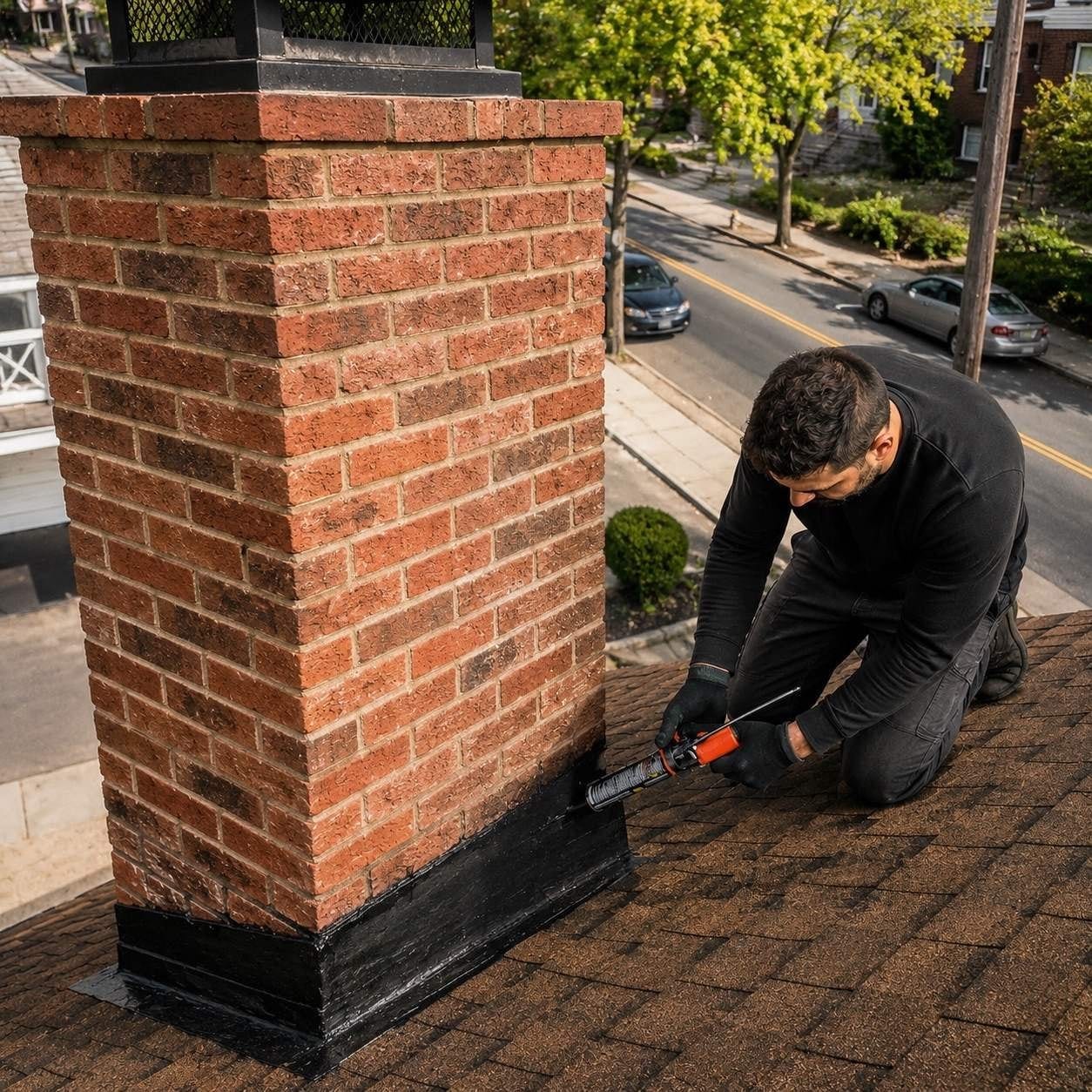
Water rarely shows up where it gets in. A crack in the crown at the top can show up as a stain in the firebox. A gap in the flashing on the roof can show up as peeling paint on the ceiling two rooms away. The sign tells you that water is getting in. Finding where it enters takes a closer look.
Signs you can check from inside the house
Inside the home
- Water stains, bubbling paint or loose wallpaper on the ceiling or walls next to the chimney
- Water or damp debris on the firebox floor or the hearth after rain
- Rust flakes, or a damper that sticks, grinds or won't seal
- White crusty or powdery residue on the firebox bricks
- A musty, damp or sharp smoky smell from the fireplace, stronger on humid or rainy days
- Pieces of clay tile or crumbled mortar in the firebox
- Mildew or dark spots on drywall, trim or attic framing around the chimney
Signs on the outside of the chimney
Outside, from the ground or with binoculars
- White streaks or patches on the brick (efflorescence)
- Brick faces that are flaking, pitted or broken off (spalling)
- Mortar joints that are recessed, sandy or missing
- Cracks in the concrete crown at the top of the chimney
- A missing, bent or rusted chimney cap
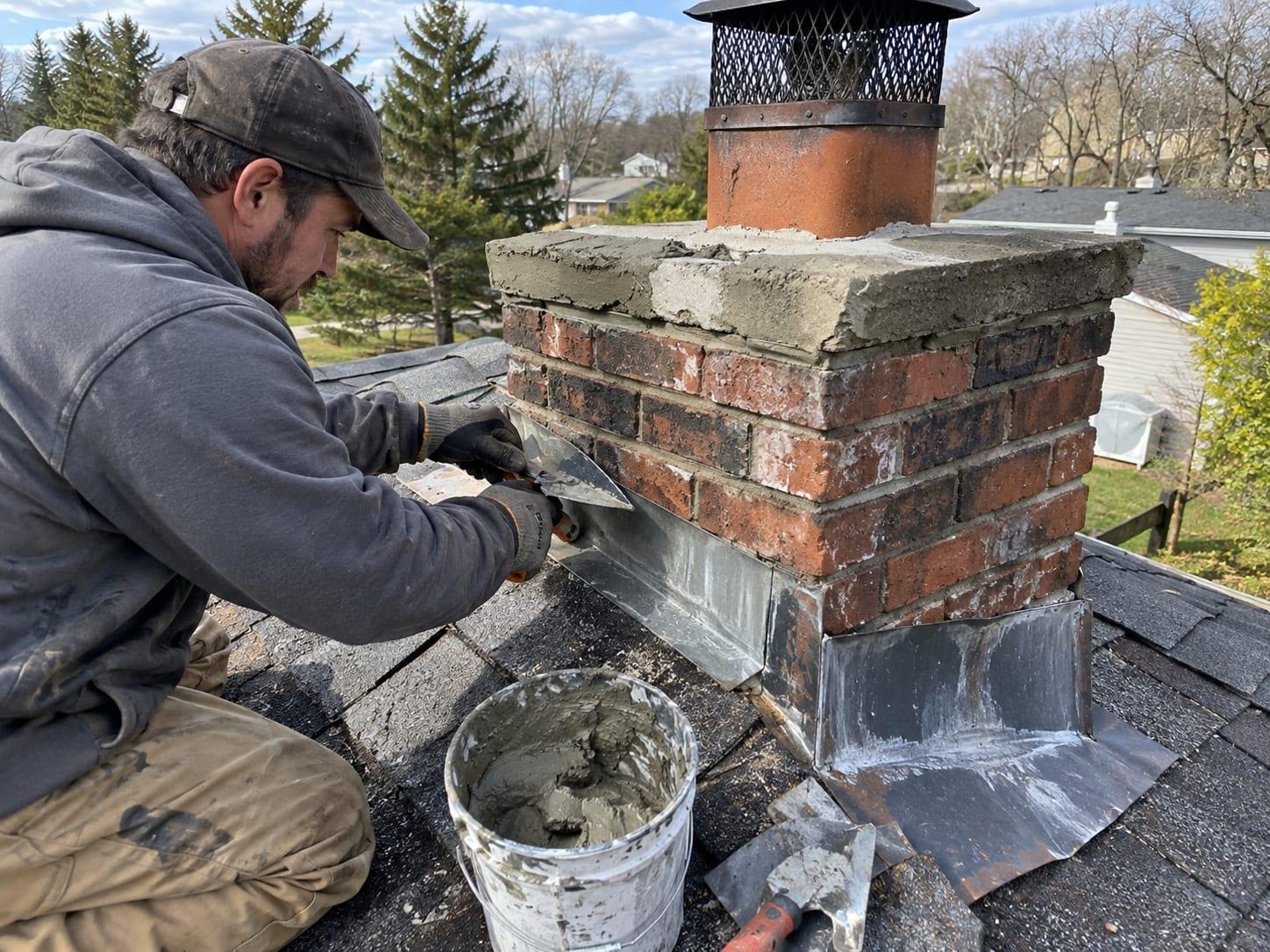
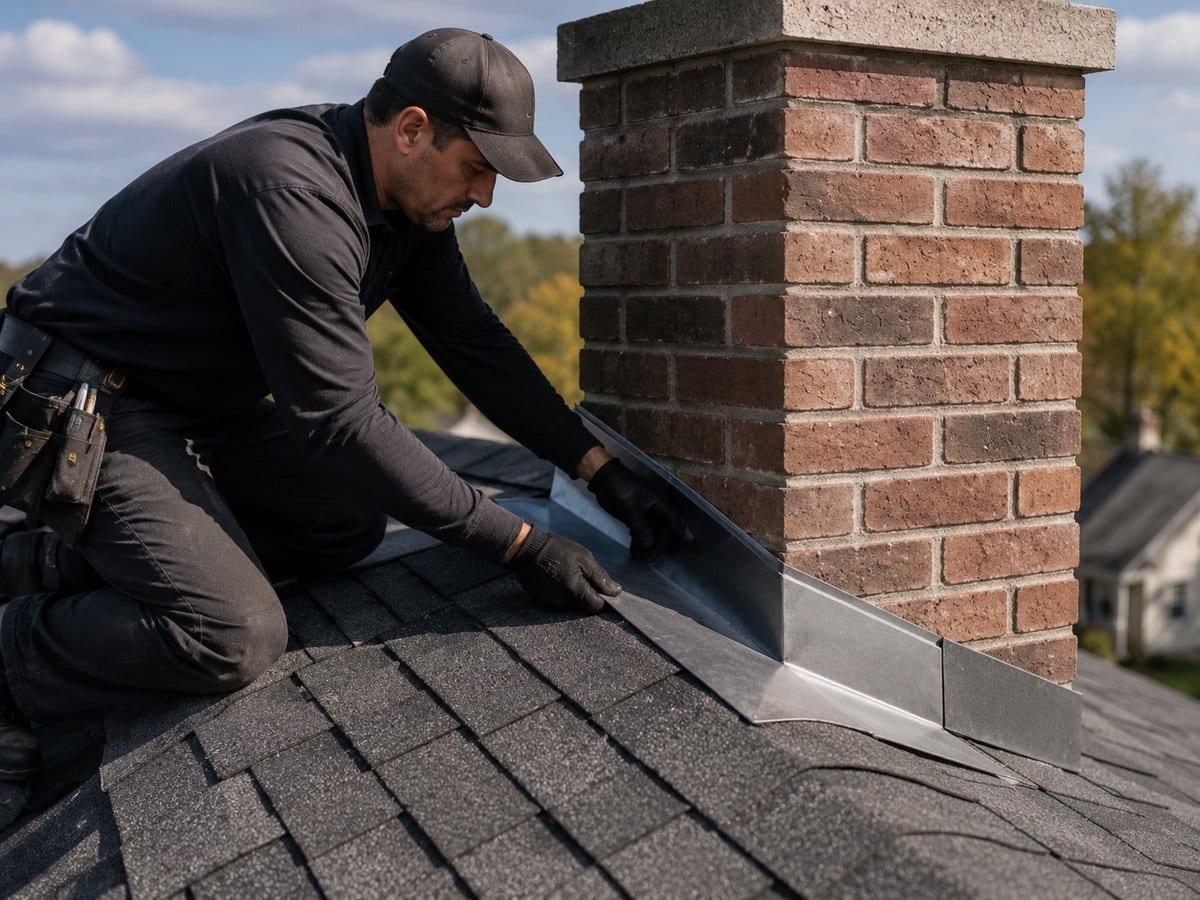
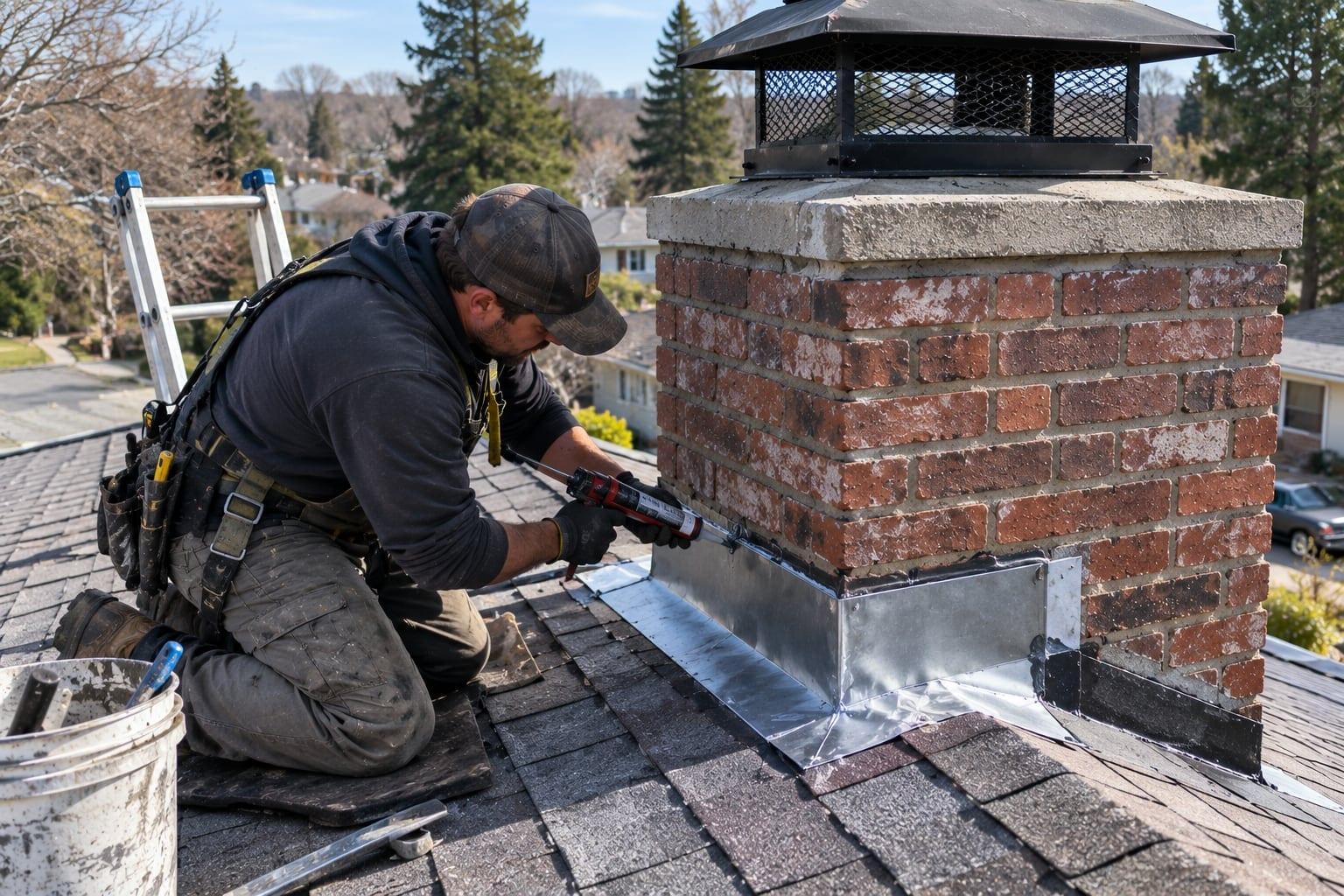
- Lifted, rusted or caulk-patched metal flashing where the chimney meets the roof
- Dark wet patches that stay on the masonry long after rain stops
- Rust streaks running down the siding of a metal or framed chimney chase
- A chimney that leans or separates from the house
| Sign | What it often points to | Repairs that usually address it |
|---|---|---|
| White powdery deposits | Water moving through the masonry and carrying salts to the surface | Find and fix the entry point, then repoint mortar or apply a water repellent |
| Flaking or broken brick faces | Water soaked into the brick and breaking it apart as it freezes or dries | Masonry repair or brick replacement, then a water repellent |
| Crumbling mortar joints | Long-term water exposure washing out the mortar | Repointing the mortar joints |
| Cracked crown | Crown concrete breaking down and letting water into the chimney | Crown repair |
| Ceiling or wall stains beside the chimney | Failed flashing, a cracked crown or porous masonry | Flashing repair or sealing the leak point |
| Rusty damper or firebox parts | Rain coming straight down an uncapped flue | A chimney cap and damper repair |
| Rust streaks on a metal chase | A worn or rusted chase cover | Chase cover replacement or chase repair |
| Clay tile pieces in the firebox | A damaged flue liner | Camera inspection, then liner repair or replacement |
| Musty odor | Moisture mixing with creosote and debris in the flue | Sweeping, odor removal and a cap to keep rain out |
How water gets into a chimney
- The crown. The concrete slab on top of a masonry chimney is supposed to shed water away from the flue. Once it cracks, every rain runs into the brickwork below. The signs of that are covered in cracked chimney crown causes, signs and repair.
- The open flue. Without a cap, rain falls straight down the flue onto the damper and smoke shelf.
- The flashing. The metal seal between the chimney and the roof is a common leak point. Roofing cement smeared over old flashing tends to crack and let water back in.
- The brick and mortar. Masonry is porous. Old or cracked mortar joints and weathered brick soak up wind-driven rain.
- The chase cover. On factory-built chimneys, the metal top of the framed chase can rust through or pool water, which then runs inside the chase.
Why small leaks turn into bigger repairs
Water damage compounds. Wet mortar loses strength, which lets in more water. Rust weakens the damper and cap. Clay flue tiles can crack and shift, and loose pieces or crumbled mortar can collect at the smoke shelf and add to a blocked chimney flue. A cracked liner is also a safety issue. It can let heat and smoke reach parts of the house they shouldn't, which is why damage to the liner matters most when you think about what causes a chimney fire and how one spreads.
Moisture also changes the smell of the flue. Damp creosote gives off the heavy, musty odor many people notice in summer. A chimney sweep removes ordinary soot and buildup. Thick or glazed deposits may need a dedicated creosote removal service.
Masonry and prefab chimneys show it differently
Brick and stone chimneys show water damage in the masonry itself: efflorescence, spalling, eroded mortar and crown cracks. Factory-built chimneys sit inside a framed chase. On those, look for rust on the chase cover, stains on the siding below it, soft or swollen wood, and water inside the firebox. If you're not sure which kind you have, the guide to different types of chimneys explains how to tell them apart.
Your options once you see the signs
A sensible order of work
Note when it happens
Write down whether the sign appears after every rain, only in wind-driven storms, or all the time. That pattern helps narrow down where the water enters.
Have the chimney inspected
An inspection looks at the crown, cap, flashing and masonry from the top. A camera inspection checks the flue liner from the inside, where many problems can't be seen otherwise.
Fix where the water gets in
Seal or repair the crown, add or replace the cap, redo the flashing, or replace the chase cover. Nothing else holds up until the entry point is closed.
Repair the damage
Repoint failed mortar, replace spalled brick, and repair the liner, damper or firebox as needed.
Protect the brick
Once repairs are done and the brick has dried, a breathable water repellent helps the masonry shed rain while still letting trapped moisture escape.
| Feature | Repairing the entry point | Water repellent on the brick |
|---|---|---|
| What it does | Closes the specific gap letting water in: crown, cap, flashing or chase cover | Reduces how much water porous brick and mortar absorb |
| When it fits | Whenever a crack, gap or missing part is found | After repairs, on sound masonry |
| Limits | Doesn't stop absorption through weathered brick | Won't seal cracks, failed flashing or an open flue |
What it does
- Repairing the entry point
- Closes the specific gap letting water in: crown, cap, flashing or chase cover
- Water repellent on the brick
- Reduces how much water porous brick and mortar absorb
When it fits
- Repairing the entry point
- Whenever a crack, gap or missing part is found
- Water repellent on the brick
- After repairs, on sound masonry
Limits
- Repairing the entry point
- Doesn't stop absorption through weathered brick
- Water repellent on the brick
- Won't seal cracks, failed flashing or an open flue
What helps you decide
Stains that are cosmetic and occasional can usually wait for a planned repair. Signs that point to the structure or the flue should be looked at before the next fire. Those include loose brick, a leaning chimney, tile fragments in the firebox, or a damper that has rusted through. It also helps to know how a chimney inspection works, so you can ask for photos of the crown, flashing and liner and see the problem yourself.
Hold off on fires if you see these
Pieces of flue tile in the firebox, a chimney that is pulling away from the house, or bricks falling from the top are reasons to stop using the fireplace until the chimney has been inspected. If bricks are falling or it looks like it could come down, keep everyone away from the area below it and call 911.
If you're seeing these signs, get in touch to request an estimate for a chimney inspection, sweep or creosote removal.