On this page
What wood burning fireplace repair covers
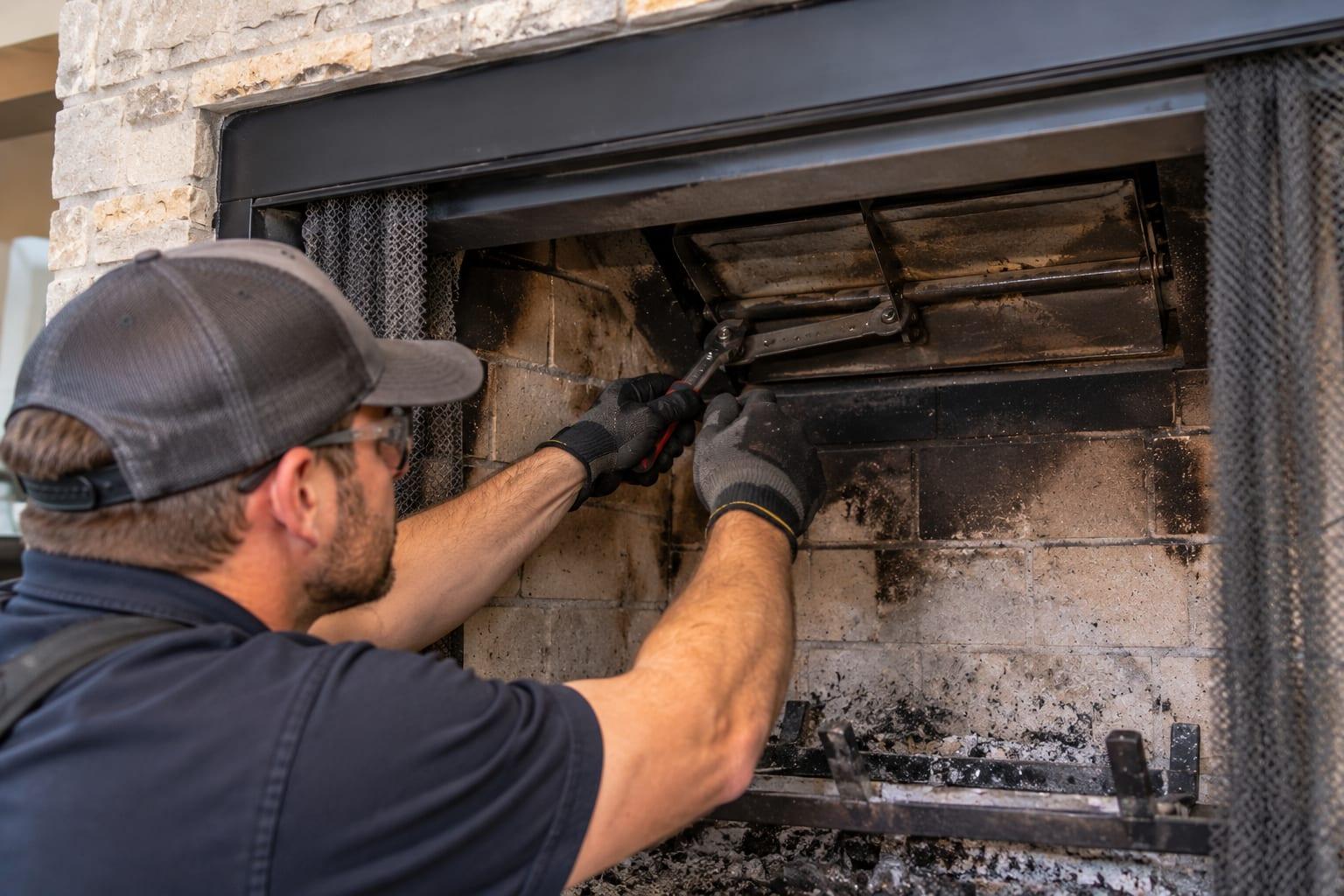
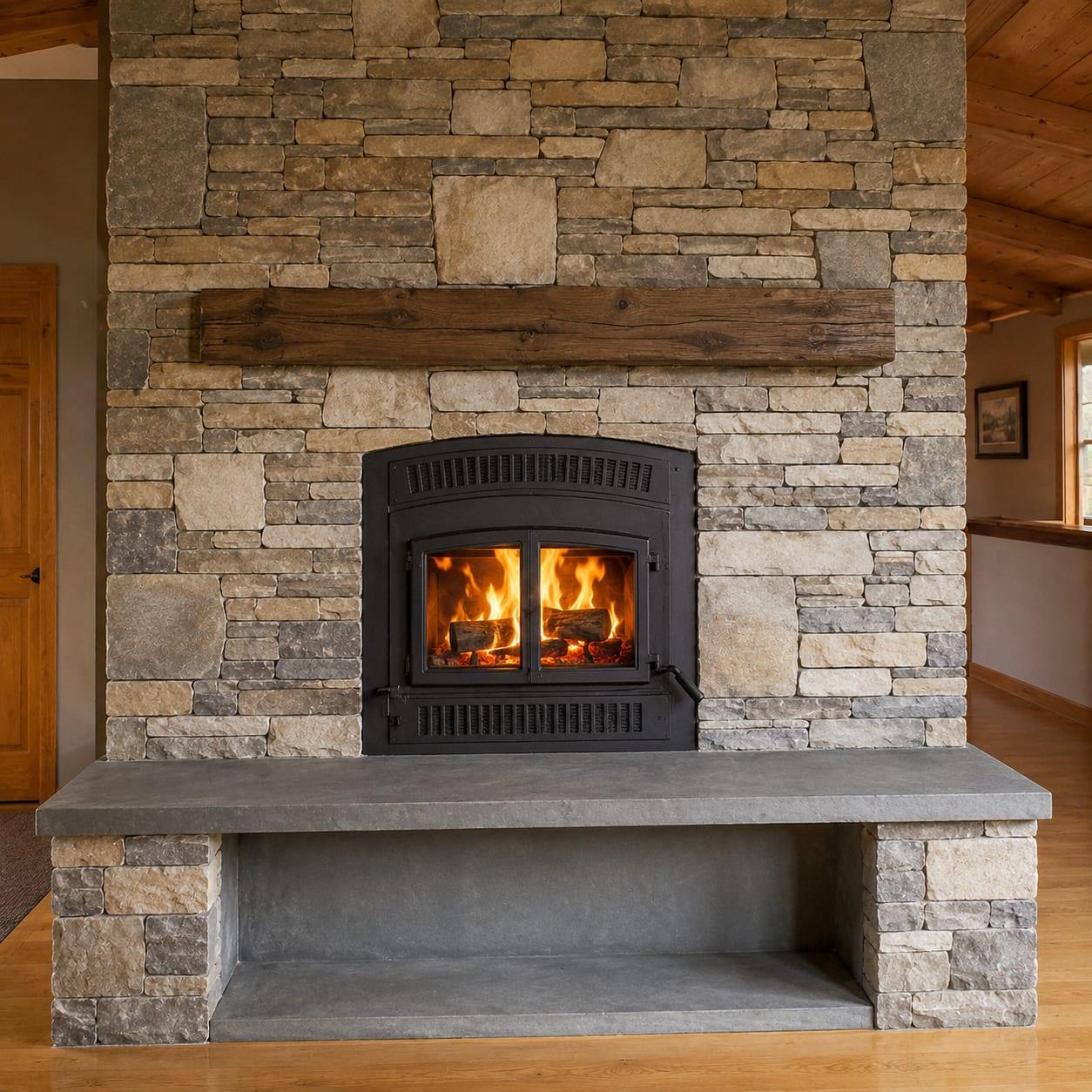
Wood burning fireplace repair covers the parts that take the heat, smoke and moisture of real wood fires. Masonry fireplaces and factory-built wood fireplaces wear in different ways, so the first job is to identify what you have and where the damage is.
| Part | What goes wrong | Typical repair |
|---|---|---|
| Firebox brick and mortar | Cracked firebrick, eroded or missing joints | Replacing damaged brick and repointing joints with heat-resistant mortar |
| Refractory panels (factory-built units) | Cracks, crumbling, gaps that expose the metal behind | Replacing the panels |
| Damper | Rust, warping, sticking, not sealing | Repairing or adjusting the damper |
| Smoke chamber | Rough or cracked walls above the damper | Sealing cracks and parging the walls smooth |
| Glass doors | Cracked glass, sagging hinges, failed latches | Replacing the glass and repairing the doors |
| Draft | Smoke rolling into the room | Finding and correcting the cause of poor draft |
When a wood fireplace needs repair
- Cracks across firebrick, or joints you can scrape out with a fingernail
- A damper handle that won't move, or a damper that won't close fully
- Smoke entering the room when the fire is lit
- Pieces of brick or mortar collecting in the firebox
- Rust on the damper plate or water marks in the firebox
- Glass doors that are cracked, won't latch or sit crooked
Fireplaces without a real flame work differently and fail differently. For those units, electric fireplace repair is the service to look at.
What the visit involves, step by step
From first look to a working fireplace
Clean where needed
Soot and creosote hide cracks and keep mortar from bonding, so heavy buildup is removed first. This can be paired with a full fireplace cleaning.
Inspect
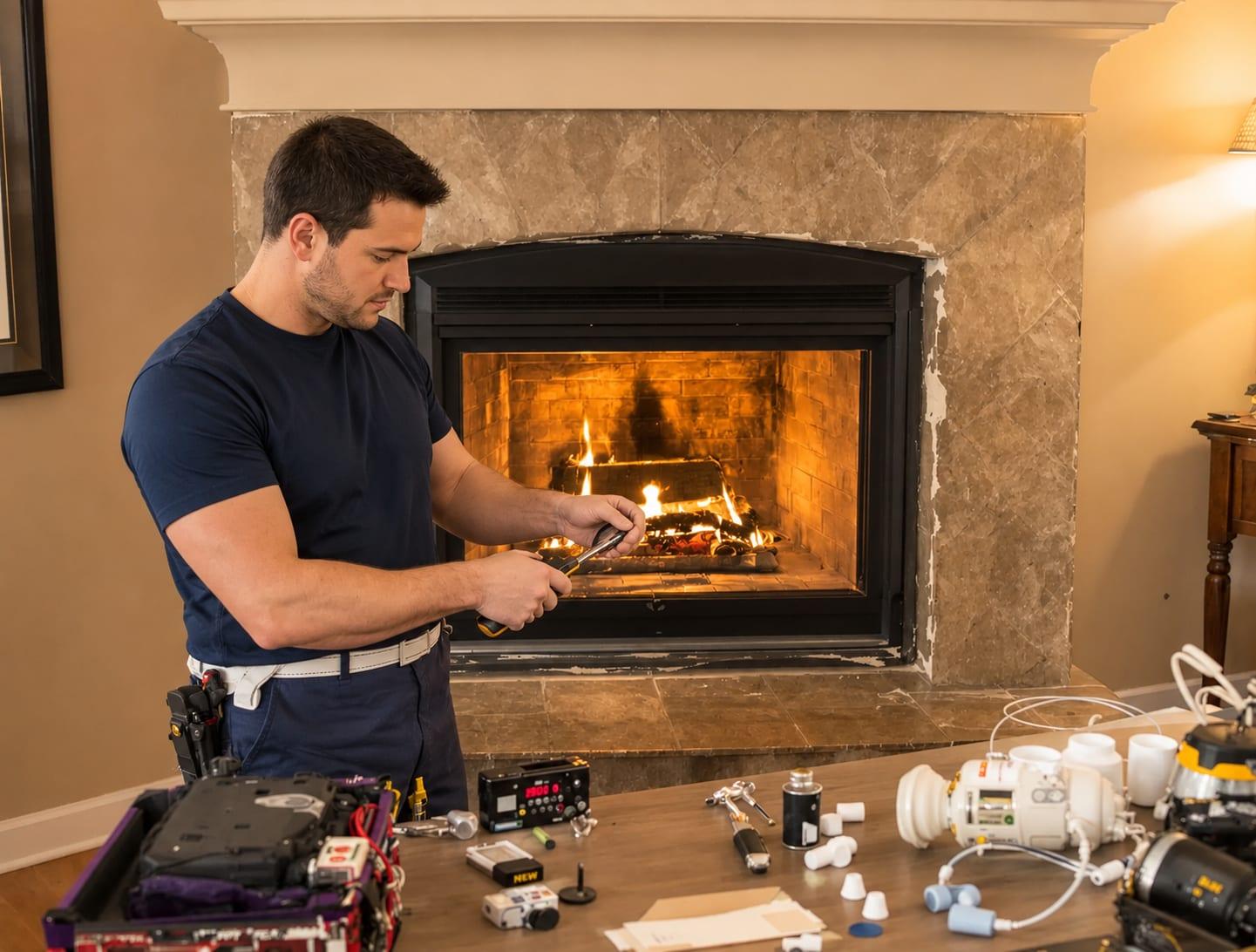
We check the firebox, damper, smoke chamber, doors and the connection to the flue.
Explain the options
You hear what's damaged, what needs to be fixed before the next fire, and what can wait.
Repair
Brick, panels, mortar, the damper or the doors are repaired as agreed.
Check operation
The damper and doors are worked through their full range, and you get any curing instructions before the next fire.
Hold off on fires if the firebox is open
Gaps in firebox mortar or cracked panels can let heat reach the structure behind them. Stop using the fireplace until those gaps are repaired.
Wood-burning stoves and inserts
A freestanding stove or a fireplace insert is a different appliance, with a closed firebox, its own glass and its own flue connection. If a stove is your main heat source, regular cleaning of the stove and its flue is the upkeep that matters most. An open fireplace that burns poorly can sometimes be fitted with an insert, and one that is worn out can be replaced through fireplace installation.
Booking a wood fireplace repair
Get in touch and describe what you're seeing, along with whether the fireplace is masonry or factory-built if you know. Commercial and property-manager work is offered as well. Request an estimate to set up the visit.
Before the technician arrives
- Write down what you've noticed and when it happens — smells, smoke, sounds or stains.
- Clear a few feet of space in front of the hearth or appliance.
- Move rugs, photos and anything fragile away from the work area.
- Let the fireplace or stove cool completely — ideally no fire for 24 hours before the visit.
Carbon monoxide
A blocked or damaged flue can push carbon monoxide into the home. If an alarm sounds or anyone feels dizzy or sick near the fireplace, get everyone outside and call 911.
What gets checked
- Hearth and surround
- Damper operation
- Firebrick or refractory panels
- Mortar joints inside the firebox
- Draft from the opening
- Smoke chamber and smoke shelf
- Doors, glass and gaskets
Signs it's time for wood-burning fireplace repair
- Doors or glass that are cracked or don't seal
- Rust or warping inside the firebox
- Smoke coming into the room
- A fireplace that is hard to light or won't stay lit