On this page
What dryer vent cleaning covers
A dryer pushes hot, damp, lint-laden air through a duct that runs from the back of the machine to a cap on an outside wall or the roof. The lint screen catches much of that lint, but not all of it. What gets past settles in the duct, especially at bends, low spots and the exterior cap. Over months it narrows the passage until air can barely move.
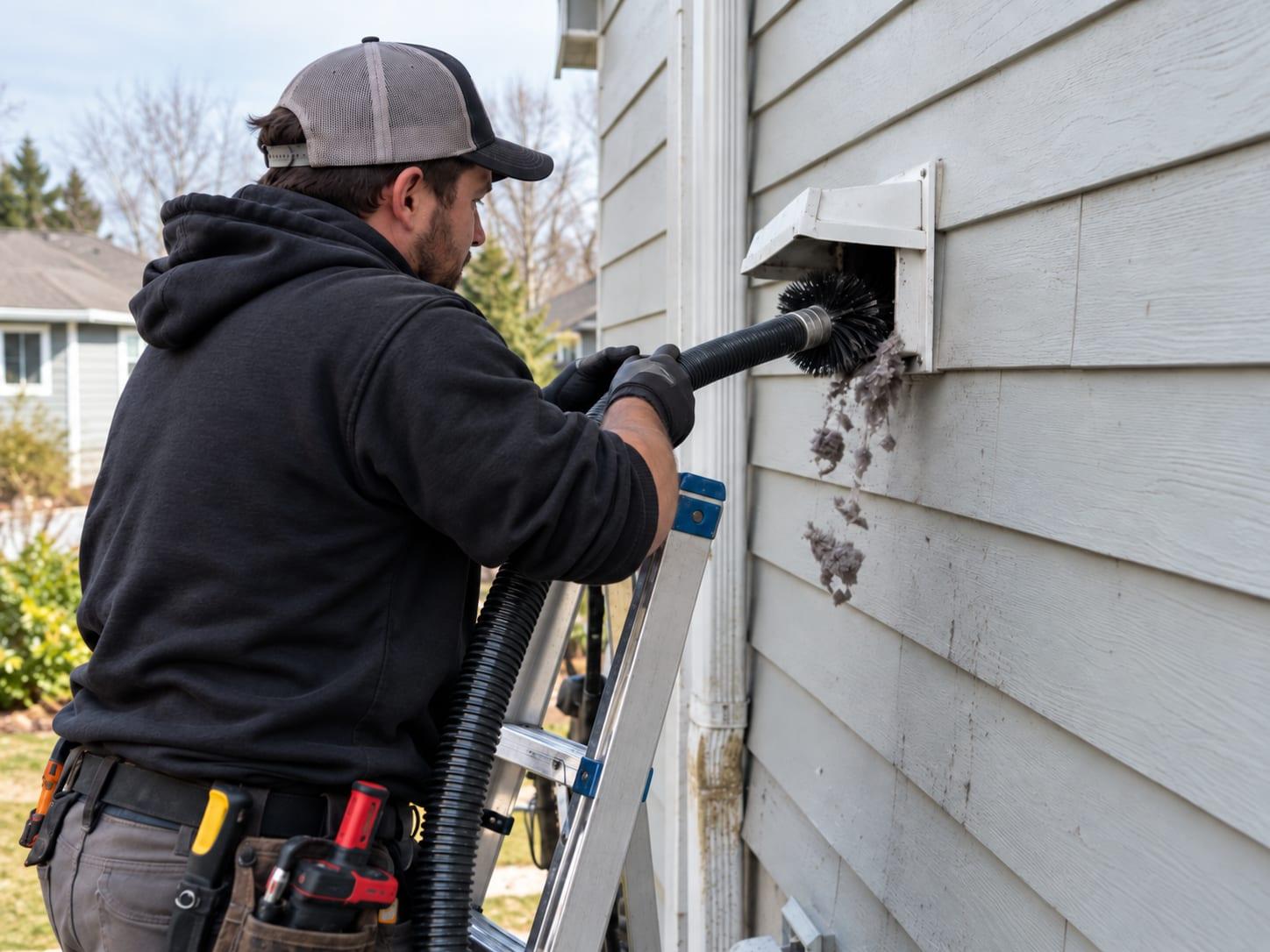
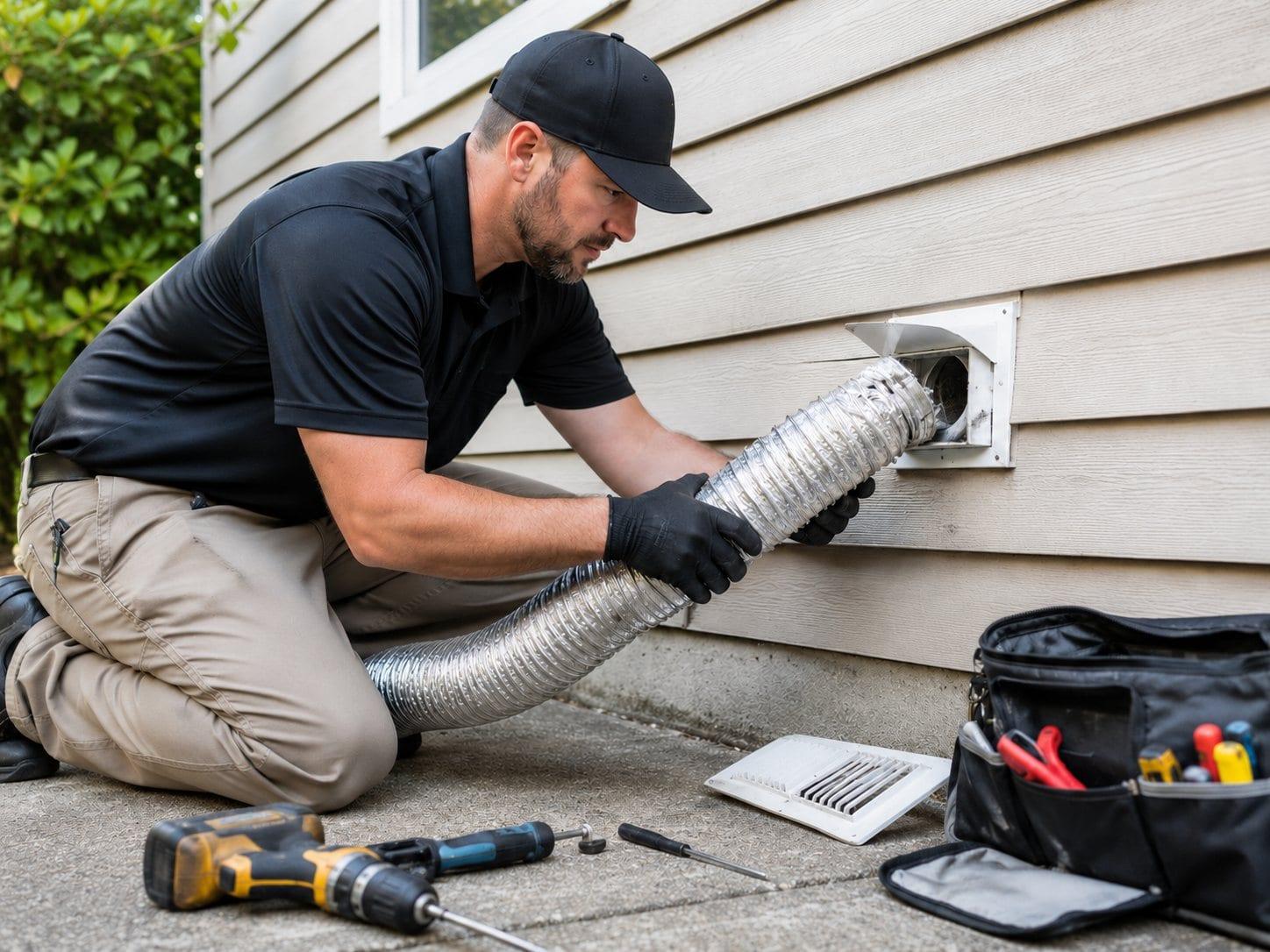
Dryer vent cleaning removes that buildup along the whole run. That includes the short transition hose behind the dryer, the duct inside the wall, ceiling or attic, and the hood or cap where the air leaves the house. The goal is simple: an open path with no lint left to restrict airflow or catch heat.
Signs the vent needs cleaning
Common reasons homeowners call
- Clothes take longer than one cycle to dry, or come out damp at the seams
- The dryer, or the laundry room, gets noticeably hot while it runs
- Clothes feel unusually hot to the touch when the cycle ends
- A burning or scorched smell while the dryer is running
- Lint collecting around the dryer door, behind the machine or at the outside cap
- The flap on the exterior vent barely opens, or doesn't open at all, while the dryer runs
- Extra humidity or condensation in the laundry area
- It has been a year or more since anyone cleaned the duct
Not every one of these points to lint. A crushed hose, a disconnected joint or a duct that is simply too long can cause the same symptoms. If you want airflow measured and the run checked before deciding what to do, our dryer vent inspection and airflow testing is the better first step.
What happens during the visit
Step by step
Look at the setup
We find where the duct runs, where it exits the house, and what kind of duct is behind the dryer before anything is moved.
Pull the dryer out and disconnect
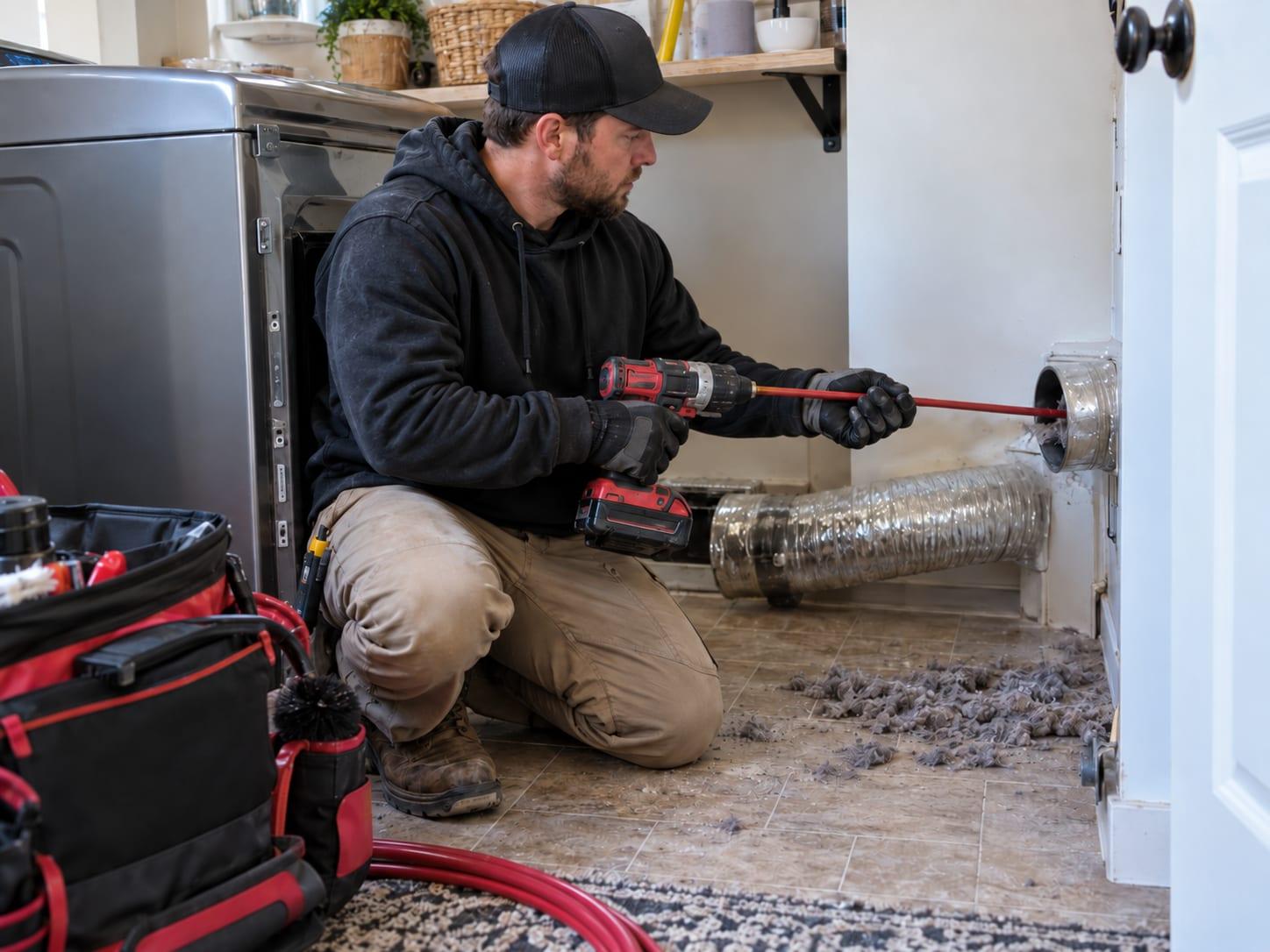
The dryer is moved away from the wall and the transition hose is detached so both ends of the run can be reached.
Clear the duct
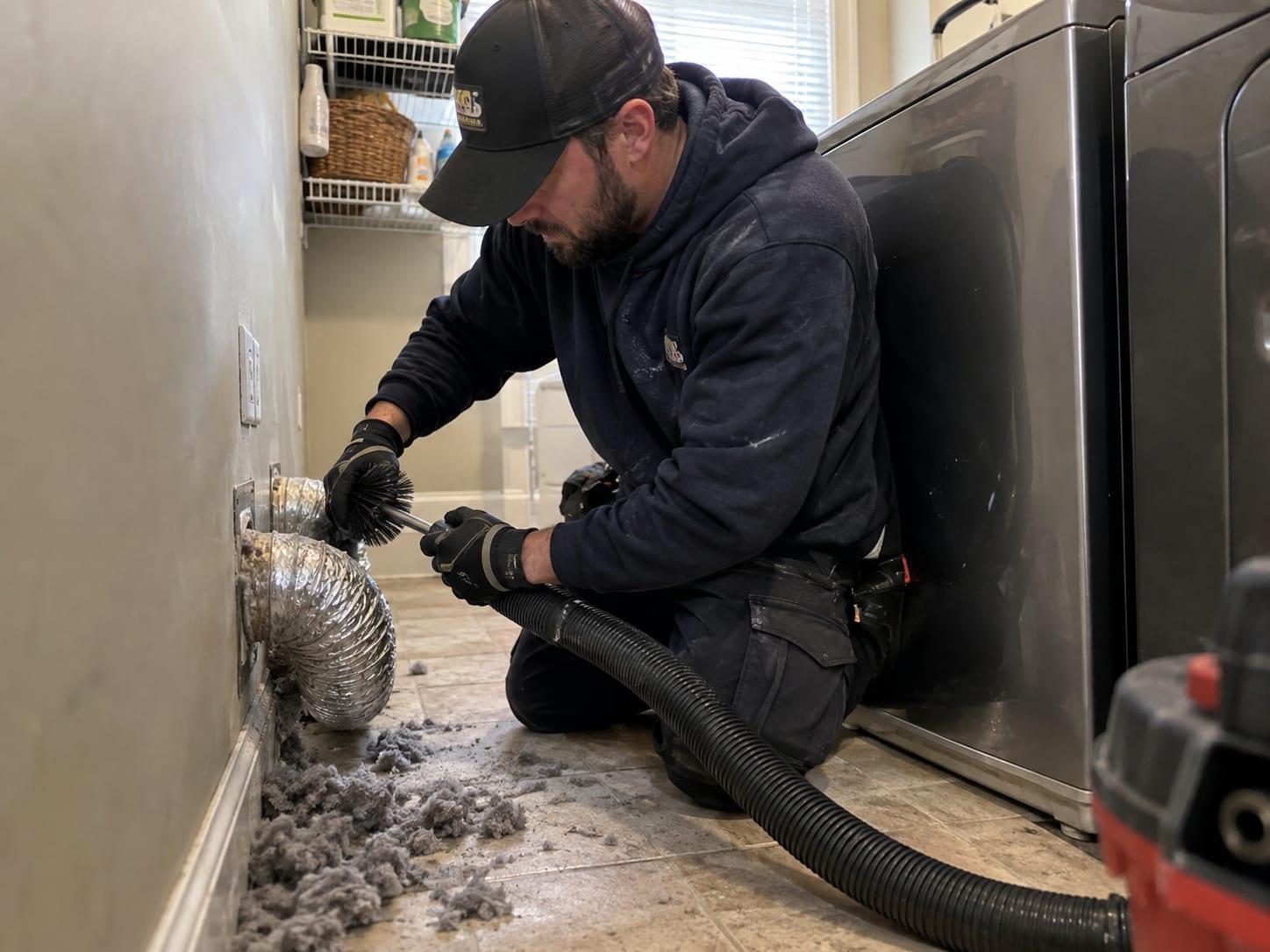
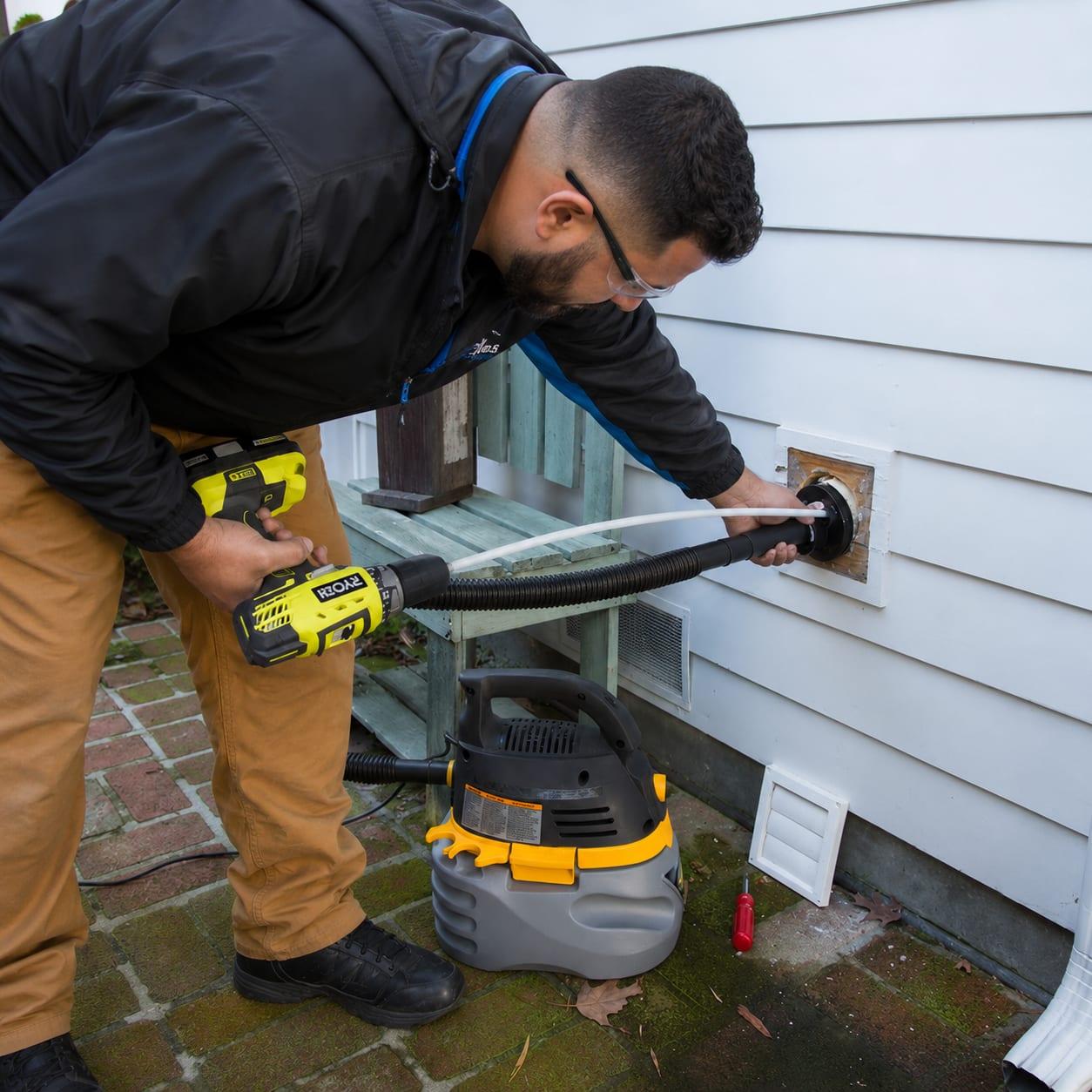
Lint is loosened along the full length of the duct, working from the inside, the outside or both depending on the layout, and removed rather than pushed deeper.
Clean the exterior cap
The wall hood or roof cap is cleared of lint, and we check that its flap or damper opens and closes freely.
Clean behind and under the dryer
Lint that has gathered around the back of the machine and the lint screen housing is removed.
Reconnect and test
The dryer is reconnected and run so we can confirm air is moving out at the exterior cap.
Tell you what we found
If we spot a crushed hose, loose joints or damaged duct during the cleaning, we point it out so you can decide what to do next.
Roof dryer vent cleaning
Some homes vent the dryer straight up through the attic and out a cap on the roof. These runs tend to clog faster than a short wall vent. Lint has to travel upward against gravity, it tends to settle back down the duct, and the roof cap often has a screen or tight louvers that catch lint and hold it.
Roof dryer vent cleaning means clearing the vertical run and working on the cap from the roof. We remove the lint plug that usually forms at the top and make sure the cap's flap can open. If the cap is damaged, rusted shut or the wrong style for a dryer, replacing it is a separate job. Our dryer vent cover replacement service handles that.
Duct types we run into
| Duct type | Where you usually see it | What to know |
|---|---|---|
| Rigid metal | Inside walls, ceilings and attics | Smooth inside, so it holds the least lint and cleans most thoroughly |
| Semi-rigid aluminum | Short connection behind the dryer | Fine for the transition, but it can kink when the dryer is pushed back |
| Flexible foil | Transition hoses, sometimes longer runs | Ridged walls catch lint and crush easily; long runs of it clog quickly |
| Flexible plastic or vinyl | Older installations | Not suited to dryer exhaust heat; it is worth replacing rather than just cleaning |
Cleaning can't fix a duct that is crushed, torn or made of the wrong material. When the duct itself is the problem, dryer vent repair and replacement is the right job. When the run is so long or so winding that it clogs again soon after each cleaning, rerouting or relocating the dryer vent to a shorter path is usually the lasting fix.
Safety and upkeep between cleanings
Why lint buildup matters
Lint burns easily, and a clogged duct traps heat right where that lint sits. Restricted airflow also makes the dryer run hotter and longer. With a gas dryer, a blocked vent can also keep combustion exhaust from leaving the house as it should.
- Clean the lint screen before or after every load, not just when it looks full.
- Wash the lint screen with warm, soapy water now and then; dryer sheet residue can clog the mesh even when it looks clean.
- Keep the dryer from being pushed tight against the wall, which crushes the transition hose.
- Glance at the outside cap while the dryer runs. A flap that opens means air is moving.
- Don't leave the dryer running when nobody is home or while you sleep.
- Schedule a full cleaning about once a year, sooner if you do a lot of laundry or have a long or roof-mounted run.
Homes, rentals and managed properties
Commercial and property-manager work is offered.
Booking a cleaning
Call or request an estimate and tell us where your dryer vent exits the house. A wall cap, a roof cap, or a vent that runs through an attic all help us plan the visit. Also mention anything you've noticed, such as long dry times, heat or a smell, so we know what to look for.
Related work covered on this page
- Dryer Vent Lint Removal
- Dryer Vent Blockage Removal
- Roof Dryer Vent Cleaning
- Dryer Vent Cleaning for Rentals & Property Managers