On this page
- What a chimney inspection covers
- Signs your home needs a chimney inspection
- How the inspection visit works
- Level 2 and level 3 chimney inspections
- Chimney camera inspection
- Insurance chimney inspection
- Annual fireplace inspection by fuel type
- Safety and maintenance between inspections
- Booking your chimney inspection
What a chimney inspection covers
A chimney inspection is a structured check of the whole venting system: the firebox, damper, smoke chamber, flue liner, crown, cap, flashing and the masonry or chase outside. The goal is a clear answer to three questions. Is it safe to burn in? Is anything blocking the flue? Is anything letting water, animals or heat get where they shouldn't?
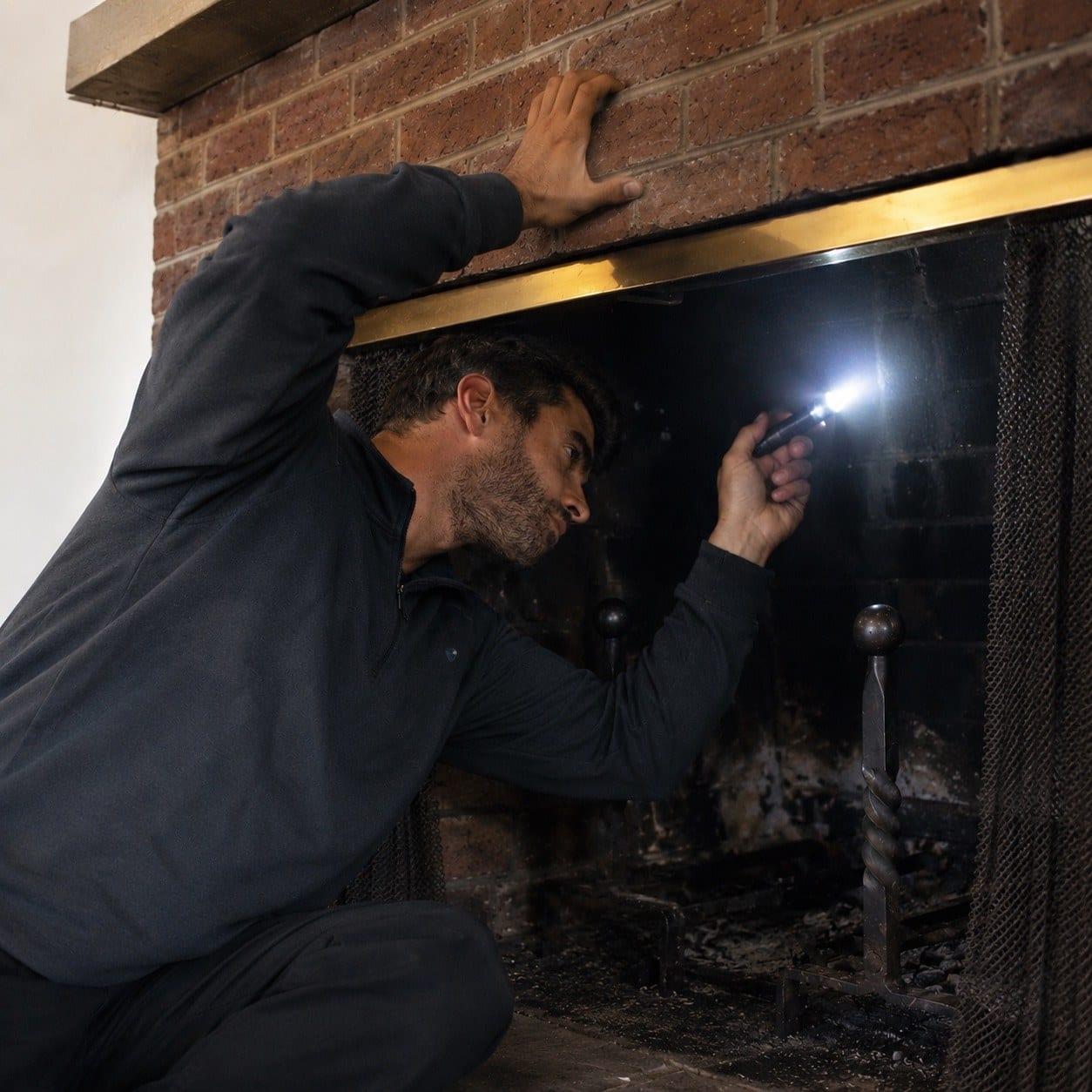
We inspect masonry chimneys, prefab (factory-built) fireplaces, wood stoves, inserts, pellet units and gas fireplaces. Each system fails in its own way.
Signs your home needs a chimney inspection
An annual check is the baseline for any chimney in use. These situations call for an inspection sooner:
- You're about to use the fireplace for the first time in a while, or you've just moved in.
- Smoke spills into the room, the fire is hard to start, or the draft feels weak.
- You hear crackling or rumbling in the flue, see flaky black debris on the roof, or suspect a past chimney fire. If you hear roaring or see flames or sparks from the top of the chimney, get everyone out and call 911.
- There are water stains on the ceiling or walls near the chimney, rust on the damper, or white staining on the brick. Our guide to water damaged chimney signs shows what to look for.
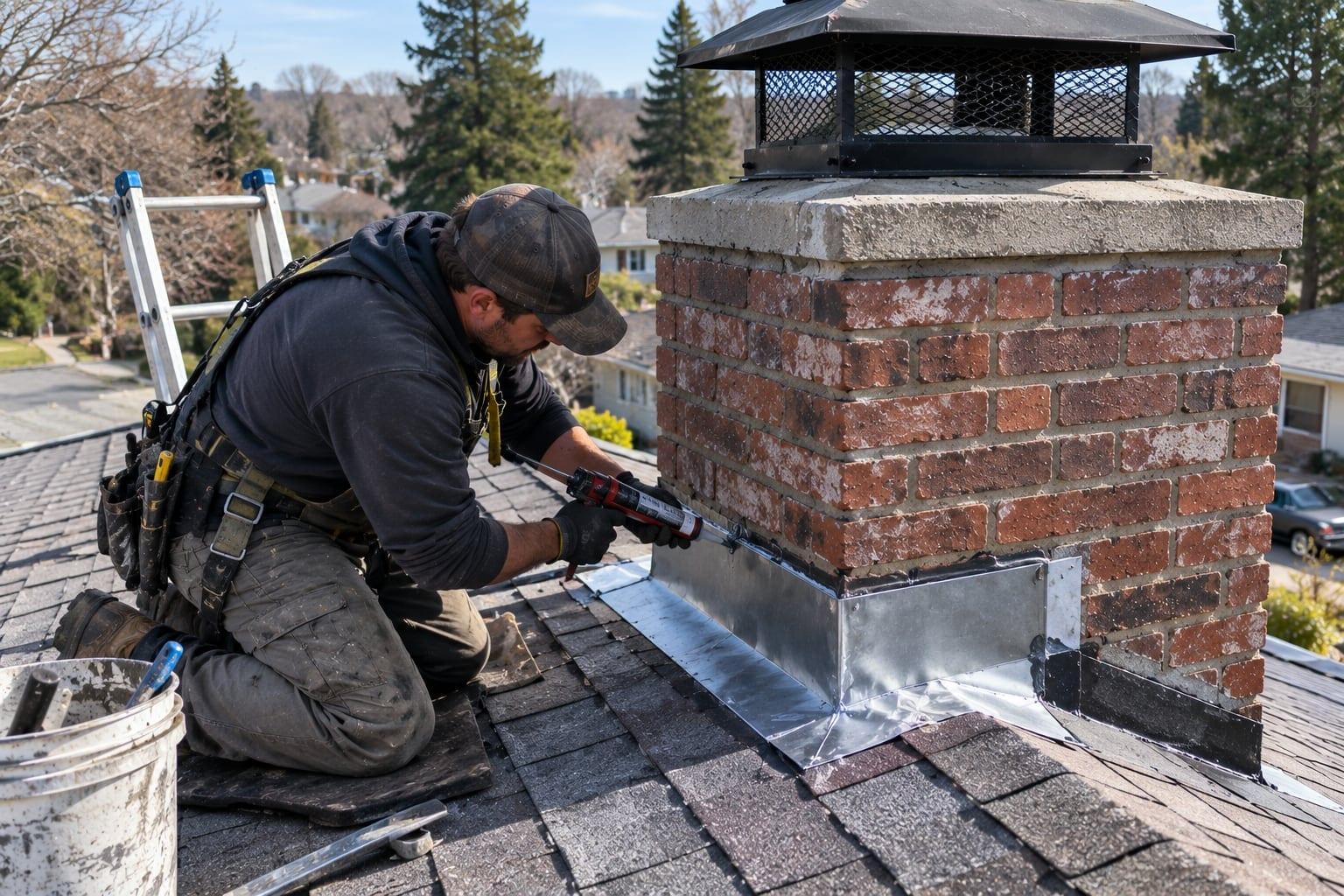
- High winds, a fallen branch or a hard storm may have caused chimney storm damage to the crown, cap or flashing. That is what our storm damage chimney inspection service is for.
- A strong smoky or musty smell, especially in warm or humid weather.
- You hear animals in the flue or see nesting material falling into the firebox.
- You're changing fuel type, adding an insert or stove, or relining the chimney.
If you think the chimney is on fire
Get everyone out of the house and call 911. Don't use the fireplace again until the flue has been inspected. A chimney fire can crack the liner and leave hidden damage even after it burns out.
How the inspection visit works
What to expect, step by step
Tell us what you've noticed
When you call, describe the symptoms, the fuel you burn and when the chimney was last cleaned or inspected. That tells us which level of inspection fits.
Protect the room
We lay down drop cloths around the hearth before opening anything up.
Check the fireplace and firebox
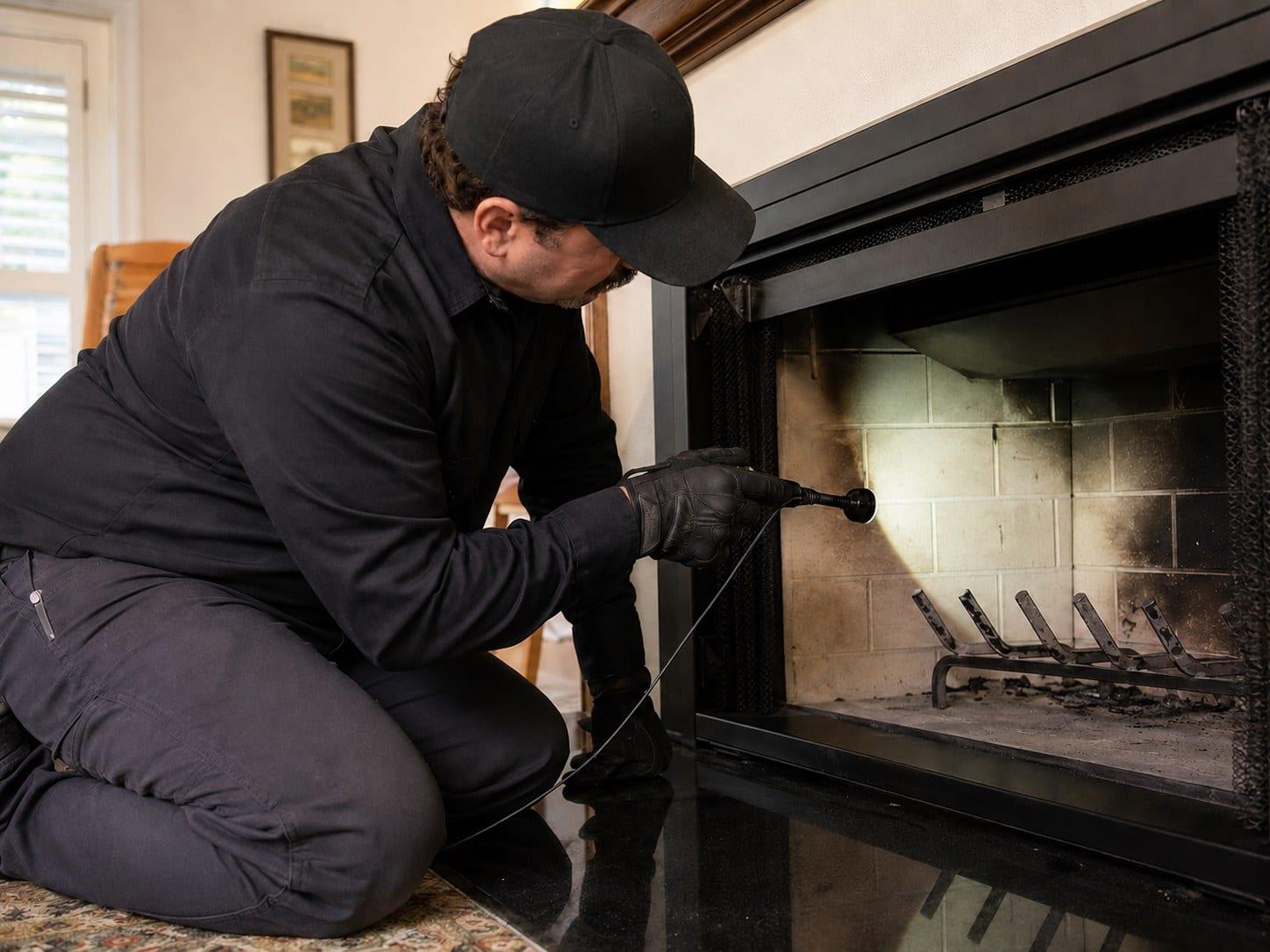
We look at the firebox walls, the damper and how it seals, the smoke chamber, glass doors or panels, and for gas units the burner area and venting.
Look up the flue
We check the flue for creosote buildup, blockages, nests and debris, and run a chimney camera where the liner needs a closer look.
Check the exterior
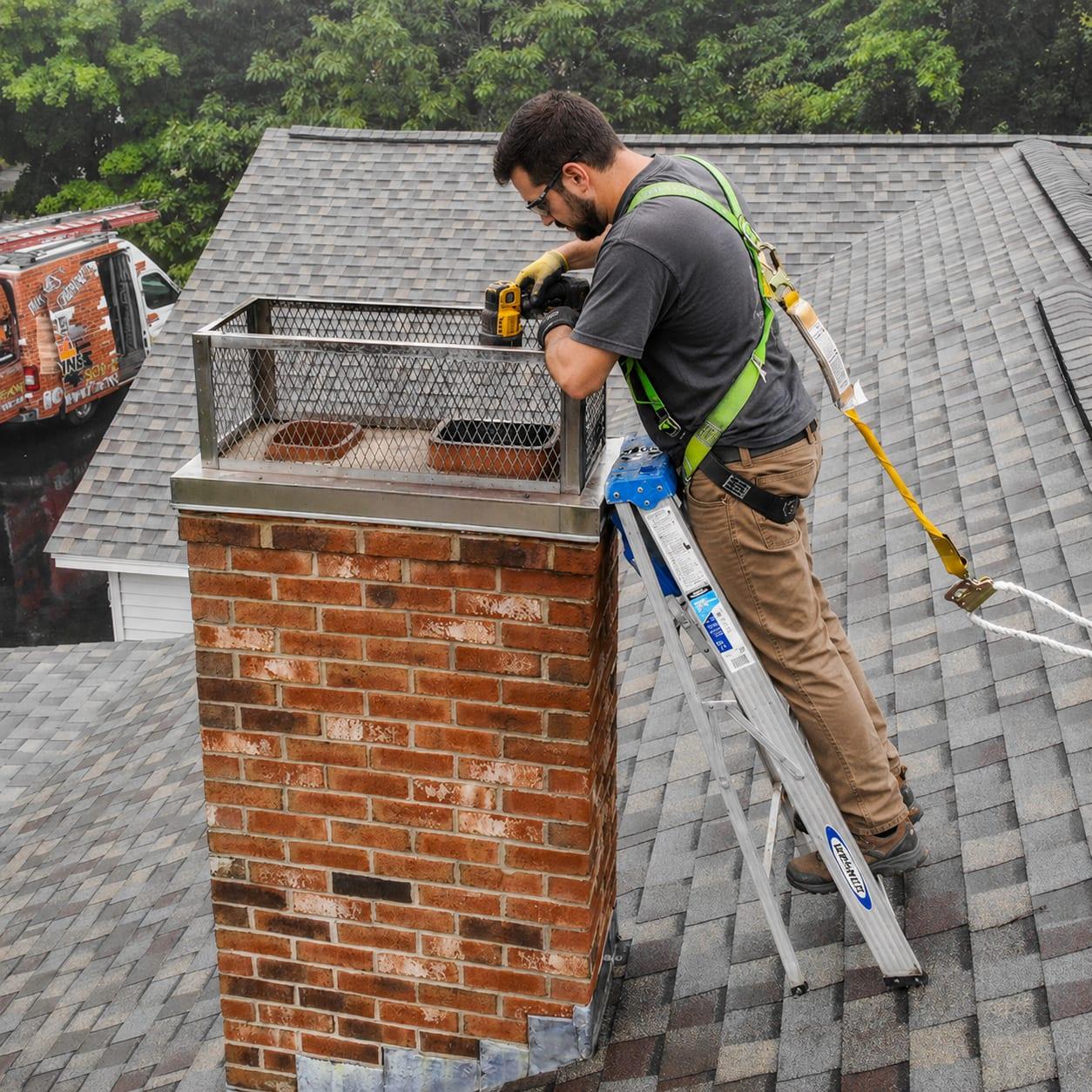
Where we can safely reach it, we check the crown, cap, spark screen, flashing, mortar joints and brick, or the chase and chase cover on a prefab chimney.
Walk through the findings
We show you what we found, explain what's urgent and what can wait, and tell you whether the chimney is safe to use as it is.
Estimate for any follow-up work
If cleaning or repair is needed, we explain the options. Estimates are free.
Level 2 and level 3 chimney inspections
Chimney inspections are usually described in three levels. A Level 1 inspection looks at the readily accessible parts of the chimney and fireplace and suits a system that's in regular use with no changes and no known problems. The deeper levels apply when something has changed or something is suspected.
Level 2 chimney inspection
A Level 2 chimney inspection includes everything in Level 1, plus accessible areas such as attics and crawlspaces, the exterior, and a camera scan of the flue interior. It's the common choice after a chimney fire, a storm or other damaging event, a change in fuel or appliance, a relining, or when a home is being bought or sold. For a sale, we also offer a Real Estate Chimney Inspection. Landlords can book a Rental Property Chimney Inspection.
Level 3 chimney inspection
A Level 3 chimney inspection is only needed when a Level 2 points to a serious hidden problem, such as structural damage behind a wall or a concealed section of flue that can't otherwise be reached. It can involve removing parts of the chimney or surrounding building to get access. We explain why before recommending it, and we don't suggest it as a routine check.
| Feature | Level 2 | Level 3 |
|---|---|---|
| Typical trigger | Fuel or appliance change, sale, chimney fire, storm or other event | A serious concealed hazard found or suspected during a Level 2 |
| What's examined | Accessible areas, attic and crawlspace, exterior, and a camera scan of the flue | Hidden components that can only be reached by opening up the structure |
| Disruption to the home | Little to none | Some removal of chimney or building materials |
Typical trigger
- Level 2
- Fuel or appliance change, sale, chimney fire, storm or other event
- Level 3
- A serious concealed hazard found or suspected during a Level 2
What's examined
- Level 2
- Accessible areas, attic and crawlspace, exterior, and a camera scan of the flue
- Level 3
- Hidden components that can only be reached by opening up the structure
Disruption to the home
- Level 2
- Little to none
- Level 3
- Some removal of chimney or building materials
Chimney camera inspection
A flashlight shows only the bottom few feet of a flue. A chimney camera inspection runs a video camera up the inside of the chimney, so we can see cracked or missing liner tiles, gaps at the joints, heavy glaze creosote, blockages and damage high in the flue. You see the same footage we do. That makes it easier to judge whether a repair is needed, and it gives you a record if an insurer or buyer asks for one.
Chimney liner inspection
The liner keeps heat, sparks and combustion gases inside the flue and away from the wood framing around the chimney. A chimney liner inspection checks clay tile liners for cracks, spalling and open mortar joints. On stainless steel liners we check for corrosion, separation and loose connections, and on cast-in-place liners for cracking. A damaged liner usually means the chimney shouldn't be used until it's repaired or relined, so we tell you plainly when that's the case.
Insurance chimney inspection
When an insurer asks for documentation, or you're filing a claim after a chimney fire, storm or water damage, an insurance chimney inspection records the chimney's condition with written findings and camera footage where needed. We document what we see. The decision on any claim belongs to your insurance company.
Annual fireplace inspection by fuel type
- Wood-burning fireplaces and stoves: creosote buildup, damper condition, firebox cracks, cap and spark screen.
- Gas fireplaces and gas logs: venting, burner and log placement, glass and gaskets, and signs of soot or poor combustion. Gas fireplace and gas appliance work is offered.
- Pellet stoves and inserts: the vent pipe, connections and ash buildup, which can restrict airflow.
- Prefab fireplaces: the metal flue sections, chase, chase cover and firebox panels.
We work on all major fireplace and stove brands.
Safety and maintenance between inspections
Burn only dry, seasoned wood, keep the damper fully open while a fire is going, and never burn trash, cardboard or treated lumber. All of these leave heavier creosote. Keep the hearth area clear and test your smoke and carbon monoxide alarms.
An inspection and a cleaning are separate jobs. If you already know the flue is coated and you simply want it cleaned, book a chimney sweep. For ash, soot and glass in the firebox itself, our fireplace cleaning service handles it. When an inspection finds a cracked crown, failed flashing or worn mortar, the fix is chimney repair, which we quote separately.
Booking your chimney inspection
Call or request an estimate, and tell us what you've noticed. Estimates are free. Emergency calls are accepted, and 24-hour service runs seven days a week.
Commercial and property-manager work is offered, so you can schedule several units or buildings together. Outside San Jose, we also provide chimney inspection in Palo Alto.
Free estimates.
Get in touch to set up your chimney inspection and get a clear answer on whether your chimney is safe to use.
Related work covered on this page
- Chimney Camera Inspection
- Fireplace Inspection
- Annual Fireplace Inspection
- Insurance Chimney Inspection
- Level 2 Chimney Inspection
- Level 3 Chimney Inspection