When the damper won't open or won't close
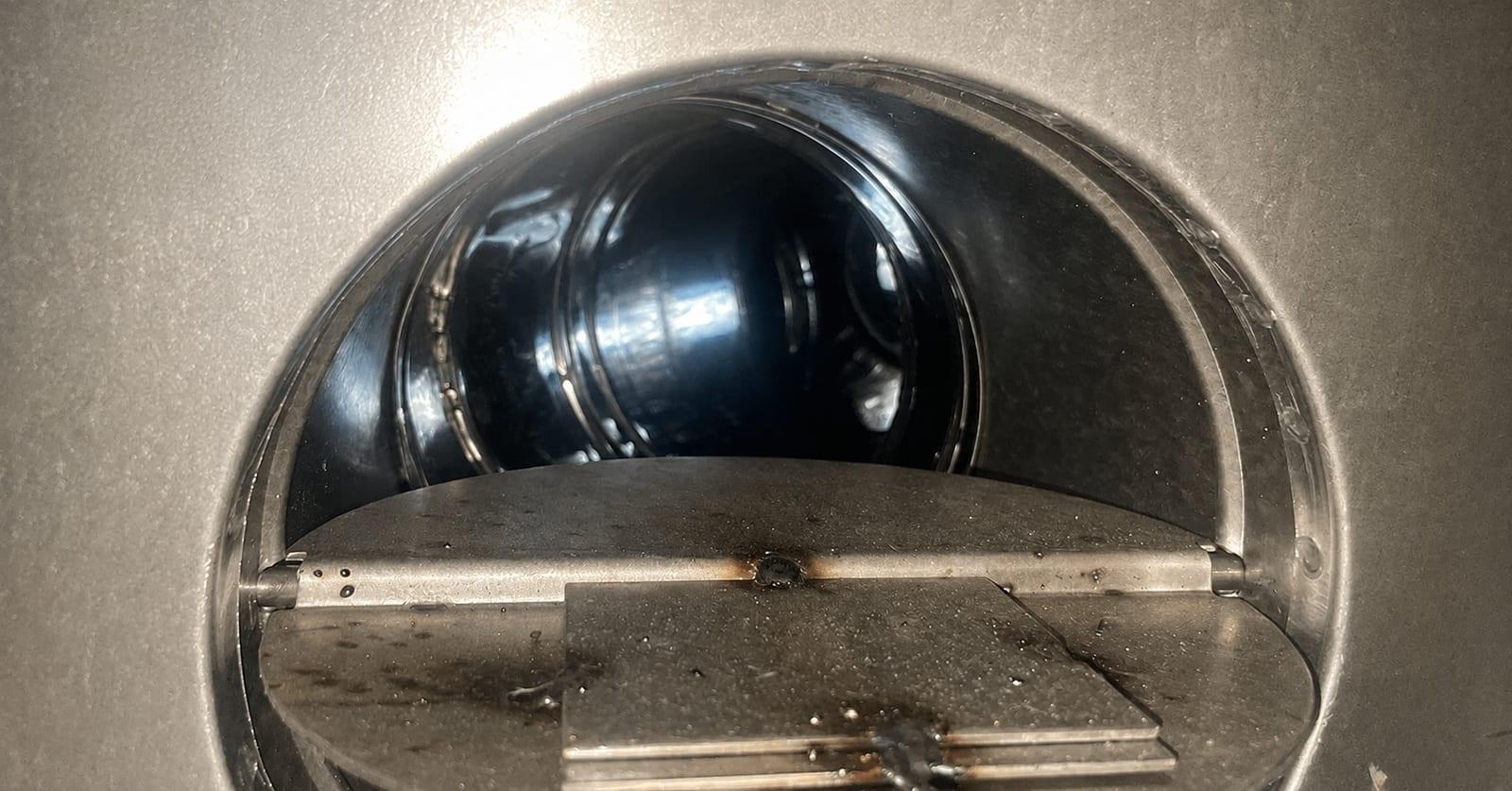
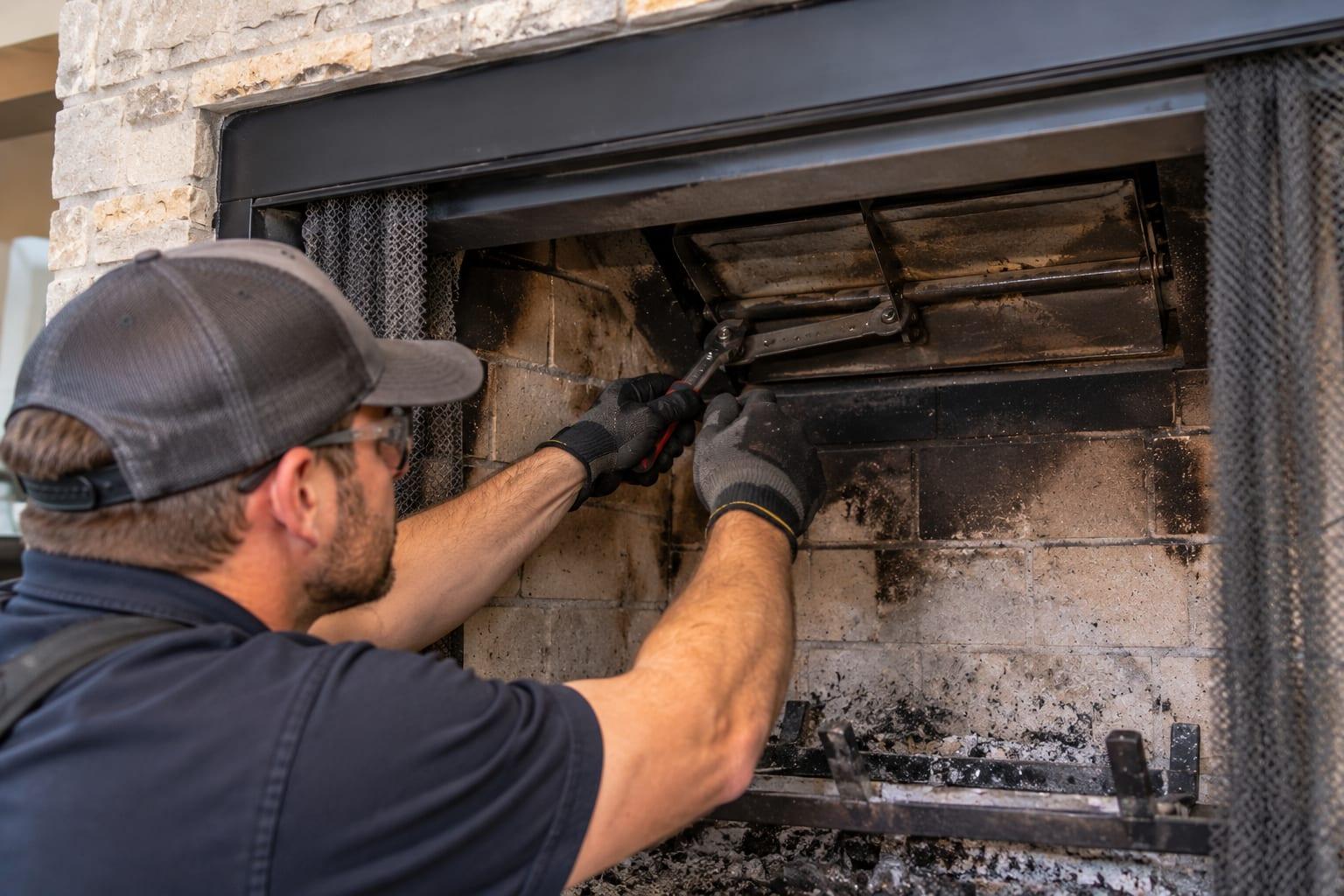
The damper is the metal plate or lid that opens to let smoke out when a fire is burning and closes to keep outside air out when the fireplace isn't in use. A stuck chimney damper usually shows up as one of these problems:
- The handle, lever or chain won't move at all.
- The handle moves, but the plate above it doesn't.
- The damper opens only partway.
- The damper closes but doesn't seal, or won't stay latched open.
Most fireplaces have a throat damper just above the firebox. Others have a top-sealing damper at the top of the flue, worked by a cable or chain that runs down into the fireplace. Which kind you have depends partly on how the chimney was built, masonry or factory-built. Our guide to different types of chimneys explains how those systems differ.
Common signs of a stuck or failing damper
What homeowners usually notice
- Smoke rolls into the room soon after a fire is lit.
- A cold draft or outdoor smell comes from the fireplace even when the damper is supposed to be closed.
- Rust flakes or orange-brown grit collect on the firebox floor.
- The handle squeaks, grinds or feels gritty when you move it.
- The plate rattles or flaps in the wind.
- A top-damper cable hangs slack or no longer pulls the lid shut.
- Water drips or stains appear in the firebox after rain.
What can cause a damper to stick
The causes below are possibilities. Only a look at the damper and flue can confirm which one applies to your fireplace, and sometimes more than one is involved.
Rust from water getting in
Rust is one of the most common reasons a damper seizes. Water can come down an uncapped flue, through a cracked crown, or past worn flashing. Once the hinge, pivot or frame rusts, the plate binds in place. Rust can also eat through the plate so that it no longer seals.
Soot and creosote buildup
Creosote and soot can coat the damper and its track until the parts gum together. This is more likely when the chimney hasn't been swept in a while.
Warped or bent parts
Repeated heat can warp a thin damper plate so it no longer sits square in its frame. A handle or linkage that has been forced can bend and stop moving the plate.
Debris sitting on the damper
Fallen masonry, leaves or an animal nest can rest on top of the damper and pin it shut. If debris is the problem, the flue above may be obstructed too, which is covered under blocked chimney flue.
A failed cable, spring or seal on a top damper
Top-sealing dampers depend on a cable and a spring. A stretched or broken cable, a worn spring, or a hardened gasket can leave the lid stuck open or shut.
How urgent is it?
| Feature | What to expect | What to do |
|---|---|---|
| Stuck closed | Smoke and carbon monoxide have nowhere to go but into the house. | Don't light a fire until it's repaired. |
| Stuck partly open | The fire may smoke or burn poorly, and fumes can spill into the room. | Don't use the fireplace until it has been checked. |
| Stuck open | No smoke risk, but heated or cooled air escapes, and rain, debris or animals can come down. | Plan a repair soon. It's usually not an emergency. |
Stuck closed
- What to expect
- Smoke and carbon monoxide have nowhere to go but into the house.
- What to do
- Don't light a fire until it's repaired.
Stuck partly open
- What to expect
- The fire may smoke or burn poorly, and fumes can spill into the room.
- What to do
- Don't use the fireplace until it has been checked.
Stuck open
- What to expect
- No smoke risk, but heated or cooled air escapes, and rain, debris or animals can come down.
- What to do
- Plan a repair soon. It's usually not an emergency.
If smoke is filling the room
Don't add more fuel, and don't reach into the fireplace to force the damper. Open windows, get people and pets away from the smoke, and let the fire burn down. If anyone feels dizzy, nauseated or gets a headache, or a carbon monoxide alarm sounds, get everyone outside and call emergency services. If anyone has a headache, dizziness or nausea while an appliance runs, turn it off if you can, get everyone outside and call 911.
Heavy creosote around the damper is also a warning about the flue. That same buildup is what fuels a chimney fire, so a gummed-up damper is a good reason to have the whole chimney looked at.
What not to do
- Don't hammer or pry the damper. Rusted parts can snap and fall, and the frame can crack.
- Don't spray lubricant on a damper that is warm or has been near a recent fire. Many household lubricants are flammable.
- Don't light a fire to try to free the damper with heat.
- Don't climb onto the roof to work a top-sealing damper loose.
- Don't pull out the damper and keep using the fireplace without one.
Some fireplace upkeep is reasonable to do yourself, but freeing seized metal inside a flue isn't one of those jobs. Our guide to DIY vs chimney cleaning covers where that line usually falls.
How a stuck damper is fixed
What a repair visit looks like
Inspect the damper and flue
We check the plate, frame, handle and linkage, plus what is sitting above the damper.
Find the cause
We look for rust, buildup, warping, debris or a failed cable, and for where any water is getting in.
Explain the options
You get a clear explanation of what we found and a free estimate before any work starts.
Make the repair
We free or replace the damper and deal with whatever made it stick.
Depending on what the inspection shows, the fix may be cleaning and freeing the existing damper, replacing a bent handle or linkage, replacing a rusted-out throat damper, or installing a top-sealing damper when the original can't be saved. Our chimney damper repair covers all of these.
If water caused the rust, a new damper will rust again unless the leak is stopped. That can mean a chimney cap, crown repair, flashing repair or waterproofing, all handled through our chimney repair service.
Is your damper fully open?
Not always. A damper can look open from the firebox while the plate is only partway up, and that is enough to make a fire smoke. You can check before lighting a fire:
Quick checks with the fireplace cold
- Push the handle all the way to its open stop. It should move freely to the end of its travel.
- Use a flashlight to look up past the damper. You should see a clear opening, not the edge of the plate.
- Hold a lit match or incense stick in the firebox. The smoke should pull up the chimney, not drift into the room.
- On a top-sealing damper, the cable should be latched in its open position and not hanging slack.
If the handle stops short, the plate stays in view, or smoke drifts back toward you, treat the damper as stuck and don't light a fire.
Related services
A damper repair is often a single visit, and you can read how chimney damper repair works in more detail. While we're there, we can sweep the flue, remove blockages or nests, and install a cap or animal screen to keep water and debris off the new damper.
Get a stuck damper checked
Same-day visits are available where the schedule allows, and emergency calls are accepted. Request an estimate to get started.