When birds move into the vent
A dryer vent runs from the back of the dryer, through a wall or the roof, and ends at a hood or cover outside. That outlet is a small, sheltered and often warm opening, which is exactly what many birds look for when they build a nest. Once a nest is inside, the exhaust has nowhere to go. Lint collects behind the nesting material, the dryer runs hotter and longer, and the duct slowly turns into a clogged, flammable channel.
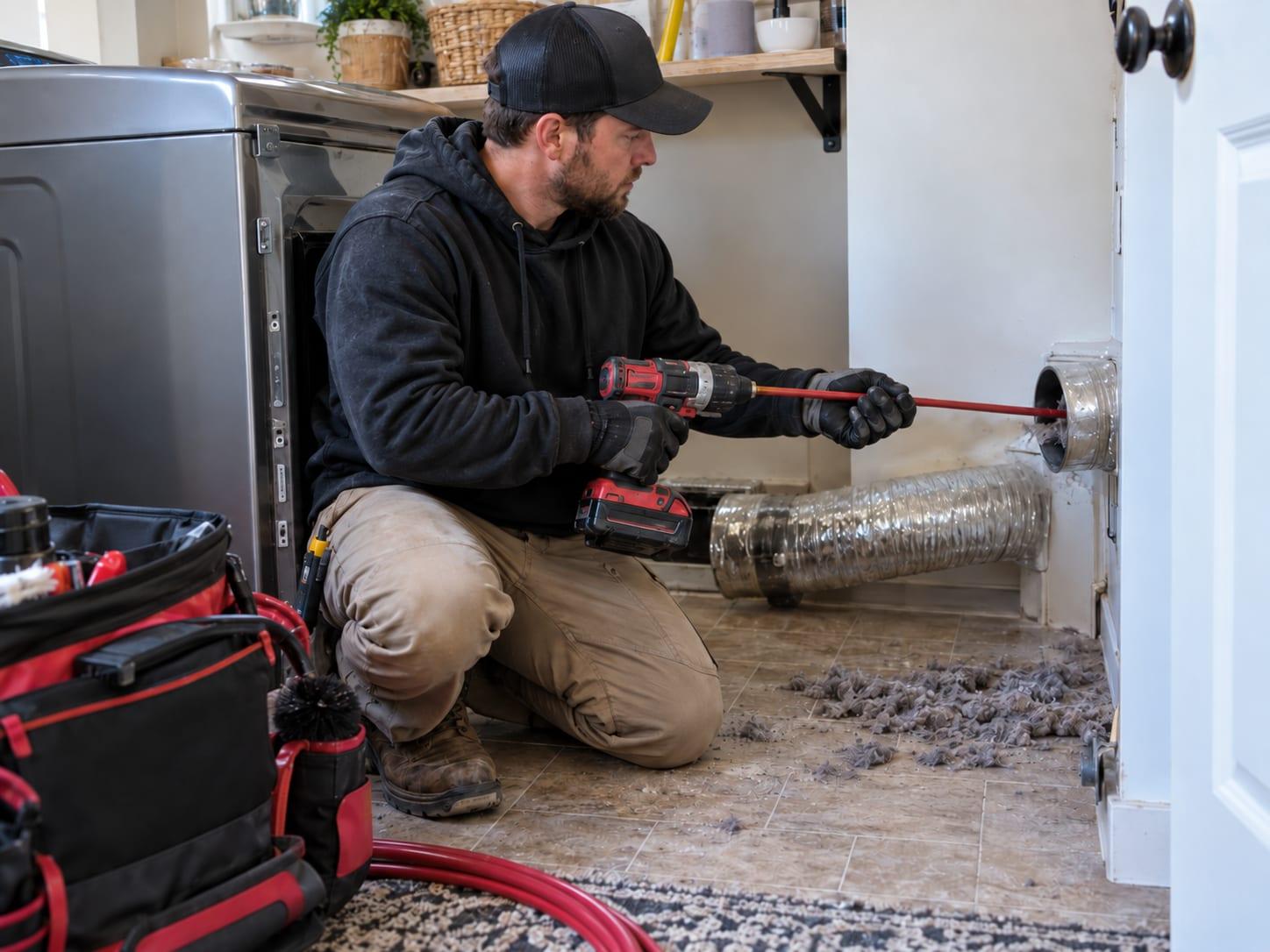
You may only notice the sounds. Often the first real sign is that laundry stops drying properly.
Signs of birds in a dryer vent
What homeowners usually notice
- Chirping, fluttering or scratching near the dryer, inside the wall or at the outside vent
- Twigs, grass, straw or feathers sticking out of the vent hood
- Birds flying in and out of the vent opening
- Bird droppings on the wall or ground below the vent
- A vent flap that stays open or no longer moves when the dryer runs
- Little or no air coming out of the outside vent while the dryer is on
- Clothes that take longer to dry, or a dryer and laundry room that feel unusually hot
- A musty or burning smell during a cycle
Slow drying has other causes too, such as lint buildup or a crushed duct. If you aren't sure birds are the reason, read about what causes a dryer that takes too long to dry to compare the symptoms.
Possible causes
An inspection of the vent opening and the duct run confirms how the birds got in. These are the usual possibilities:
- A missing or broken flap on the vent hood leaves the opening wide open.
- A flap stuck open with lint, so it never closes between loads.
- Cracked, bent or loose louvers on the outside cover that leave gaps large enough for a bird.
- A cover that has come loose from the wall or roof, exposing the duct end.
- A vent that sits unused for long stretches, giving birds quiet time to build.
- A roof vent with a damaged cap, which is harder to see from the ground.
How urgent it is, and when to stop using the dryer
Stop using the dryer if you see these signs
Stop running the dryer if no air comes out of the outside vent, if you smell burning, or if the dryer or laundry room gets much hotter than usual. Nesting material and trapped lint are both flammable, and a fully blocked vent sends heat back toward the dryer.
With a gas dryer, a blocked vent can also keep exhaust from leaving the house properly, which is one more reason not to keep running loads. If air still flows and you only hear birds at the opening, the problem is less urgent, but it should still be handled soon. Nests usually grow, and lint builds up quickly behind them.
What normally fixes it
How a bird blockage is usually handled
Inspect the opening and the run
The outside cover is checked first. The duct is then checked from end to end to see how far the nesting material and lint reach.
Remove the nest and debris
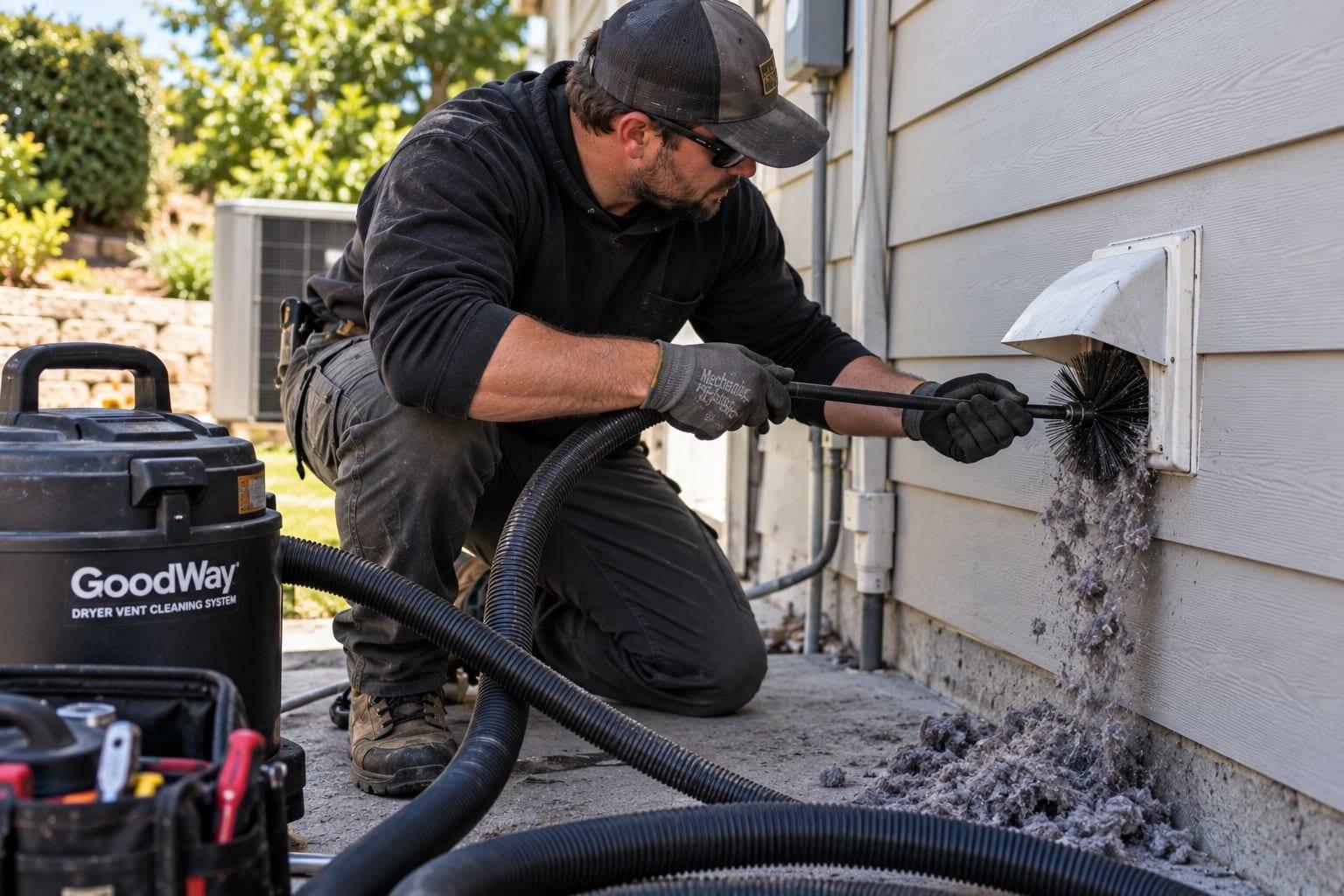
Nesting material, feathers and droppings are cleared from the hood and the duct, including bends where material tends to collect.
Clean out the lint
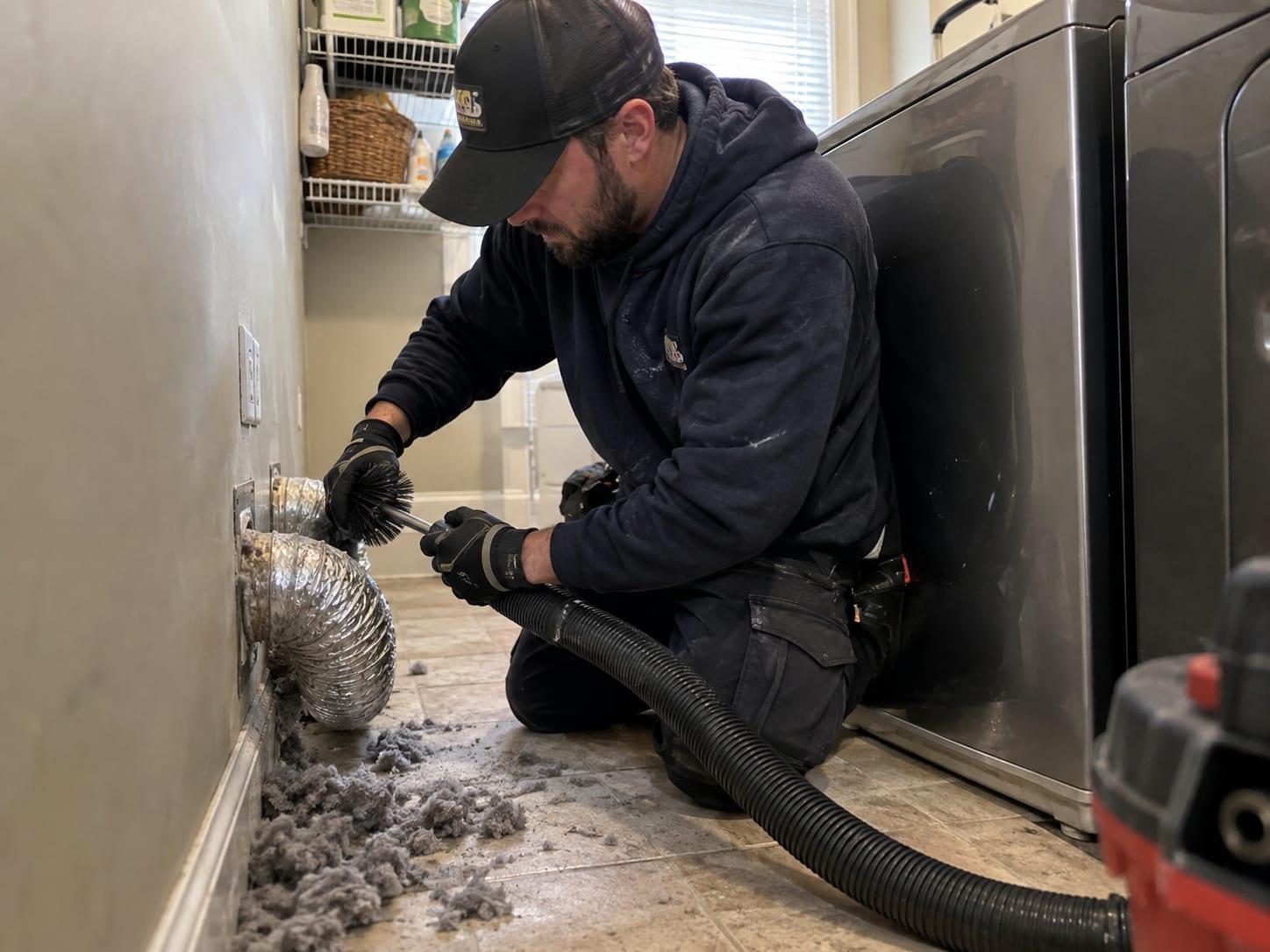
Lint trapped behind the nest is removed along the full length of the vent, so the duct is clear and not just the opening.
Check the airflow
With the dryer running, airflow at the outside vent is checked to confirm the exhaust moves freely again.
Close the entry point
A damaged or missing cover is replaced with one that keeps birds out but still lets air and lint escape.
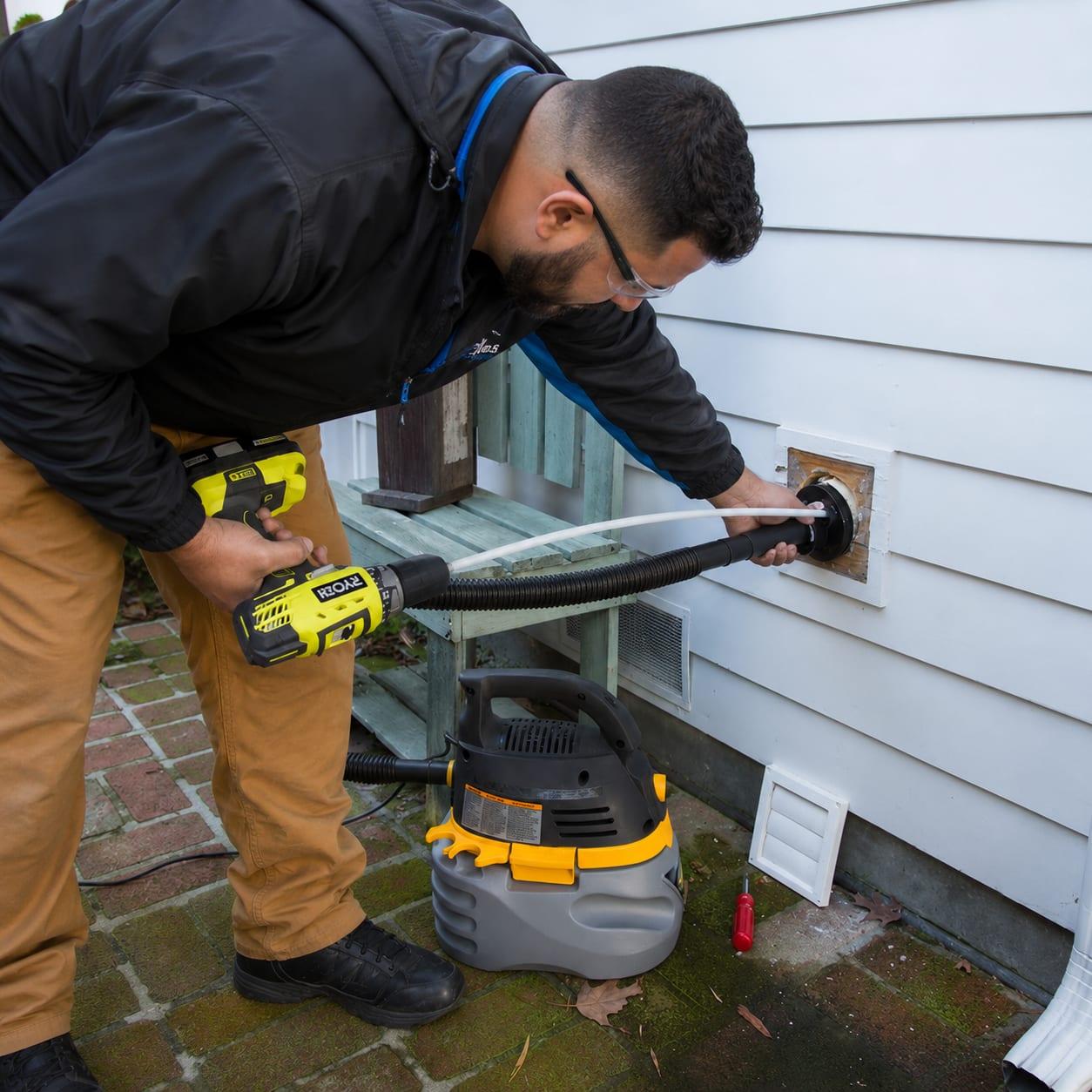
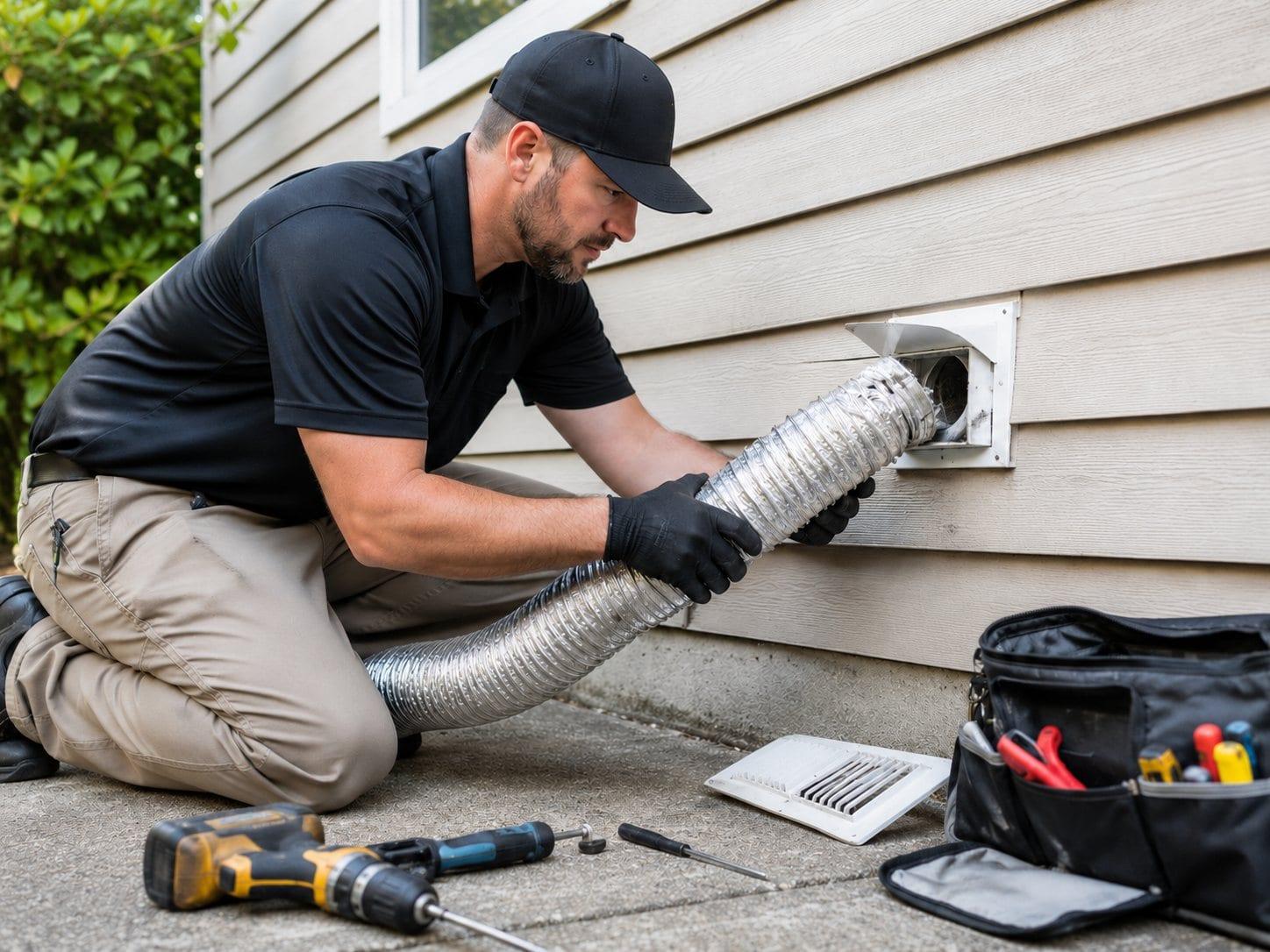
In most homes the core fix is dryer vent cleaning together with blockage removal, because a nest almost always traps lint behind it. If the hood or louvers are broken, dryer vent cover replacement is what keeps the birds from moving back in. Damaged duct sections can be repaired or replaced during the same visit, and roof-mounted vents are handled as well.
What not to do
- Don't run the dryer to drive the birds out. The heat and lint make the blockage worse and raise the fire risk.
- Don't reach deep into the duct or push a stick into it. That tends to pack the nest further in.
- Don't use poisons, sprays or chemicals in the vent. They end up in the duct and in the air near your laundry.
- Don't seal the vent opening shut. The dryer must be able to exhaust outside.
- Don't cover the opening with fine mesh or window screen. Lint clogs it quickly and can block the vent just like a nest.
Related services
If your dryer also seems slow when there are no birds around, find out how dryer vent cleaning works and what a full cleaning covers. Airflow testing, lint removal and vent rerouting are also available when the original run is part of the problem. Commercial and property-manager work is offered, so rental units with shared or hard-to-reach vents can be scheduled too.