When smoke comes into the room instead of going up the chimney
A working fireplace pulls air in through the opening and sends smoke and hot gases up the flue. That steady upward pull is called draft. When draft is weak, blocked or reversed, smoke rolls out over the top of the opening, the room smells like a campfire, and soot shows up where it shouldn't. Sometimes it happens only while the fire is being lit. Sometimes it happens every time the fireplace is used.
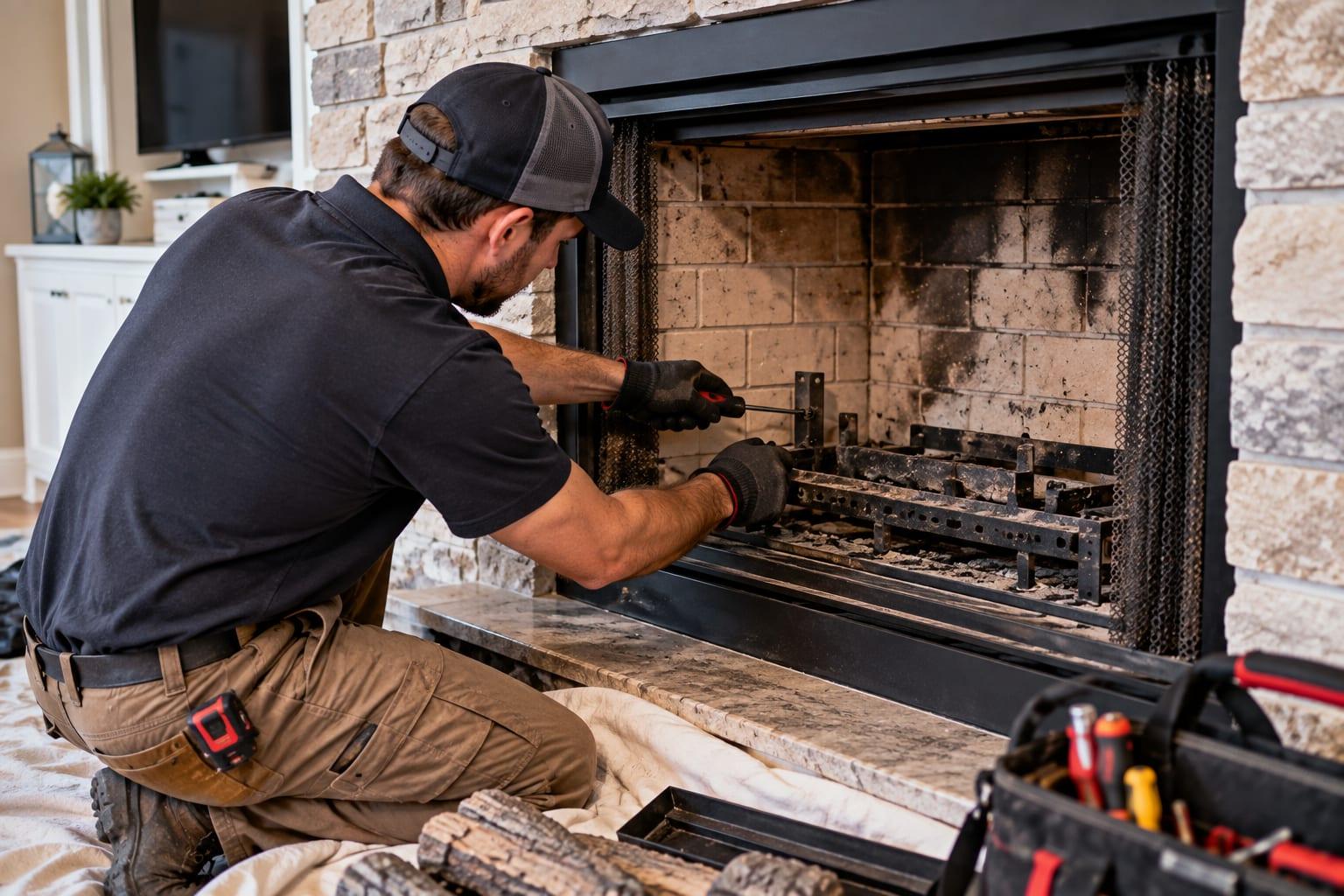
Common signs of a smoky fireplace
Signs the chimney isn't drafting well
- Smoke curls out of the top of the fireplace opening, especially when the fire is first lit or burning down
- A smoky smell lingers in the room long after the fire is out
- Black soot stains on the brick, stone or wall above the opening
- The fire is hard to start, struggles to stay lit or smolders instead of burning cleanly
- Puffs of smoke come into the room when an exhaust fan runs or an outside door opens
- Glass doors or a glass-front unit soot up quickly
Possible causes of a smoky fireplace
Several different problems can produce the same smoky result, and more than one can be at work at the same time. These are possibilities, not a diagnosis. An inspection of the firebox, damper, smoke chamber and flue is what confirms which one applies.
- A closed or partly closed damper. A damper that sticks, is warped or doesn't open fully restricts the flue opening.
- A blocked flue. Creosote buildup, fallen debris, leaves or an animal nest can narrow the flue or close it off.
- A cold flue. A cold column of air sitting in the chimney can push down against rising smoke until the flue warms up.
- Negative air pressure in the house. Kitchen and bath exhaust fans, a running dryer or a very tightly sealed home can pull air down the chimney.
- A damaged or rough smoke chamber. Cracked or poorly shaped masonry above the damper can create turbulence that pushes smoke back out.
- Size mismatches. A fireplace opening that is too large for the flue, or a chimney that is too short, may not draft well.
- Wind and cap problems. A missing or damaged chimney cap, or wind swirling around the chimney top, can cause downdrafts.
- A damaged liner. Cracks or gaps in the flue liner can disrupt draft and let smoke escape where it shouldn't.
- Wet or unseasoned wood. Green wood burns cool and produces more smoke than a weak draft can carry away.
How urgent it is, and when to stop using the fireplace
A puff of smoke during lighting on a cold day is worth noting. Smoke that comes into the room regularly is a reason to stop using the fireplace until it has been checked. Smoke carries combustion gases, including carbon monoxide, and the blockages and creosote that cause poor draft can also feed a chimney fire.
Get out first, then call
If a carbon monoxide alarm sounds, or anyone feels dizzy, sick or short of breath, get everyone out of the house right away and call 911 once you are outside. If you smell gas around a gas fireplace, leave the house first and call your gas utility from outside. Don't stop to put out the fire or open windows.
What normally fixes a smoky fireplace
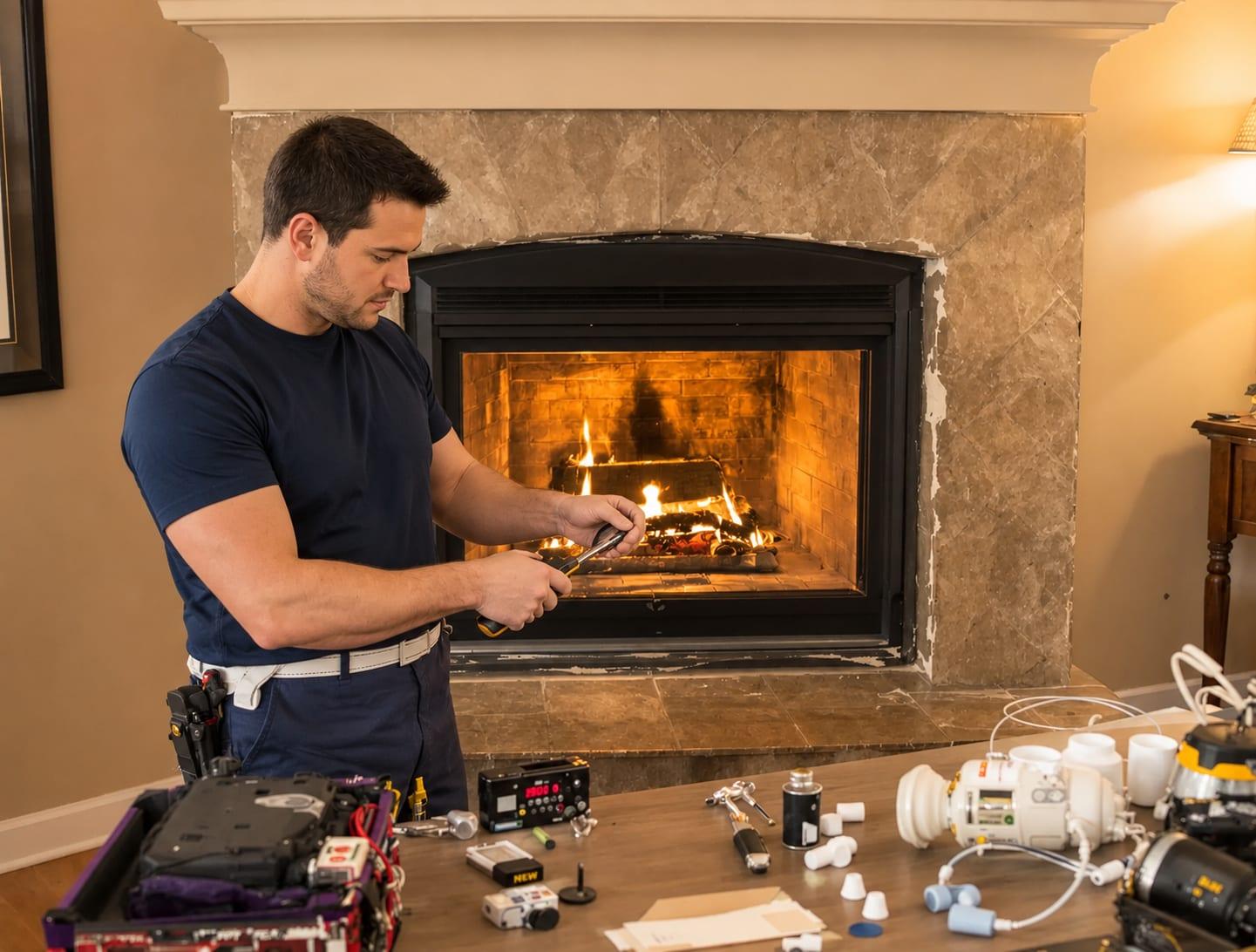
The fix depends on what the inspection finds. Most repairs start by clearing the flue and then correcting whatever is disrupting the draft. Our fireplace draft repair service covers that diagnosis and correction from start to finish.
How the work usually goes
Inspect
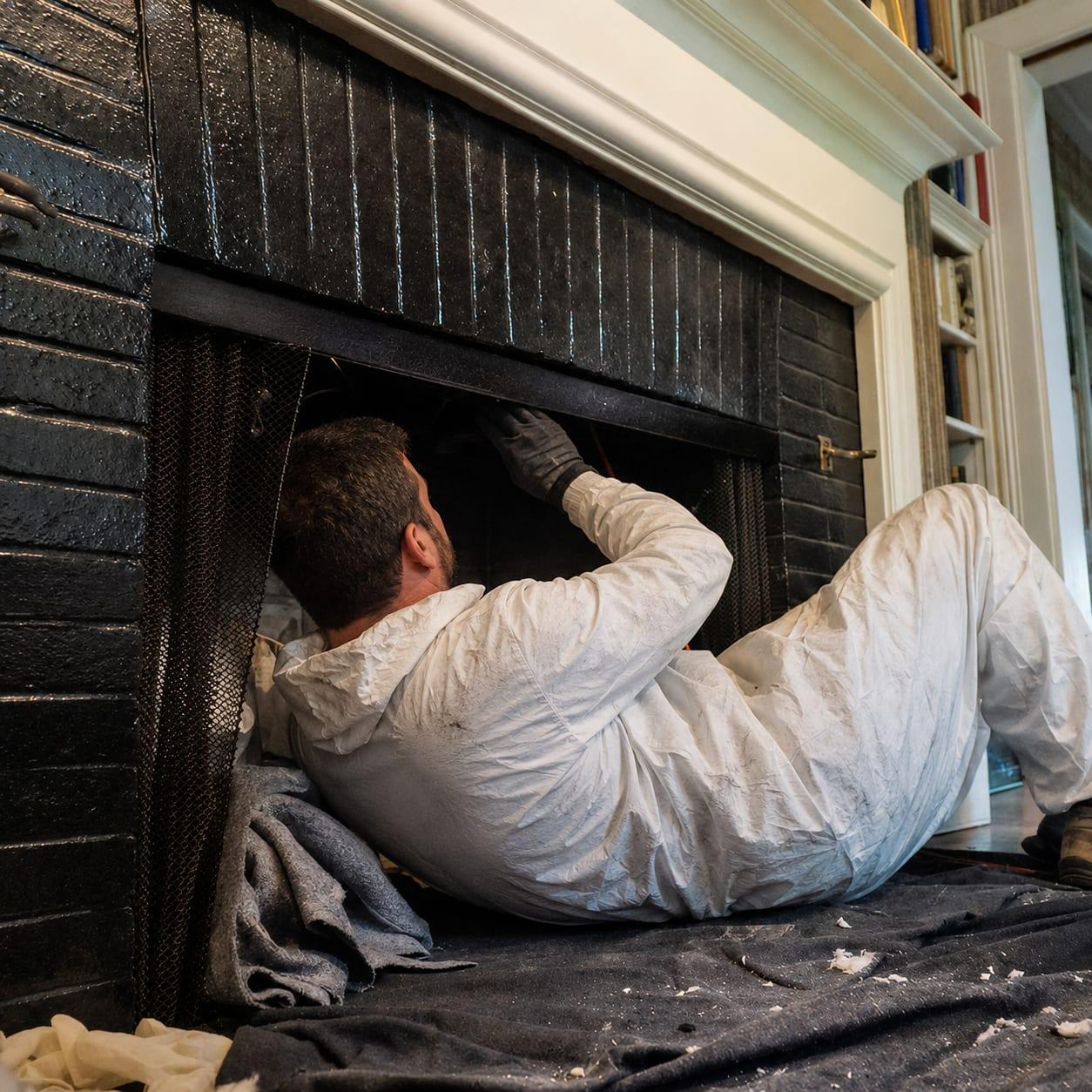
The firebox, damper, smoke chamber, flue and chimney top are checked, using a chimney camera where the flue needs a closer look.
Clear the flue
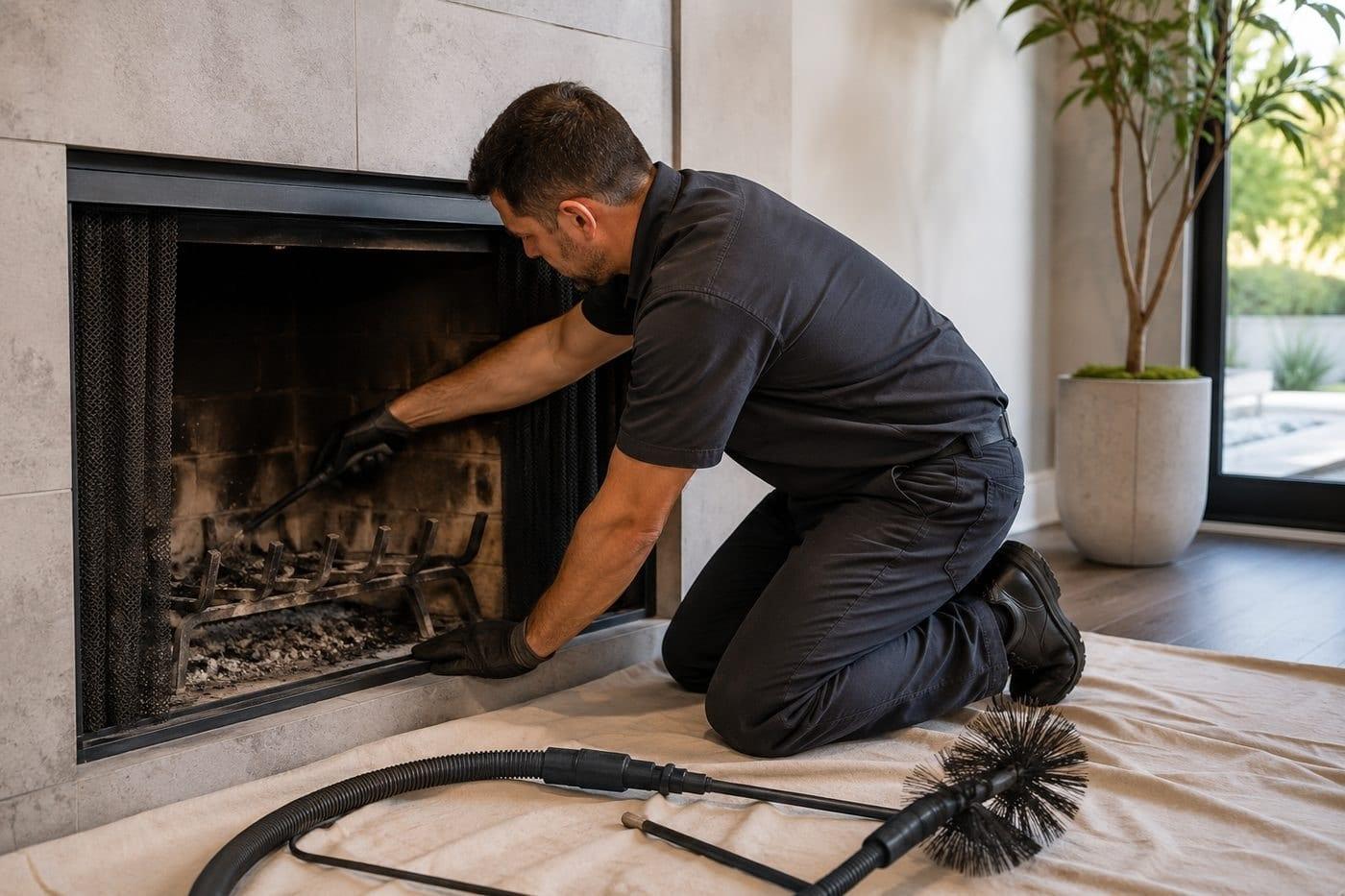
Creosote removal, blockage removal or nest removal opens the flue back up when buildup or debris is part of the problem.
Repair what's restricting draft
Depending on the findings, that can mean damper repair, liner repair or a new liner, or cap installation or replacement. A rough or cracked smoke chamber calls for smoke chamber repair.
Test the draft
The fireplace is checked again to confirm smoke is moving up and out the way it should.
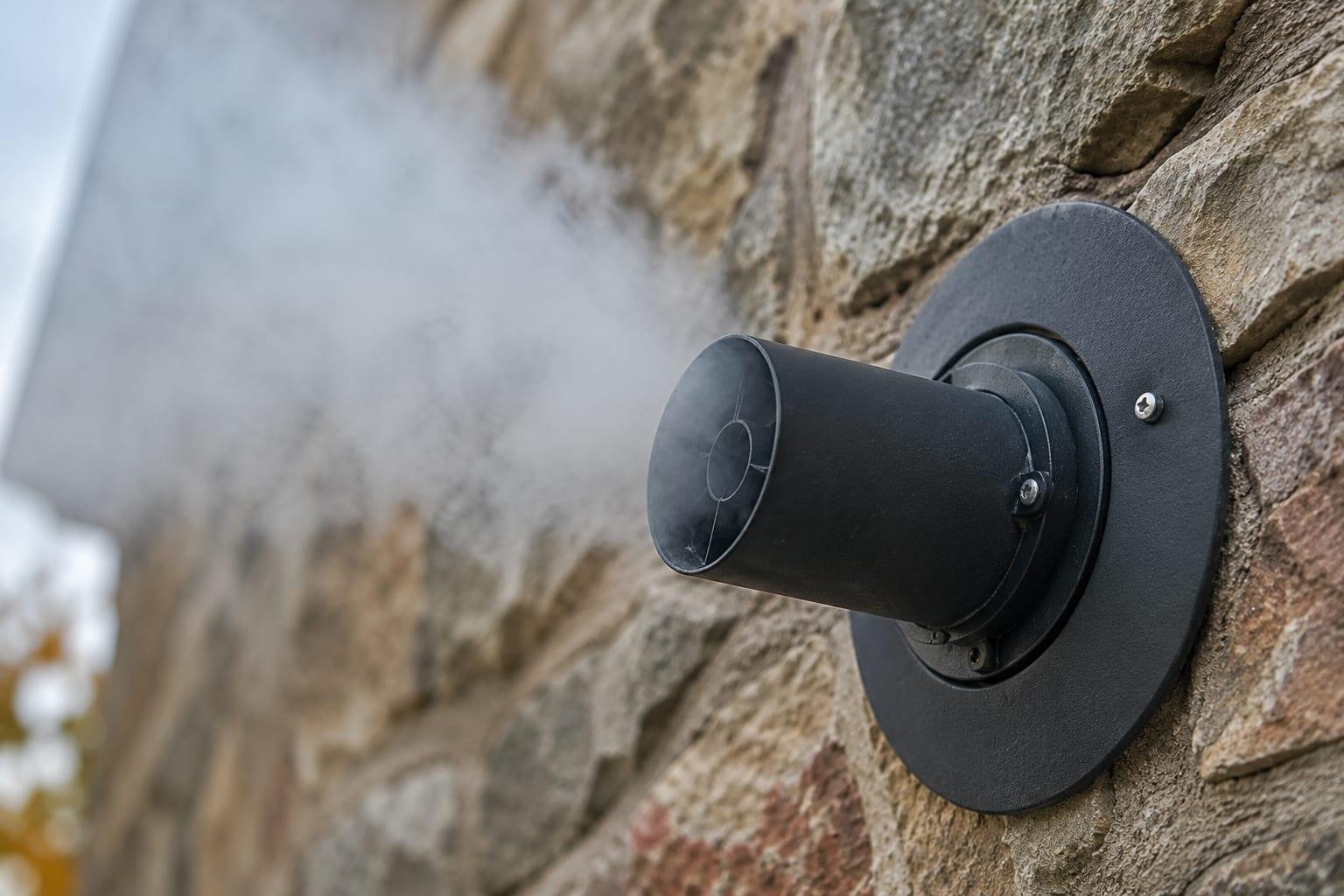
For gas fireplaces, the same idea applies. Venting, burner condition and log placement all affect how cleanly the unit burns, and our guide on when a gas fireplace needs cleaning covers the warning signs.
What not to do while it's smoking
- Don't keep building bigger fires to force the draft. More heat in a blocked or creosote-coated flue raises the fire risk.
- Don't use lighter fluid, gasoline or other accelerants to get a struggling fire going.
- Don't burn trash, cardboard, treated lumber or wet wood.
- Don't close the damper while embers are still glowing. If the fireplace has gas logs, leave the damper as the installer set it — vented gas logs need it open.
- Don't climb onto the roof to clear the chimney top yourself.
Related reading
For a broader look at what smoke, smells and stains can mean, read our guide to smoke Signals what your Chimney is trying to tell you. If an odor around a gas unit is the bigger worry, start with what causes gas fireplace smell. If an open fireplace that never drafts well has you thinking about a change, compare a fireplace insert vs freestanding wood stove.
Get the smoke going up, not out
Call or request an estimate to have a smoky fireplace in your San Jose home inspected and repaired.