FAQ
Frequently Asked Questions
Straight answers to the questions homeowners ask about chimney sweeping, inspections, leaks, gas fireplaces and dryer vents.
Questions Homeowners Ask
What is creosote, and why is it dangerous?
Creosote is the dark, tar-like residue that forms when wood smoke cools and condenses on the inside of the flue. It's flammable, and a thick or glazed layer can ignite into a chimney fire that damages the liner and masonry. Regular sweeping keeps it thin. Heavy or glazed deposits call for dedicated creosote removal. Burning dry, seasoned wood slows the buildup.
What happens during a chimney inspection?
The inspector checks the fireplace or stove, damper, smoke chamber, flue and liner, and the outside of the chimney: crown, cap, flashing and masonry. They look for buildup, cracks, gaps and water damage. Where the flue can't be seen clearly, a camera is run up inside it. Afterward you hear what was found and what, if anything, needs attention.
Do I need a chimney inspection when buying or selling a home?
It isn't always required, but it's worth doing whenever a home with a fireplace changes hands. A general home inspection usually sees only the firebox and the outside of the chimney, so problems inside the flue can go unnoticed. A chimney inspection for a home sale covers the full system, so buyers and sellers know where things stand.
Why does my fireplace smoke into the room?
Smoke spills into the room when the chimney isn't drawing well. The usual causes are a damper that isn't fully open, cold air sitting in the flue, or creosote and debris restricting it. Check the damper first. Then warm the flue by holding a lit roll of newspaper up near the damper for a moment before lighting the fire. Only try this once the flue has been checked clear of blockages and creosote; if smoke comes into the room, stop adding fuel and don't relight. If smoke still comes back, diagnosing and fixing a poor draft finds the cause.
Why does my chimney smell, especially on warm or humid days?
Chimney odors usually come from creosote deposits, moisture in the flue, or debris and nesting material. Humid air makes them stronger, and so does a house that pulls air down the chimney. A sweep removes much of the source, and a cap and a closed damper keep rain and outside air out. If the fireplace has gas logs, leave the damper as the installer set it — vented gas logs need it open. When the smell lingers after cleaning, tracking down and removing chimney odors targets the cause.
Can birds or animals get into a chimney?
Yes. An uncapped chimney is an easy way in for birds, squirrels and raccoons looking for a place to nest. Don't light a fire if you hear movement or suspect a nest, because it can trap the animal and fill the room with smoke. We handle removing animals and nests and can fit a cap or screen afterward.
What does a chimney cap do?
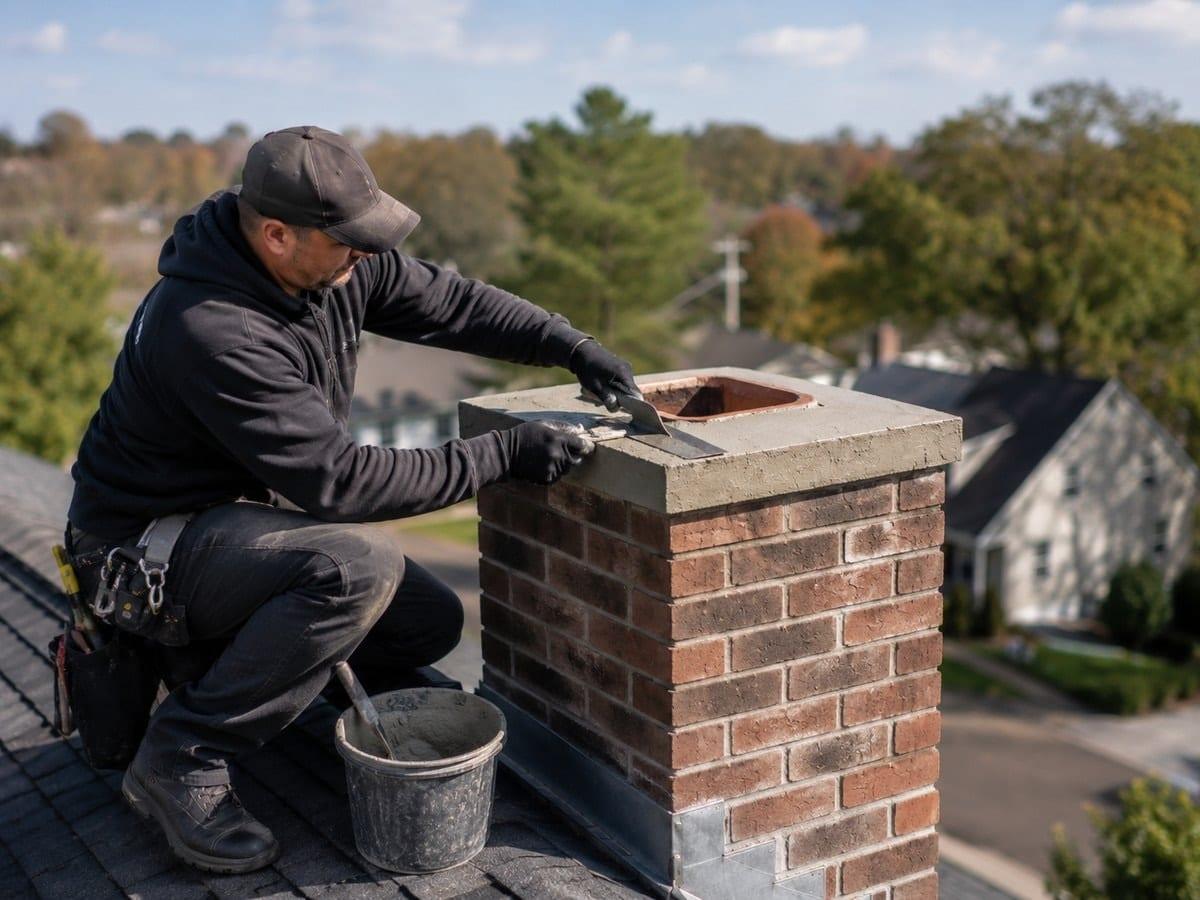
A chimney cap covers the top of the flue to keep rain, animals and debris out. Its mesh also helps stop sparks from landing on the roof. Without a cap, water runs straight down onto the damper and into the smoke chamber, which speeds rust and masonry damage. Installing a chimney cap is one of the simplest ways to protect the rest of the chimney.
Why is water leaking around my chimney?
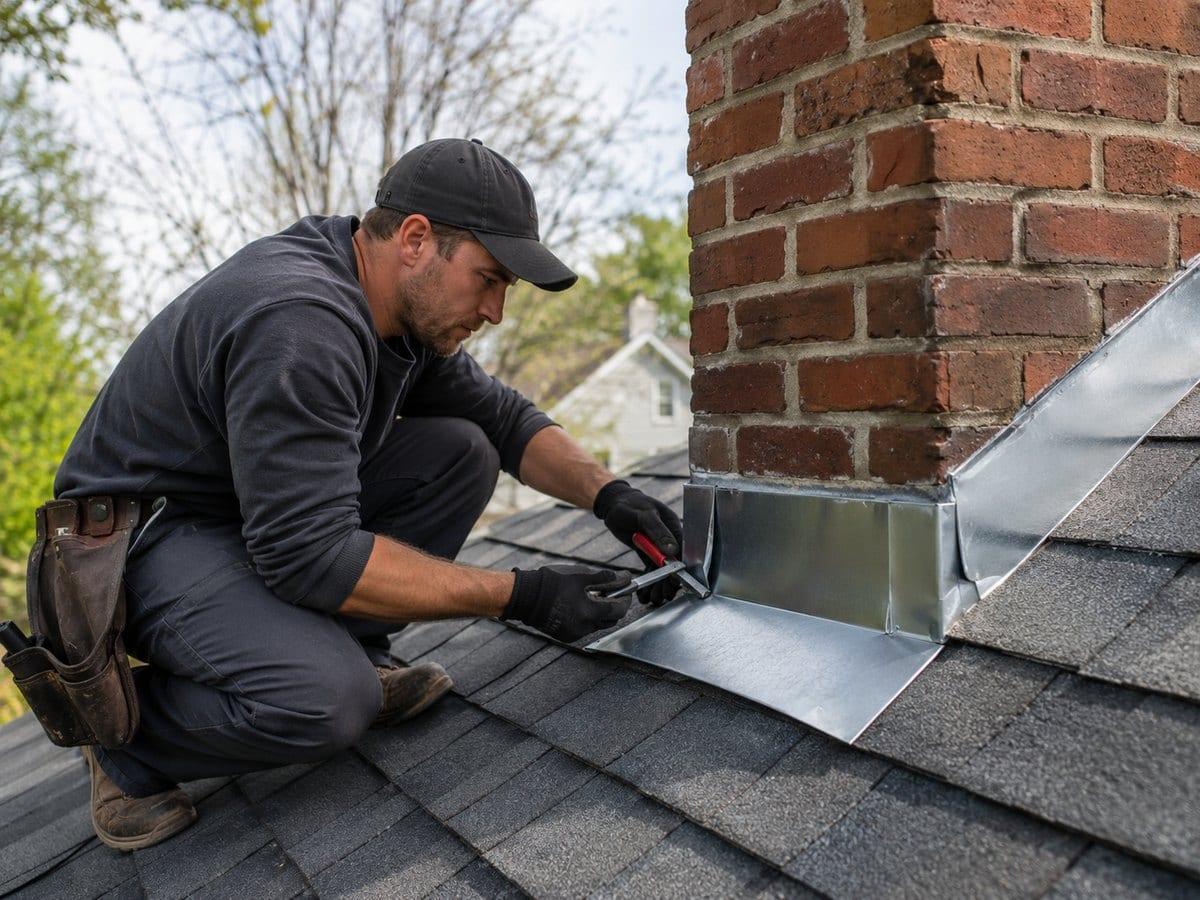
Chimney leaks usually come from worn flashing where the chimney meets the roof, a cracked crown, a missing cap, or porous brick and mortar. Common signs are stains on the ceiling or wall beside the chimney, a damp smell and white deposits on the brick. Finding the source comes first. The fix might then be new flashing, crown repair, a cap or waterproofing.
Does a gas fireplace need regular service?
Yes. Gas fireplaces don't build up creosote, but the burner, pilot, logs, glass and venting still need cleaning and checking so the flame burns properly and exhaust leaves the house. Having it serviced once a year before the season is a sensible habit. If you ever smell gas, leave the house and call your gas utility from outside.
Can a wood-burning fireplace be converted to gas?
Yes, in many cases. Depending on the fireplace, the conversion might be gas logs in the existing firebox, a gas insert with its own liner, or a new gas unit, and each option needs a gas line to the fireplace. Converting a fireplace to gas starts with checking the condition of the existing chimney.
How do I know my dryer vent needs cleaning?
The usual signs are clothes that need more than one cycle to dry, a dryer or laundry room that gets unusually hot, a burning smell, and lint collecting around the outside vent flap. If you smell burning, turn the dryer off and unplug it until the vent is checked. Lint in the duct restricts airflow and is flammable. Long runs, roof vents and ducts with many bends clog faster than short, straight ones.
Do you clean wood stoves and fireplace inserts?
Yes. Wood stoves, their connector pipes and fireplace inserts are cleaned along with the flue they vent into. Creosote builds up in them the same way it does above an open fireplace, and inserts can hide buildup that isn't visible from the room.
Free Estimates
Still have a question?
Send it with a few details about your system. We’ll answer before anything is booked.