On this page
What a chimney cap does and what installing one involves
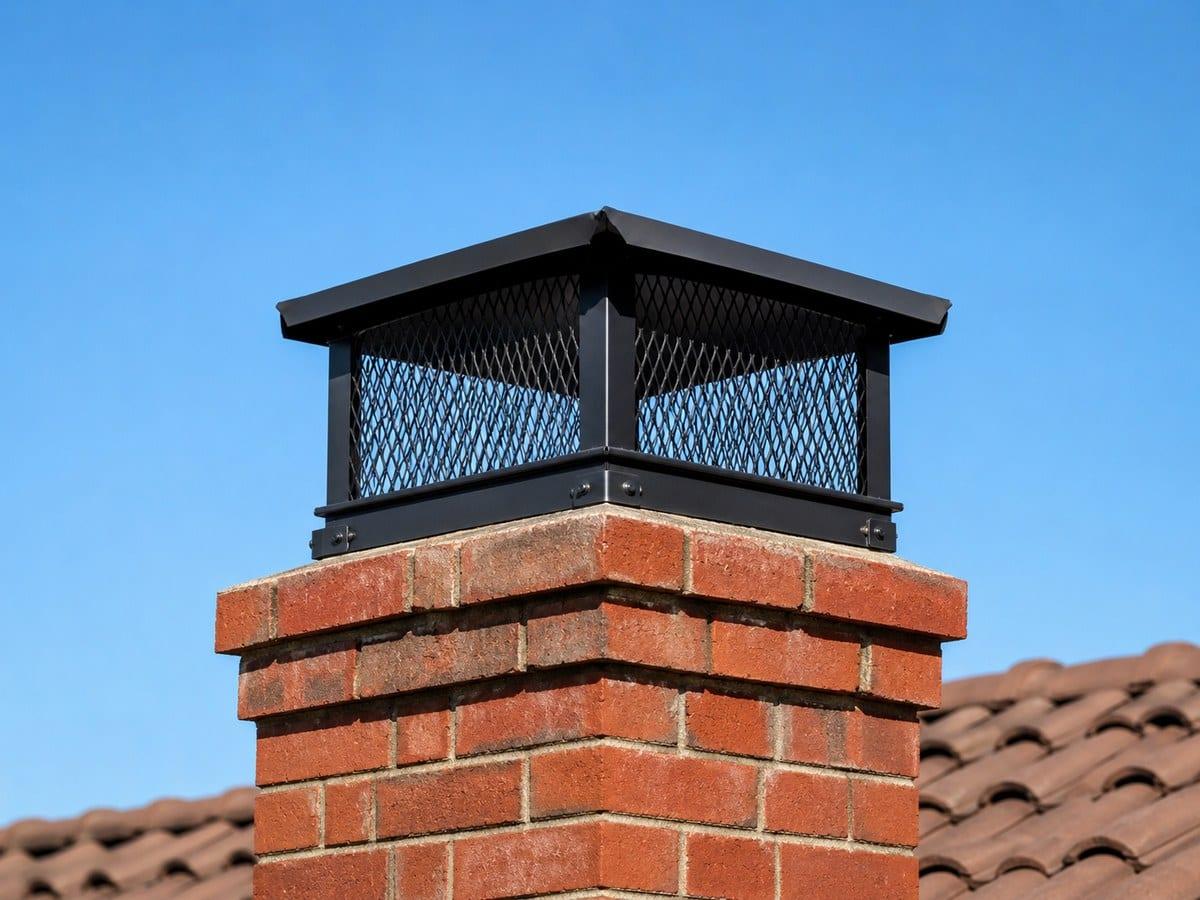
A chimney cap is a metal hood with mesh sides that mounts on top of the flue or over the whole chimney crown. The hood sheds rain away from the flue opening. The mesh keeps out birds, squirrels, raccoons and blowing leaves, and on a wood-burning chimney it also works as a spark arrestor, catching embers before they land on the roof.
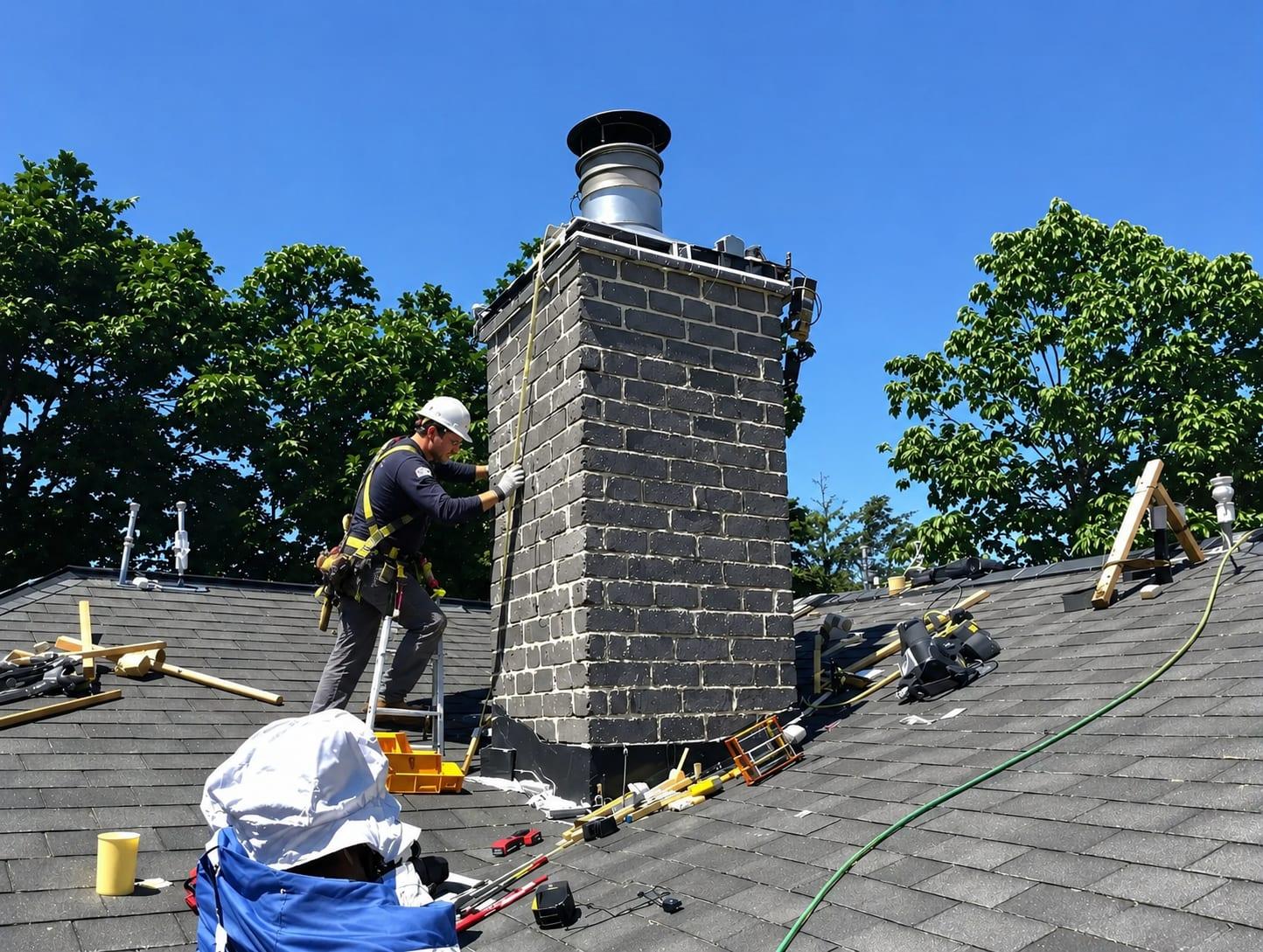
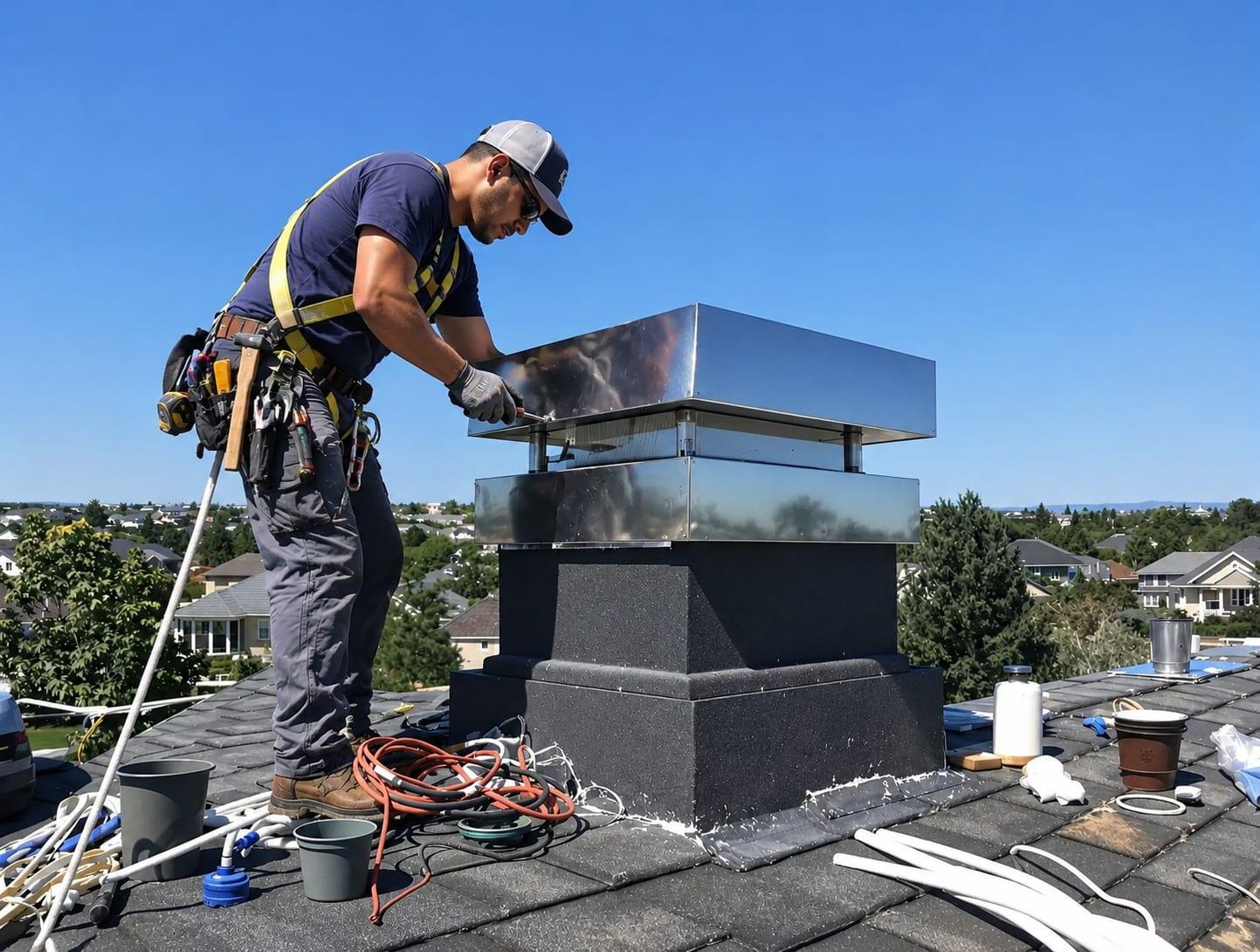
Installing one means measuring the flue or crown, choosing a style and material that suit the chimney and the fuel it burns, and fastening the cap firmly enough that wind can't lift it off. Chimney cap replacement follows the same steps, with the old, rusted or bent cap removed first.
Signs the chimney needs a cap, or a new one
- There is no cap at all, just an open flue tile or pipe.
- Water shows up in the firebox, the damper is rusting, or the fireplace smells damp after rain.
- You hear chirping, scratching or movement in the chimney.
- Twigs, leaves, nest material or droppings fall onto the grate or the smoke shelf.
- The existing cap is rusted through, bent, loose or leaning, or it blew off in a storm.
- The mesh is torn, missing, or so clogged with soot and creosote that smoke struggles to get out.
Water in the chimney doesn't always come from the open flue. A cracked crown or failing brick can let it in too, so it's worth reading what causes a cracked chimney crown and how it's fixed. If the masonry itself is soaking up water, a cap works best alongside chimney waterproofing.
Chimney nest removal comes before the cap
A cap installed over an occupied flue traps the problem inside. If there's an animal or nesting material in the chimney, it has to be cleared first: the animal leaves or is removed, the nest material is pulled from the flue, smoke shelf and damper area, and only then is the cap fitted so nothing can get back in.
Some birds that nest in chimneys, such as chimney swifts, are protected under federal law, which can affect when an active nest may be removed. That's one more reason to have the flue checked before anyone starts pulling material out.
Dangers of animals in a chimney
- A nest can block the flue, sending smoke and carbon monoxide back into the house the next time the fireplace or a vented appliance runs.
- Dry twigs, grass and leaves are fuel, and a nest sitting near a fire can ignite.
- Droppings and nesting debris bring odors, insects and mites into the home.
- Animals that get trapped and die in the flue leave a strong, lasting smell.
- Scratching and nesting can damage the damper and the flue lining; if that happens, see how chimney liner repair works.
Don't try to smoke an animal out
Lighting a fire to drive out a bird or animal can trap it, set the nest alight and push smoke into the house. Keep the damper and fireplace doors closed and get in touch to have it removed. Only close it once the fireplace is completely cold and no stove, furnace or water heater vents into that flue.
What the visit involves, step by step
From estimate to finished cap
Estimate
You request an estimate and describe what you're seeing: no cap, a damaged cap, water, or animal sounds. Estimates are free.
Measuring the chimney
We check the top of the chimney and measure the flue tile, liner or crown so the cap fits snugly rather than sitting loose.
Clearing the flue
Any animals, nests or debris are removed before the cap goes on, so nothing gets sealed inside.
Choosing the cap
We match the style and material to the chimney type and to what you burn: wood, gas or pellets.
Installing and securing
The cap is fastened to the flue or crown and checked for a tight fit, and we make sure the mesh and hood leave the flue room to draft.
Cap styles, materials and fuel types
| Style | How it mounts | Where it's used |
|---|---|---|
| Single-flue (liner) cap | Clamps or bolts onto one flue tile or the top of a liner | Chimneys with one flue, or one flue that needs its own cap |
| Multi-flue or crown-mount cap | Sits over the crown and covers several flues at once | Chimneys with more than one flue opening |
| Termination cap for prefab chimneys | Attaches to the top of a factory-built chimney pipe | Metal, factory-built chimney systems |
Masonry and factory-built chimneys take different caps. If you're not sure which one you have, our guide to masonry vs prefab chimneys explains how to tell.
Materials
- Stainless steel resists rust well and is a common choice for most chimneys.
- Copper lasts a long time and weathers to a darker finish.
- Galvanized steel costs less up front but tends to rust sooner.
Fuel type matters
On a wood-burning fireplace or stove, the mesh doubles as a spark arrestor, and it collects soot and creosote over time, so it needs checking when the chimney is swept. Gas fireplaces and gas appliances have their own venting needs, and the cap has to let the vent work as designed. Gas fireplace and gas appliance work is offered, and we work on all major brands. Pellet stove vents also take caps suited to that appliance.
Safety and upkeep after the cap is on
A cap keeps things out of the chimney, but it doesn't replace sweeping or inspection. Creosote still builds up inside a wood-burning flue, and a mesh screen packed with soot can choke the draft and push smoke back into the room. Have the cap and mesh looked at whenever the chimney is cleaned, and check it from the ground after strong winds for any lean or missing pieces.
Some problems can't wait for a routine visit, such as smoke entering the house, falling brick or a loose cap. Our guide on signs a chimney needs immediate repair covers what to watch for.
Booking cap installation
Estimates are free. 24-hour service runs seven days a week, and emergency calls are accepted, which helps when an animal is stuck in the flue. Commercial and property-manager work is offered too. Call or request an estimate to get started.
If you're nearby, there are also pages for chimney cap installation in Saratoga and chimney cap installation for homes in Fremont.
Related work covered on this page
- Chimney Cap Replacement