On this page
What firebox repair covers
The firebox is the chamber where the fire actually burns: the floor, back wall and side walls behind the fireplace opening. In a masonry fireplace it is usually built from firebrick set in refractory mortar, which is made to tolerate much higher heat than ordinary brick and mortar. In a factory-built fireplace, the firebox is usually lined with refractory panels instead of loose brick.
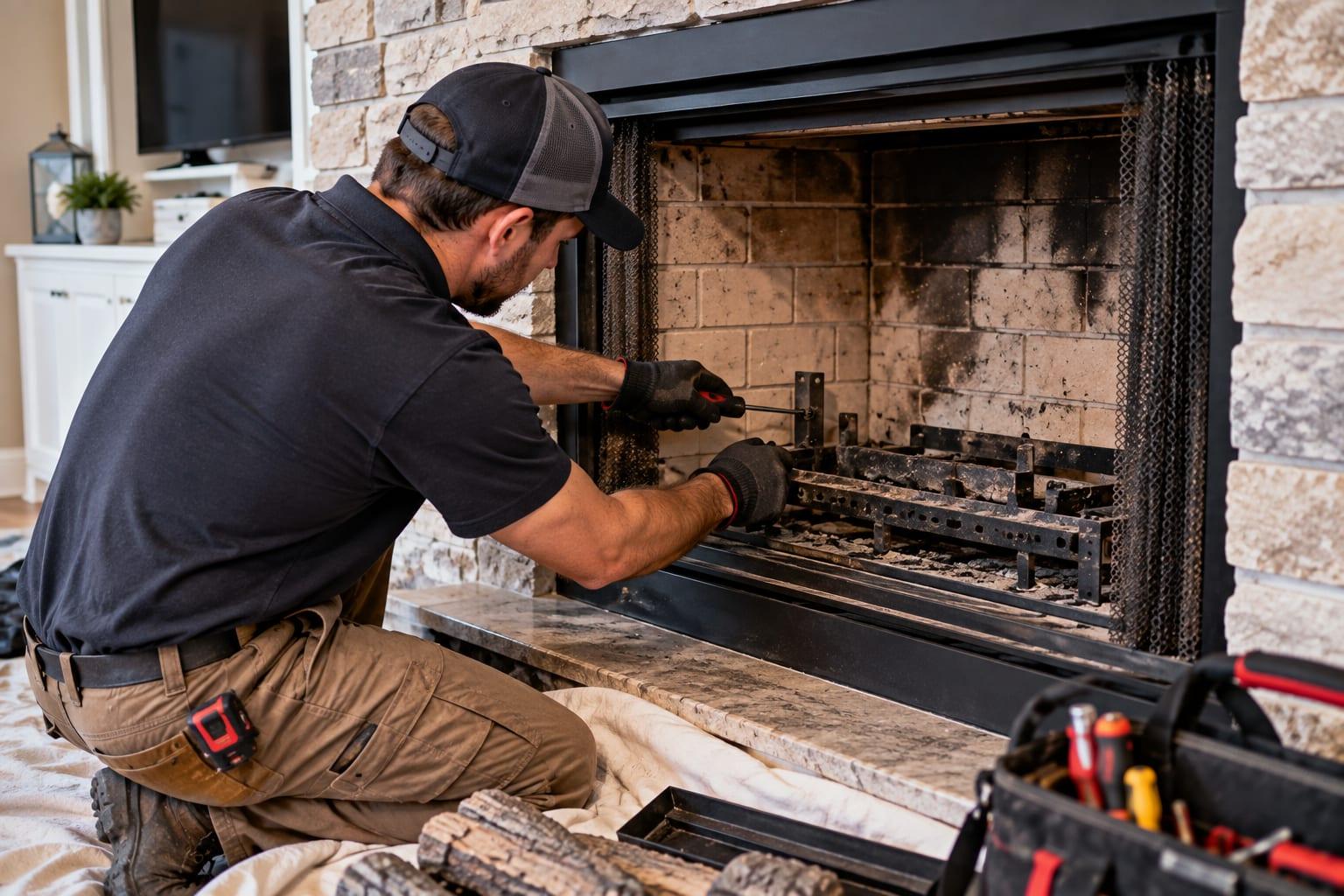
Firebox repair means restoring that lining so it is solid, sealed and able to hold heat. Depending on the damage, that can mean filling and repointing mortar joints, replacing individual cracked or spalled firebricks, rebuilding a damaged wall section, or replacing worn refractory panels in a prefab unit.
Signs your firebox needs repair
Look inside the fireplace with a flashlight for:
- Mortar joints that are recessed, sandy, crumbling or missing
- Firebricks with cracks that run through the brick rather than across the surface
- Brick faces that are flaking, pitting or breaking away (spalling)
- Loose bricks, or bricks that have shifted out of line
- Gaps where you can see behind the firebrick lining
- Cracked, crumbling or broken refractory panels in a factory-built fireplace
- Brick or mortar debris collecting on the hearth floor
A few fine surface lines in firebrick are common after years of heating and cooling. Open joints, gaps and loose or missing pieces are the problems that matter, because the firebox lining is what keeps fire heat away from the structure around it.
Stop burning if you see gaps or loose brick
If mortar is missing, bricks are loose or a refractory panel is broken through, hold off on using the fireplace until it has been looked at. A damaged lining can let heat reach materials that were never meant to see it.
How a firebox repair visit works
What to expect
Clean and inspect
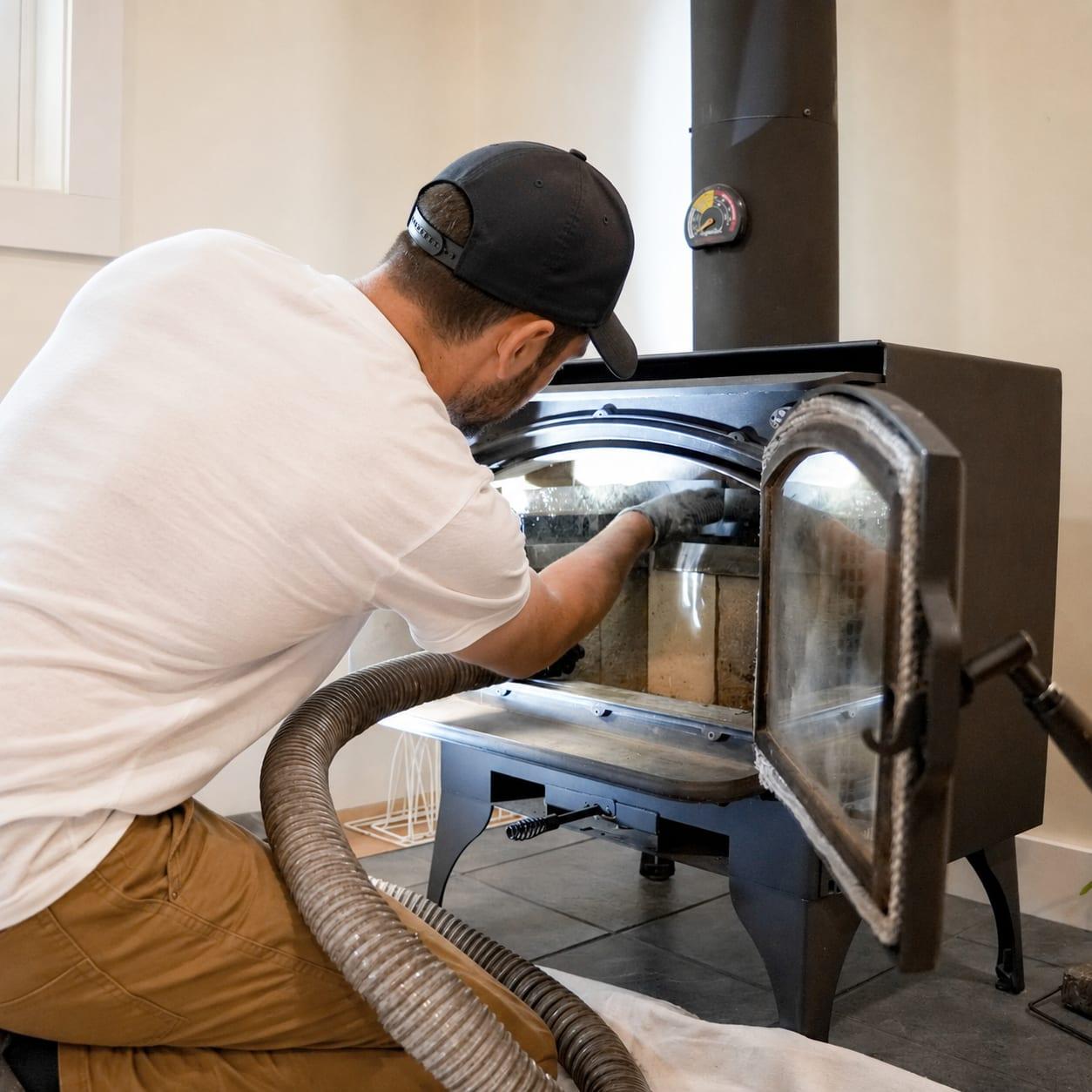
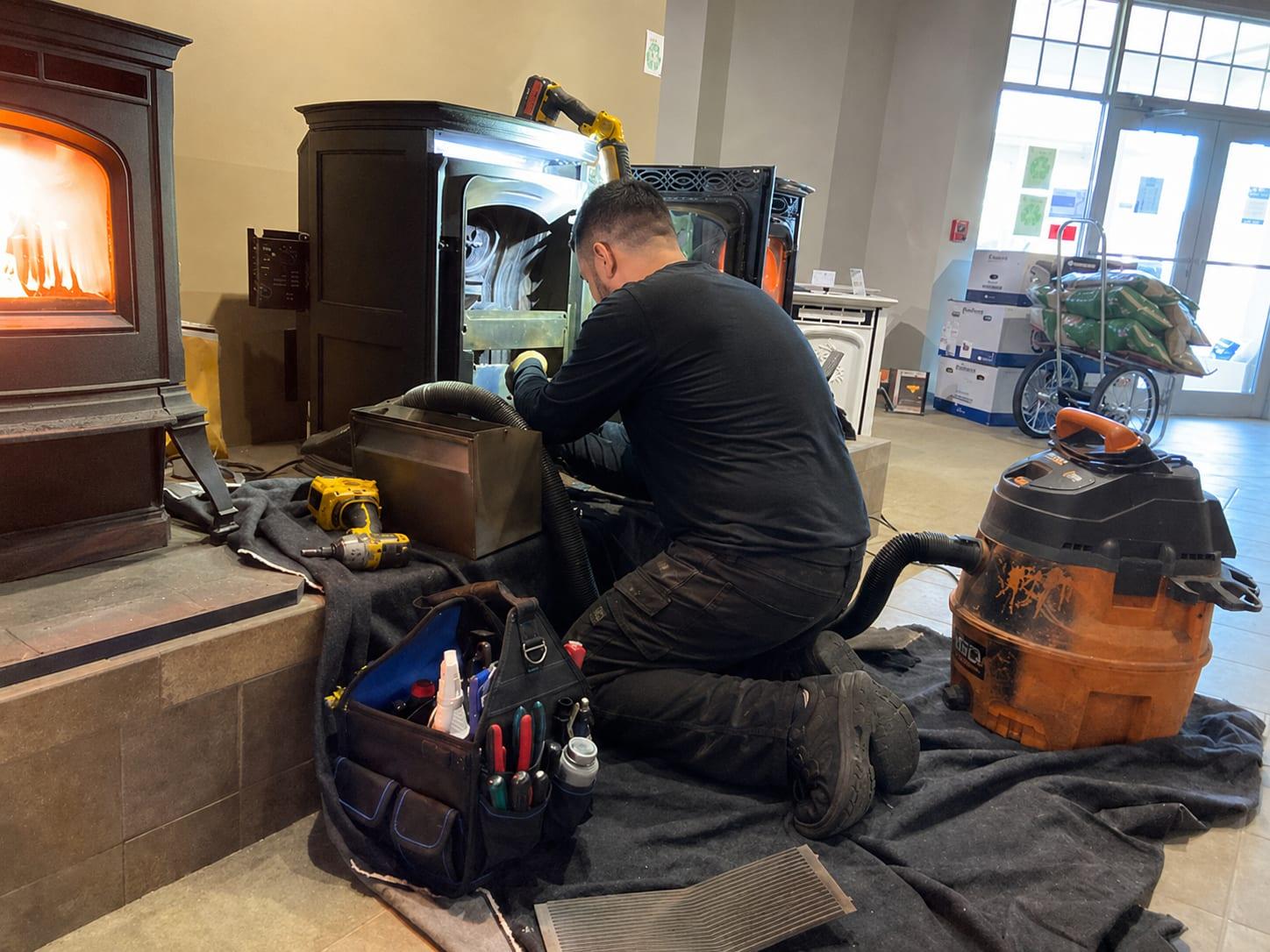
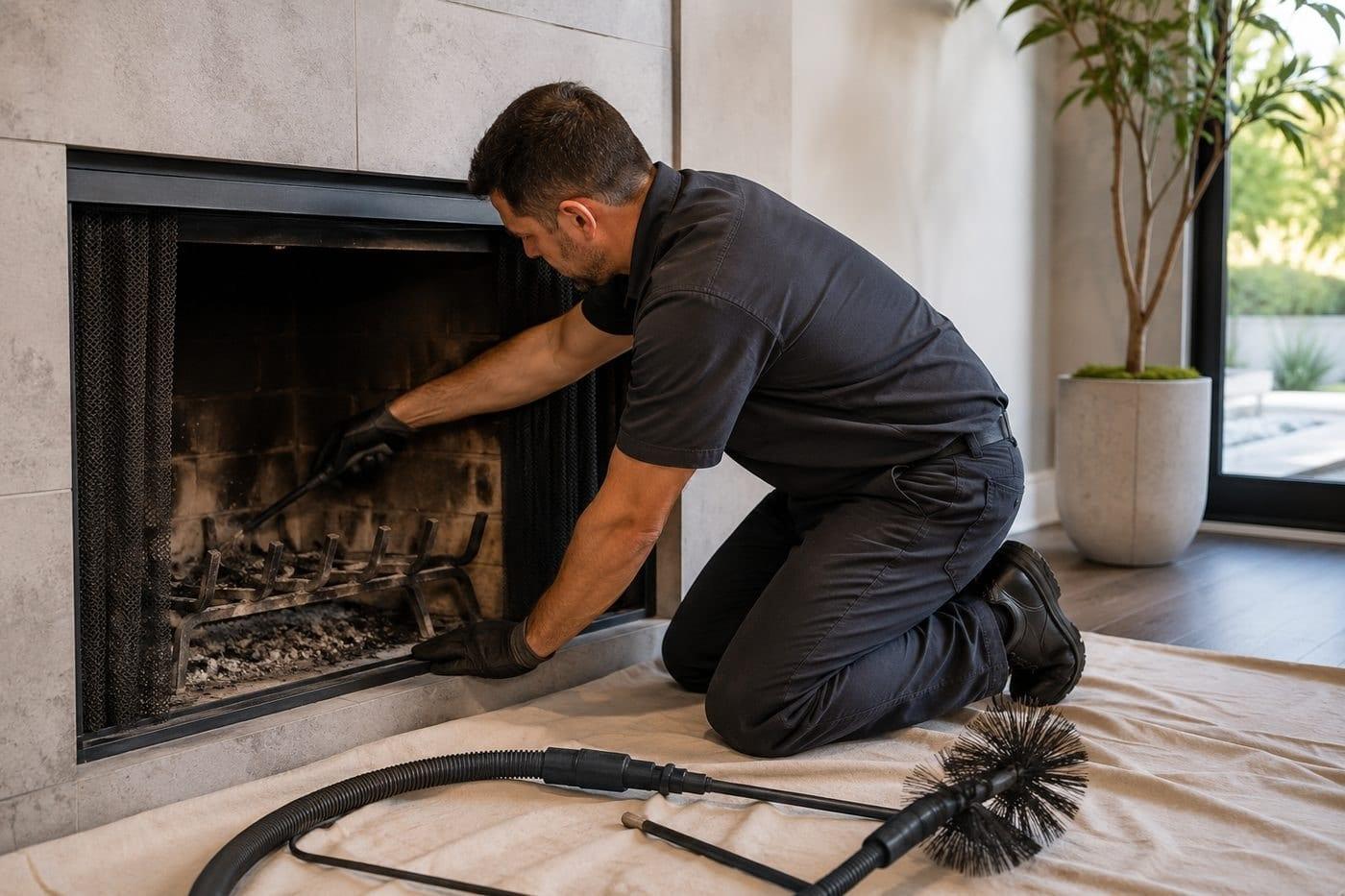
Soot and ash hide damage and keep new mortar from bonding, so the firebox is cleaned before it is assessed. If the whole fireplace needs it, our fireplace cleaning service can be done first.
Explain what we find
We show you which joints, bricks or panels are damaged and explain whether repointing, brick replacement, a wall rebuild or panel replacement is the right fix.
Remove damaged material
Failed mortar is raked out and cracked or spalled firebricks, or broken panels, are removed without disturbing the sound parts of the firebox.
Repair with heat-rated materials
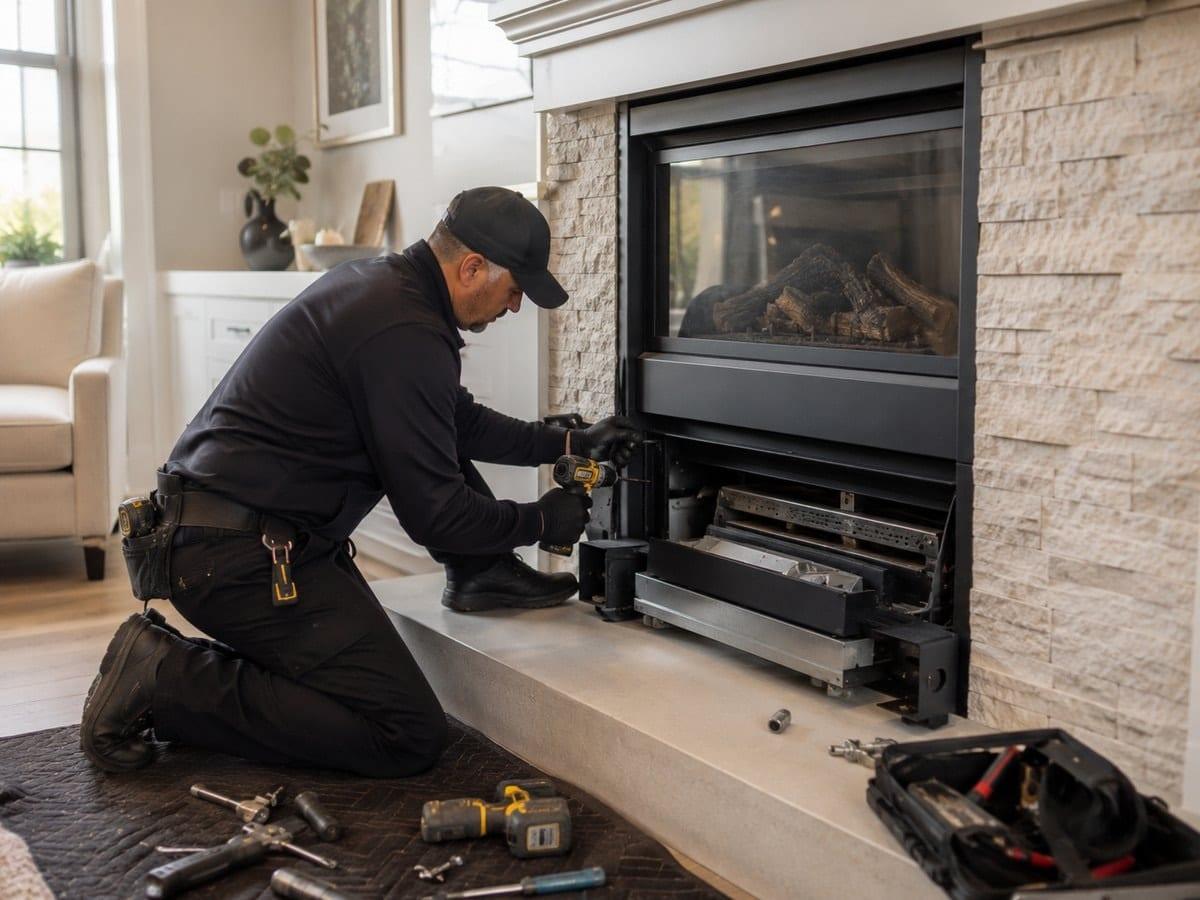
Joints are refilled and new firebrick is set using refractory mortar, or new refractory panels are fitted in a factory-built unit.
Go over first use
Fresh refractory mortar needs time to set before a full fire. We tell you when and how to start using the fireplace again.
Masonry fireboxes vs. factory-built fireboxes
| Feature | Masonry fireplace | Factory-built fireplace |
|---|---|---|
| Lining | Firebrick set in refractory mortar | Refractory panels inside a metal unit |
| Typical damage | Eroded joints, cracked or spalled brick, loose sections | Cracked, crumbling or broken panels |
| Typical repair | Repointing, brick replacement or partial rebuild | Panel replacement |
Lining
- Masonry fireplace
- Firebrick set in refractory mortar
- Factory-built fireplace
- Refractory panels inside a metal unit
Typical damage
- Masonry fireplace
- Eroded joints, cracked or spalled brick, loose sections
- Factory-built fireplace
- Cracked, crumbling or broken panels
Typical repair
- Masonry fireplace
- Repointing, brick replacement or partial rebuild
- Factory-built fireplace
- Panel replacement
When a factory-built unit is damaged well beyond its panels, repair may no longer make sense, and we can talk through replacing it with a new fireplace instead. Electric units have no live fire and no firebox lining, so problems there are handled through electric fireplace repair.
Booking a firebox repair
Get in touch to describe what you are seeing in the firebox, or send a photo taken with a flashlight, and request an estimate.
Related work covered on this page
- Fireplace Repair
- Fireplace Restoration
- Custom Fireplace Design
- Fireplace Makeover
- Fireplace Refacing
- Old Fireplace Redesign