On this page
What gas fireplace repair involves
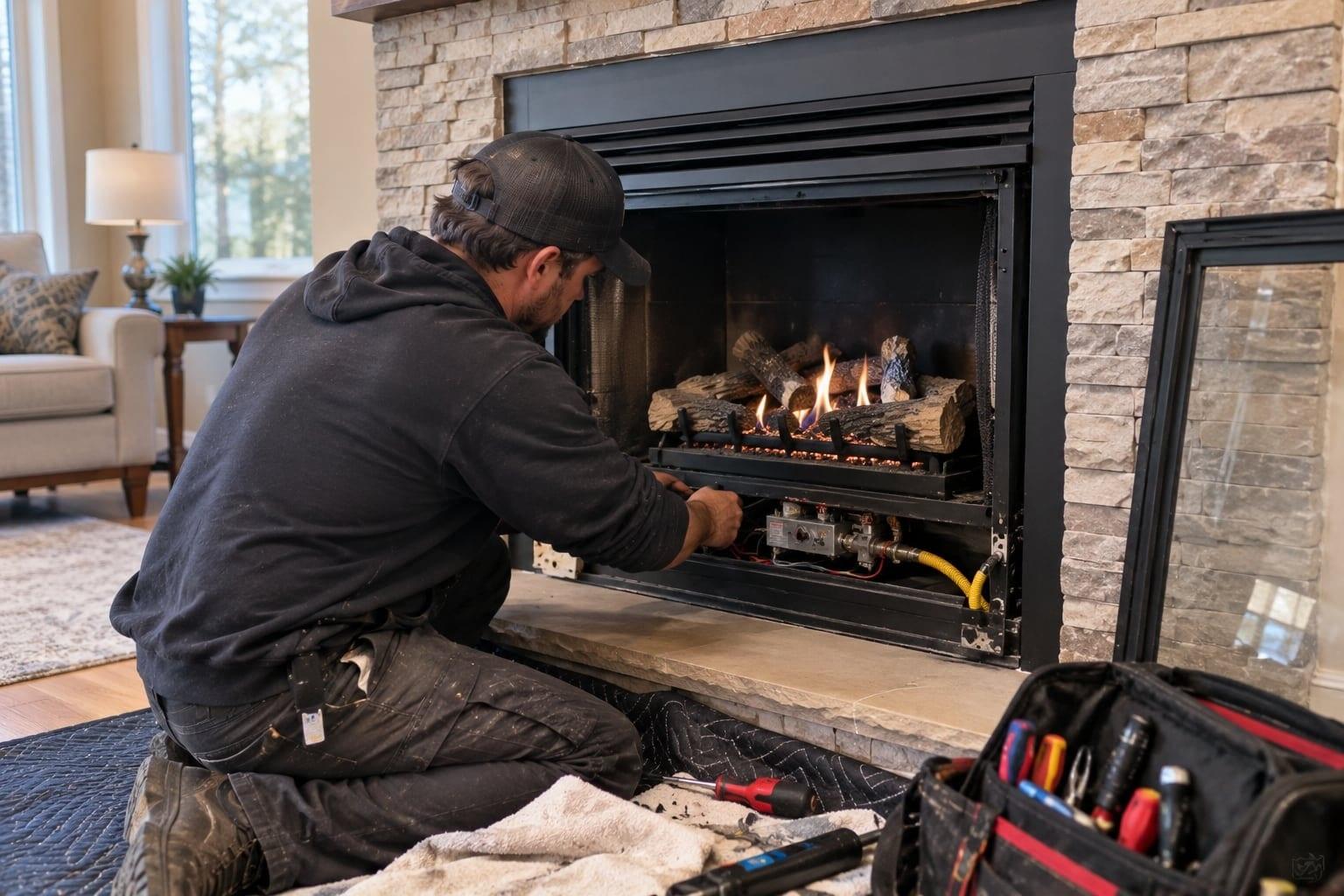
A gas fireplace is a small appliance. It has a gas valve, a pilot or electronic ignition, a flame sensor, a burner, a log set or media, a sealed glass front and a vent that carries combustion gases outside. When one of those parts wears out, gets dirty or falls out of adjustment, the fireplace stops working properly. Repair means testing each part in order, finding the one that's failing and fixing or replacing it.
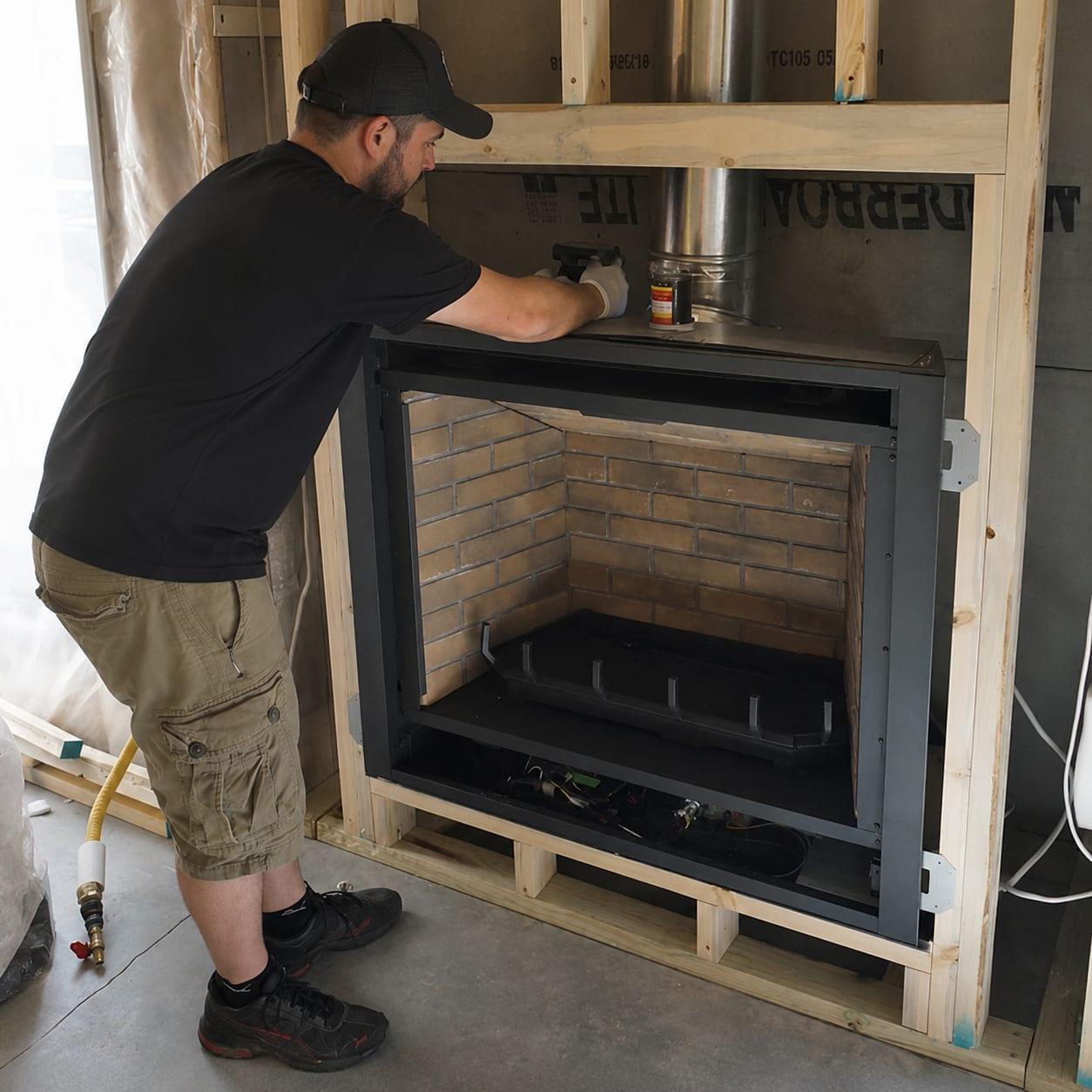
Most repairs are about ignition and flame: a pilot that won't stay lit, a burner that won't come on, or a flame that's the wrong size or color. Others involve the glass and gasket, the remote or wall-switch controls, or a blower that has turned noisy. If the unit simply needs cleaning and a seasonal check rather than a fix, our gas fireplace service and maintenance is the better fit.
If you smell gas
Leave the building right away and take everyone with you. Don't use light switches, phones or any flame inside, and don't try to relight the fireplace or look for the leak. Once you are outside, call the gas utility or 911.
Signs your gas fireplace needs repair
- The pilot won't light, or it lights and goes out when you release the control knob.
- The pilot stays lit but the main burner won't come on.
- The fireplace lights, then shuts itself off after a few minutes.
- Flames are mostly yellow or orange, tall and lazy, or they leave soot on the glass or logs.
- The burner ignites with a delay or a noticeable puff.
- The remote, wall switch or thermostat no longer controls the unit.
- A white or gray film builds up on the inside of the glass faster than it used to.
- The glass is cracked, or the gasket around it is loose or missing.
- The blower rattles, squeals or doesn't run.
- If a carbon monoxide alarm sounds, get everyone outside and call 911.
A carbon monoxide alarm, sooting or a delayed, puffing ignition are reasons to turn the fireplace off and leave it off until it has been checked. Don't use it in the meantime.
Gas fireplace pilot light repair
The pilot is a small standing flame, or on newer units an electronic spark, that lights the main burner. A safety sensor next to it confirms the flame is there before the gas valve opens. If the sensor doesn't detect enough heat, the valve shuts the gas off. That is a safety feature working as designed, but it also means a worn or dirty part can keep the fireplace from running.
Common causes of a pilot that won't light or won't stay lit:
- A worn thermocouple or thermopile that no longer generates enough signal to hold the valve open.
- A pilot orifice partly blocked by dust, debris or spider webs, which leaves a weak or misdirected flame.
- A pilot flame that doesn't fully reach the sensor because the assembly has shifted.
- A failed igniter or spark electrode, or worn wiring to it.
- A gas valve that has stopped responding properly.
- Weak batteries or a failed receiver on units with electronic ignition.
Simple checks before you call
If there's no gas smell, a few checks are safe to try. Replace the batteries in the remote and in any battery pack or receiver on the unit. Make sure the wall switch is on. Read the lighting instructions on the label that comes with most units, usually inside the lower access panel. If the pilot still won't light or stay lit after following those instructions, stop trying and have it looked at. Repeated attempts won't fix a worn sensor or a blocked orifice.
Parts we look at during a repair
| Component | What it does | Typical symptom when it fails |
|---|---|---|
| Thermocouple / thermopile | Senses the pilot flame and powers or holds the gas valve | Pilot goes out; burner won't come on |
| Pilot assembly and orifice | Produces the small flame that lights the burner | Weak, flickering or no pilot flame |
| Igniter / spark electrode | Lights the pilot or burner on electronic-ignition units | Clicking with no flame, or no spark at all |
| Gas valve | Controls gas flow to the pilot and burner | Unit won't respond even with a good pilot |
| Burner and log or media set | Spreads the flame across the firebox | Uneven, sooty or yellow flames |
| Glass and gasket | Seals the firebox from the room | Cracks, loose glass or a broken seal |
| Vent system | Brings in combustion air and carries exhaust outside | Unit shuts off, sooting, or a carbon monoxide alarm |
| Remote, receiver, switch and blower | Control the unit and move heat into the room | No response to controls; a noisy or dead fan |
What a repair visit looks like
Step by step
Hear what's happening
We start with your description: when the problem started, what the fireplace does and doesn't do, and anything you've already tried.
Shut off and open up
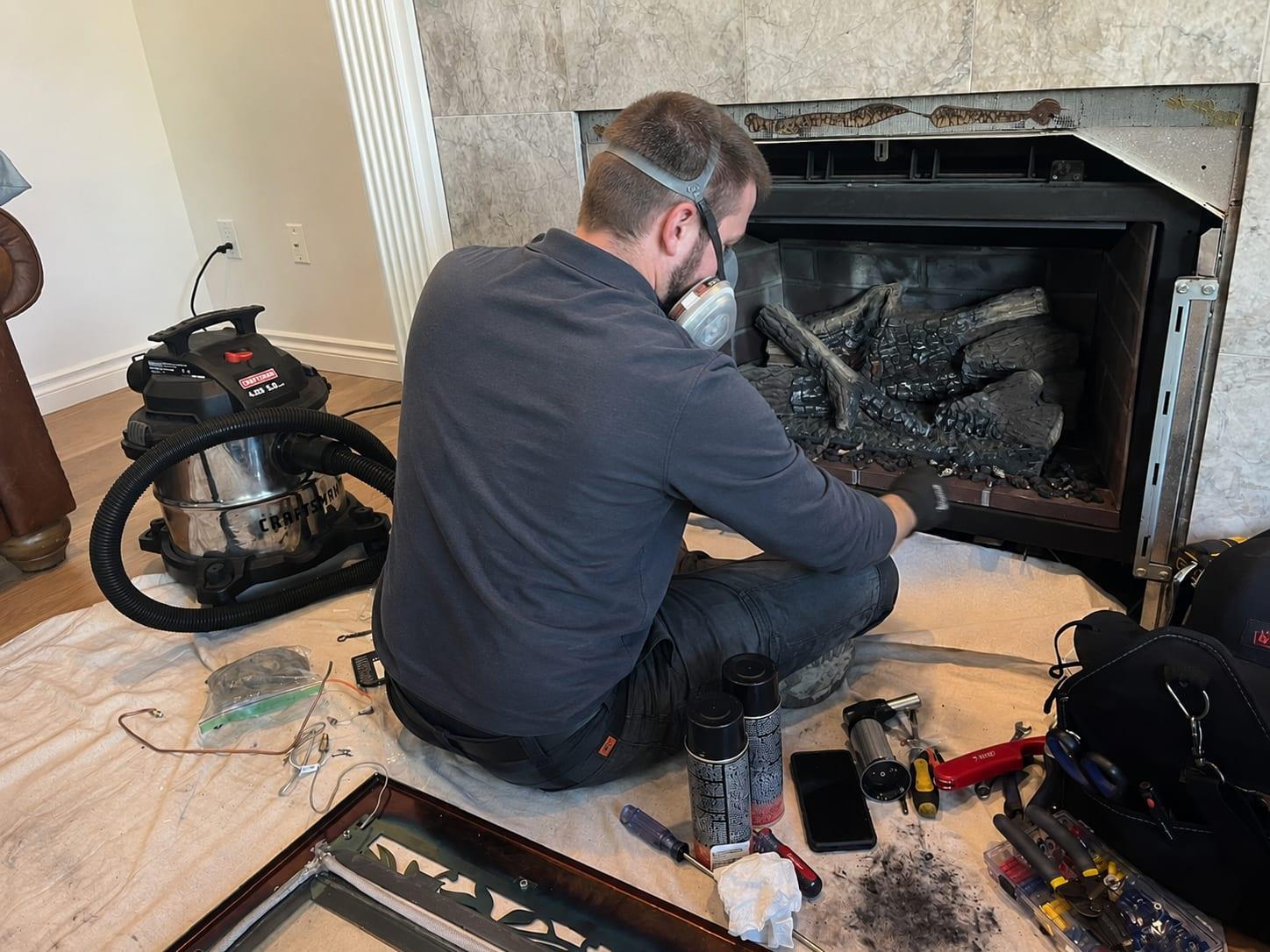
The gas is turned off at the appliance, the unit is allowed to cool, and the glass front and access panels are removed.
Inspect and test
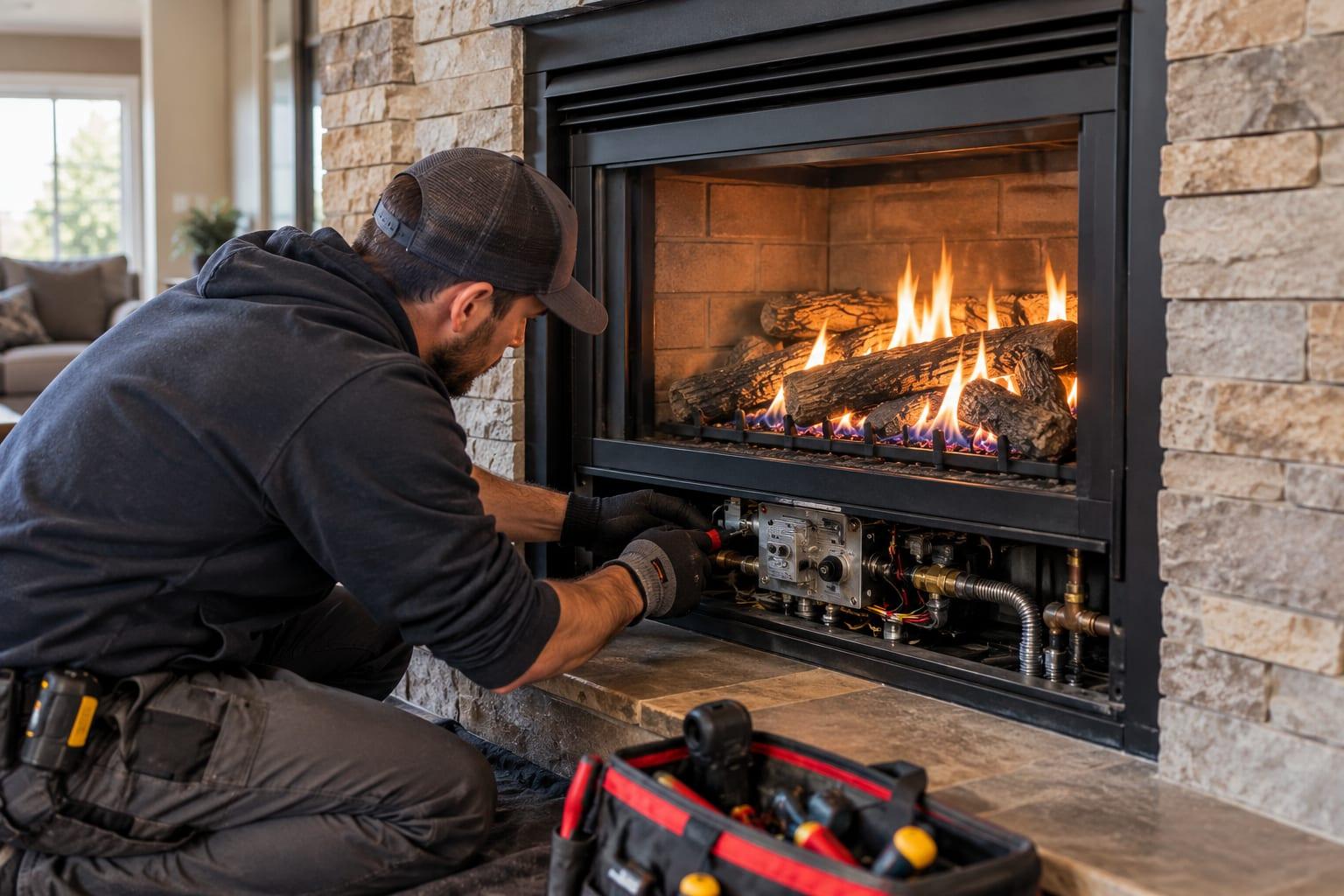
We check the pilot assembly, sensors, igniter, valve, burner, logs and glass seal, and test the electrical parts where the unit uses them.
Explain what we found
Before any part is replaced, you hear what's wrong and what fixing it involves, so you can decide how to proceed.
Repair
We clean, adjust or replace the failing part, then reset the log or media set to the manufacturer's layout and reseal the glass.
Test-fire
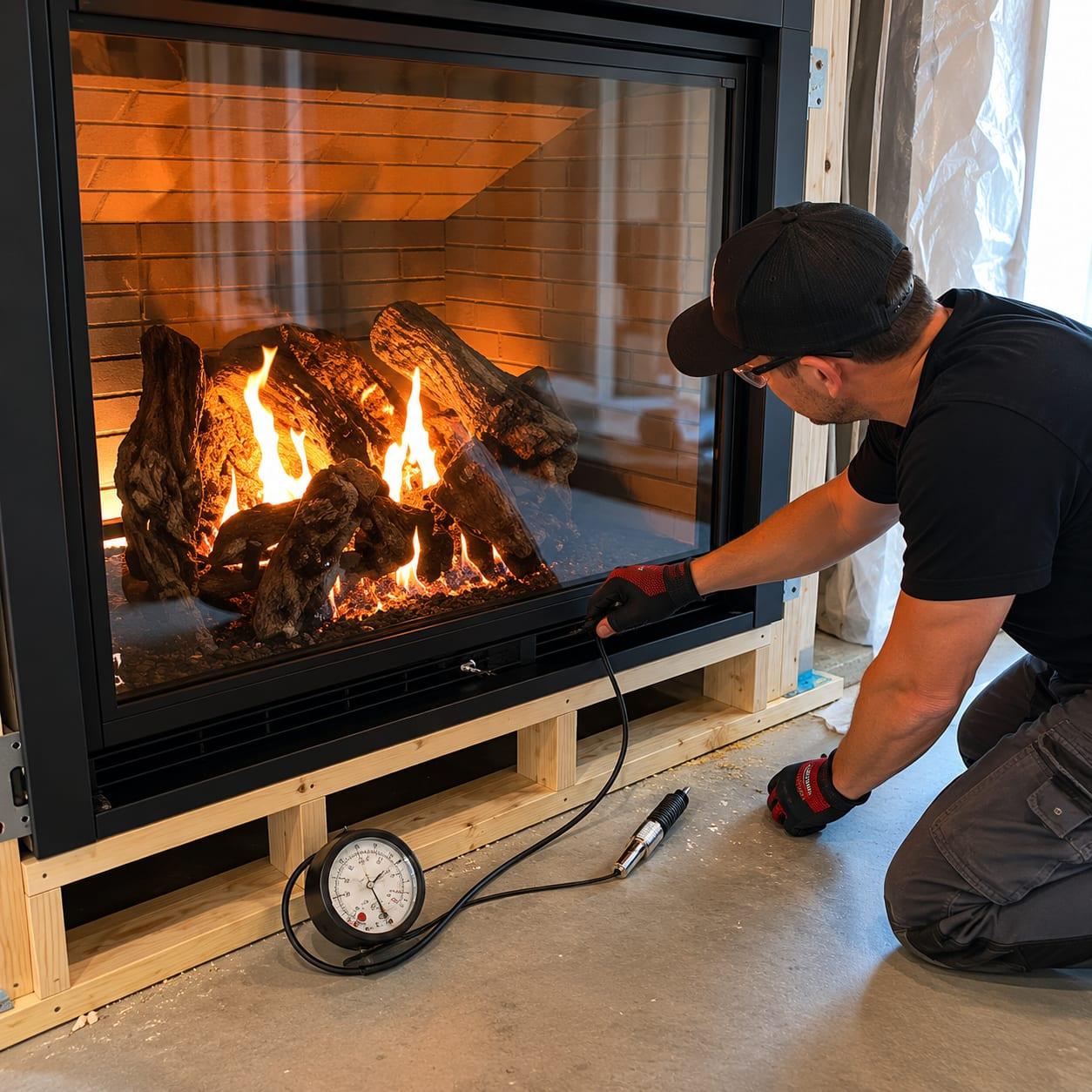
The fireplace is lit and run to confirm it lights reliably, stays on, and burns with a steady, properly shaped flame.
Safety and maintenance between repairs
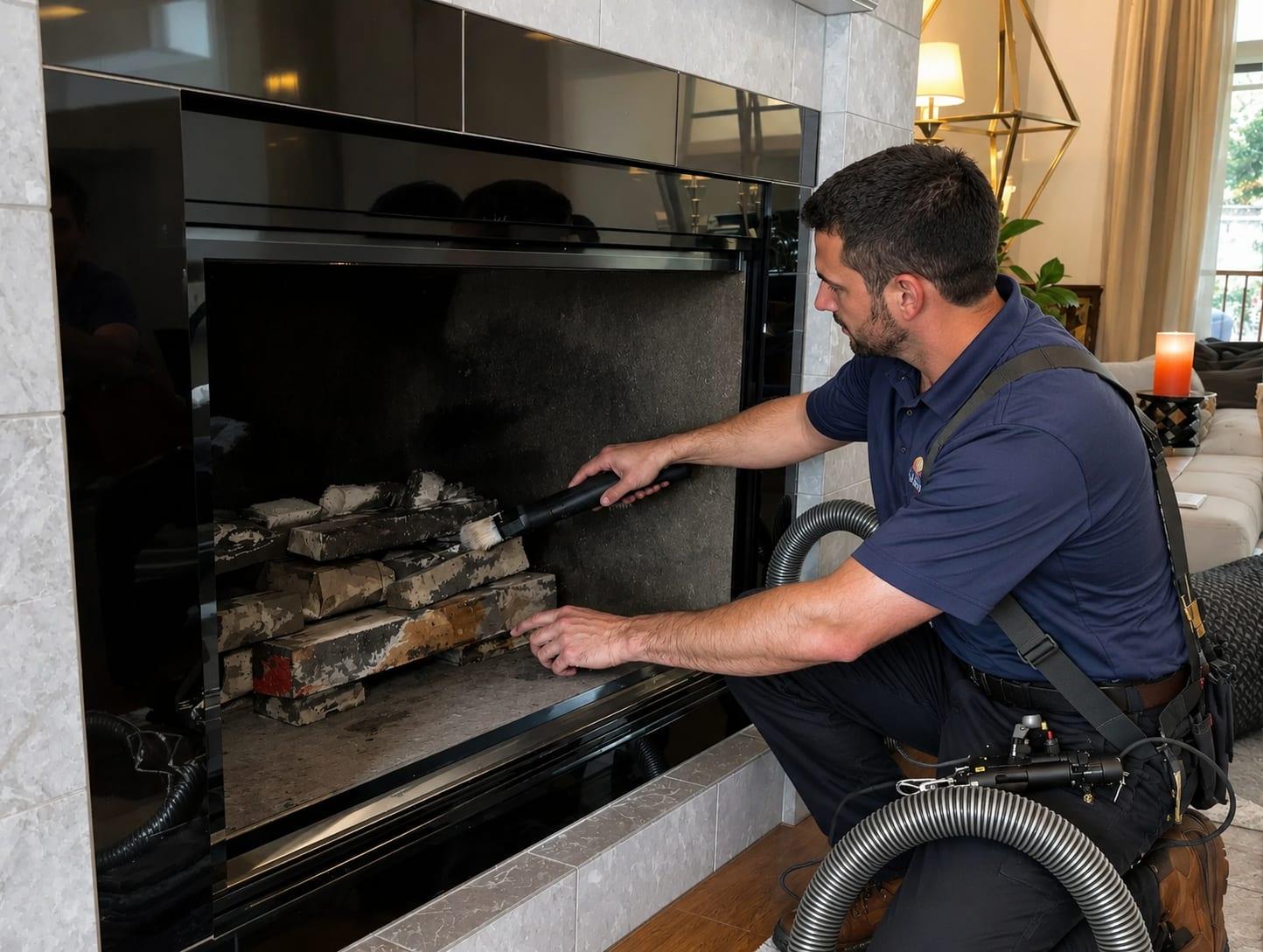
Gas fireplaces burn cleaner than wood, but they still produce combustion gases and still collect dust, debris and wear. Most of the failures listed above build up slowly, and a regular check catches them before the fireplace stops working.
Good habits for any gas fireplace
- Keep working carbon monoxide alarms in the home, and test them regularly.
- Never run the fireplace with the glass front removed, cracked or loose.
- Keep the log set or media arranged as the manufacturer shows. Don't add extra logs, rocks or decorations to the burner.
- Keep children and pets away from the glass, which gets hot enough to burn skin.
- Keep the outdoor vent clear of plants, debris and stored items.
- Turn the unit off and have it checked if you notice soot, a changed flame or a new smell that isn't gas.
- Have the fireplace checked before the first use of the season.
Repair isn't always the answer. When a unit is too old or damaged to be worth fixing, or you want a fireplace where there isn't one, installing a new gas fireplace is the right job. If the new appliance needs a supply line run to it, that's handled as separate gas line installation work.
Booking a gas fireplace repair
Get in touch and describe what the fireplace is doing. Tell us what happens when you try to light it, whether the pilot stays on, and what the flame looks like. If you can find the make and model on the rating label, usually inside the lower access panel, include that too, along with a photo of the label and the firebox. That helps us come prepared for your unit.