On this page
What creosote removal involves
Creosote forms when smoke cools on its way up the chimney and its tars and gases condense on the flue walls. It doesn't all look the same, and the way it gets removed depends on how far it has progressed. A light coating comes off with brushes. Heavier deposits need more aggressive tools. Hardened glaze sometimes needs a chemical treatment before it will come loose at all.
| Stage | What it looks like | How it's usually removed |
|---|---|---|
| First degree | Dry, dark, flaky soot that brushes off easily | Standard brushing during a routine sweep |
| Second degree | Crunchy, shiny black flakes or granules, sometimes tar-like in spots | Stiffer brushes and rotary tools that break up the deposits |
| Third degree | Hard, glossy glaze that can look like dripped tar or melted plastic | Rotary tools, plus a chemical treatment that softens or dries the glaze so it can be removed. Heavy glaze can take more than one visit |
A light first-degree coating is normally handled during our chimney sweep service. Dedicated creosote removal is for flues where the buildup has moved past that stage and brushing alone won't clear it.
Signs your chimney needs creosote removal
Book a visit if you notice any of these
- Black flakes or granules dropping into the firebox or onto the smoke shelf
- Shiny, tar-like or bubbled deposits visible above the damper
- A strong smoky or asphalt-like smell from the fireplace, especially on humid days or when the house is closed up
- Fires that are hard to start, burn poorly, or push smoke into the room
- Dark, sticky streaks around the damper, stove pipe or insert connector
- A season or more of regular wood burning since the flue was last cleaned
A smell on its own doesn't always mean creosote. Damp debris, trapped animals or old nesting material can produce similar odors. That's why we check the flue before deciding what it needs. If the cause turns out to be something else, our chimney odor removal work or animal and nest removal from chimneys may be the better fit.
What makes creosote build up faster
- Wet or unseasoned wood burns cooler and smokier, so more residue condenses in the flue.
- Low, smoldering fires with the air supply turned down, which is common with stoves and inserts overnight.
- A flue that stays cool, such as an oversized flue or a chimney on an exterior wall.
- Restricted airflow from a partly closed damper, a blocked cap or debris in the flue.
What the visit looks like, step by step
How we remove creosote
Protect the room
We put down drop cloths, seal off the fireplace or stove opening, and run a vacuum so soot stays out of the house.
Look at the buildup
We check the firebox, damper, smoke shelf and flue to see what stage the creosote is at and how far up it goes. Where part of the flue can't be seen directly, a camera can help.
Remove the deposits
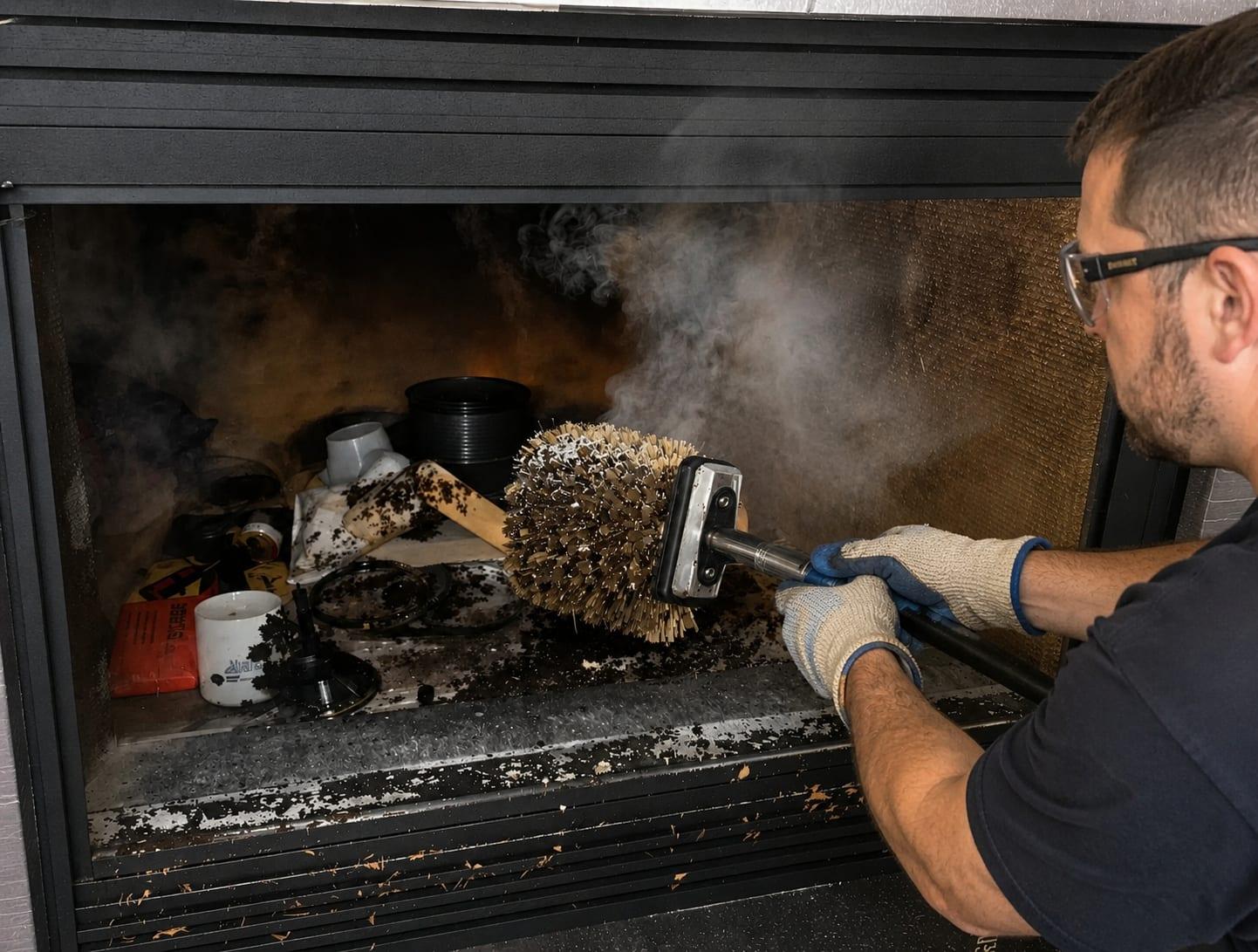
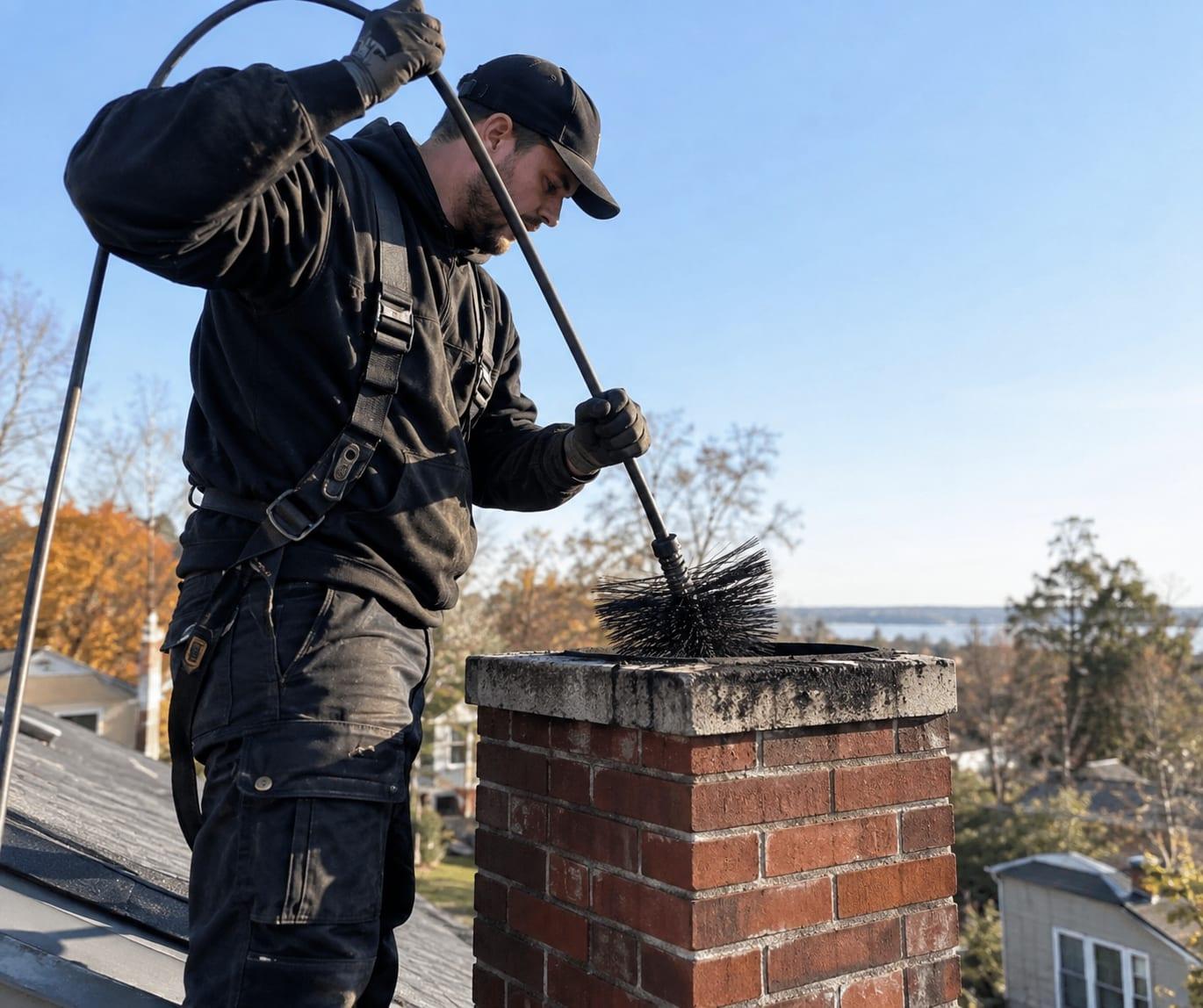
We use brushes for loose material and rotary tools for heavier, crusted buildup, sized to your flue and its liner.
Treat glaze if needed
Hardened third-degree glaze may get a chemical treatment so it can be broken up and removed. We'll tell you if a follow-up visit is needed to finish the job.
Clean up and explain what we found
We clear the debris from the smoke shelf and firebox, check the damper, and walk you through what came out and anything that needs attention.
Sometimes the problem is more than creosote. Heavy deposits can collapse into a flue and block it, along with leaves or other debris. In that case, our chimney blockage removal work clears the passage so smoke can vent again.
Fireplaces, inserts and wood stoves
Any appliance that burns wood produces creosote. Fireplace inserts and wood stoves are often run with the air turned down, which can make glaze form faster in their liners and connector pipes. We remove creosote from open wood-burning fireplaces, inserts and stoves. The visit covers the flue along with the connector or liner the appliance vents through.
If a chimney fire may be burning
Get everyone out and call 911
A loud roaring or rumbling sound, popping or cracking from the chimney, thick smoke, or flames and sparks coming from the top can all mean a chimney fire. Get everyone out of the house and call 911. Don't go back in to put it out. Once it's over, don't use the fireplace or stove again until the chimney has been inspected, because a chimney fire can crack a flue or liner without any damage you can see.
Keeping creosote down between cleanings
- Burn dry, seasoned hardwood rather than green or damp wood.
- Give fires enough air to burn hot and bright instead of smoldering.
- Avoid burning trash, cardboard, painted wood or wrapping paper.
- Have the flue checked and swept before the first fire of the burning season, and more often if you burn a lot.
If you're weighing whether to tackle light buildup yourself, our guide to DIY vs chimney cleaning covers what's reasonable for a homeowner and where professional tools make the difference.
Booking creosote removal
Get in touch to request an estimate. Tell us what you're seeing, such as flakes in the firebox, a tarry smell or smoke coming into the room, and what you burn in. That helps us plan the right tools for the visit.