On this page
What chimney repair covers
A chimney is a system. The cap and crown keep weather out at the top. The flue or vent carries smoke and gases up and away. The damper seals the opening when the fireplace is off. The firebox holds the fire. Chimney repair means finding which part has failed, fixing it, and dealing with whatever let the damage start. That cause is often water.
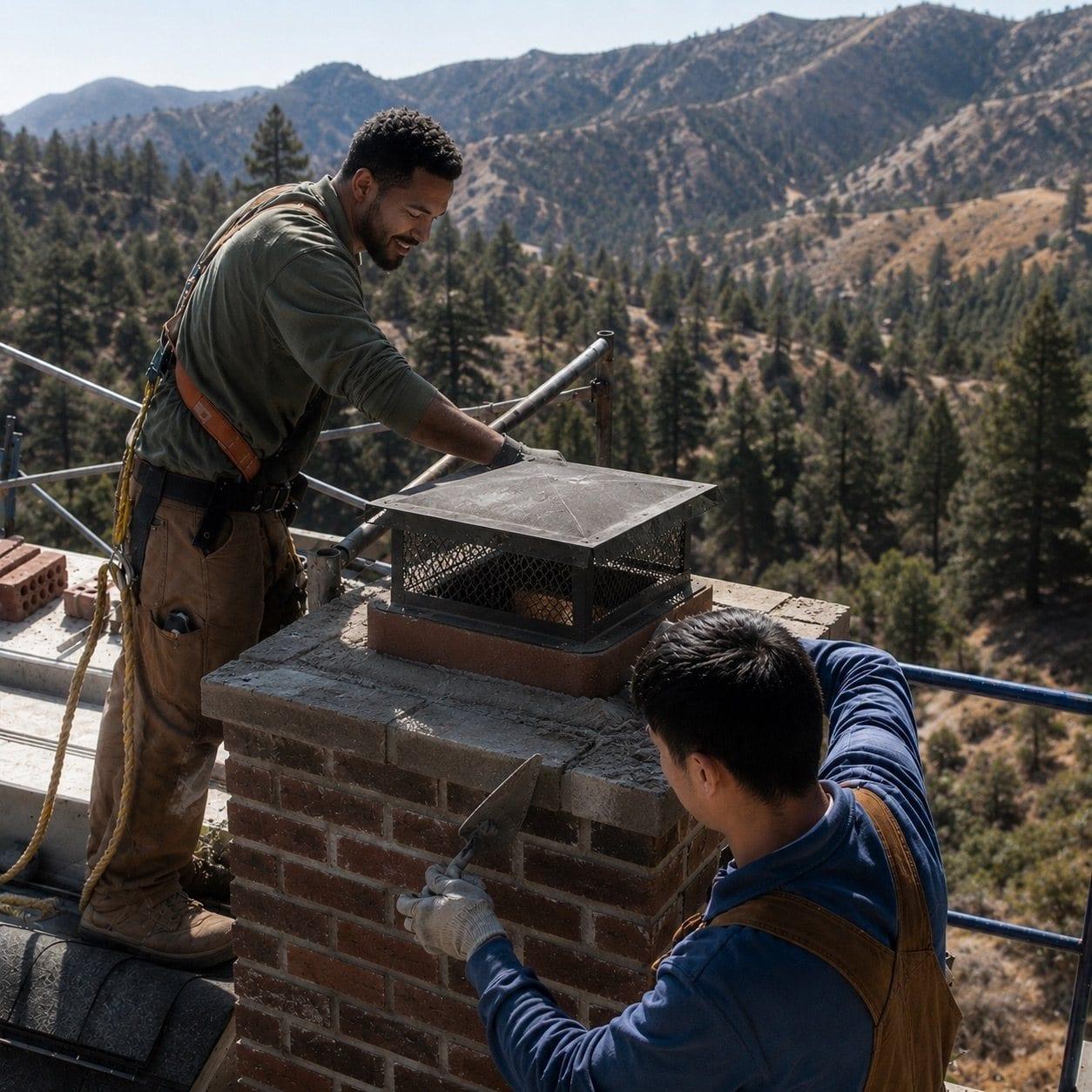
Repairs range from small jobs, like replacing a bent cap or repointing a few mortar joints, to larger ones, like replacing a rusted chase cover or relining a cracked flue. The work covers wood-burning fireplaces, wood and pellet stoves, and gas fireplaces and gas appliances.
Signs your chimney needs repair
Common reasons homeowners call
- Cracks in the brick, the mortar joints or the crown at the top of the chimney
- Mortar that crumbles, falls out of the joints or leaves sandy debris on the roof or hearth
- White staining on the brick, or water marks on the ceiling or wall beside the chimney
- Rust on the damper, the firebox, the chase cover or the fireplace doors
- Smoke that drifts into the room instead of going up the flue
- A damper that sticks, won't close fully or won't open
- A missing, bent or rusted chimney cap
- Pieces of flue tile or broken firebrick in the fireplace
Some of these can wait for a scheduled repair. Others, like a cracked flue or smoke spilling into the house, shouldn't. Our guide to signs a chimney needs immediate repair explains which is which.
How a chimney repair visit works
From your call to the finished repair
Tell us what you're seeing
Describe the problem when you request an estimate, such as a leak, smoke, rust, falling mortar or a stuck damper. If you can, mention whether it's a masonry or prefab chimney and what fuel it burns.
We look at the whole chimney
We check the cap, crown, chase or brickwork, the flue or vent, the damper and the firebox. When the problem is inside the flue, a camera inspection shows damage that can't be seen from the top or the bottom.
You get a free estimate
We explain what has failed, what caused it and what the repair involves, so you can decide before any work starts.
We make the repair
The damaged part is repaired or replaced. Where water caused the problem, we address the entry point too, so the repair doesn't fail the same way again.
We check the result
After the repair, we confirm the damper opens and closes properly and that the fireplace or stove is ready to use.
The parts of a chimney we repair
Which parts need work depends on how the chimney was built. A masonry chimney is brick or stone with a clay or metal flue liner. A prefab chimney is a metal flue inside a framed chase with a metal cover on top. If you're not sure which you have, read up on how masonry and prefab chimneys differ.
Chimney cap repair
The cap keeps rain, animals, leaves and debris out of the flue. Caps get bent, lose their mesh, rust through or come loose from the crown or chase cover. We repair or replace the cap and its mesh screen, and we install spark arrestors, which catch embers before they leave the chimney. If animals have been getting in, we can add an animal screen at the same visit.
Chimney chase repair
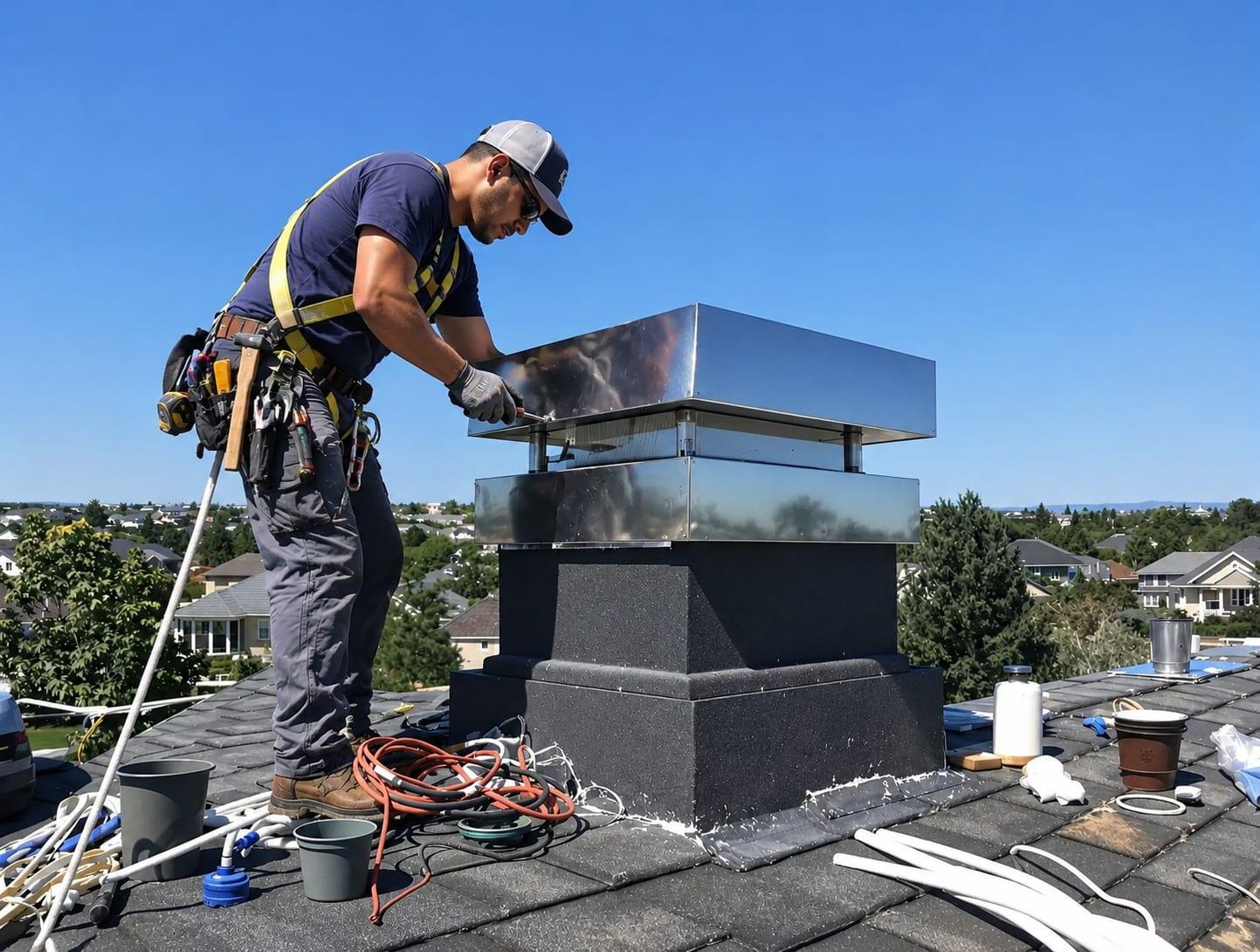
On a prefab chimney, the chase is the framed box around the metal flue, and the chase cover is the metal panel on top. Flat or sagging covers hold standing water, rust through and let water run down into the chase and the fireplace below. We repair chase framing and siding, and we replace chase covers with ones shaped to shed water.
Chimney mortar repair
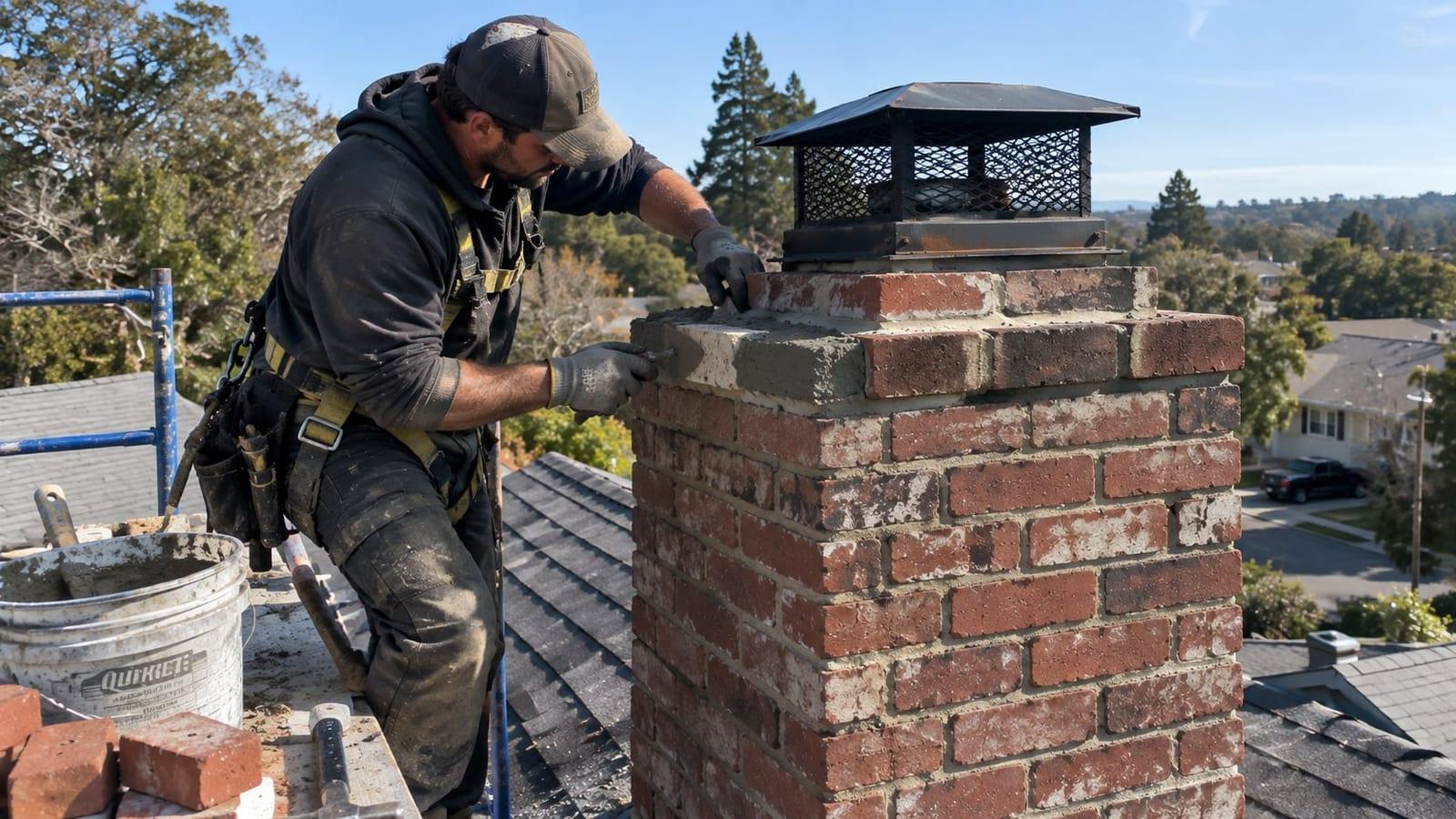
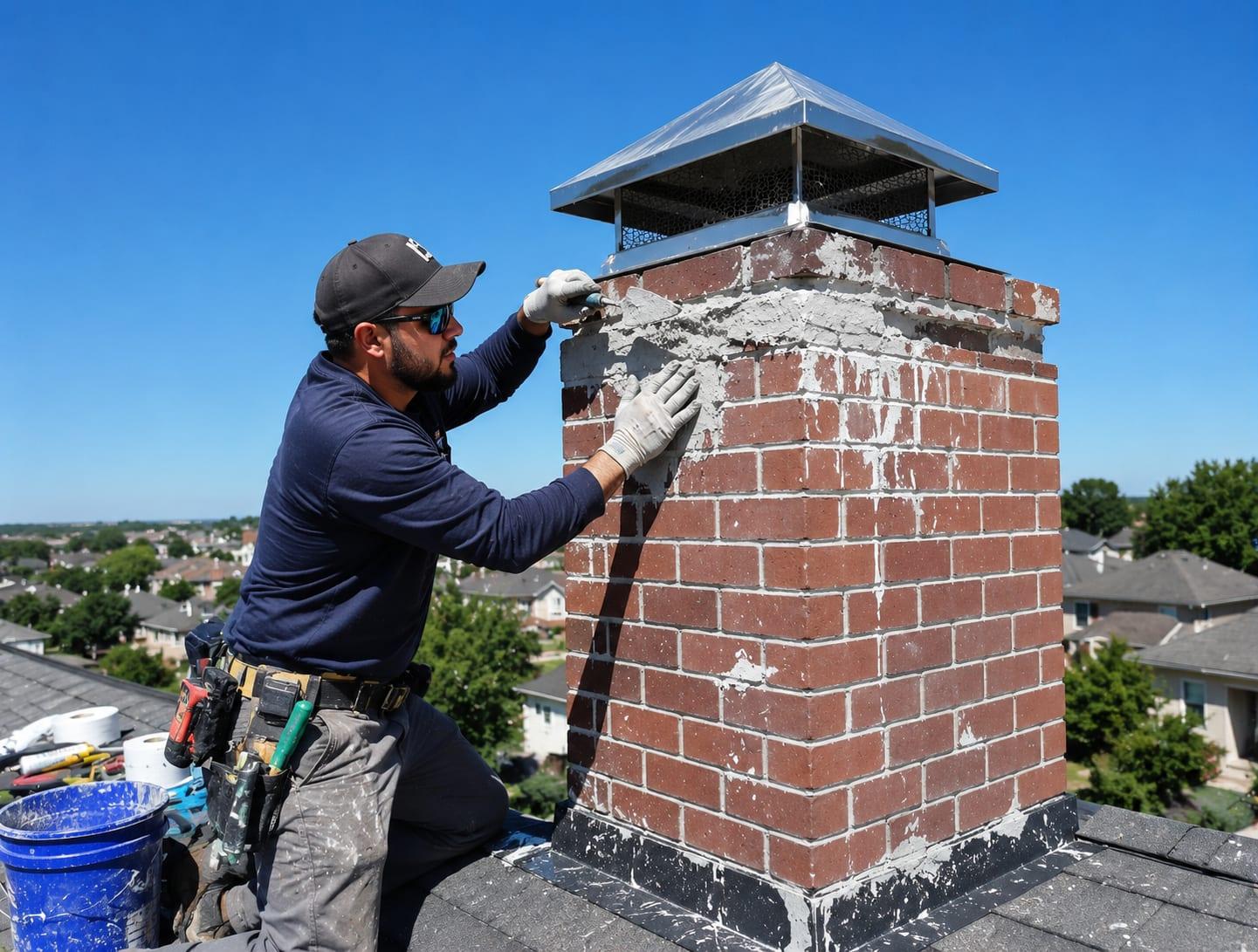
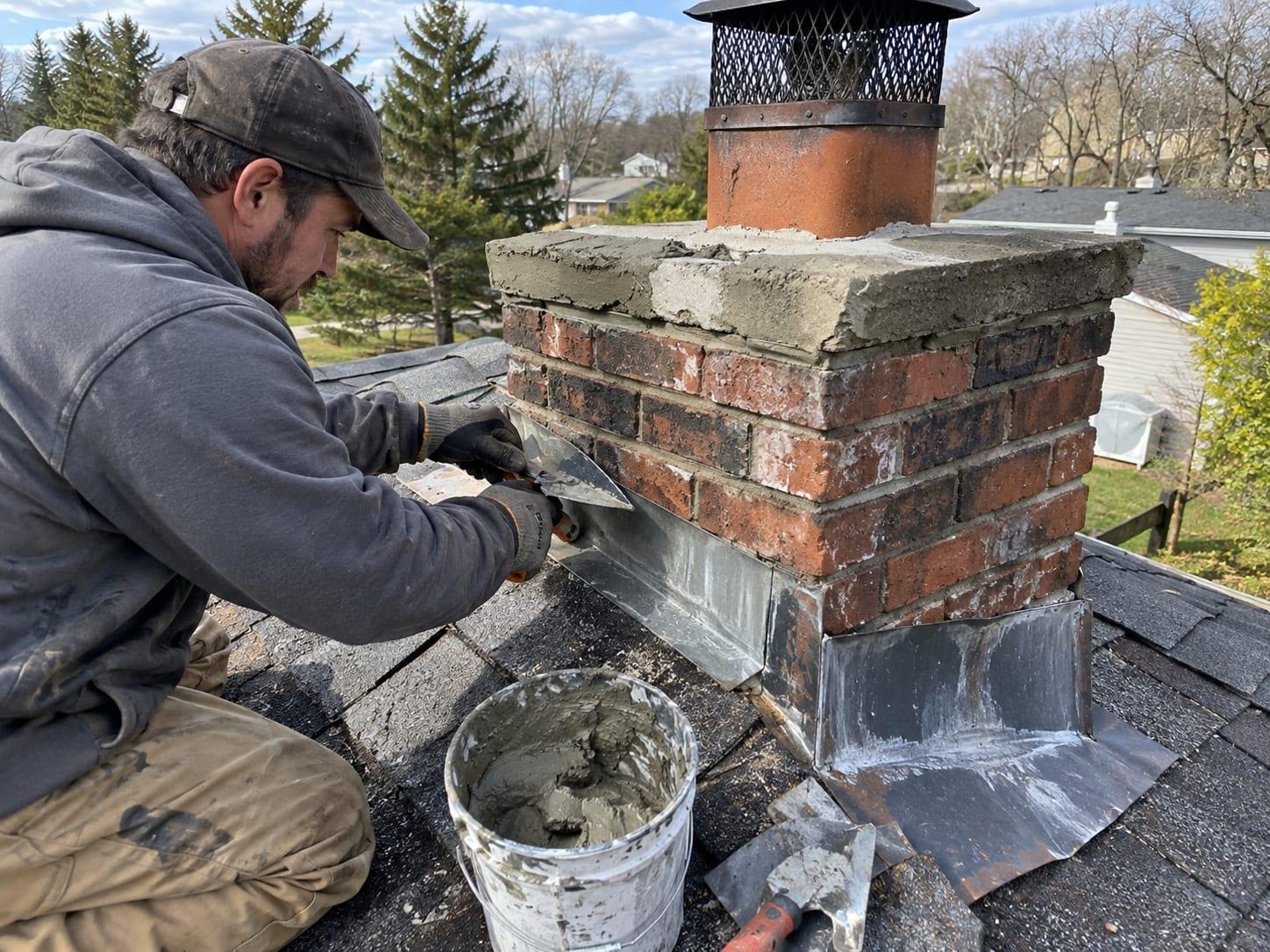
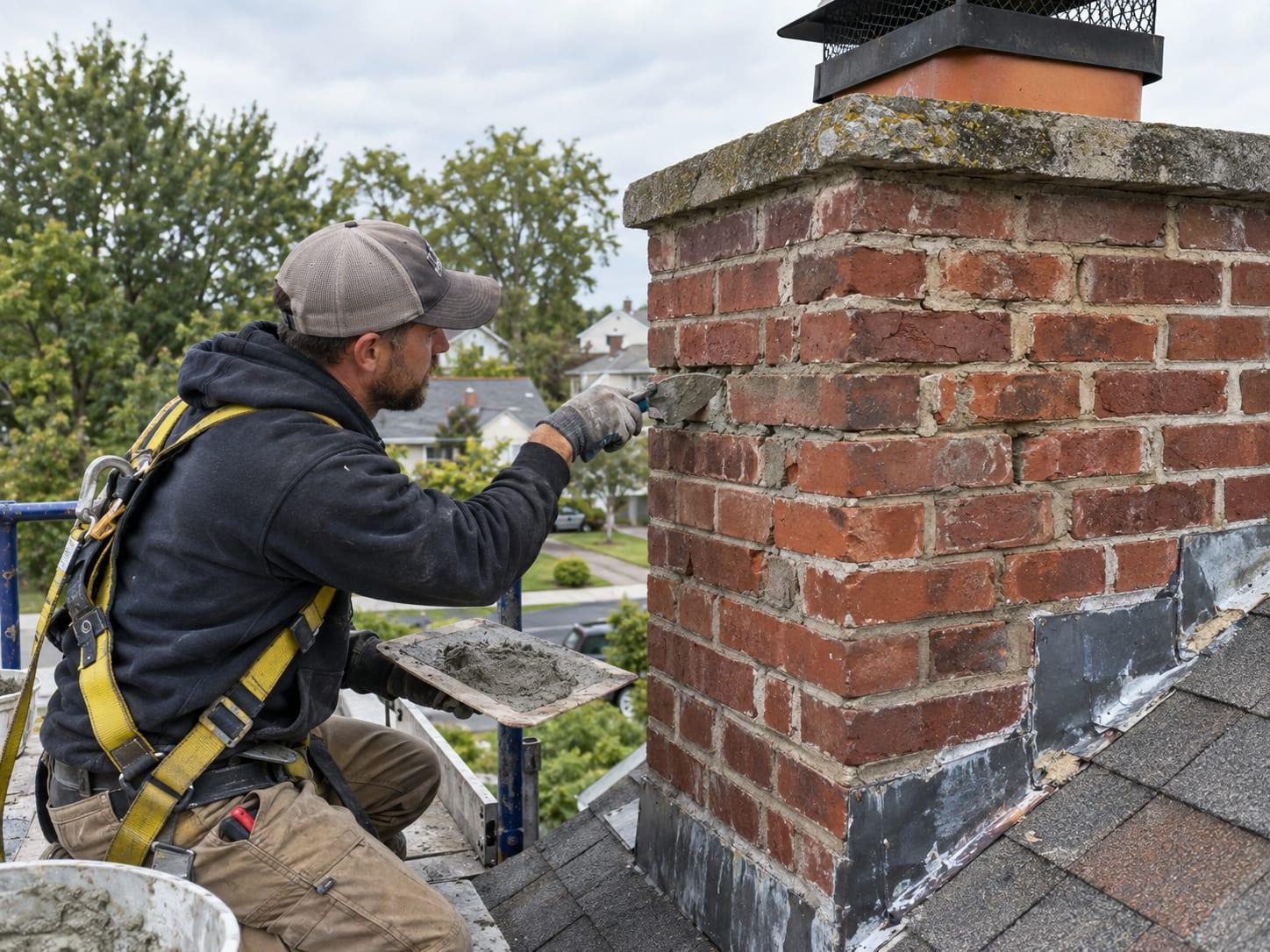
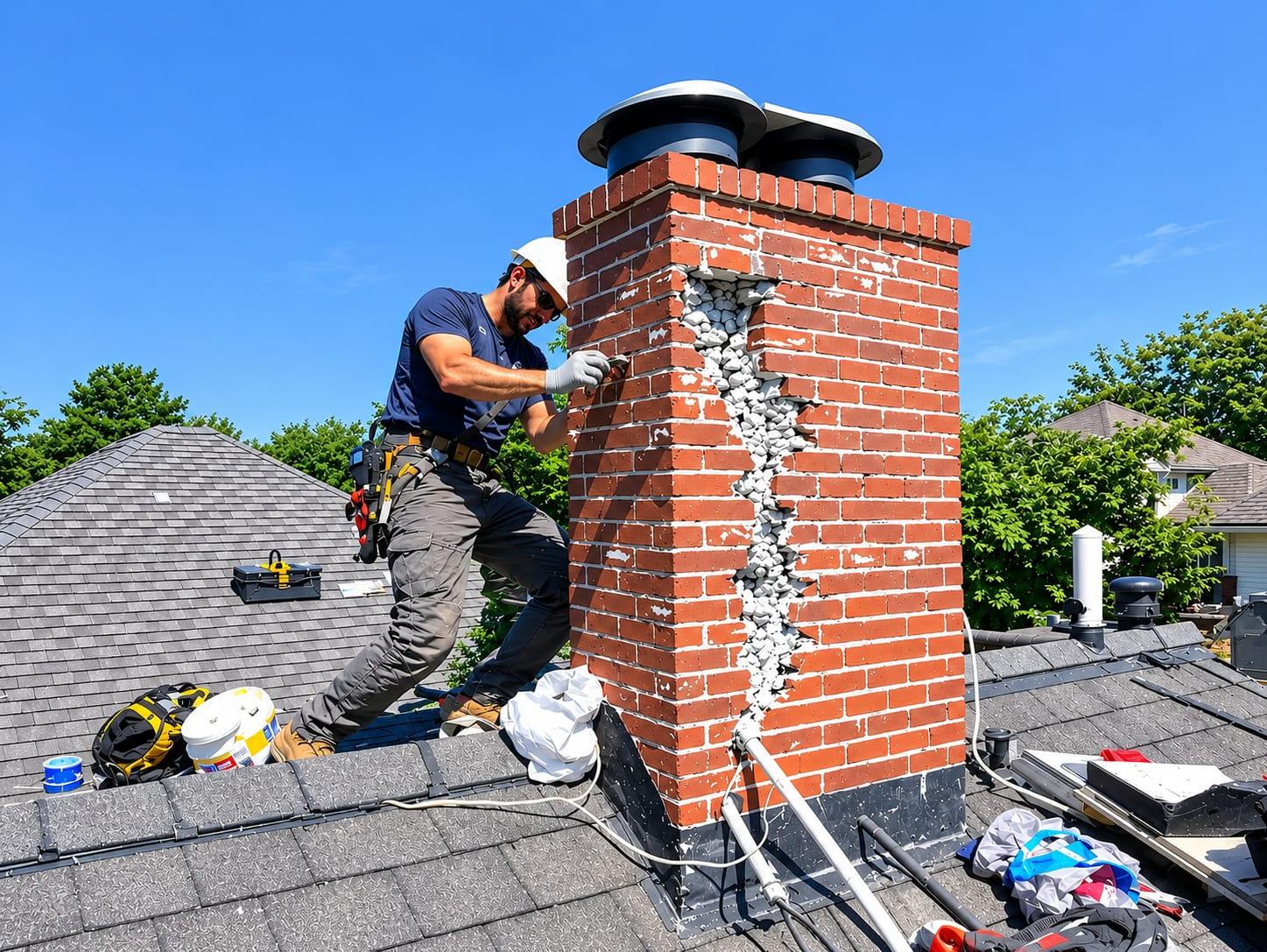
Mortar joints wear out before the bricks do. Once they open up, water gets into the masonry, loosens bricks, cracks the structure and stains the walls. Repointing, also called tuckpointing, replaces the failing mortar before the damage spreads. Mortar repair often goes along with crown repair. Our guide on what causes a cracked chimney crown covers the warning signs, and our brick and mortar repair work covers the larger masonry jobs.
Chimney vent and flue repair
Flue tiles crack, metal liners corrode, and the vent pipes on gas fireplaces and pellet stoves can separate or rust. Any of these lets heat and combustion gases reach places they shouldn't. Depending on the damage, we repair the existing liner or install a new one. On gas units, we repair or replace damaged vent sections.
Fireplace damper repair
A damper that won't close sends warm room air up the chimney and lets drafts and rain down. One that won't fully open causes smoke problems. Rust, warping and broken handles are the usual causes. Fixing a stuck or warped damper often means repairing the existing damper, and sometimes means replacing it with a top-sealing one.
Firebox and smoke problems
Cracked firebrick, open mortar joints in the firebox and worn refractory panels on prefab units all let heat reach parts of the fireplace that weren't built for it. When smoke comes into the room, the cause can be the damper, a rough or damaged smoke chamber, or a draft problem in the flue. We repair fireboxes, smoke chambers and draft issues, and we replace refractory panels.
Rust around the fireplace
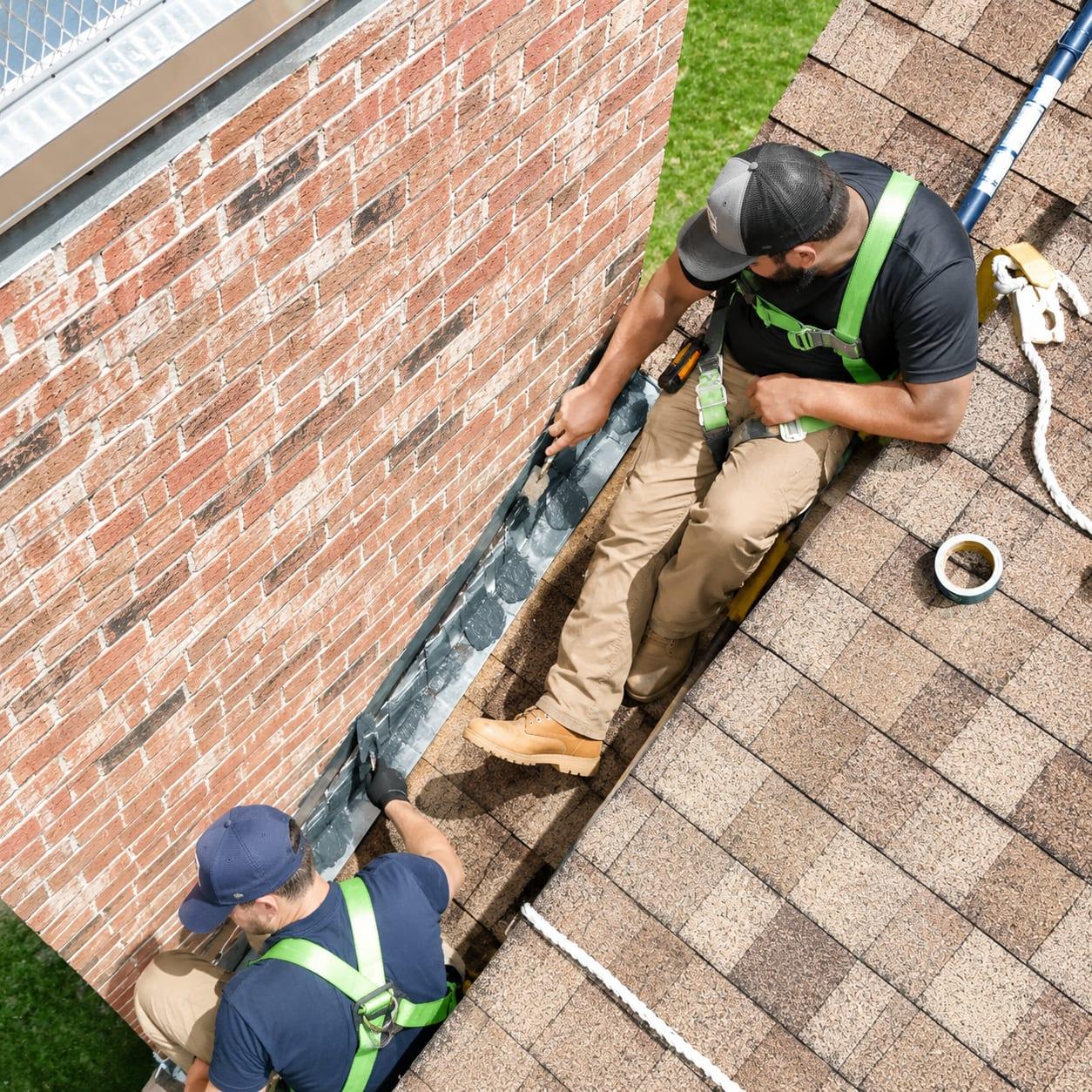
Rust on the damper, firebox, fireplace doors or the metal parts of a prefab unit almost always points to moisture. Common sources include a damaged cap, a leaking chase cover, failed flashing where the chimney meets the roof, or a cracked crown. We find where the water is getting in and fix it, then repair or replace the rusted parts. On brick chimneys, waterproofing the masonry can help keep water from soaking back in.
Fireplace restoration
An older fireplace that has sat unused or been neglected can often be brought back into service. Restoration usually combines several repairs: firebox and smoke chamber work, a new or repaired damper, mortar repair, and new doors or glass. Each part is checked first, so you know what the fireplace needs before work begins.
When a different job fits better
- If the problem is creosote buildup or a dirty flue rather than damage, a chimney sweep and cleaning is the right job.
- If you need a full report on the chimney's condition, for example before buying a home or after a storm, a chimney inspection comes first.
- If the masonry above the roofline is too far gone to repair, a chimney rebuild is the right job.
- If you're adding a fireplace or stove where there's no chimney, that's a chimney installation.
Safety while you wait for a repair
If you've found cracked flue tiles, smoke coming into the room or loose bricks at the top of the chimney, stop using the fireplace or stove until it has been repaired. Keep working smoke and carbon monoxide detectors in the home, and don't try to close up or patch a flue yourself.
Emergency chimney repair
Emergency calls are accepted, with 24-hour service seven days a week.
A short history of the fireplace
How the fireplace originated
The fireplace grew out of the open fire in the middle of a dwelling, where smoke escaped through a hole in the roof. As buildings gained more rooms and upper floors, the fire moved to an outside wall. By around the 12th century in Europe, hearths were being built with hoods and chimneys to carry the smoke away, and the masonry fireplace and chimney developed from there.
How fireplaces looked in the 1600s and 1700s
Fireplaces of the 1600s and 1700s were large, wide hearths built for cooking as much as for heating, often with iron cranes and pot hooks over the fire. Their big, open throats sent much of the heat up the chimney along with the smoke. In the 1790s, Count Rumford published a design with a shallower firebox, angled sides and a narrower throat. It reflected more heat into the room and cut down on smoke, and many later fireplaces follow his ideas.
Booking chimney repair in San Jose
To book, call or request an estimate and tell us what you're seeing. Same-day visits are available where the schedule allows, and 24-hour service runs seven days a week.
We work on all major fireplace, stove and insert brands, including gas fireplaces and gas appliances. We also take on commercial and property-manager work. Outside San Jose, we handle chimney repair in Palo Alto and chimney repair for Los Gatos homes.
Related work covered on this page
- Chimney Chase Cover Repair