When smoke has nowhere to go
The flue is the open channel inside your chimney that carries smoke, heat and combustion gases up and out of the house. When something partly or fully closes that channel, those gases slow down or turn around, and some of them end up indoors. That includes carbon monoxide, which you can't see or smell.

A blocked chimney flue can affect an open wood-burning fireplace, a wood or pellet stove, a fireplace insert, or a gas fireplace that vents through a chimney. The signs often start small, so it helps to know what to watch for.
Common signs of a blocked chimney flue
Signs worth taking seriously
- Smoke spills into the room instead of rising, even with the damper open
- The fire is hard to light, burns poorly or goes out on its own
- A strong smoky or sour smell from the fireplace, even when it isn't in use
- Twigs, leaves, nesting material or loose soot falling into the firebox
- Scratching, chirping or other animal sounds inside the chimney
- Bits of brick, mortar or clay tile showing up in the firebox
- Black soot stains forming on the face of the fireplace or on gas fireplace glass
- If a carbon monoxide alarm sounds, get everyone outside and call 911.
What can block a flue
Several different things can choke a flue, and the signs overlap. An inspection of the flue, sometimes with a chimney camera, is what confirms the actual cause in your chimney. These are the possibilities we look for:
Possible causes and how each one is checked
01Creosote and soot buildup
- What you may notice
- Heavy black or tar-like deposits on the damper and smoke chamber, a strong smoky odor, a fire that draws worse over time.
- How it’s confirmed
- Visual inspection from the firebox and a camera run up the flue to see how thick the deposits are and how far they reach.
02Bird or animal nests
- What you may notice
- Twigs and nesting material in the firebox, scratching or chirping sounds, droppings, often in a chimney without a cap or screen.
- How it’s confirmed
- Inspection from the firebox and from the top of the chimney to find the nest and check whether animals are still inside.
03Leaves and wind-blown debris
- What you may notice
- Leaves or debris in the firebox, sudden smoke problems after windy weather, a missing or damaged chimney cap.
- How it’s confirmed
- Inspection of the cap and the top of the flue, then a look down the flue to see how far the debris has settled.
04Fallen masonry or broken liner pieces
- What you may notice
- Chunks of brick, mortar or clay tile in the firebox, often after a storm or in an older, weathered chimney.
- How it’s confirmed
- Camera inspection of the liner and an exterior check of the crown and chimney top for the source of the debris.
05A damper stuck closed or partly closed
- What you may notice
- Smoke backs up right away, the damper handle won't move fully, or it moves but the plate doesn't open.
- How it’s confirmed
- Checking the damper by hand and with a light from the firebox. This isn't a true flue blockage, but it causes the same symptoms.
Thick creosote does more than restrict draft. It is also the fuel that a chimney fire burns, so a flue coated heavily enough to slow the smoke needs attention before the next fire. If brick or tile pieces turned up after high winds, the blockage may be one part of a bigger problem with chimney storm damage that also needs repair.
How urgent is a blocked flue?
Stop using it now if any of these happen
If your carbon monoxide alarm sounds, or anyone feels headachy, dizzy or nauseated while the fireplace or stove is running, get everyone outside and call 911 from there. Stop adding fuel, open a window and don't relight the fire until the chimney has been checked. If the smoke is heavy, an alarm sounds or you suspect a chimney fire, get everyone outside and call 911. Don't use the fireplace again until the flue has been inspected and cleared.
Slower signs, like a fire that's harder to start, a growing smoky smell or occasional debris in the firebox, are less of an emergency but still a reason to stop burning until the chimney has been checked. A partial blockage can get worse quickly, especially if animals keep building or creosote keeps collecting.
What fixes a blocked chimney flue
How a blockage is usually cleared
Inspect the flue
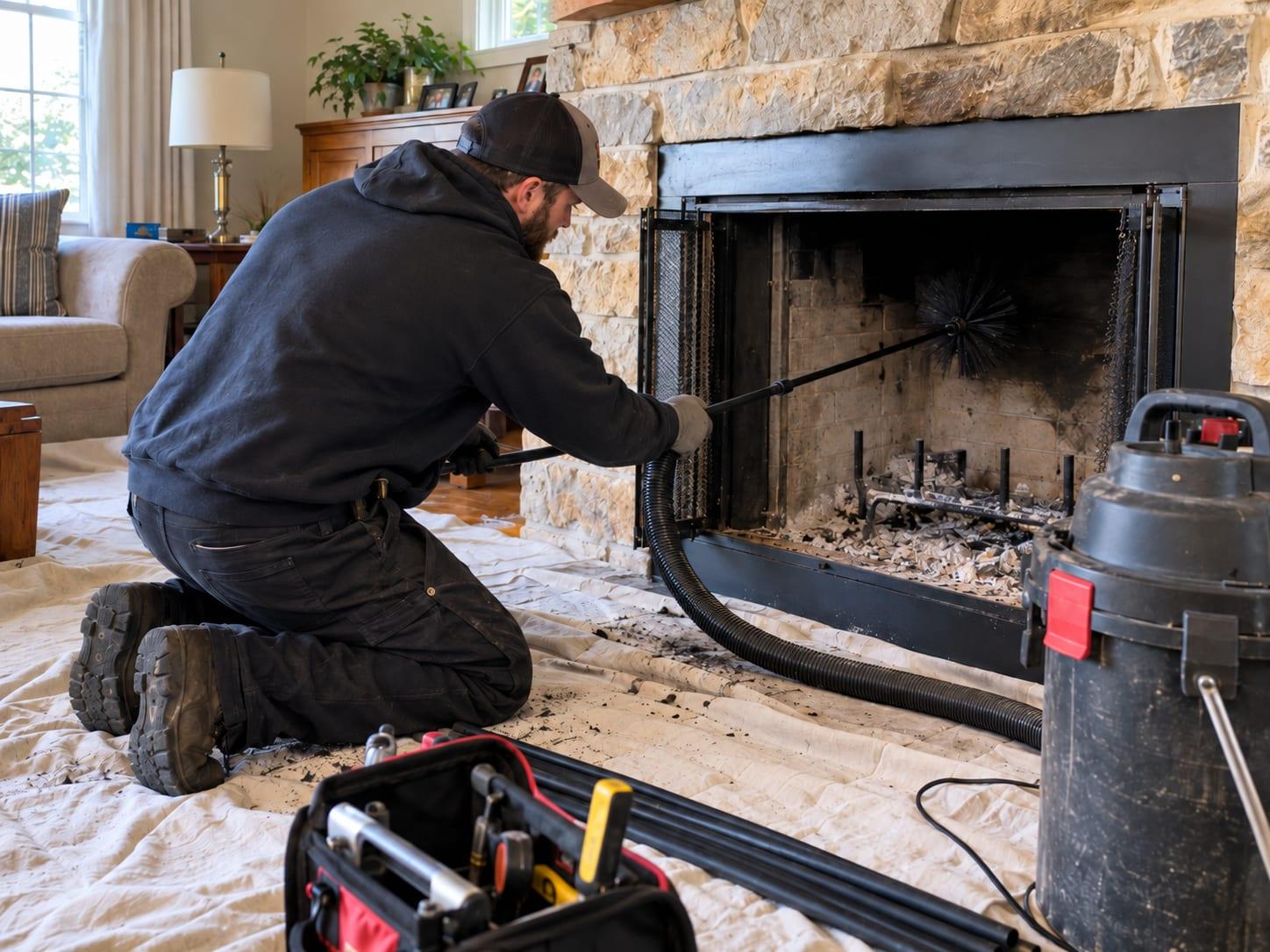
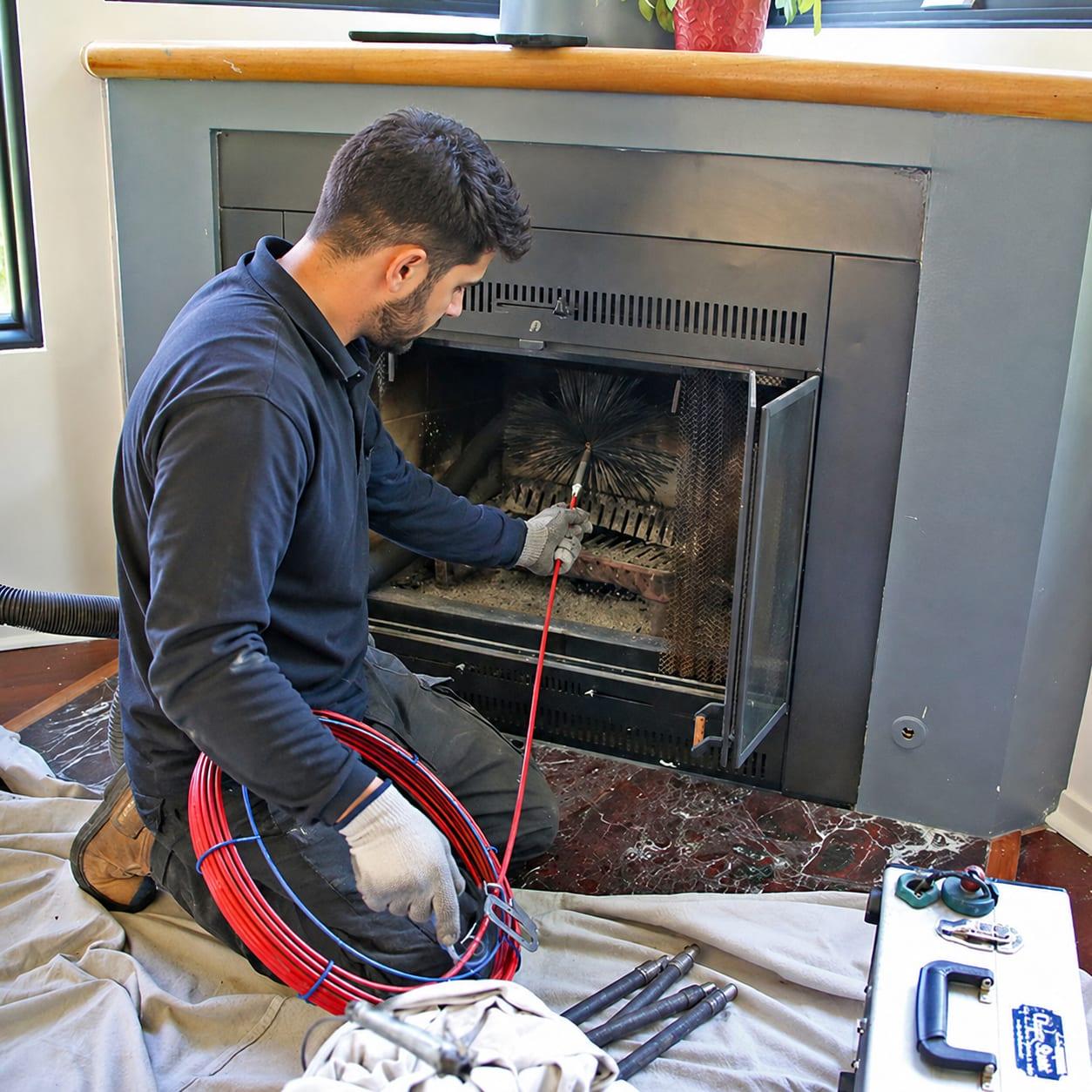
We check the firebox, damper, smoke chamber and chimney top, and use a chimney camera when the blockage or the liner's condition can't be seen directly.
Remove the blockage
Nests, debris, fallen masonry or creosote plugs are removed from the flue with tools suited to the chimney type, taking care not to damage the liner.
Clean the flue
Once the obstruction is out, the flue is swept so smoke and gases can move freely, and any heavy creosote is removed.
Fix what let it happen
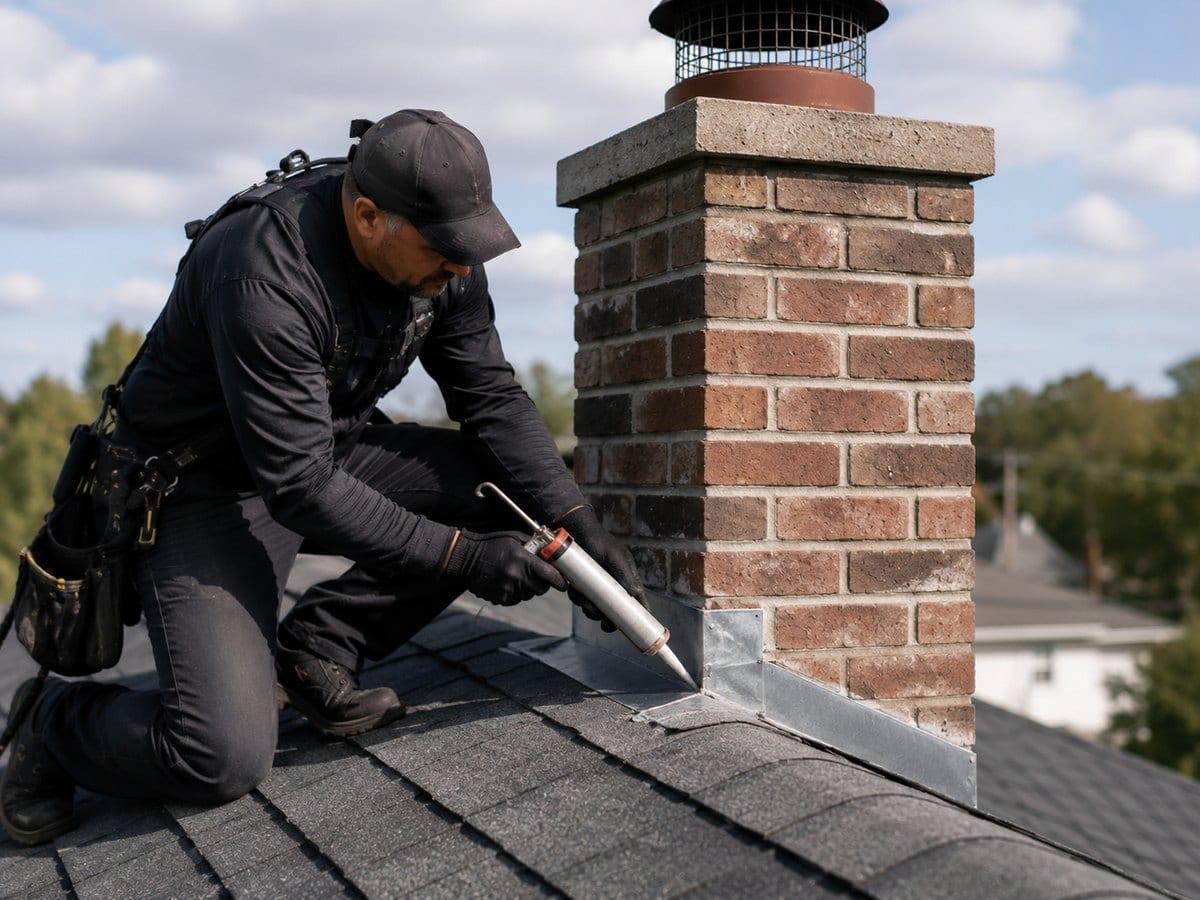
Depending on the cause, that may mean installing or replacing a chimney cap, adding an animal screen, repairing a damaged liner or damper, or repairing the crown or masonry.
For nests, debris and fallen material, our chimney blockage removal service is usually the main fix. When the cause turns out to be buildup along the whole flue rather than one obstruction, a full cleaning is the answer, and you can read how chimney sweep works before your visit.
Why the type of chimney matters
A masonry chimney with clay tile liners, a metal-lined flue and a factory-built prefab chimney each block, and clear, a little differently. If you're not sure what you have, our guide to different types of chimneys explains how to tell them apart.
What not to do
- Don't build a hotter fire to try to burn the blockage out. That can ignite creosote or a nest and start a chimney fire.
- Don't climb onto the roof to look down the chimney or pull debris out from the top.
- Don't push rods or poles blindly up the flue. You can pack the blockage tighter or crack a liner.
- Don't seal the top of a chimney that may have animals inside, and don't try to smoke them out.
- Don't treat creosote-removal logs as a substitute for having a blocked flue inspected and cleaned.
If you're weighing a hands-on approach for routine upkeep, DIY vs chimney cleaning lays out what a homeowner can reasonably handle and where a blockage calls for professional tools.
Get the flue checked
Emergency calls are accepted, 24-hour service runs seven days a week, and same-day visits are available where the schedule allows. We also handle commercial and property-manager work, and gas fireplace and gas appliance work.