Water showing up around the fireplace after rain
The pattern is easy to recognize: everything is dry for weeks, then a storm comes through and you find a brown ring on the ceiling next to the chimney, wet streaks on the wall, or water pooling on the hearth. Sometimes it is only a smell, damp and musty, that gets stronger after rain.
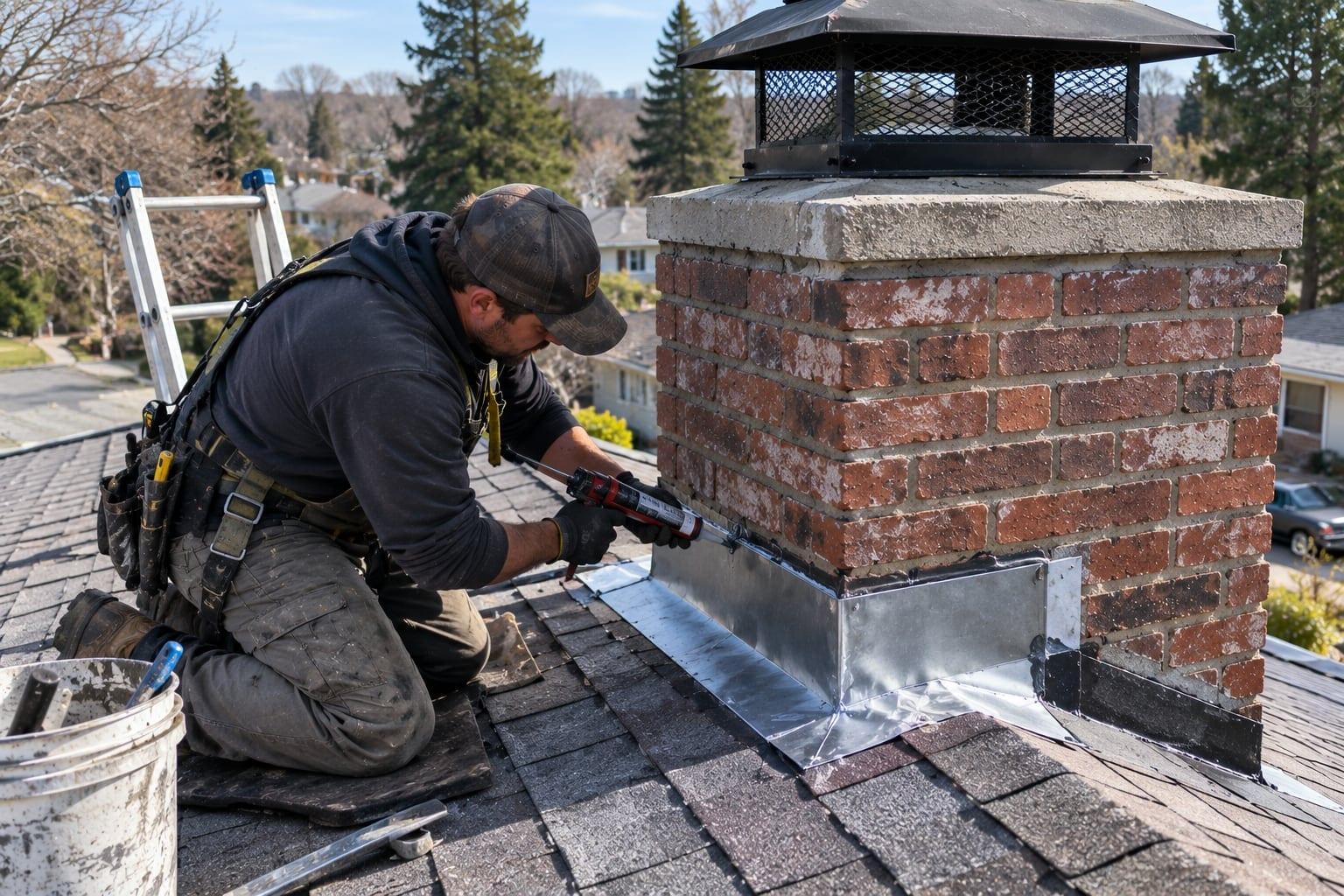
A chimney sticks up through the roof and takes rain from every side, so there are several ways water can get in. Water also travels before it drips. It can run along brick, flue tiles, roof framing or the inside of a metal chase, then show up a few feet from where it entered. That is why a stain on the ceiling does not always mean the problem is directly above it.
Common signs of a chimney leaking when it rains
What homeowners usually notice
- Water stains or peeling paint on the ceiling or walls next to the chimney
- Drips, puddles or wet ash in the firebox after a storm
- A musty or sour smell from the fireplace that is worse in wet weather
- Rust on the damper, firebox, fireplace doors or the top of a metal chimney
- White, chalky deposits (efflorescence) on brick inside or outside
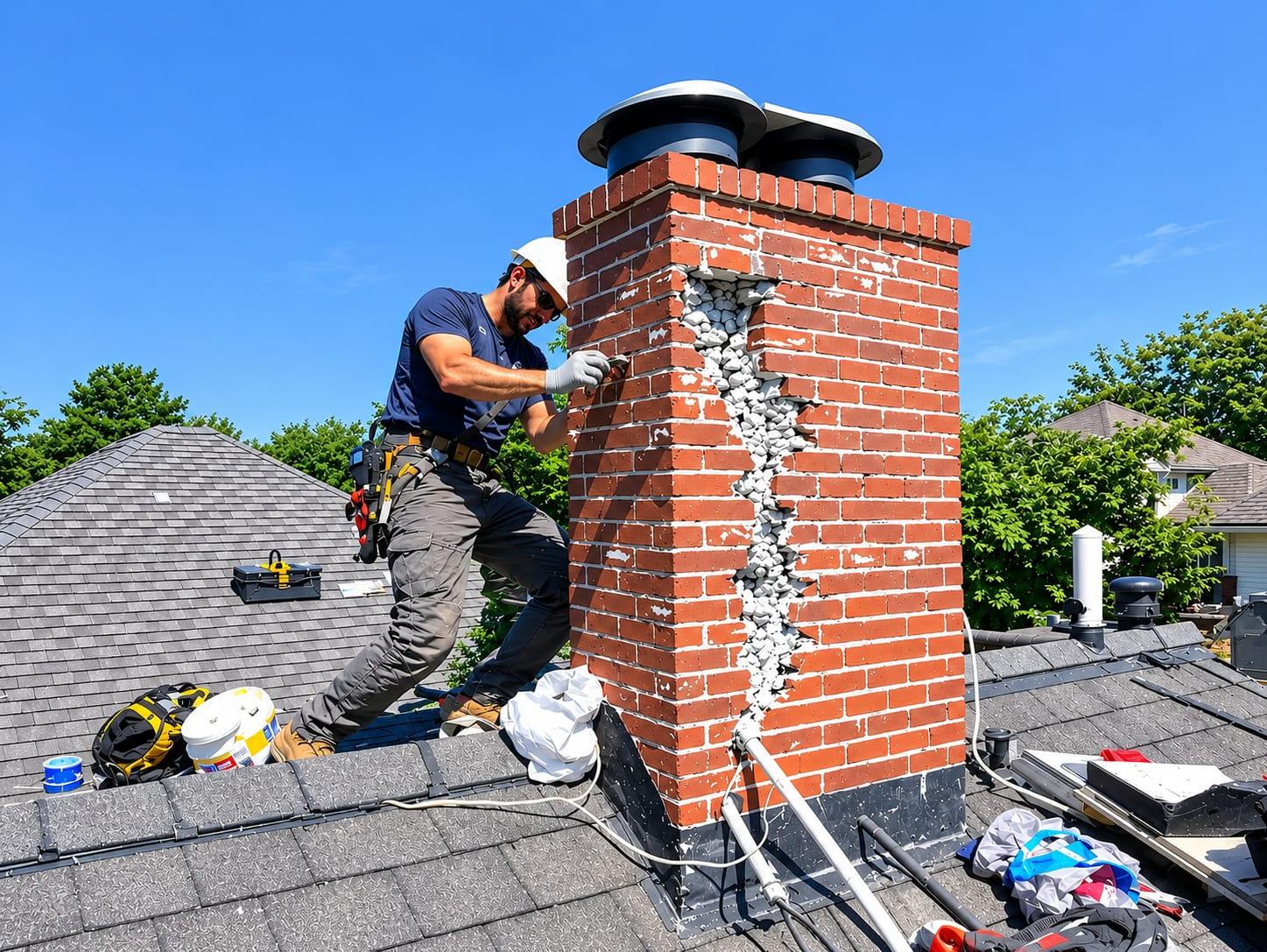
- Cracked, crumbling or flaking brick and mortar on the chimney
- Damp or stained attic framing around the chimney
- Bits of tile, mortar or masonry falling into the firebox
Possible causes of a rain leak
Each of these can let rain in, and more than one can be at work at the same time. An inspection confirms which one is actually responsible. Matching the signs to a cause from the ground is a starting point, not a diagnosis.
Where rain may be getting in
01Cracked or deteriorated chimney crown
- What you may notice
- Leaks that show up inside the flue or firebox, crumbling concrete or mortar at the top of the chimney, damp masonry near the top
- How it’s confirmed
- The crown is examined up close on the roof for cracks, gaps around the flue and spots where water sits
02Failed or loose flashing
- What you may notice
- Stains on the ceiling or wall where the chimney meets the roof, damp attic framing beside the chimney
- How it’s confirmed
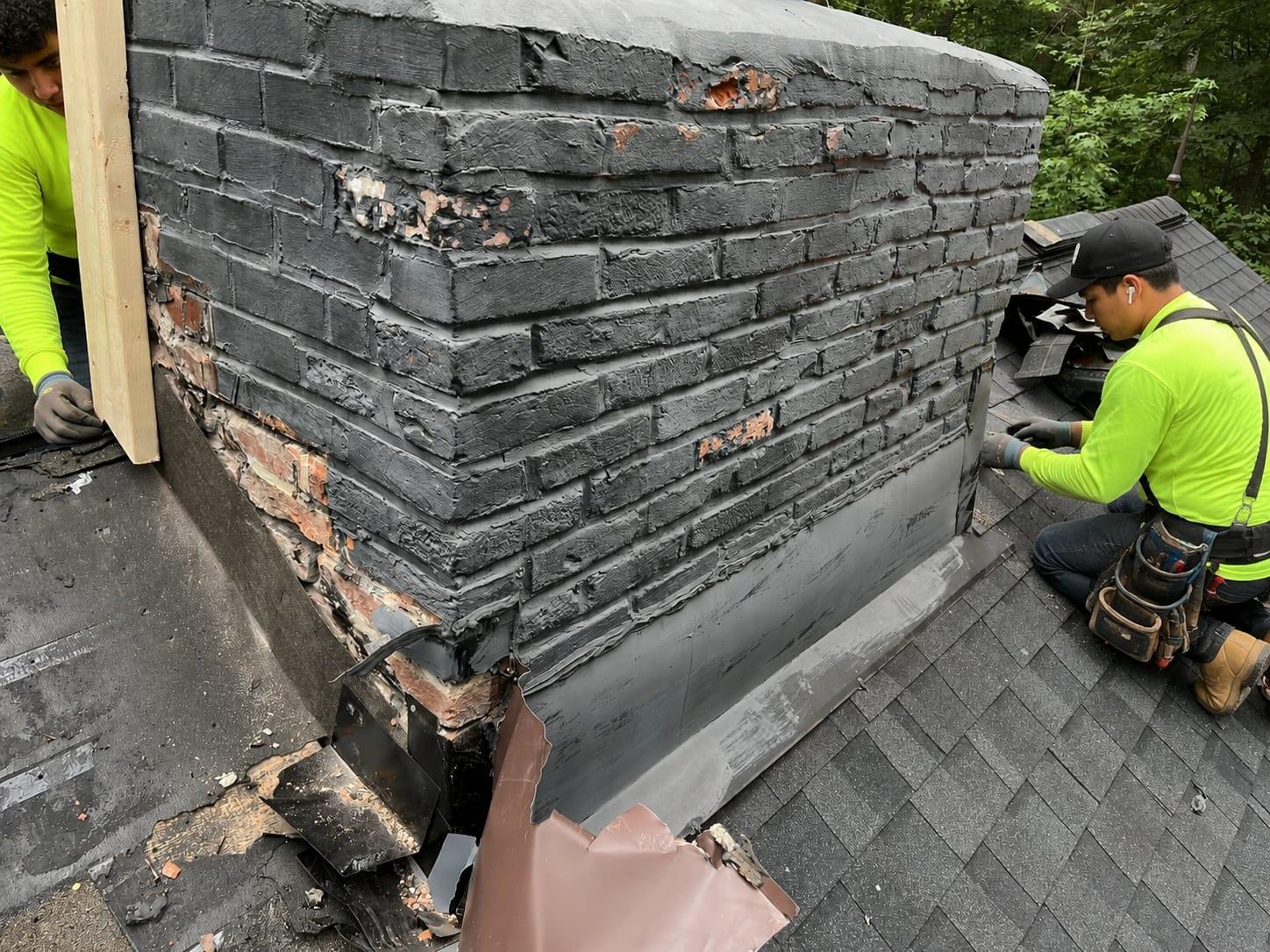
- The metal flashing and its seal against the brick and roofing are checked for gaps, lifted edges, rust and old caulk
03Missing or damaged chimney cap
- What you may notice
- Rain falling straight into the firebox, wet ash, rust on the damper
- How it’s confirmed
- The top of the flue is checked to see whether a cap is there and whether it is intact and fits properly
04Porous brick and worn mortar joints
- What you may notice
- Damp patches on the chimney's sides, efflorescence, flaking brick faces, open mortar joints
- How it’s confirmed
- The masonry is inspected for open joints, spalling brick and how readily the surface takes on water
05Rusted or sagging chase cover (factory-built chimneys)
- What you may notice
- Rust streaks down the chase siding, water inside a prefab fireplace, rust on the metal firebox
- How it’s confirmed
- The chase cover is checked for rust, holes, standing water and a poor seal around the flue
Crown problems are among the more common culprits because the crown takes the full force of rain and sun, and small cracks grow over time. If that is what you suspect, our guide to cracked chimney crown causes, signs and repair goes into more detail.
How urgent is a rain leak?
Most rain leaks are not an emergency the way a chimney fire is, but they rarely fix themselves. Every storm sends more water into the masonry, the flue and the framing around the chimney, so the damage, and the repair, tends to grow the longer it waits. Getting it looked at before the next stretch of wet weather is usually the sensible move.
When to stop using the fireplace
Hold off on fires until the chimney has been inspected if you see pieces of flue tile or mortar in the firebox, loose or crumbling brick inside the firebox, heavy rust on the damper or a metal firebox, smoke coming back into the room, or bricks loose or falling outside. If water has reached a gas fireplace's controls or valve, have it checked before you use it again. If you ever smell gas, leave the house and call your gas utility from outside.
Some signs point to a problem that should not wait at all; this rundown of when a chimney needs immediate repair covers them. Emergency calls are accepted, and 24-hour service runs seven days a week.
What normally fixes it
The repair depends on where the water is getting in, so the first job is finding the entry point. A typical match between cause and repair looks like this:
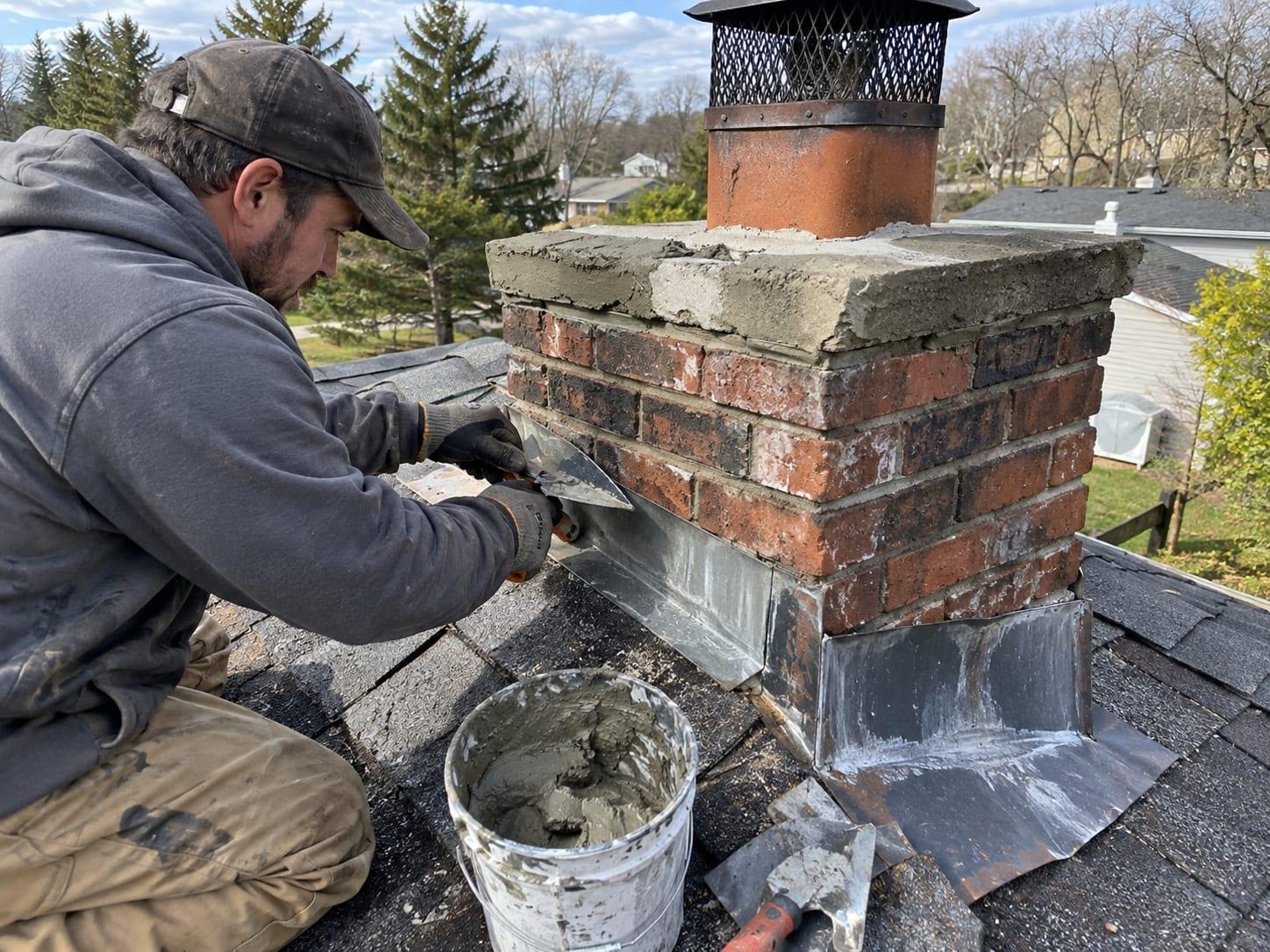
- Crown cracks: small cracks can often be sealed, while a crown that is breaking apart may need to be rebuilt; the chimney crown repair service handles both.
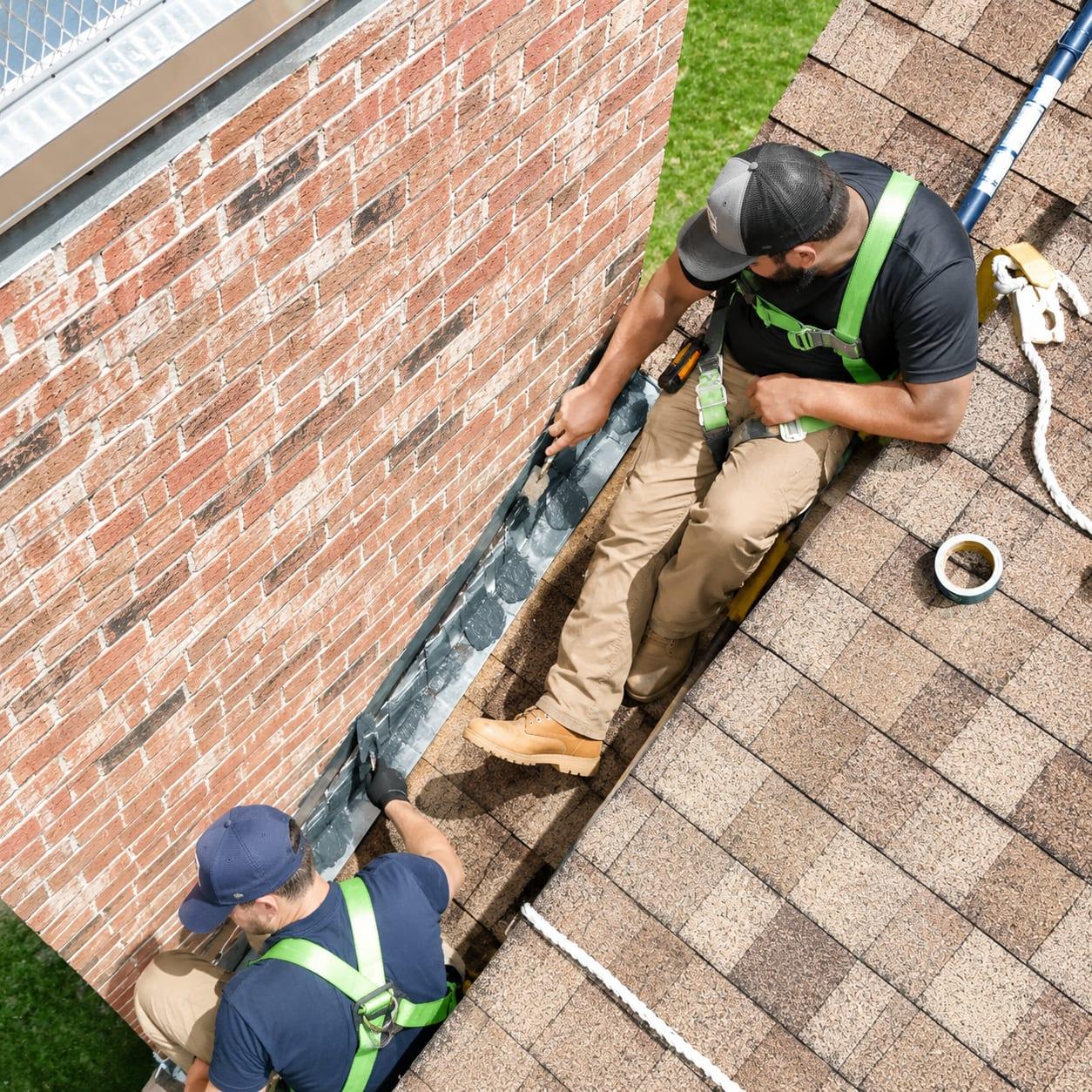
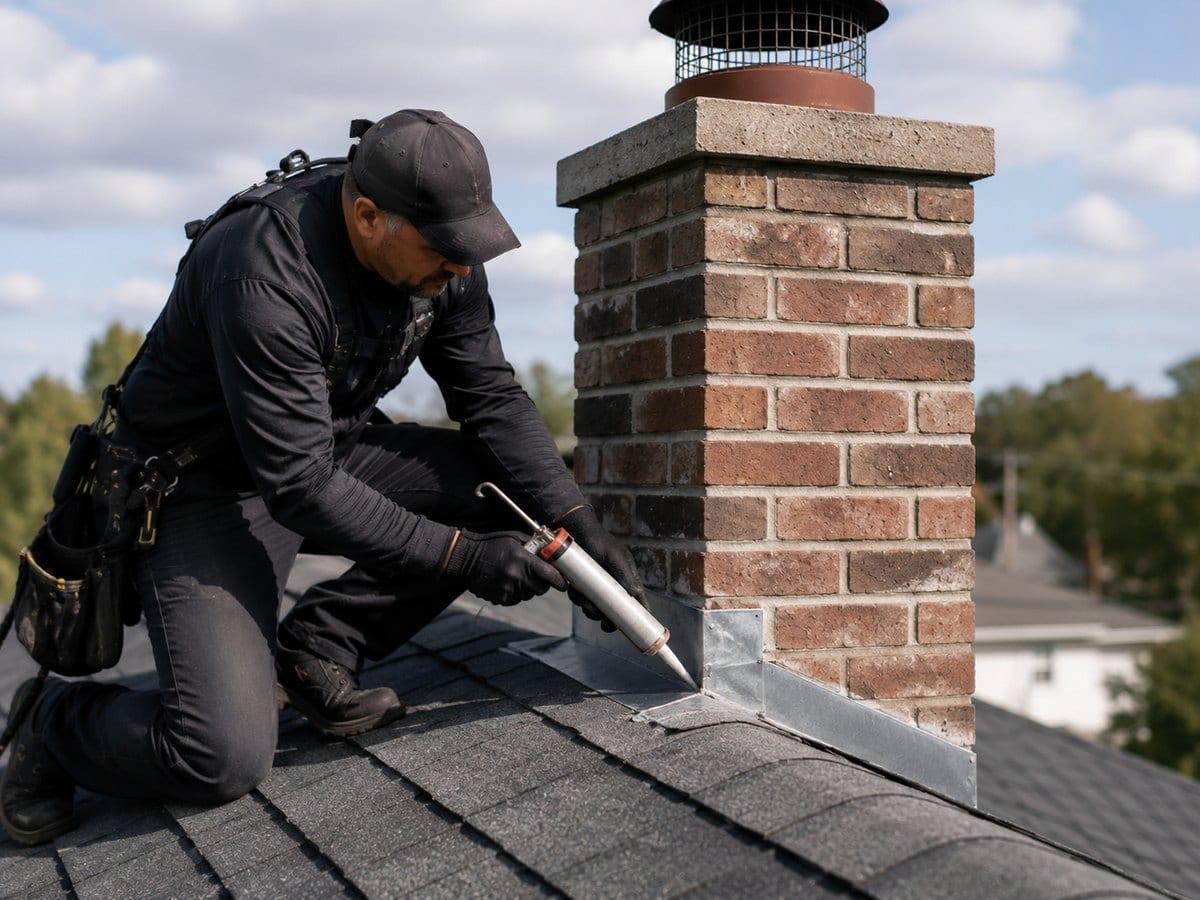
- Flashing gaps: the flashing is resealed or replaced so the joint between chimney and roof sheds water again; here is how chimney flashing repair works.
- Missing or damaged cap: a new cap is installed or the damaged one is replaced to keep rain out of the flue.
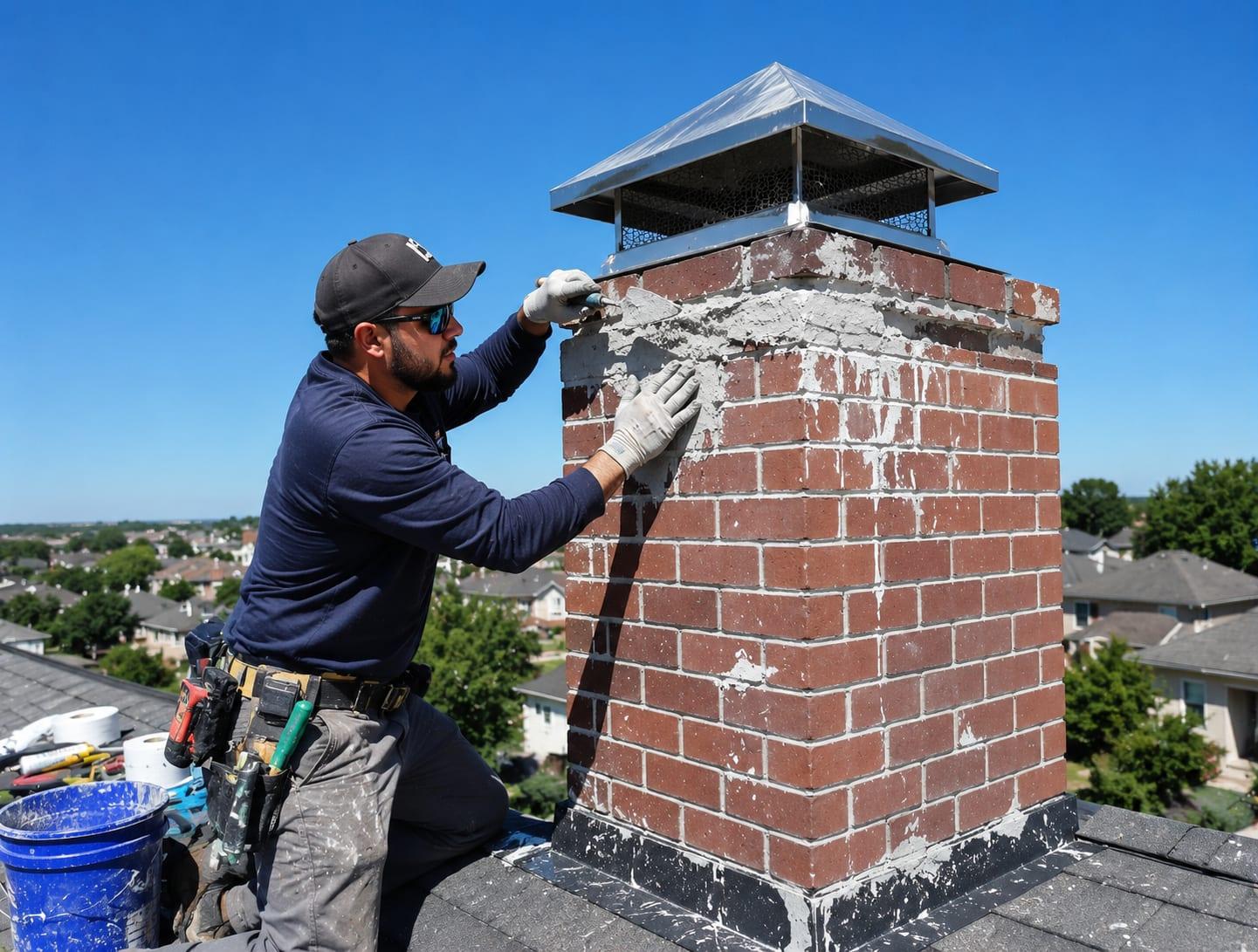
- Worn mortar and porous brick: tuckpointing and masonry repair close the joints, and a breathable water repellent can then be applied as chimney waterproofing.
- Prefab chase leaks: the chase cover is repaired or replaced.
- Damage the water already caused: damper, liner, firebox or smoke chamber repairs, depending on what the inspection finds.
How a leak repair usually goes
Inspect
The chimney is checked from the roof and from inside, and a camera inspection of the flue can be used when the inside needs a closer look.
Confirm the source
The entry point, or points, are confirmed and any water damage already done is noted.
Explain the options
You get a clear explanation of what is wrong and what fixes it, with a free estimate.
Repair
The agreed repairs are carried out, starting with whatever stops the water.
Our chimney leak repair work starts with finding where water gets in, because sealing the wrong spot only moves the leak somewhere else.
What not to do
- Don't climb onto a wet or steep roof to look at the chimney yourself.
- Don't rely on a bead of caulk over flashing or crown cracks as a permanent fix; it often fails within a season and can hide the real problem.
- Don't coat brick with paint or a sealer that traps moisture; masonry needs a breathable product.
- Don't keep burning fires if you see falling tile, crumbling firebox brick or smoke coming back into the room.
- Don't wait for the stain to dry and assume the leak is gone; it will usually return with the next storm.
If your chimney leaks when it rains, get in touch to request an inspection and repair for your San Jose-area home.