On this page
What a chimney sweep involves
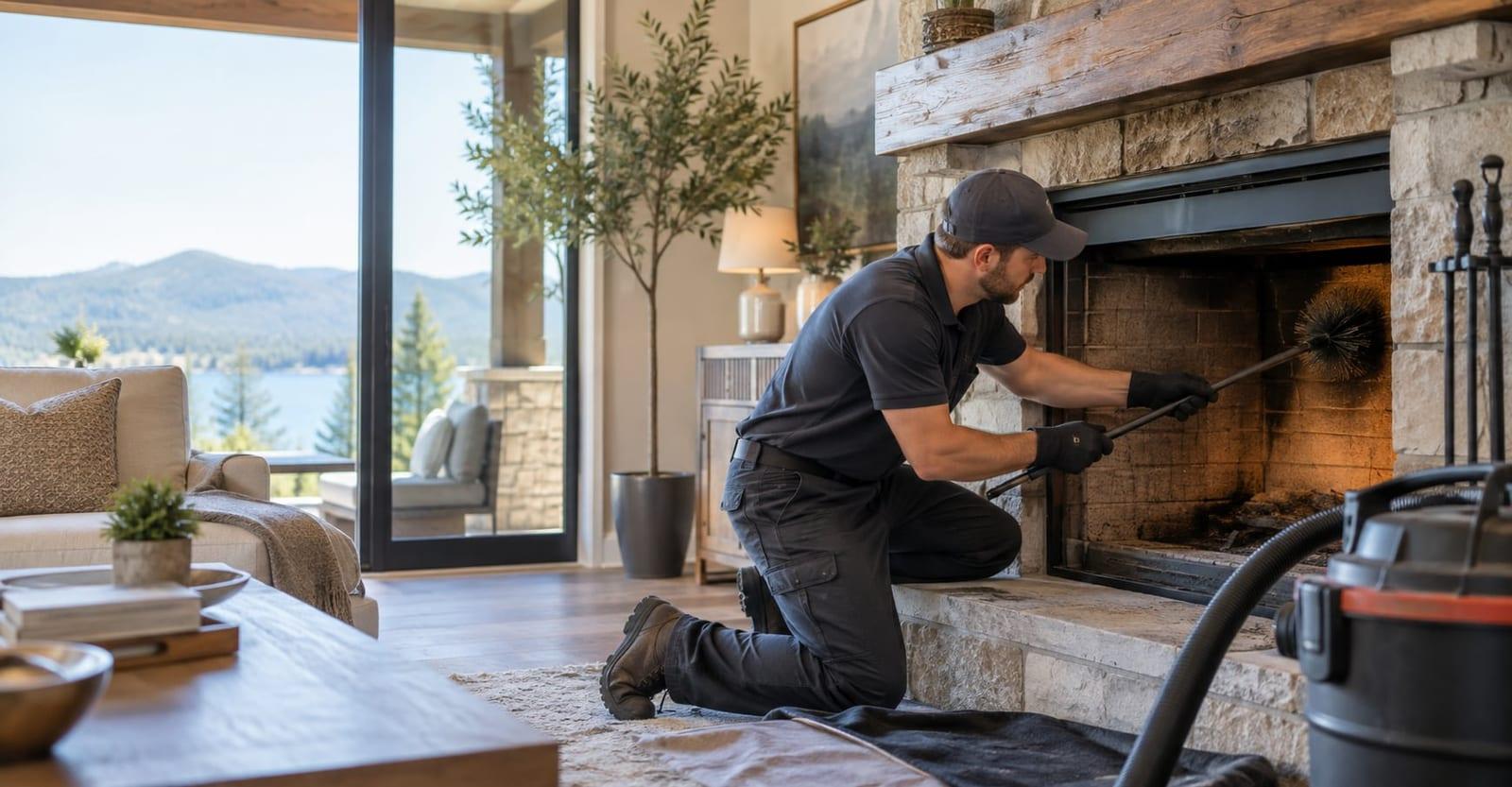
A chimney sweep cleans the inside of the whole venting system. That includes the flue or liner that carries smoke up and out, the smoke chamber just above the damper, the damper itself and the firebox. The goal is to remove soot, creosote, nests and loose debris so the chimney draws properly and less fuel is sitting in the flue for a stray spark to ignite.
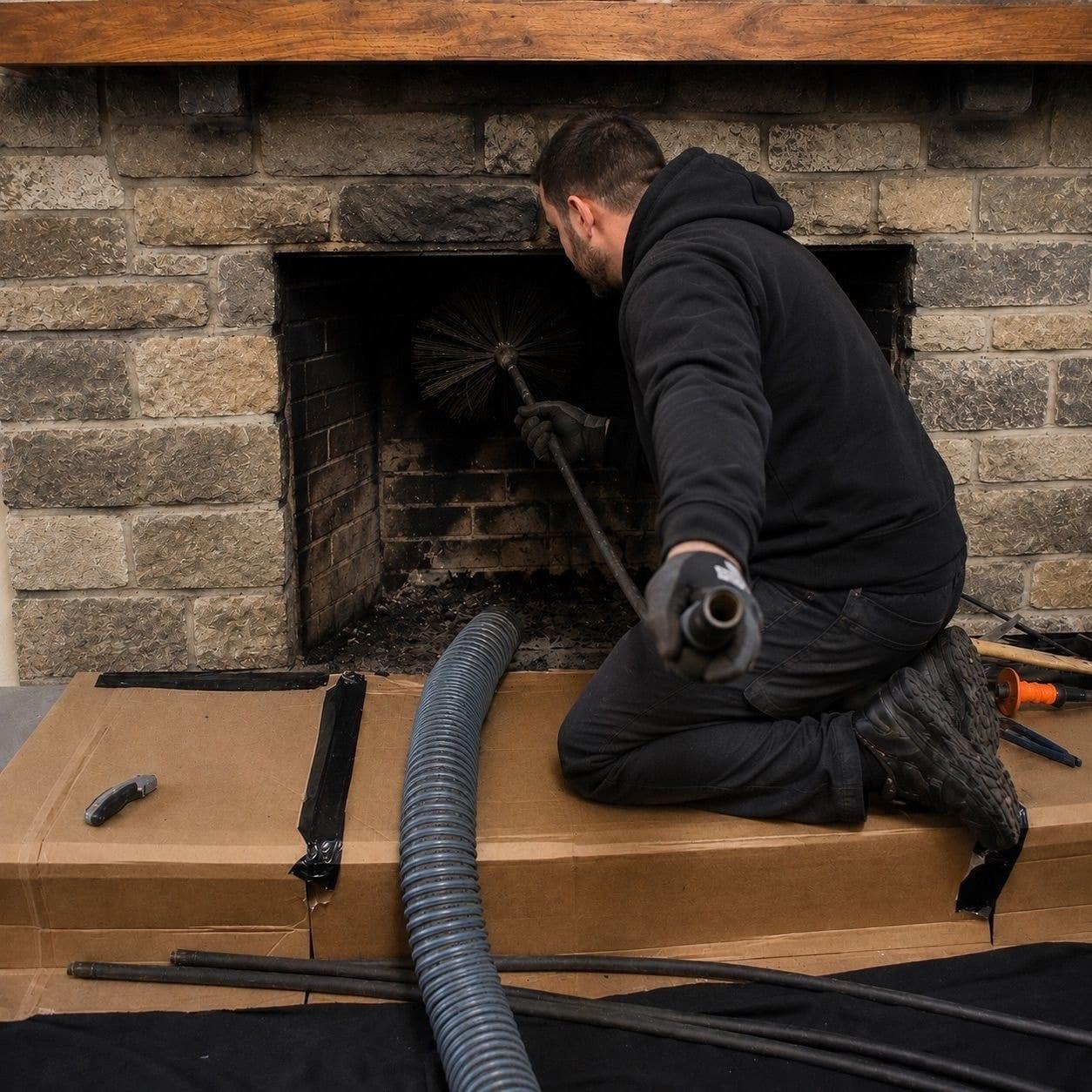
It is a cleaning job, not a repair. While we sweep we see the inside of the chimney up close, so we can point out anything worn, cracked or missing. Fixing those problems is separate work.
Chimney cleaning and chimney sweep: the same job
"Chimney sweep" is the traditional name and "chimney cleaning" is the plain description. Both mean mechanically removing buildup from the flue and the parts around it. Whichever term you use, the cleaning covers the flue or liner, the smoke chamber, the damper, the firebox, and the cap or spark arrestor screen at the top.
Signs your chimney needs sweeping
Common reasons homeowners book a sweep
- Black, flaky or tar-like deposits on the damper or inside the firebox
- Smoke rolling back into the room, or fires that are hard to start and keep going
- A smoky, campfire-like or musty smell from the fireplace, especially on warm or humid days
- A season or more of regular fires since the last cleaning
- Twigs, leaves or debris falling into the firebox, or sounds of birds or animals in the flue
- A wood stove or insert with a dirty glass door that won't stay clean
- Moving into a home where you don't know when the chimney was last cleaned
During a chimney fire, get everyone out and call 911 first. If you need a report on the chimney's condition, for example after a chimney fire or before buying a home, a chimney inspection is the right job rather than a sweep alone.
What happens during the visit
A chimney sweep, step by step
Protect the room
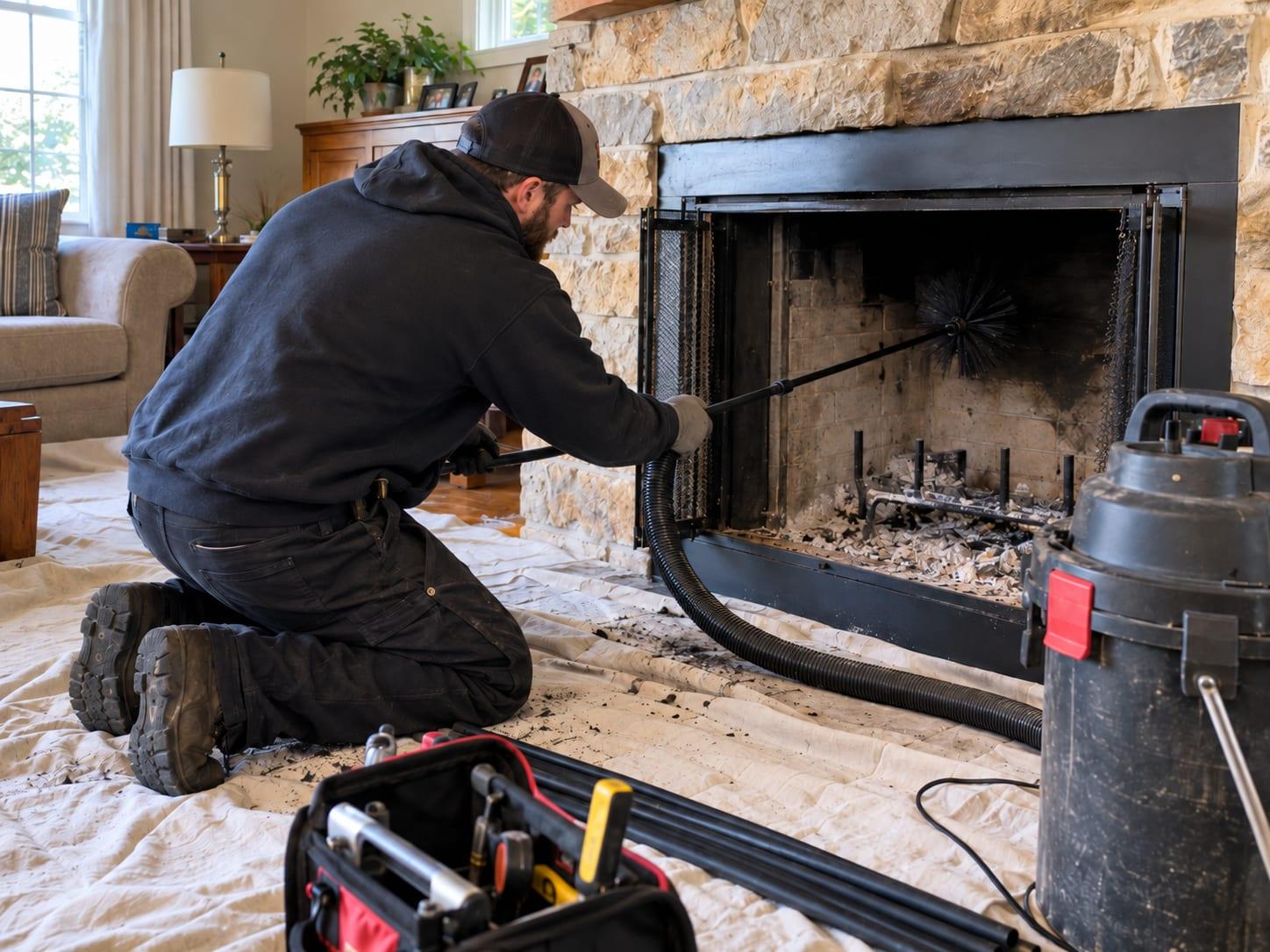
Drop cloths go down around the hearth and the fireplace opening is sealed off, so soot stays out of your home.
Look before cleaning
We check the firebox, damper and smoke chamber, and the top of the chimney where it's reachable, so we know what we're working with.
Sweep the flue
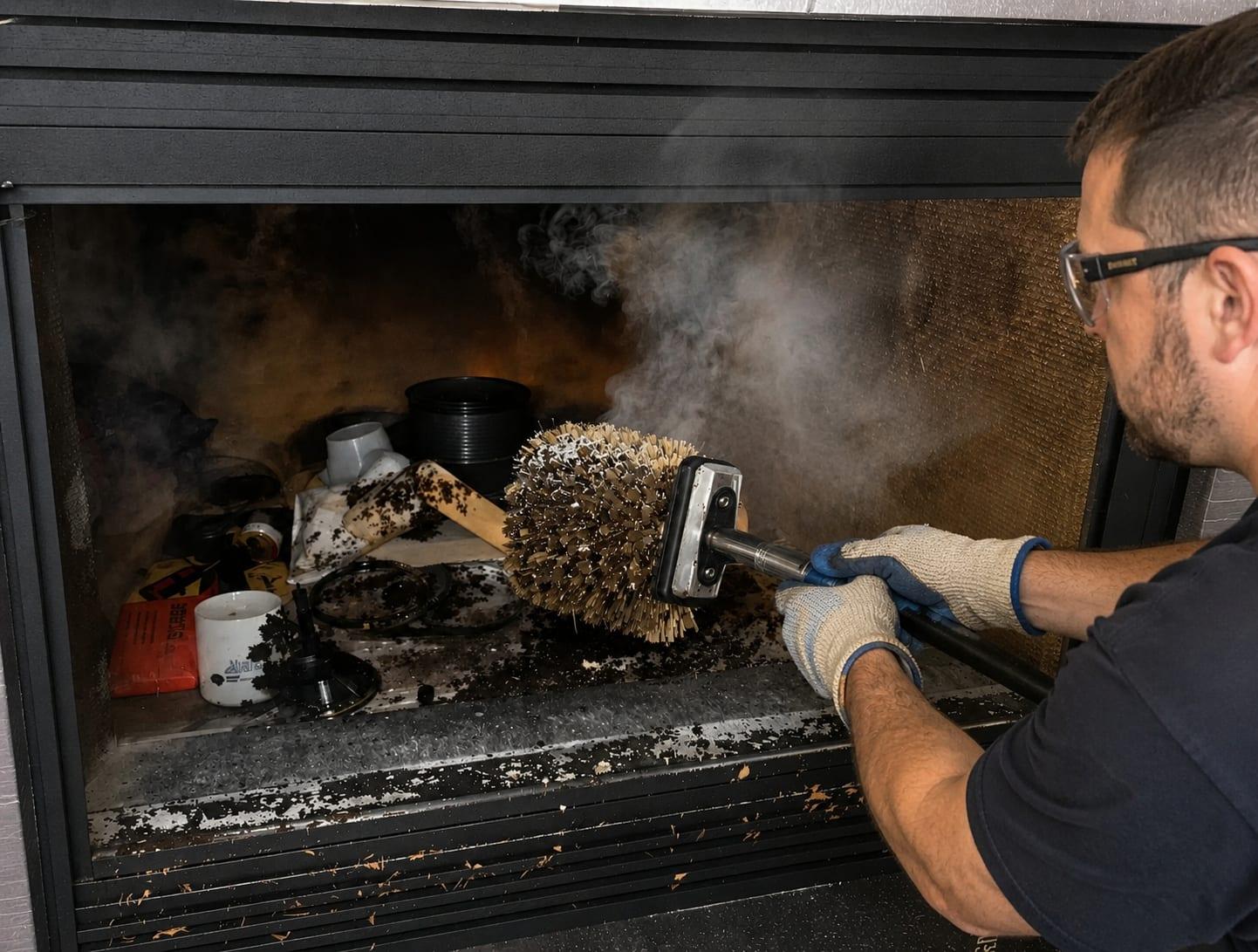
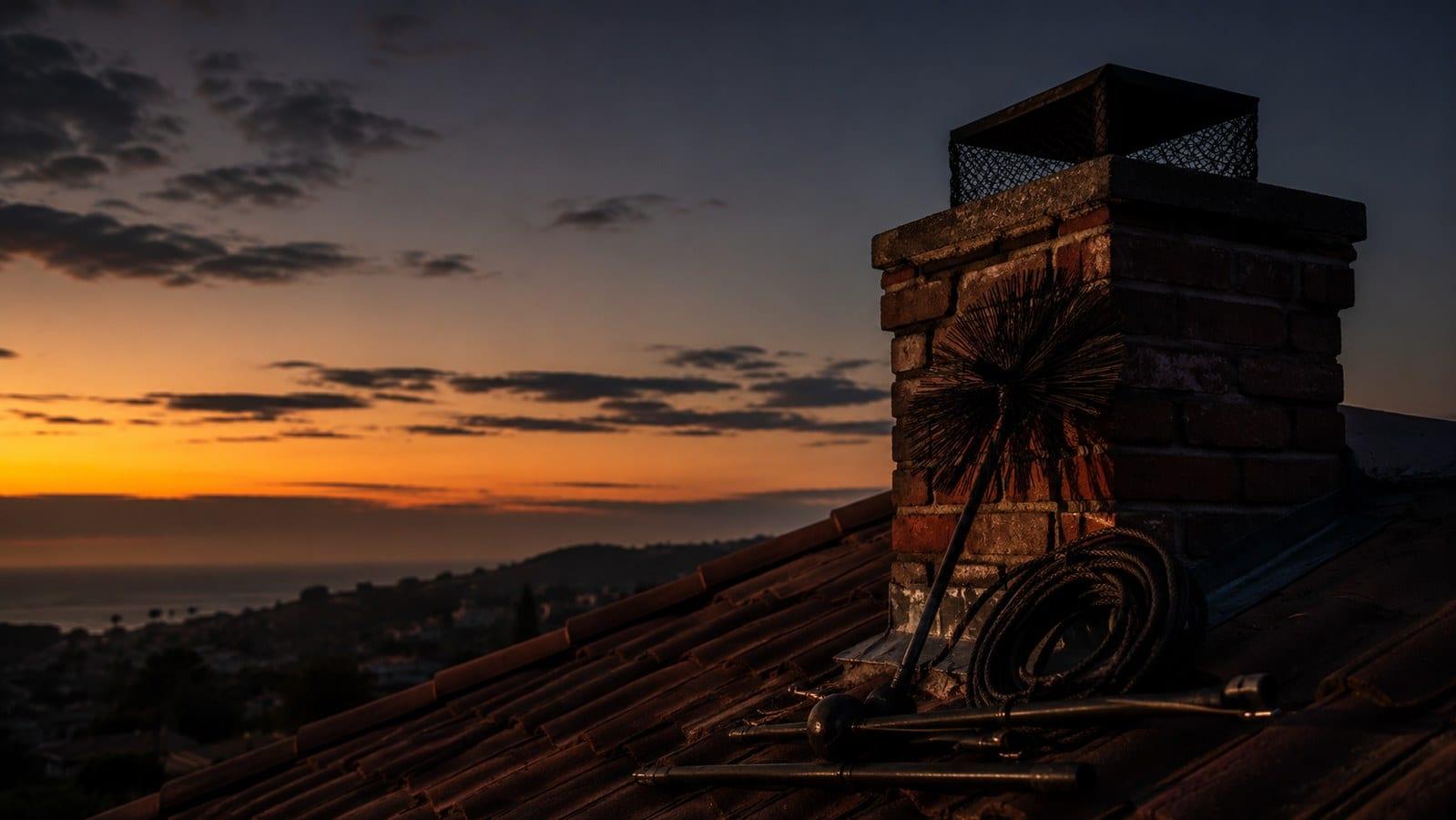
Brushes sized to the flue run its full length with a vacuum running, loosening soot and creosote from the liner walls.
Clean the lower chimney
The smoke chamber, damper and firebox are brushed and vacuumed, and the cap or spark arrestor screen is cleared if it's clogged.
Check what's left
Any creosote that stayed put during brushing, especially hard, glazed deposits, is noted, because it needs a different removal method.
Walk you through it
We tell you what we found, explain anything that needs attention and answer your questions before we leave.
What gets cleaned, part by part
Chimney flue cleaning
The flue is the passage smoke travels through, and it's where most buildup collects. A narrowed flue drafts poorly, and the deposits lining it are what burns in a chimney fire. Flue cleaning is the core of every sweep.
Chimney liner cleaning
Most flues have a liner: clay tile, stainless steel or a cast-in material. Each needs the right brush. A steel brush suits clay tile, while stainless liners are cleaned with brushes that won't scratch them. Cleaning the liner also exposes its surface, which is when cracked tiles, gaps or corrosion become visible.
Chimney vent cleaning
Gas fireplaces, inserts and pellet stoves vent through pipes rather than a traditional masonry flue. Those vents don't collect wood creosote, but they can be blocked by nests, leaves, fine pellet ash or soot from a burner that isn't burning cleanly. Clearing the vent keeps exhaust moving outside. Gas fireplace and gas appliance work is offered.
Caps, spark arrestors and chase covers
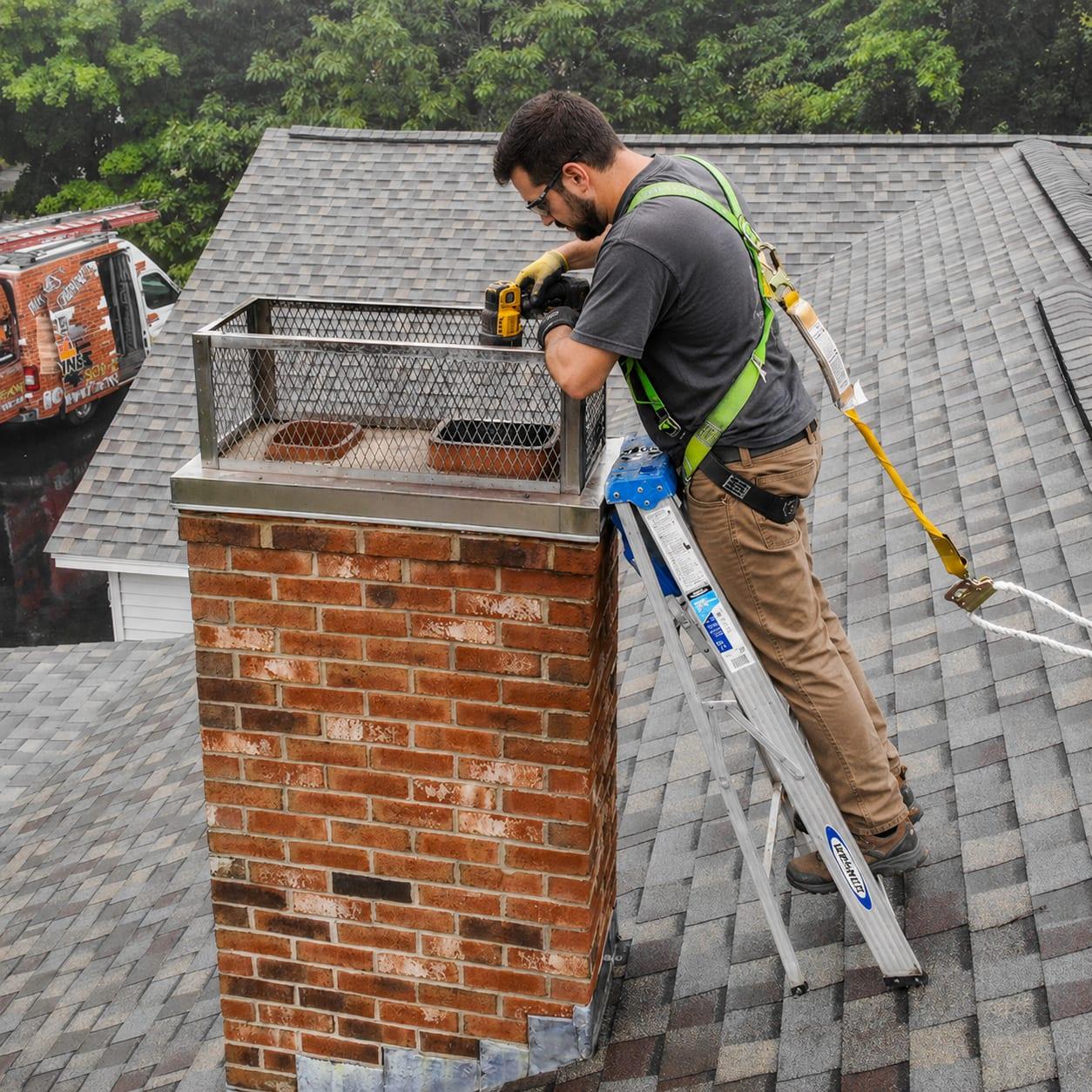
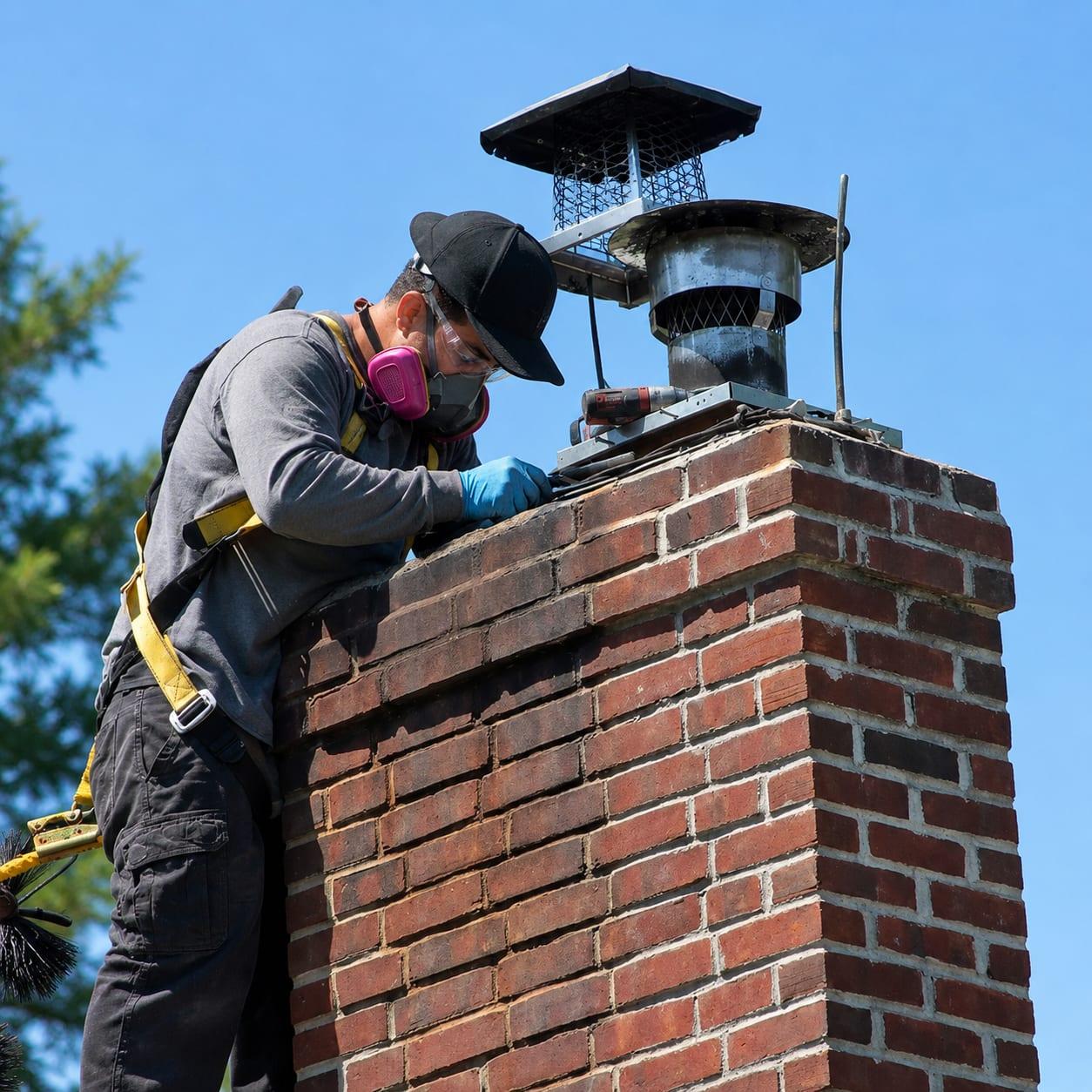
A cap with a spark arrestor screen keeps embers in and animals out, but the screen can clog with soot until it chokes the draft, so it gets cleaned with the flue. Factory-built chimneys sit inside a framed chimney chase topped by a chase cover. We look at that cover for rust or standing water while we're on top.
| Fuel or appliance | What builds up | What the sweep focuses on |
|---|---|---|
| Wood-burning fireplace | Soot and creosote | Flue, smoke chamber, damper, firebox |
| Wood stove or insert | Creosote, often heavier from slow burns | Stove pipe or liner, baffle area, connection to the chimney |
| Pellet stove | Fine ash | Vent pipe and the stove's exhaust path |
| Gas fireplace or gas logs | Debris, nests, soot from a misadjusted burner | Vent, termination cap, firebox area |
We work on all major fireplace and stove brands.
Chimney creosote: why the buildup matters
Creosote forms when smoke cools inside the flue and its tars and unburned wood compounds condense on the walls. It builds up faster with wet or unseasoned wood, smoldering fires, restricted air and flues that run cool. It is flammable, and a thick layer is the fuel behind most chimney fires.
- First stage: dry, flaky soot that brushes off easily.
- Second stage: crunchy, tar-like flakes that need more work to break loose.
- Third stage: a hard, shiny glaze that coats the flue and doesn't come off with ordinary brushing.
Regular sweeping keeps buildup in the early stages. When glazed creosote is found, a dedicated creosote removal service uses methods made for those deposits.
A broken chimney: when sweeping isn't enough
Sweeping often brings damage into view: cracked or missing flue tiles, gaps between liner sections, a crumbling crown, loose bricks or mortar, or a rusted cap or chase cover. A damaged flue can let heat and smoke reach parts of the house they shouldn't. If we find that kind of damage, we'll recommend holding off on fires until it's fixed.
Cracks, loose brick and failing mortar call for chimney repair and masonry work rather than another cleaning. A leaky chimney often shows itself first through stains, peeling paint or rust, and these signs of a water-damaged chimney are worth knowing.
Safety and upkeep between sweeps
- Burn dry, seasoned hardwood. Wet wood makes more smoke and more creosote.
- Give fires enough air. Long, smoldering burns cool the flue and coat it faster.
- Open the damper fully before lighting, and keep it open until the fire is completely out.
- Keep the cap and screen in place to block rain, animals and embers.
- Don't burn trash, cardboard or treated wood, which leave heavy deposits and can send burning debris up the flue.
Signs of a chimney fire
A loud roaring or popping sound, dense smoke and a strong hot smell can mean a fire inside the chimney. If you hear roaring or see flames or sparks from the top of the chimney, get everyone out and call 911. Get everyone out of the house and call the fire department. Don't light the fireplace again until the chimney has been checked.
Some homeowners try to sweep their own chimneys. Before you do, read our comparison of DIY vs. professional chimney cleaning so you know what the job involves.
Booking a chimney sweep in San Jose
Estimates are free. Call or request an estimate and tell us what you burn, roughly when the chimney was last cleaned and anything you've noticed, such as smoke, smells or debris. That helps us come prepared.
Same-day chimney sweep
Same-day visits are available where the schedule allows.
Emergencies, rentals and commercial buildings
Emergency calls are accepted, and 24-hour service runs seven days a week. Commercial and property-manager work is offered. Owners of rentals or larger buildings can learn more about our commercial and property management chimney services.
Related work covered on this page
- Chimney Flue Cleaning