On this page
What chimney masonry repair covers
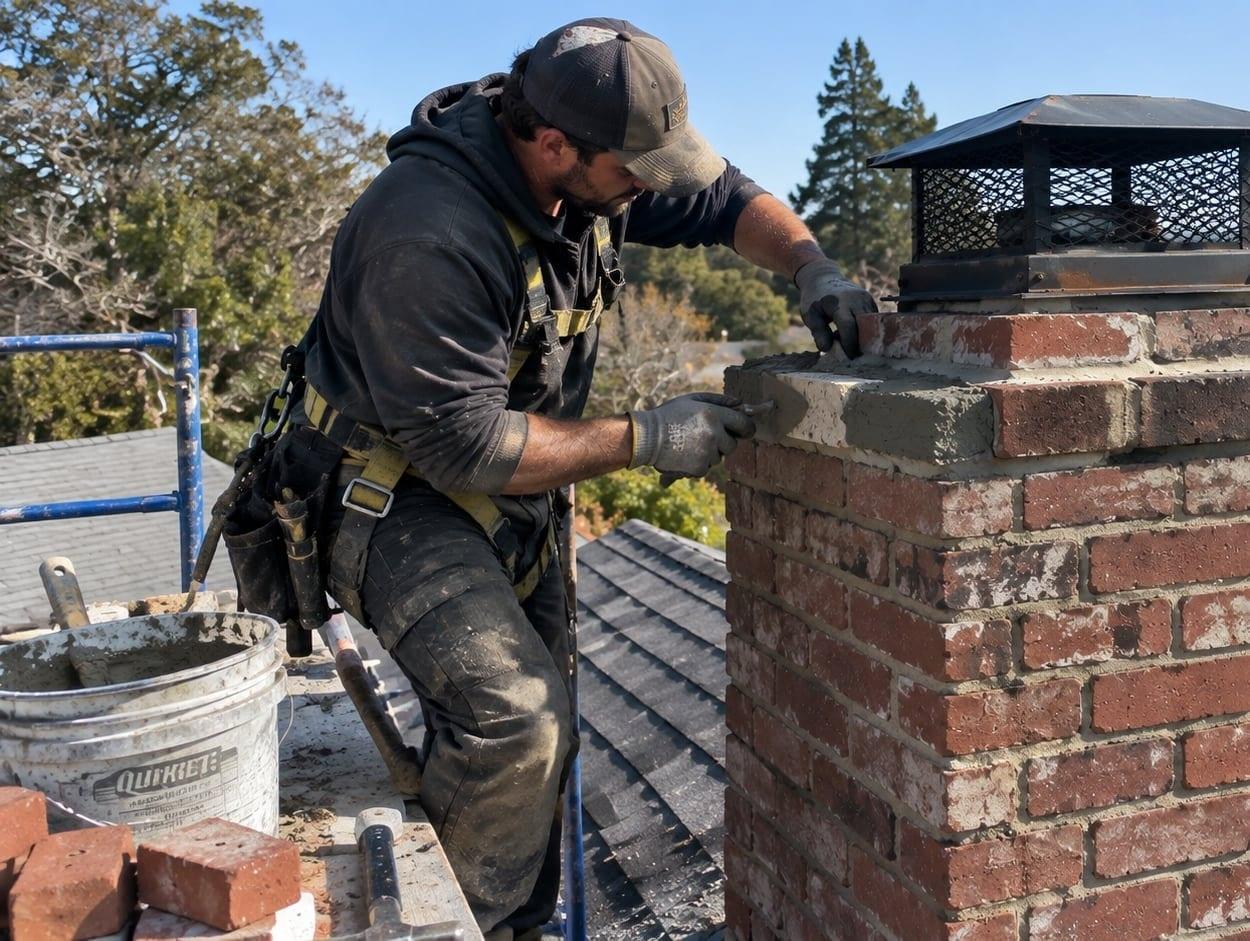
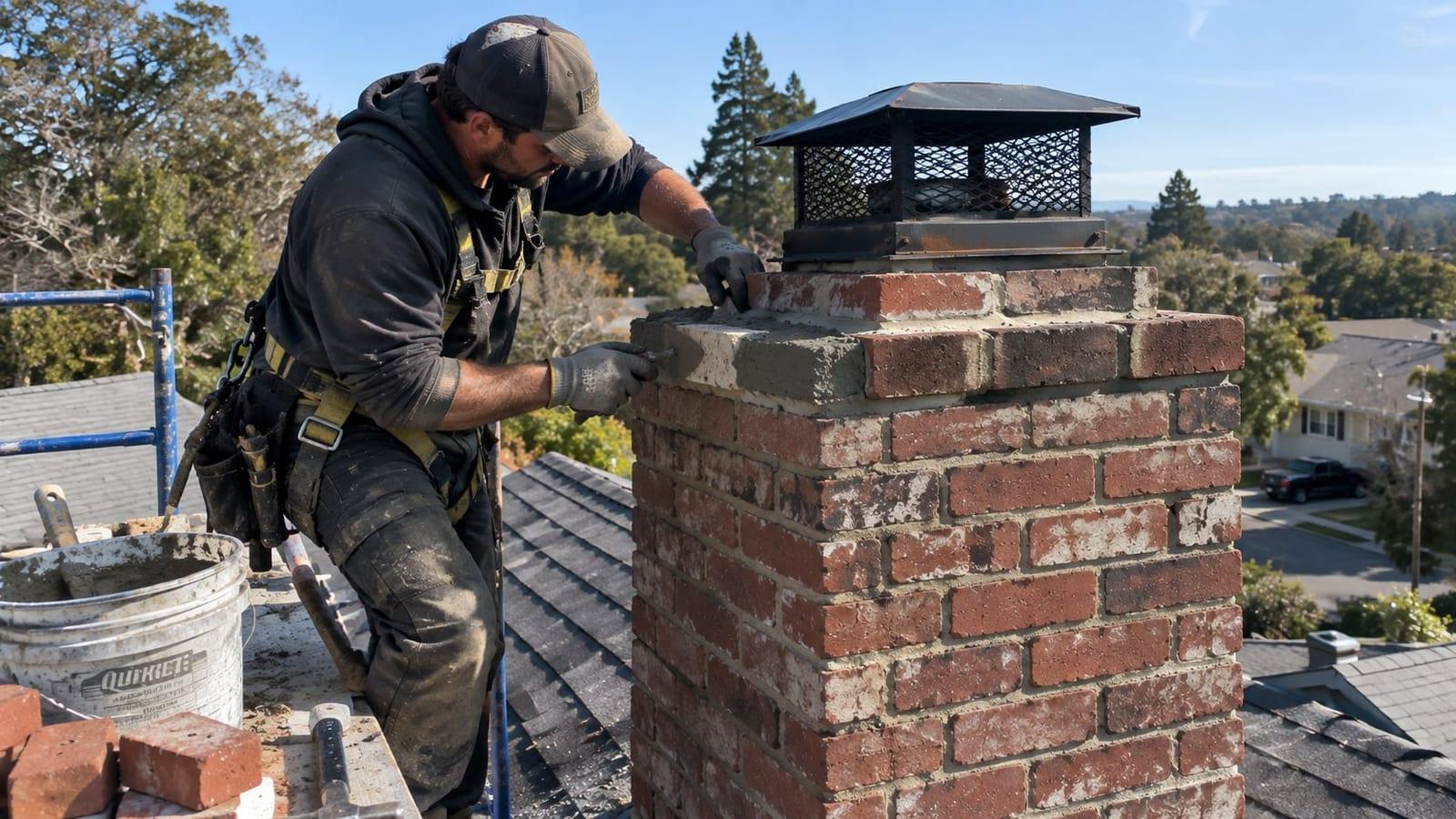
Chimney masonry repair is work on the brick, block or stone body of a chimney and the mortar that holds it together. The job depends on what's damaged and how far it has gone. It can include any of these:
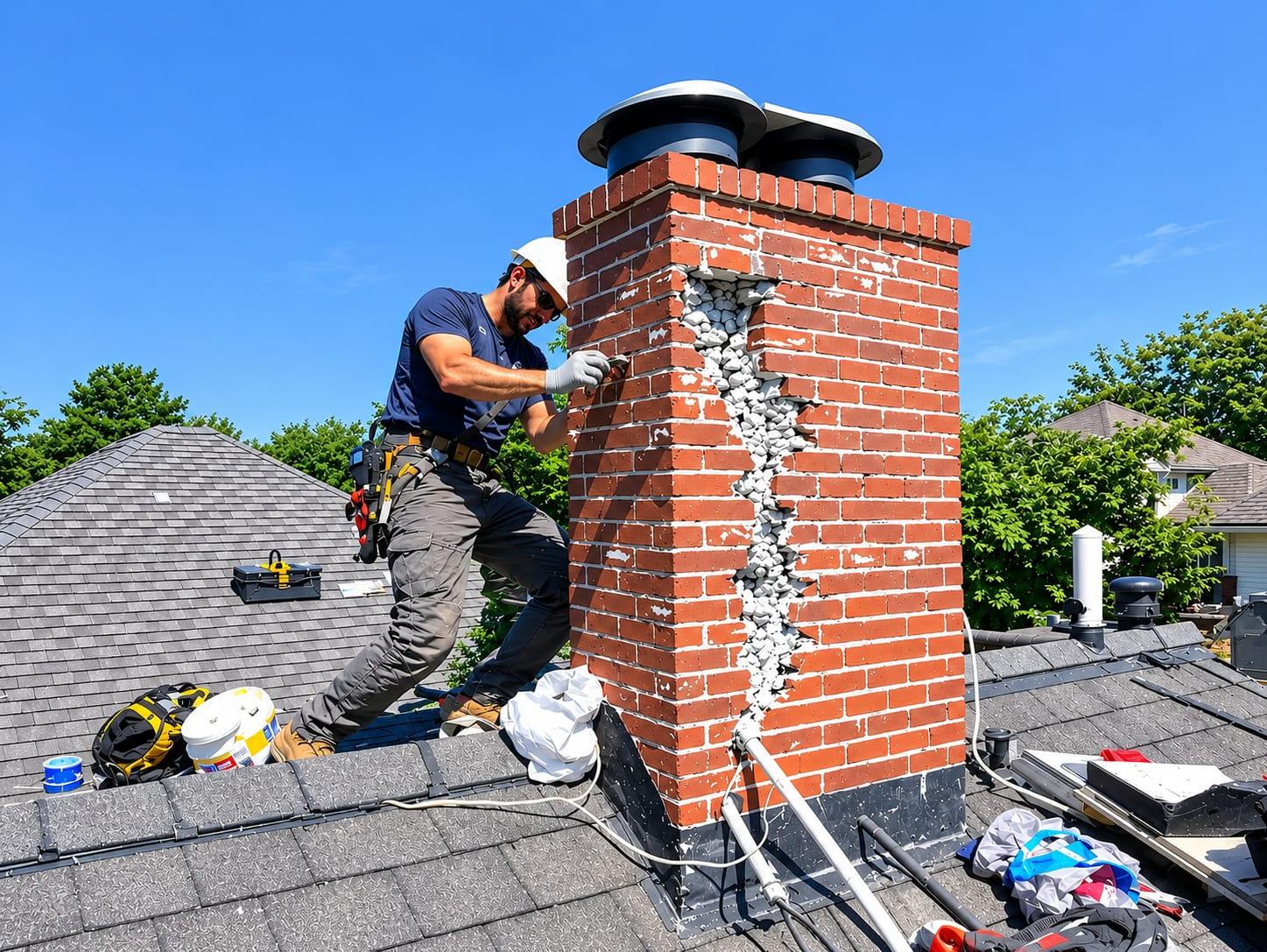
- Tuckpointing: grinding out worn or cracked mortar joints and refilling them with fresh mortar.
- Brick replacement: cutting out cracked or spalled bricks and setting new ones.
- Crown work: sealing small cracks in the concrete or mortar slab on top of the chimney, or recasting it when it's broken. Our chimney crown repair service covers this in detail.
- Partial or full rebuild: taking down loose, leaning or badly deteriorated courses and relaying them.
- Waterproofing: applying a breathable water repellent once repairs are done, so the brick can still release moisture.
This work applies to masonry chimneys. A factory-built chimney, with a metal flue inside a framed chase, needs different repairs. If you're not sure which type is on your house, this comparison of masonry vs prefab chimney construction explains how to tell them apart.
Signs your chimney needs masonry repair
What to look for
- Cracks in bricks or along mortar joints, especially stair-step cracks across several courses
- Mortar that is sandy, recessed behind the brick face, or missing
- Brick faces flaking, peeling or popping off (spalling)
- White, powdery staining on the brick, a sign water is moving through the masonry
- Bits of brick or mortar on the roof, in the firebox or sitting on the damper
- A chimney that leans or is pulling away from the house
- Water stains on ceilings or walls next to the chimney
- A crown that is cracked, chipped or crumbling at the edges
Some of these can wait for a scheduled repair. Others, like loose bricks at the top of the stack or a chimney that is visibly leaning, should be handled quickly. Our guide to the signs a chimney needs immediate repair explains which is which.
Cracked chimney
Where a crack sits matters more than how big it looks. Hairline cracks in mortar joints are often fixed by tuckpointing. Cracks running through the bricks themselves, stair-step cracks that follow several courses, or a crack that keeps getting wider point to movement in the structure. Those need a closer look before anyone picks a repair. A cracked chimney flue is a separate problem: the clay tiles inside the chimney can split with nothing showing on the outside. A camera inspection finds that kind of damage, and chimney liner repair is how it gets fixed.
Cracked or damaged chimney crown
The crown is the sloped slab that caps the brickwork around the flue. Its job is to shed rain away from the chimney. When it cracks, water runs straight down into the core of the masonry, and that's where a lot of spalling and loose brick begins. Small cracks can usually be sealed. A crown that is broken through or crumbling is removed and recast. For more on what causes crown damage and how to spot it, read our cracked chimney crown causes, signs and repair guide.
Damaged chimney cap
The cap is the metal cover over the flue opening, usually with a screen around its sides. It isn't masonry, but a damaged cap is often behind masonry problems. When a cap is rusted through, bent, loose or missing, rain falls straight down the flue onto the smoke chamber and damper, and animals and debris can get in. We replace damaged caps and install animal screens, and we check the cap whenever we work on a chimney's masonry.
Spalling brick
Spalling is when the face of a brick breaks away in flakes or chunks. It happens when water gets into the brick and can't get back out. It's often made worse by mortar that's harder than the brick around it, or by sealers that trap moisture. Repair means replacing the damaged bricks and fixing the source of the water, whether that's the crown, the cap or the flashing. Replacing brick without stopping the water usually means the same repair again later.
Masonry damage after a chimney fire
A chimney fire can crack flue tiles, open mortar joints and damage the smoke chamber, sometimes with no sign from outside. Don't use the fireplace again until the chimney has been checked. Industry guidance calls for a Level 2 inspection after a chimney fire, which includes a camera look down the flue. Our chimney inspection work shows what was damaged, and repairs to the liner, firebox, smoke chamber or brickwork follow from what it finds.
What a chimney masonry repair visit involves
From first call to finished repair
Tell us what you've seen
When you get in touch, describe the cracks, leaks or debris you've noticed and whether you still use the fireplace. That helps us know what to look at first.
Look at the whole chimney
Outside, we check the brick, mortar joints, crown, cap and flashing where the chimney meets the roof. Inside, we look at the firebox, damper area and smoke chamber. If flue damage is suspected, we'll recommend a camera inspection.
Find the cause
Most masonry damage starts with water. We trace where it's getting in, because repairing brick without fixing the source just restarts the damage.
Free estimate
We explain what we found, what needs attention now and what can wait, and give you a free estimate before any work begins.
Do the repair
Damaged mortar is removed to sound material, joints are repointed with a compatible mortar, broken bricks are replaced, and the crown is sealed or recast. Loose sections are rebuilt where needed.
Clean up and advise
We clear the debris and tell you when the fireplace can be used again. We'll also mention anything that would help the repair last, such as waterproofing, a new cap or flashing work.
The parts of a chimney involved
| Part | What goes wrong | Usual repair |
|---|---|---|
| Brick | Cracks, spalling, loose units | Replace individual bricks or rebuild a section |
| Mortar joints | Erosion, gaps, cracking | Tuckpointing |
| Crown | Cracks, chips, crumbling edges | Seal small cracks or recast the crown |
| Cap | Rust, bent screen, loose or missing | Cap replacement |
| Flashing | Lifted, rusted or poorly sealed where chimney meets roof | Flashing repair |
| Flue liner | Cracked or displaced clay tiles | Liner repair or a new liner |
| Firebox | Cracked or missing firebrick, open joints | Firebox repair |
Mortar choice matters in every one of these repairs. Mortar should be a bit softer than the brick it sits between, so that if anything gives, it's the joint and not the brick. Hard modern mortar packed into older, softer brick is a common cause of spalling. We match the mortar to the masonry. When a leak shows up inside the house, the flashing and crown are often involved alongside the brickwork, and our chimney leak repair work deals with those parts together.
When to stop using the fireplace
Hold off on fires if bricks at the top of the chimney are loose, if you suspect a cracked flue, if pieces of masonry are falling into the firebox, or after any chimney fire. Damaged flue tiles and open joints can let heat and smoke reach parts of the house they shouldn't. Emergency calls are accepted.
Booking chimney masonry repair in San Jose
Get in touch and tell us what you're seeing. Commercial and property-manager work is offered too, so rentals and business properties are covered as well as single homes.