Does your chimney need immediate repair?
It does if the chimney is leaning or shedding masonry, has had a chimney fire, or is letting smoke, gas or carbon monoxide into the house. Water pouring in during a storm also needs prompt attention. Most other problems, like stained brick, small mortar gaps or a missing cap, are real and worth fixing, but they can usually be scheduled rather than rushed.

The key question is simple: is anyone at risk if the chimney stays as it is for another week? If the answer is yes, or you aren't sure, treat it as urgent and don't light a fire until someone has looked at it.
Get out first if there's a gas smell, a CO alarm or a chimney fire
If you smell gas, a carbon monoxide alarm sounds, or you hear a loud roaring from the chimney or see flames or sparks coming out of the top, get everyone outside right away. Call 911 from outside, or your gas utility for a gas smell. Don't stop to put out the fire, don't switch lights or appliances on or off, and don't go back in to check the fireplace yourself.
Warning signs that call for immediate repair
| What you notice | Why it matters | What to do now |
|---|---|---|
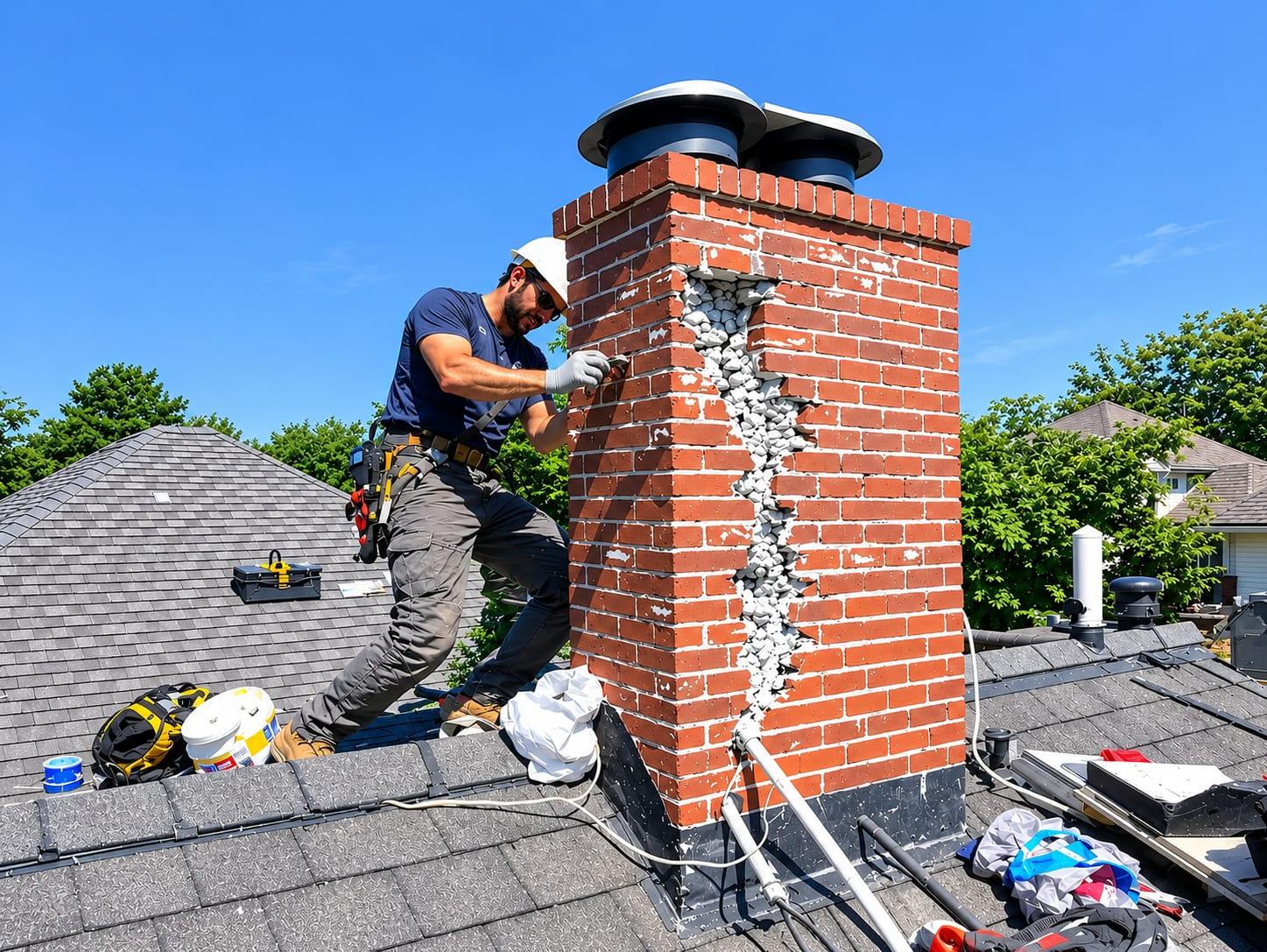
| The chimney leans, has a gap where it meets the house, or has a large crack running through it | The structure may be separating or settling, and a chimney is heavy enough to cause serious damage if it falls | Keep people, pets and cars away from the side it leans toward. Don't use the fireplace. |
| Bricks, mortar or pieces of the crown falling onto the roof or ground | Falling masonry can injure someone below, and the open joints let water in and speed up the damage | Keep the area below clear and stop using the fireplace. |
| Signs of a past chimney fire: puffy or flaky creosote, cracked flue tiles, a warped damper or cap, or heat discoloration on metal parts | A chimney fire can crack the liner, which lets heat and gases reach the wood framing around the chimney | Don't light another fire until the flue has been inspected. |
| Smoke spills into the room every time you light a fire | The flue may be blocked or the draft may have failed, which also means combustion gases are entering the house | Stop adding fuel and don't light it again. If smoke keeps filling the room or you hear roaring from the chimney, get everyone outside and call 911 from outside. |
| A gas smell near a gas fireplace or a pilot that won't stay lit with a smell present | A gas leak is a fire and explosion risk | Leave the house and call from outside, as described above. |
| Water running inside during rain, especially near ceiling lights or outlets. If water reaches wiring or a ceiling is sagging, keep clear of that area and switch off its power at the breaker if it's safe to do so. | Water near wiring is a shock and fire risk, and steady leaks rot framing and drywall. If water reaches wiring or a ceiling is sagging, keep clear of that area and switch off its power at the breaker if it's safe to do so. | Keep clear of wet wiring or a sagging ceiling, switch off that circuit at the breaker if it's safe to reach, and catch the water. |
| Birds, animals or a nest blocking the flue | A blocked flue sends smoke and gases back into the house | Don't light a fire to drive the animal out. |
Leaks deserve their own look, because the cause is often not the brick at all. Flashing, the crown and the cap are common sources, and the breakdown of what causes a chimney to leak when it rains can help you narrow it down before anyone climbs a ladder.
Problems that are serious but can usually be scheduled
Worth fixing soon, but rarely an emergency on their own
- Hairline cracks in the chimney crown
- White, chalky staining on the brick
- Small gaps or crumbling in mortar joints with no loose bricks
- A missing or damaged chimney cap with no animal or water problem yet
- A damper that sticks or doesn't seal well
- A fireplace that drafts slowly but doesn't spill smoke
- An old, dry water stain on the ceiling near the chimney
These problems tend to grow. A small crown crack lets water into the masonry, and the damage spreads from there. The guide to cracked chimney crown causes, signs and repair walks through how a minor crack turns into a bigger repair. If any item on this list shows up together with a sign from the table above, treat the whole problem as urgent.
What to do while you wait for the repair
First steps after you spot a serious chimney problem
Get out if there's an active fire or gas
A roaring sound, flames or sparks from the top of the chimney, a gas smell or a CO alarm means everyone leaves the house now and you call 911 from outside. Don't try to put out a chimney fire yourself.
Stop using the fireplace or stove
Don't add more fuel and don't light it again until the chimney has been checked.
Check your smoke and carbon monoxide alarms
Make sure they work, and keep them powered while the chimney is out of use.
Keep the area around the chimney clear
If masonry is loose or the chimney is leaning, keep people away from the roofline below it and move cars if needed.
Limit water damage indoors
Catch drips, move furniture and rugs, and turn off power to any wet fixture if it's safe to reach the breaker.
Take photos
Pictures of cracks, debris, stains and the roof area help with the estimate and with any insurance claim you choose to file.
Call for an inspection and repair
Describe what you saw and when it started. Mention a chimney fire, a gas smell or a CO alarm right away.
Repair options for urgent chimney problems
The right fix depends on what failed. Urgent repairs usually fall into these groups:
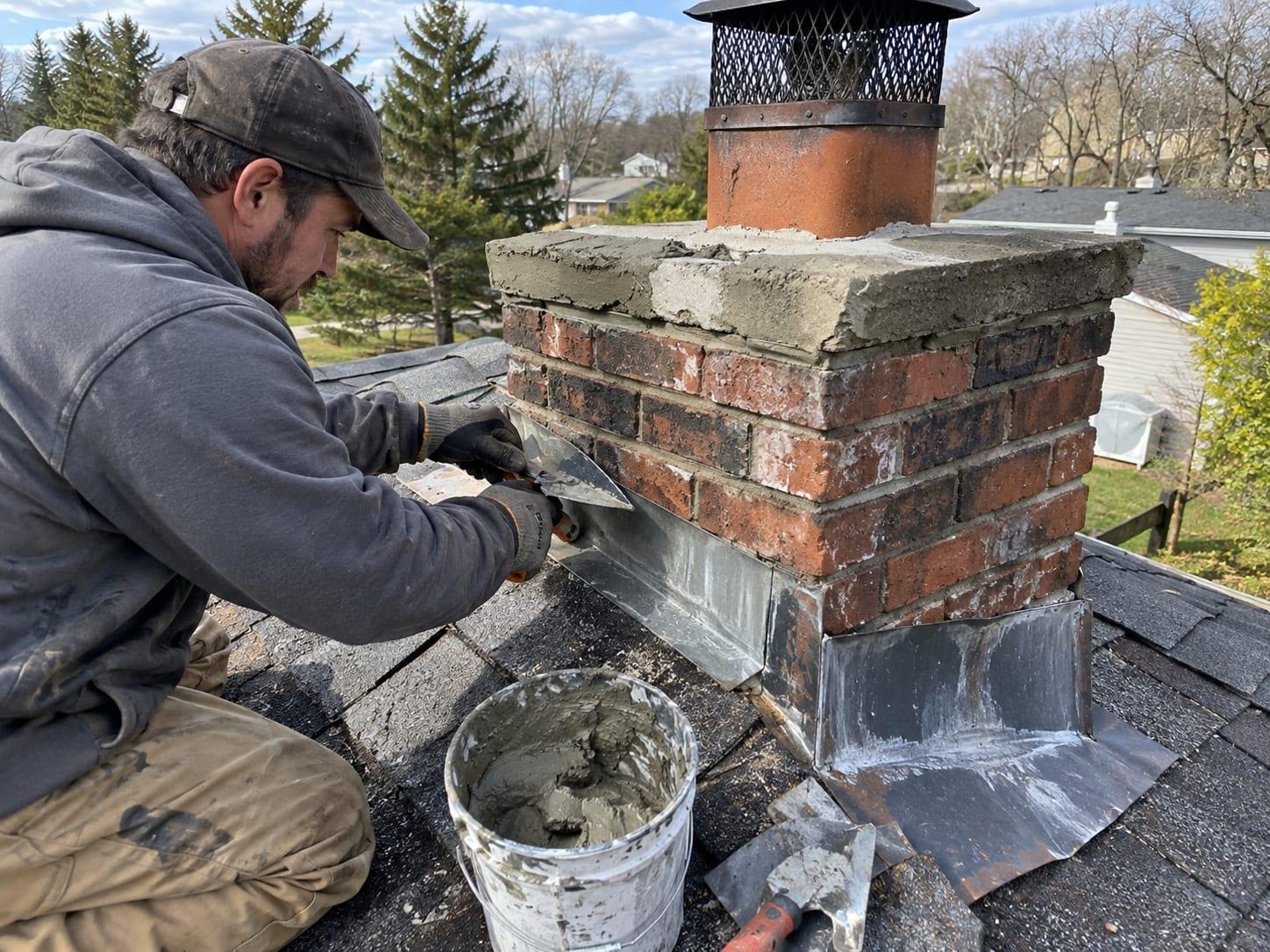
- Masonry and structure: resetting or replacing loose brick, tuckpointing failed joints, rebuilding a damaged section above the roofline or rebuilding the whole chimney. Chimney masonry repair covers this work.
- Crown and flashing: sealing or rebuilding a cracked crown and repairing flashing where the chimney meets the roof, which are often the source of active leaks.
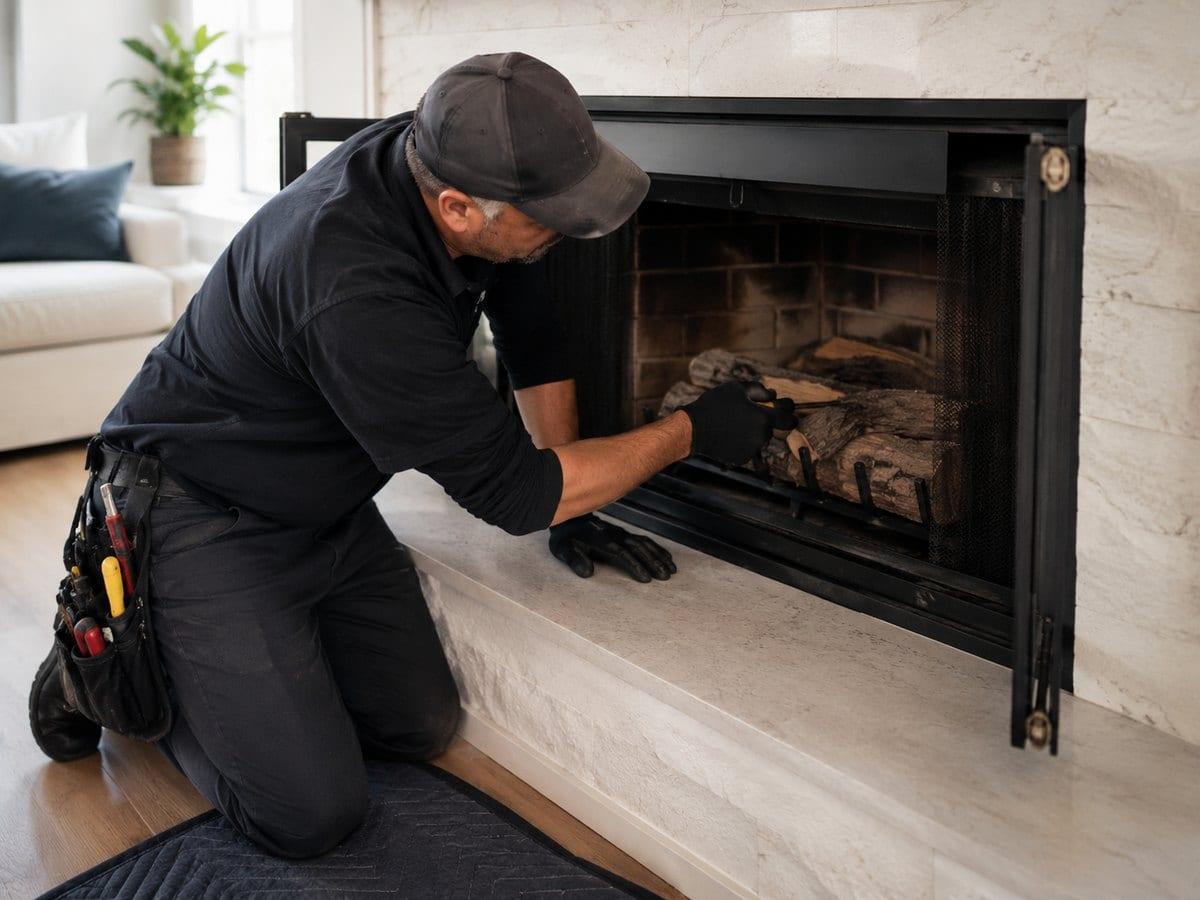
- Flue and liner: repairing or replacing a liner cracked by a chimney fire, often after a camera inspection shows how far the damage goes.
- Blockages and animals: clearing nests, debris or creosote buildup, then closing the opening so it doesn't happen again.
- Cap and screen: a missing cap invites water and animals, and installing a chimney cap is often the last step after a blockage or leak is fixed.
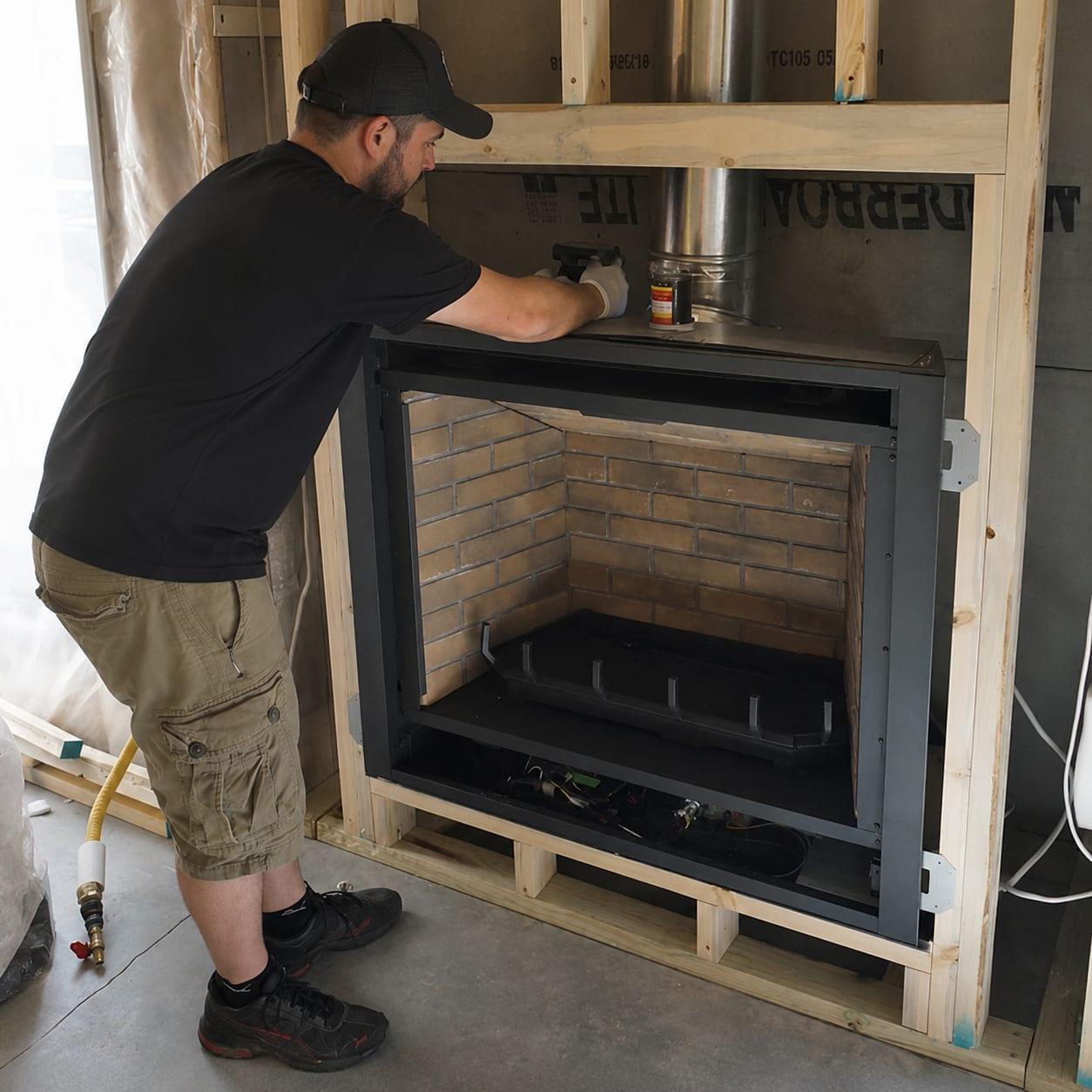
- Gas fireplaces: repairs to the burner, valve, pilot or venting once the gas issue has been made safe.
Gas units have their own warning signs that are easy to miss, such as soot on the glass or a changed flame color. The rundown of signs a gas fireplace needs cleaning covers what to watch for.
How to decide what comes first
Make safety repairs first, then stop the water, then handle appearance. A cracked liner or a leaning chimney comes before stained brick, even if the stain is more visible. If the chimney is damaged in more than one way, ask for the repairs to be ranked by risk so you can see what has to happen now and what can be planned. An inspection after a chimney fire or a storm is worth doing even when the outside looks fine, because liner damage usually can't be seen from the roof or the firebox.
When a chimney needs urgent repair
Emergency calls are accepted, with 24-hour service seven days a week.
For anything from a loose brick to a failed liner, our chimney repair service handles the work.