The short answer: does a gas fireplace need cleaning?
Yes. A gas fireplace doesn't produce creosote the way burning wood does, so it doesn't need a heavy chimney sweep. It still needs regular cleaning. Dust and lint settle on the burner and pilot. Combustion leaves a film on the glass. Soot can form if the logs or the air mix are off. Debris can also collect in the vent. Once a year is the usual recommendation in most owner's manuals, ideally before the first fire of the season.
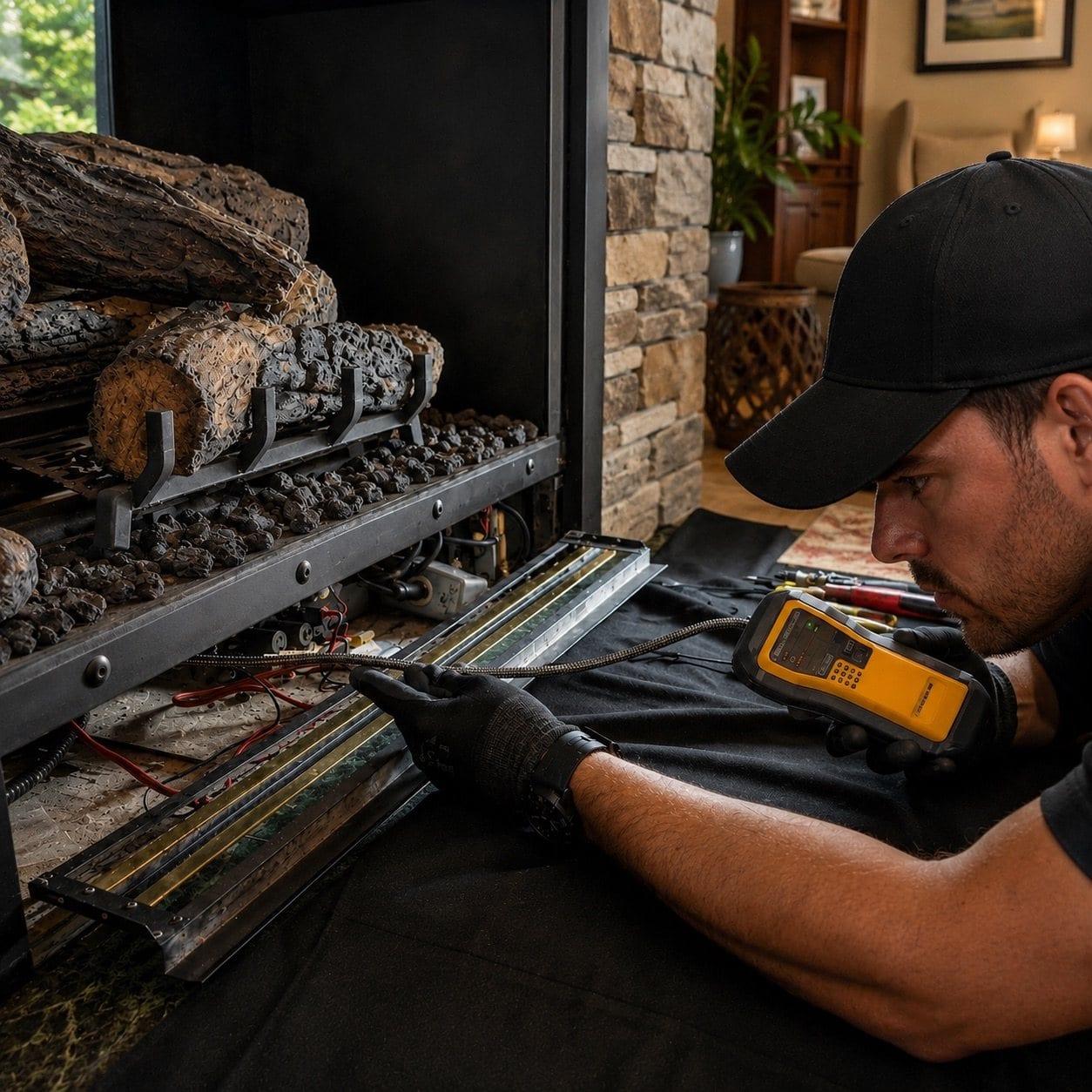
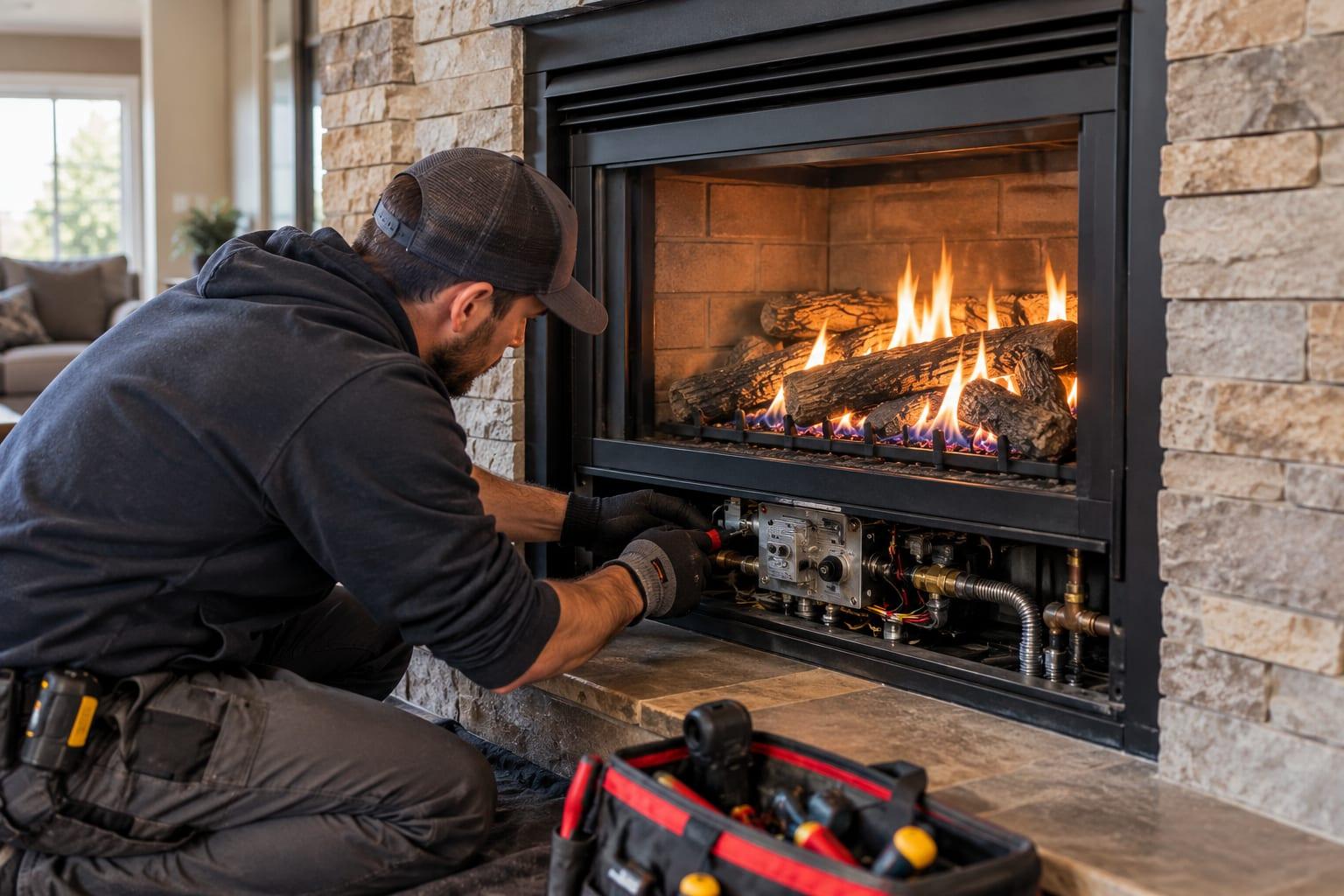
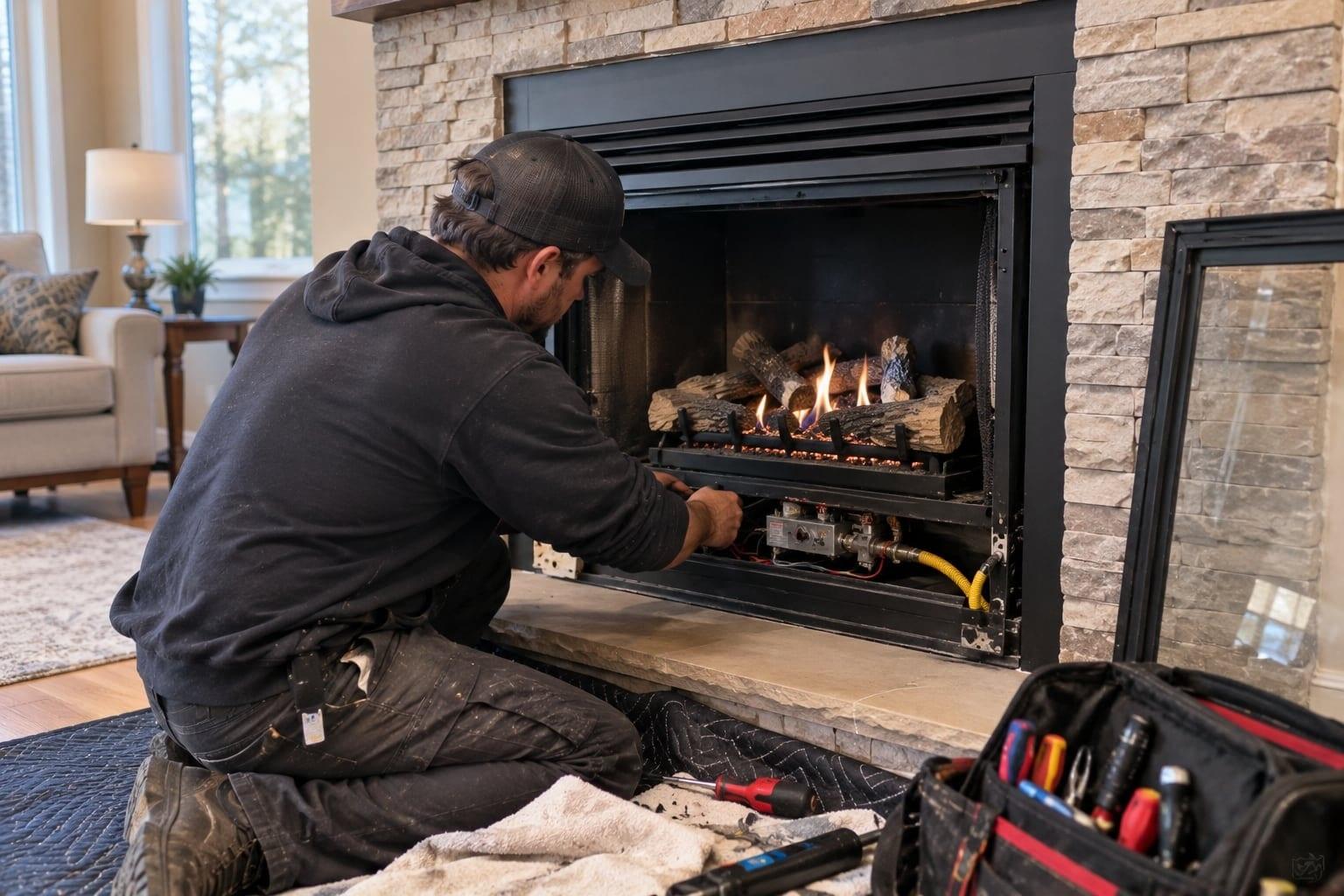
Cleaning and checking usually go together. A professional fireplace cleaning service for a gas unit covers the burner, pilot, logs, firebox, glass and venting. It is not just a wipe-down of the front.
If you smell gas
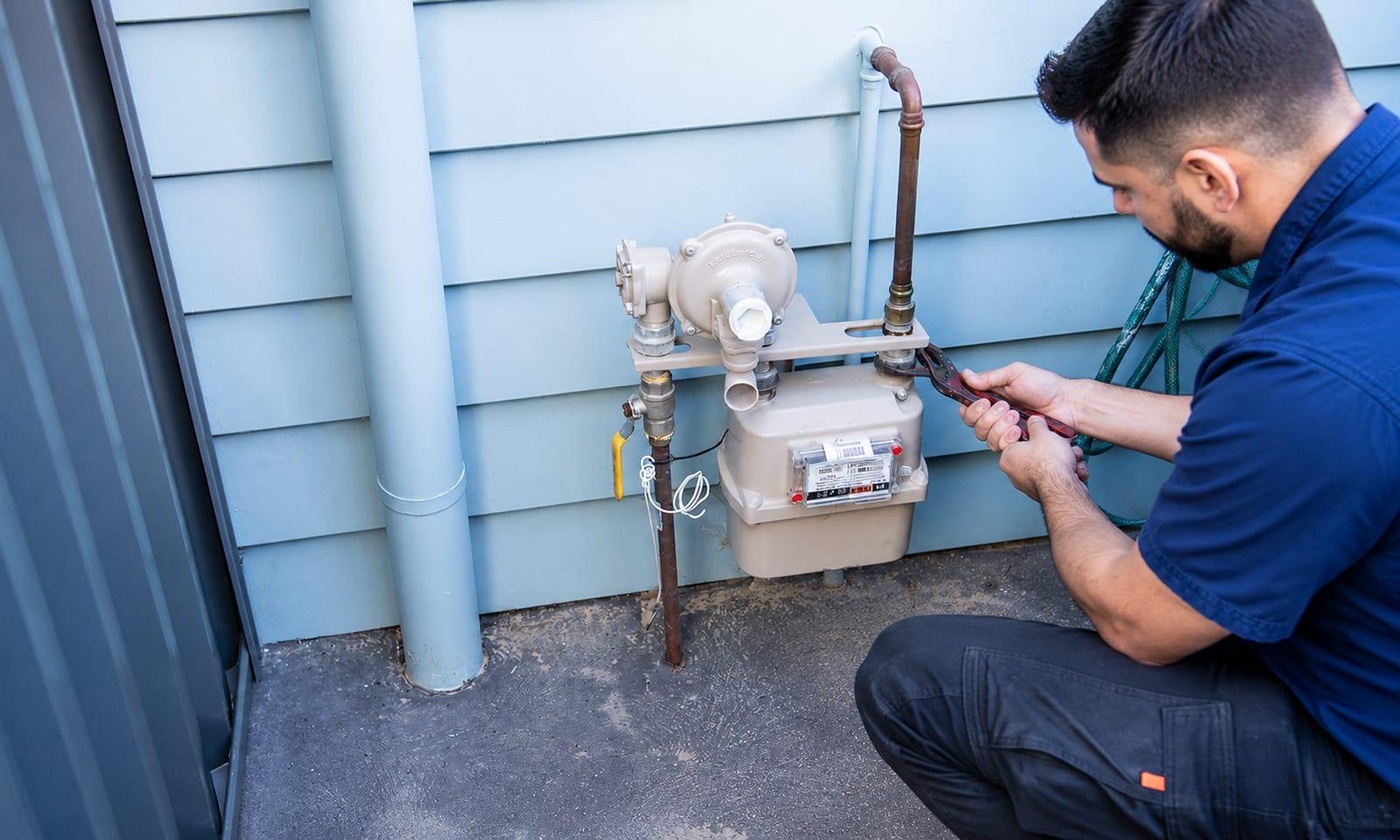
Leave the building right away. Don't use light switches, phones or any flame while you're inside. Call the gas utility or 911 once you're outside, and don't go back in until they say it's safe.
What builds up in a gas fireplace, and why it matters
Each kind of buildup causes a different problem. Some only affect the look of the fire. Others affect whether it lights, how cleanly it burns, or whether exhaust leaves the house the way it should.
| What builds up | Where | What it can cause |
|---|---|---|
| Dust, lint and pet hair | Burner ports, pilot assembly, control area | Weak or uneven flames, a pilot that won't stay lit |
| White or cloudy film | Inside of the glass front | Hazy view of the fire; it can etch into the glass if left for years |
| Black soot | Logs, firebox walls, glass | A sign the flame isn't burning cleanly, often from log placement or air mix |
| Spider webs and insect nests | Pilot tube, burner, air intake | Lighting problems and yellow, lazy flames |
| Nests and leaves | Vent cap or termination outside | Exhaust that can't vent properly |
| Worn embers and loose material | Burner bed and log set | Changed flame pattern and more soot |
Signs your gas fireplace is due for cleaning
Watch for these
- Flames that look tall, yellow or orange instead of mostly blue at the base
- Black streaks on the logs or the glass
- A glass front that stays cloudy after a normal wipe
- A pilot that goes out, or a burner slow to catch
- A dusty or burning smell that lasts beyond the first few minutes of the season
- It has been a year or more since anyone looked inside
A short dusty smell the first time you run the fireplace in fall is common, because dust on the burner is burning off. A smell that lingers, or anything that smells like gas, is different. Read more about what causes gas fireplace smell, and follow the safety step above first if you suspect a leak. If the unit won't start at all, the causes of a gas fireplace that won't light often trace back to a dirty pilot assembly.
Your options: what you can do and what to leave to a pro
| Feature | Homeowner | Professional |
|---|---|---|
| Glass | Wipe the glass when it is fully cool, with a cleaner made for fireplace glass, as your manual directs | Remove the glass, deep-clean the haze, check the gasket and frame |
| Exterior and surround | Dust the louvers, front and hearth area | Clean the inner chambers and air passages |
| Logs and embers | Leave them in place; positioning affects how the flame burns | Clean the logs, replace worn embers, reset them in the correct layout |
| Burner and pilot | Not a homeowner job | Clean the burner ports and pilot assembly, check the flame pattern |
| Vent and exhaust | Look at the outside cap for obvious nests or blockage, from the ground | Inspect and clear the venting, check that exhaust flows properly |
| Gas connections | Never take them apart | Check the connections and controls with proper tools |
Glass
- Homeowner
- Wipe the glass when it is fully cool, with a cleaner made for fireplace glass, as your manual directs
- Professional
- Remove the glass, deep-clean the haze, check the gasket and frame
Exterior and surround
- Homeowner
- Dust the louvers, front and hearth area
- Professional
- Clean the inner chambers and air passages
Logs and embers
- Homeowner
- Leave them in place; positioning affects how the flame burns
- Professional
- Clean the logs, replace worn embers, reset them in the correct layout
Burner and pilot
- Homeowner
- Not a homeowner job
- Professional
- Clean the burner ports and pilot assembly, check the flame pattern
Vent and exhaust
- Homeowner
- Look at the outside cap for obvious nests or blockage, from the ground
- Professional
- Inspect and clear the venting, check that exhaust flows properly
Gas connections
- Homeowner
- Never take them apart
- Professional
- Check the connections and controls with proper tools
Two common mistakes
Ammonia-based household glass cleaner can leave streaks that bake on, so use a cleaner made for fireplace glass. Don't move the logs around while cleaning. Logs in the wrong position can cause soot.
Vent-free and direct-vent units
A vent-free gas fireplace has no chimney or vent, but it still needs cleaning. Dust on the burner and the oxygen sensor can cause it to shut off or burn poorly. A direct-vent unit has a sealed glass front and a vent to the outside. Both the glass and that vent need attention.
Deciding what to do next
If the flames look normal, the glass is clear and it has been less than a year, routine care at home may be all you need for now. If you see soot, yellow flames, a struggling pilot or a blocked vent cap, schedule a professional cleaning. A gas fireplace inspection is the right step when something seems off but you can't tell what. It looks at the venting, controls and burn quality along with the buildup.
When cleaning isn't enough
Sometimes cleaning reveals a bigger problem. Common examples are a cracked glass panel, a failing gasket, a worn control part, or a log set that crumbles when touched. Those issues need gas fireplace repair, not another cleaning. An older unit with several of these problems at once may be a candidate for replacement. If you're weighing a different fuel altogether, our guide to gas vs wood burning fireplace lays out the trade-offs.
We handle gas fireplace cleaning, inspection and repair, and estimates are free.