When one load turns into two or three cycles
A dryer works by heating air, pushing it through wet clothes, and sending that moist air outside through the vent. When the vent can't carry the air away fast enough, the moisture stays in the drum, and the clothes stay damp. Many people respond by running the load again or picking a longer cycle, and the problem can go on for months before anyone looks behind the machine.
A slow dryer is more than an inconvenience. The same restriction that slows drying also traps heat and lint, and lint burns easily. That's why it's worth finding out what's causing it.
Common signs of a dryer that takes too long to dry
Signs that often go along with slow drying
- Clothes come out damp or only partly dry after a normal cycle
- Loads regularly need a second or third run
- The top or sides of the dryer feel hotter than usual
- The laundry room gets warm or humid while the dryer runs
- Clothes come out unusually hot to the touch
- Little or no airflow at the outside vent hood while the dryer is on
- The outside flap barely opens, or stays shut, during a cycle
- Lint collecting around the outside hood or behind the dryer
- A musty or burning smell during or after a cycle
Possible causes behind slow drying
Several problems can produce the same symptom. The list below covers the usual possibilities, but only an inspection of the vent run, from the back of the dryer to the outside termination, confirms which one is actually the cause.
What might be restricting the airflow
01Lint buildup inside the vent duct
- What you may notice
- Gradually longer drying times, a hot dryer cabinet, weak airflow outside
- How it’s confirmed
- The run is checked for buildup along its length and airflow is measured at the exit
02Crushed, kinked or disconnected hose behind the dryer
- What you may notice
- Slow drying that started after the dryer was moved, lint or humidity behind the machine
- How it’s confirmed
- The transition hose and connections are inspected after the dryer is pulled out
03Blocked outside hood, stuck flap or nesting material
- What you may notice
- Flap that won't open, debris or twigs at the hood, sounds from the vent
- How it’s confirmed
- The exterior termination is opened and checked for blockages and nests
04A vent run that is too long or has too many bends
- What you may notice
- Slow drying since the dryer or vent was installed, even after cleaning
- How it’s confirmed
- The route, length and number of turns are assessed during an inspection
If you've heard scratching or chirping near the outside vent, read about fixing birds in dryer vent problems before trying to clear it yourself.
Vent or appliance: which one is the problem?
A dryer that heats normally but takes too long usually points to restricted airflow in the vent. A dryer that produces no heat at all points to the appliance itself, which needs an appliance repair technician. A dryer that has dried slowly ever since it was installed points to the appliance or how it was installed, often a vent run that was too long or badly routed from the start.
| Feature | Usually the vent | Usually the dryer or its installation |
|---|---|---|
| Heat | Dryer heats, sometimes runs hotter than normal | No heat at all, or heat that cuts out |
| When it started | Got slower gradually, or after the dryer was moved | Slow from the day it was installed |
| Outside vent | Weak airflow, flap barely moves | Airflow seems normal but clothes stay damp |
Heat
- Usually the vent
- Dryer heats, sometimes runs hotter than normal
- Usually the dryer or its installation
- No heat at all, or heat that cuts out
When it started
- Usually the vent
- Got slower gradually, or after the dryer was moved
- Usually the dryer or its installation
- Slow from the day it was installed
Outside vent
- Usually the vent
- Weak airflow, flap barely moves
- Usually the dryer or its installation
- Airflow seems normal but clothes stay damp
Cleaning the vent does not fix every slow dryer. If the vent checks out clear and airflow is good, the cause is likely inside the appliance, and that's the honest answer you'll get. Whatever the cause, stop using a dryer that overheats.
How urgent is it, and when to stop using the dryer
Stop using the dryer if you notice any of these
A burning smell, a cabinet too hot to rest your hand on, clothes coming out scorching hot, or the dryer shutting itself off mid-cycle. Turn it off and unplug it. If you have a gas dryer and smell gas, leave the house and call your gas utility from outside.
A dryer that is only slightly slower than it used to be is not an emergency, but it's a sign to schedule a check soon rather than keep running extra cycles. Each extra cycle adds heat to a vent that is already struggling to move it. With a gas dryer, a restricted vent also matters because the same duct carries combustion exhaust out of the house.
What normally fixes a dryer that takes too long to dry
How the vent side of the problem is usually handled
Inspect and test airflow
The full vent run is checked from the dryer connection to the outside hood, and airflow is measured to see how restricted it is.
Clean the full run
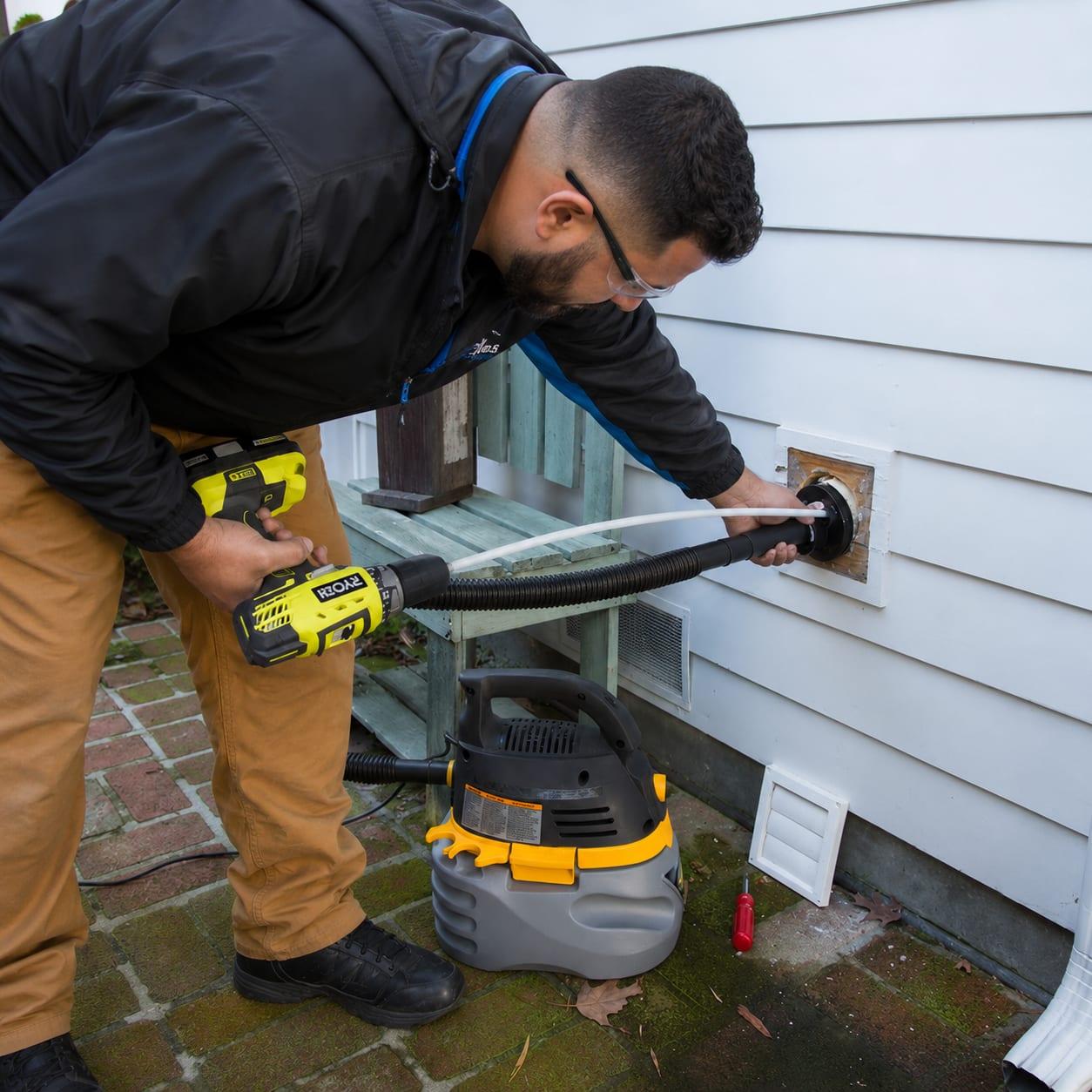
Lint is removed from the duct along its whole length, not just the first few feet behind the dryer. Unplug the dryer first, and on a gas dryer turn off its gas valve.
Clear the exterior termination
The outside hood or roof vent is opened, cleared of lint, debris or nesting material, and the flap is checked so it opens freely.
Repair or reroute where needed
Crushed or damaged sections are repaired or replaced, a worn vent cover is swapped out, and a run that is too long or has too many bends can be rerouted.
Retest
Airflow is measured again so you can see the difference, or confirm that the vent wasn't the cause.
For most slow dryers that still heat, our dryer vent cleaning service is the place to start. If the cause isn't obvious, or the dryer has been slow since installation, a dryer vent inspection with airflow testing shows where the restriction is before any work is done. You can also read how dryer vent inspection works and how dryer vent cleaning works if you want to know what happens during a visit.
We handle vent cleaning, blockage and lint removal, roof vent cleaning, vent repair and rerouting for homes around San Jose.
What not to do
- Don't keep running extra or longer cycles as a workaround; that adds heat to a restricted vent.
- Don't push the dryer tight against the wall, which can crush the hose behind it.
- Don't swap in thin foil or plastic hose as a quick fix; it crushes and traps lint easily.
- Don't cover the outside hood with fine mesh, which catches lint and blocks airflow.
- Don't reach into a vent where you hear birds or animals; nests can be packed tight and may hold live animals.
- Don't disconnect gas connections yourself to move a gas dryer.