On this page
What a dryer vent inspection covers
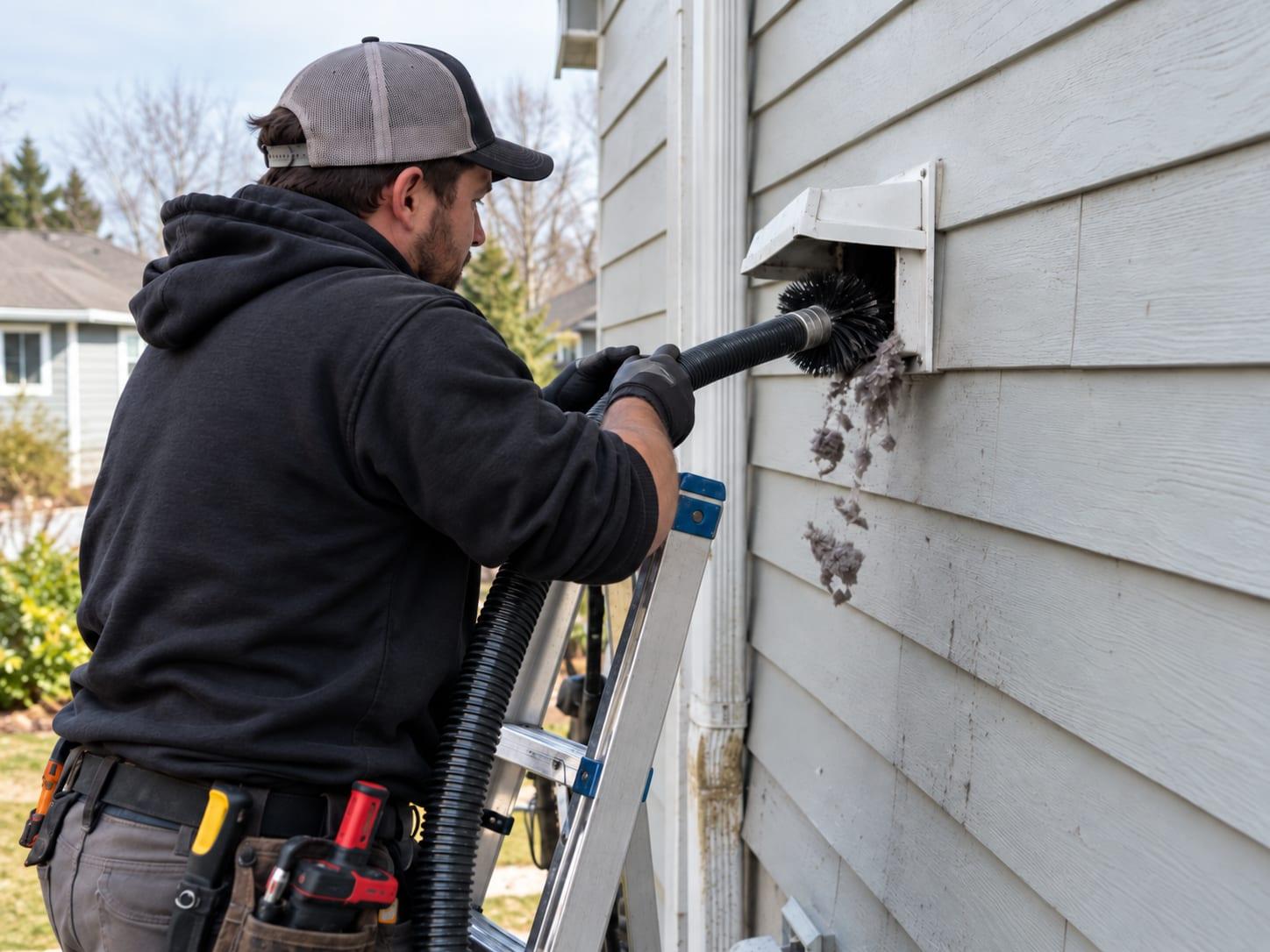
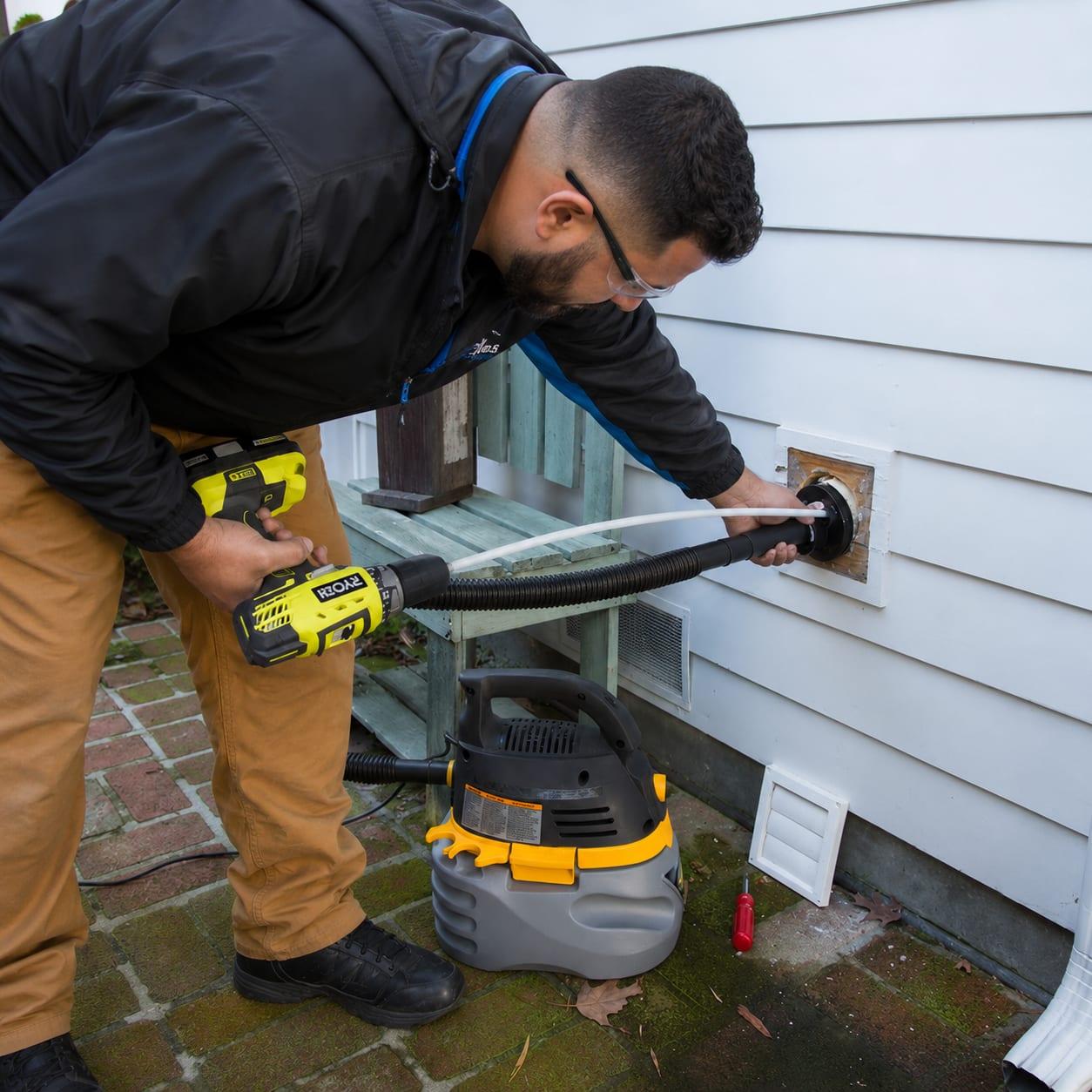
Your dryer pushes hot, damp, lint-laden air through a duct to the outside. When that duct is long, kinked, partly clogged or disconnected, the air slows down, lint settles, and the dryer works harder to do the same load. An inspection looks at the whole route, not just the lint screen or the flap you can see from the yard.
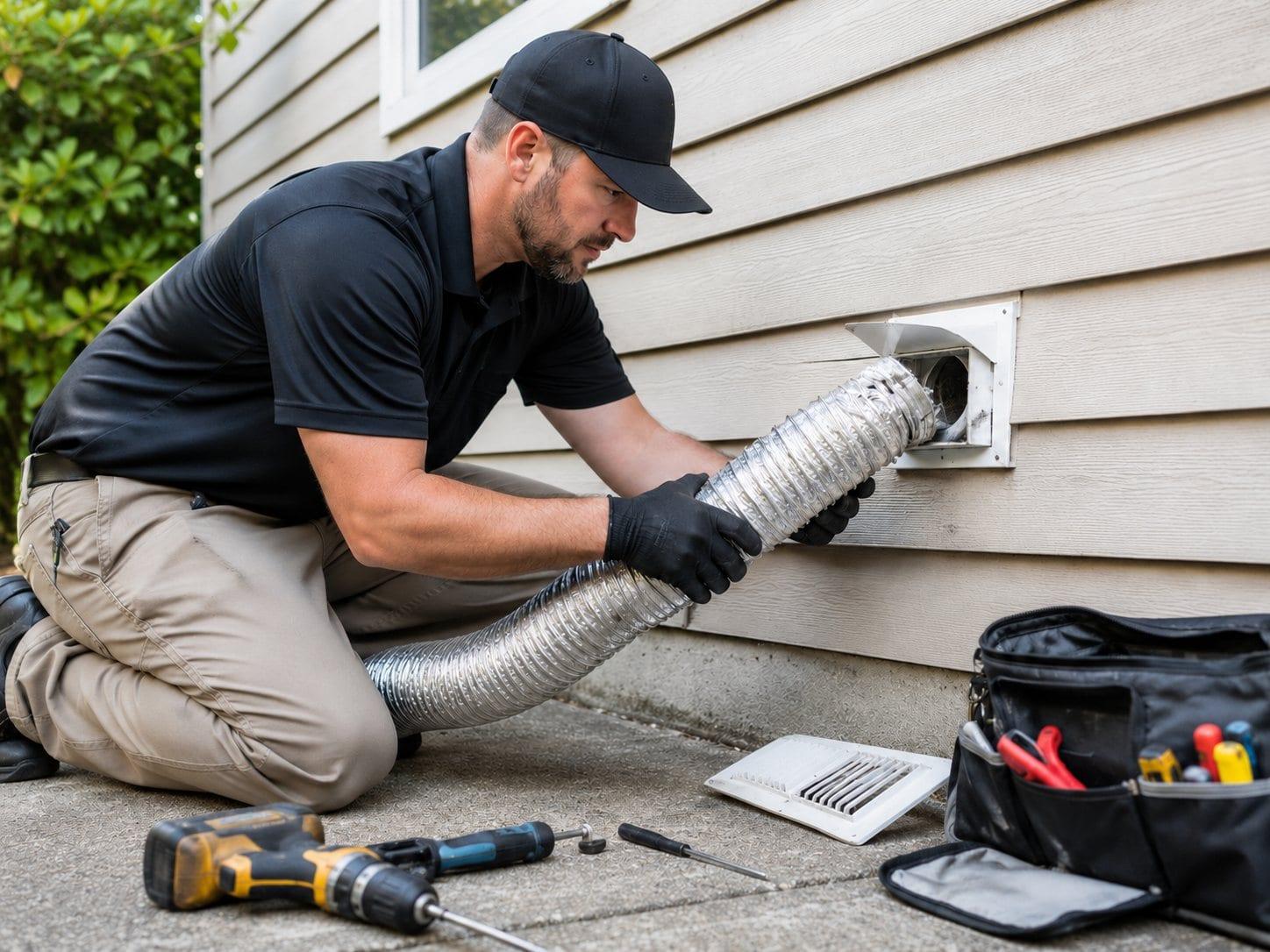
Airflow testing is the part that turns a look into a measurement. Instead of guessing from how the vent looks, we take an airflow reading at the outlet with the dryer running. A vent can look clean at both ends and still be choked somewhere in the middle, and the airflow number is what shows it.
Signs your dryer vent should be inspected
Common reasons homeowners book a dryer vent inspection
- Loads take two or more cycles to dry, even on a normal setting
- The outside of the dryer or the laundry room gets noticeably hot while it runs
- A burning or scorched smell when the dryer is on
- Lint collecting around the dryer door, behind the machine or on the floor near the outside vent
- The flap on the outside vent cap barely opens, or doesn't open at all, while the dryer runs
- Clothes come out damp and musty-smelling
- The dryer shuts off partway through a cycle
- You just moved in and don't know when the vent was last checked
- A new dryer was installed, or the laundry area was remodeled and the duct was moved
- Birds, nesting material or debris around the outside vent opening
If you already know the vent is packed with lint and the duct itself is in good shape, you can go straight to dryer vent cleaning. An inspection makes the most sense when you don't know why the dryer is struggling or what condition the duct is in.
What happens during the visit, step by step
How a dryer vent inspection and airflow test is done
Talk through what you've noticed
Drying times, smells, heat, shutoffs and any recent changes to the dryer or laundry area all point to where the trouble is likely to be.
Check the dryer connection
We look behind the dryer at the transition duct, the short piece that connects the machine to the wall. This is where crushing, kinks, loose clamps and lint buildup often start.
Trace the vent run
We follow the duct as far as it can be reached and note its material, its length, the number of bends, and any joints that are separated, sagging or taped instead of properly fastened.
Inspect the exterior termination
At the wall or roof cap we check that the damper flap opens and closes freely, that there is no screen trapping lint, and that the opening is free of nests and debris.
Test airflow
With the dryer running, we measure airflow at the outlet. Weak airflow with clean ends tells us the restriction is somewhere inside the run.
Walk you through the findings
You get a plain explanation of what we found, what is fine, and what, if anything, should be done next.
Vent materials and layouts we look at
| Part | What it is | What we check |
|---|---|---|
| Rigid metal duct | Smooth-walled metal pipe, usually inside walls, attics or crawlspaces | Separated joints, sagging sections, lint buildup at seams |
| Semi-rigid aluminum duct | Bendable metal duct, often used as the transition behind the dryer | Kinks, crushing when the dryer is pushed back, loose clamps |
| Foil or vinyl flex duct | Thin accordion-style duct | Tears, sagging, crushing; many dryer makers advise against it, especially vinyl |
| Exterior wall cap | Hood with a damper flap on the side of the house | Flap movement, screens that trap lint, nests and debris |
| Roof termination | Vent cap where the duct exits through the roof | Lint packed under the cap, damage, blockage at the top of the run |
Long runs with several elbows are the hardest on airflow. Dryer manufacturers list a maximum vent length in the installation instructions, and each bend counts against it, so the layout is part of what we look at, not just what's inside the duct.
Safety and maintenance
Lint is fuel
Dryer lint is fine, dry and burns easily. When it builds up in a vent that is also carrying hot air, it becomes a fire risk. A dryer that runs hot and slow is a warning sign, not just an inconvenience.
Gas dryers add a second concern. Their combustion exhaust leaves through the same vent, so a blocked or disconnected duct can send it back toward the house. If you have a gas dryer, a working carbon monoxide alarm in the home is worth having regardless of the vent's condition.
- Clean the lint screen before or after every load.
- Leave space behind the dryer so the transition duct isn't crushed against the wall.
- Check now and then that the outside flap opens when the dryer runs.
- Avoid running the dryer when no one is home or overnight if it has been drying slowly.
- Have the vent looked at again after moving the dryer, replacing it, or changing the laundry layout.
Booking a dryer vent inspection
Call or request an estimate to set up a visit. It helps to tell us whether the dryer is gas or electric, whether the vent exits through a wall or the roof, roughly where the laundry sits in the house, and what you've noticed. If the inspection turns up a clog, dryer vent blockage removal clears it; if the duct is crushed, torn or disconnected, our dryer vent repair service fixes or replaces the damaged sections.