When the chimney no longer lines up with the house
Most homeowners notice it from the yard or the street. The chimney looks slightly off-plumb. There's a dark gap between the masonry and the siding. A crack runs up the brick that wasn't there last year. A masonry chimney is heavy and stands on its own footing, so when it starts to tilt, something underneath or inside it has usually given way. The lean itself is the visible symptom. The real question is why it's moving and how far it has gone.
Common signs of a leaning chimney
Signs worth taking seriously
- The chimney looks tilted when you sight along it from a distance, or it doesn't line up with a corner of the house
- A gap between the chimney and the exterior wall, especially one that is wider at the top than at the bottom
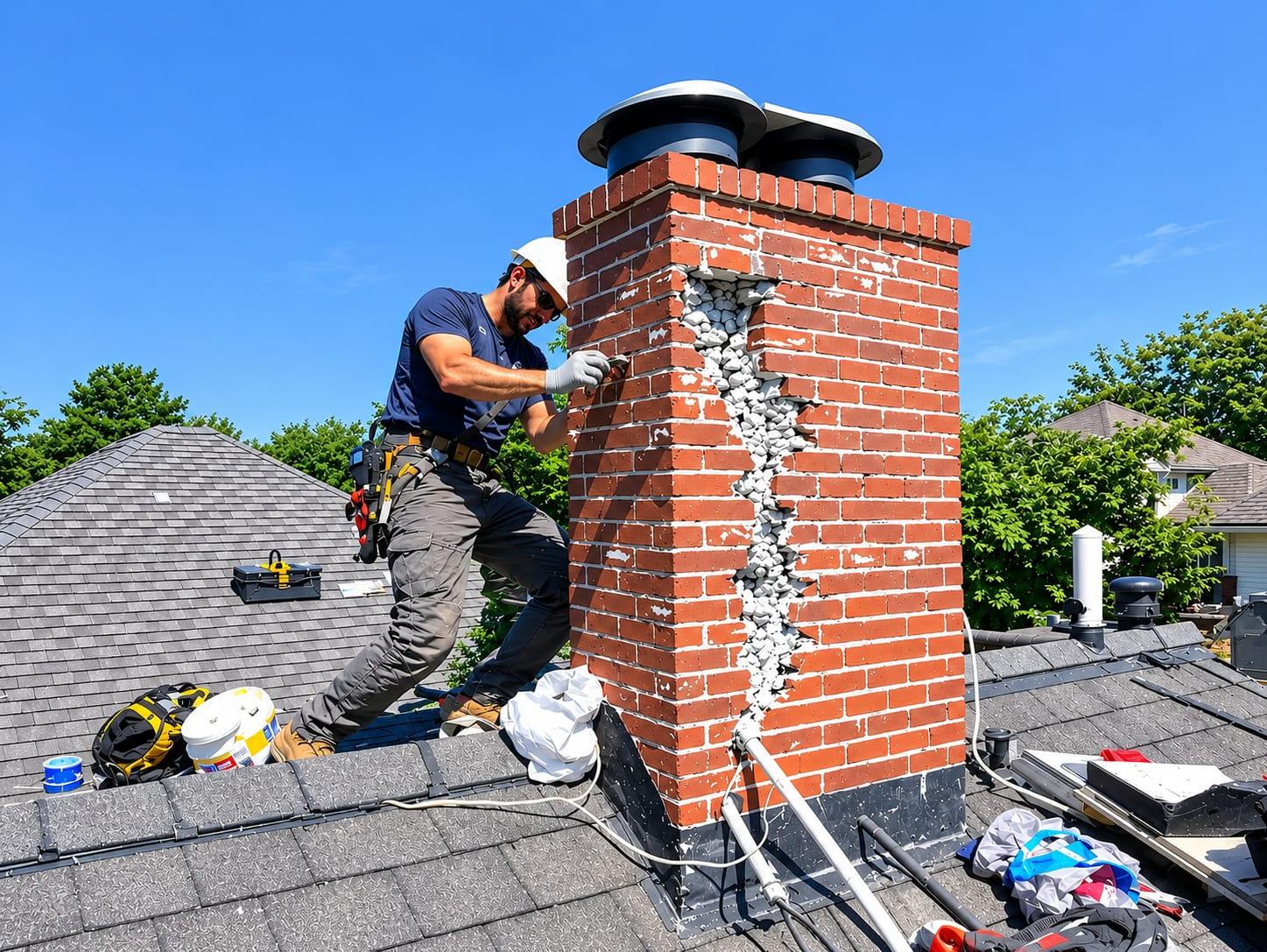
- Cracked or crumbling mortar joints, or bricks that are cracked, loose or shifted
- Flashing pulled away from the chimney, or a new roof leak around it
- Cracks in the interior wall, ceiling or hearth near the fireplace
- The firebox or hearth separating from the surrounding wall or floor
- Bits of brick or mortar collecting on the roof or the ground below
Possible causes
Several problems can make a chimney lean. Some of them look alike from the outside, so the cause has to be confirmed by inspection. The list below covers the possibilities, not a diagnosis.
- Footing problems: the concrete pad under the chimney may be undersized, cracked or sinking, so the chimney settles at a different rate than the house.
- Soil movement: soil that shrinks, swells, erodes or was poorly compacted can let one side of the footing drop.
- Water damage: years of water getting into the masonry can weaken mortar joints until the upper part of the stack shifts.
- Ground movement or impact: an earthquake, a falling tree or another strong jolt can crack the structure and start a lean.
- Failing ties or attachments: the connections between the chimney and the house framing can loosen or break, which lets the chimney pull away.
A chimney inspection looks at the exterior masonry, the crown, the flashing and the footing where it can be seen. It also checks the flue. A chimney camera inspection can show cracks or offsets in the liner that you can't see from the roof or the firebox. If you're unsure what kind of chimney you have, our guide to different types of chimneys explains masonry and prefabricated systems. They fail in different ways.
How urgent is it?
Treat a leaning chimney as urgent, even if it has looked the same for a while. A lean means the structure has moved. Movement can crack the flue liner, open gaps that let heat and smoke reach the wood framing, and in the worst cases lead to a partial collapse.
Stop using the fireplace or stove now
Don't burn anything in a fireplace, insert or stove connected to a leaning chimney until it has been inspected. A cracked or shifted flue can let hot gases and sparks reach combustible materials, and that is how a chimney fire spreads into a house. Keep people, pets and vehicles away from the area below the chimney. If the chimney is visibly moving, or brick is falling, call right away. If bricks are falling or it looks like it could come down, keep everyone away from the area below it and call 911. Emergency calls are accepted.
What normally fixes a leaning chimney
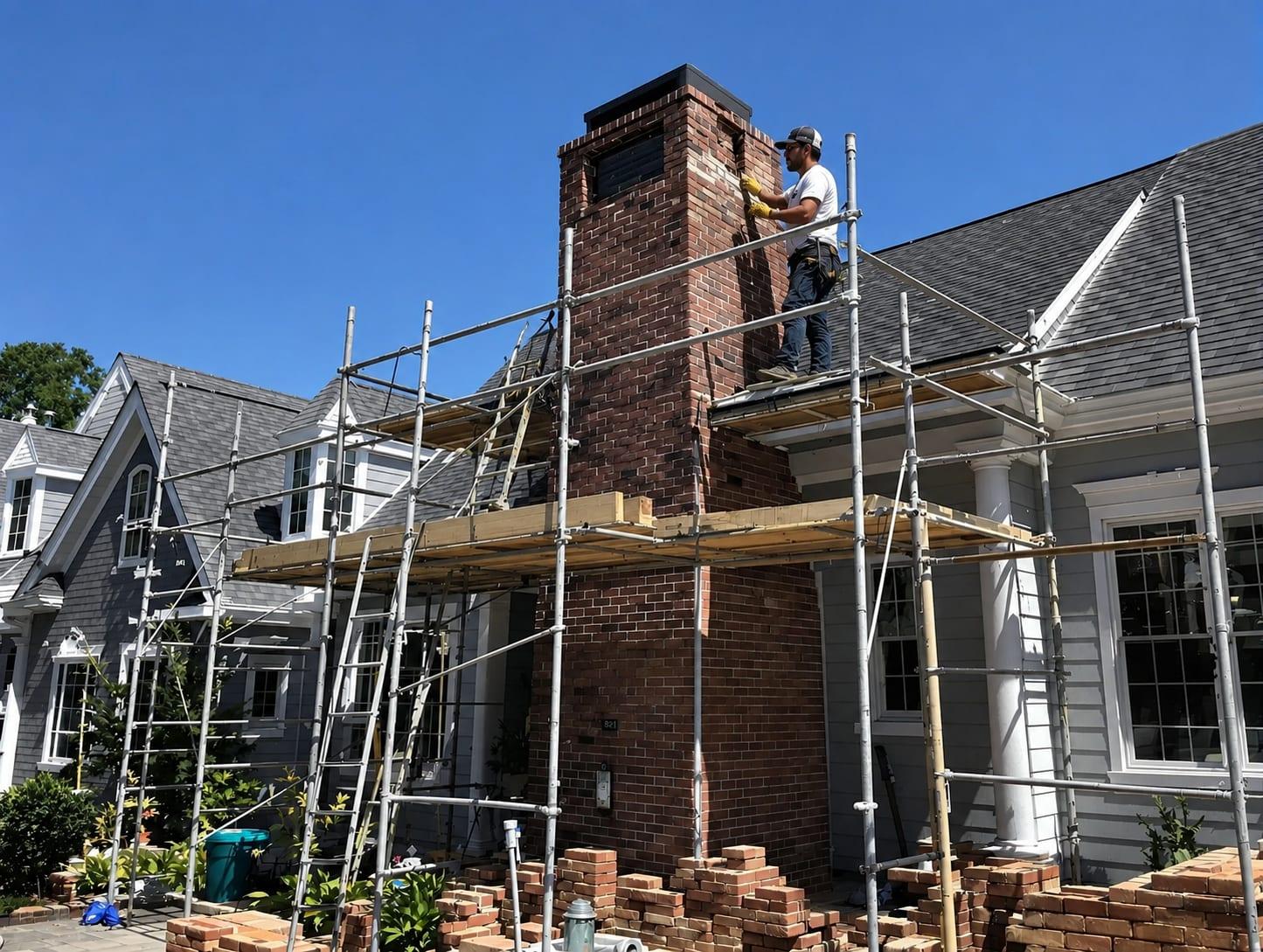
Pushing a leaning chimney back into position rarely fixes it. In most cases the moved section is taken down and rebuilt on a sound base. How much work that takes depends on where the movement starts.
How the repair usually comes together
Inspect and find the cause
The chimney is checked inside and out to see how far it has moved, whether the flue is damaged and whether the problem is in the footing, the masonry or the attachments.
Choose the scope
A chimney that has only shifted above the roofline may need a partial rebuild from that point up. One that is leaning from the base usually needs a full chimney rebuild, and the inspection shows whether the footing needs attention first.
Rebuild and seal
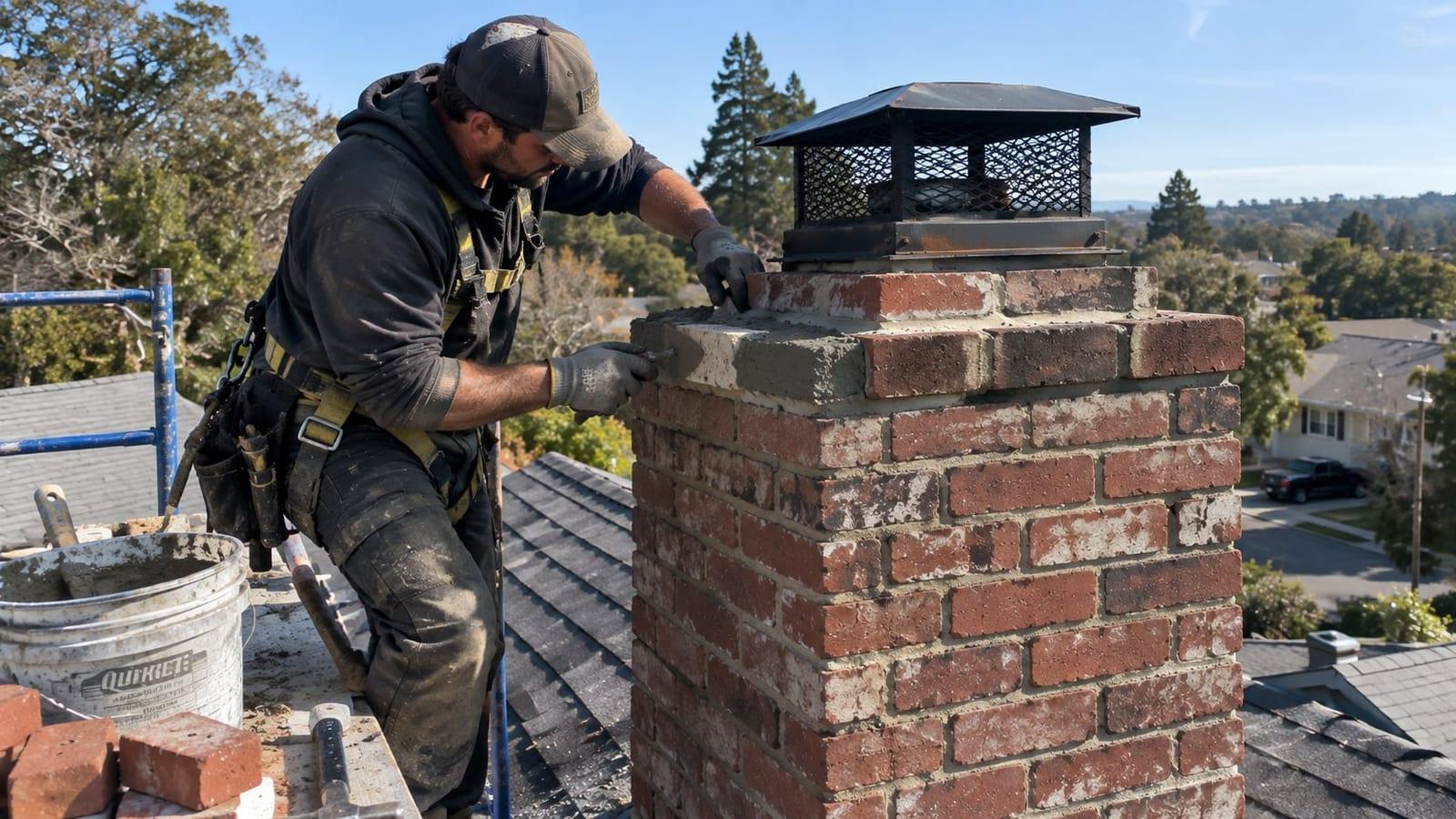
The affected section is taken down and rebuilt plumb. Then the crown, flashing and cap are restored so water doesn't start the problem again.
Check the flue before use
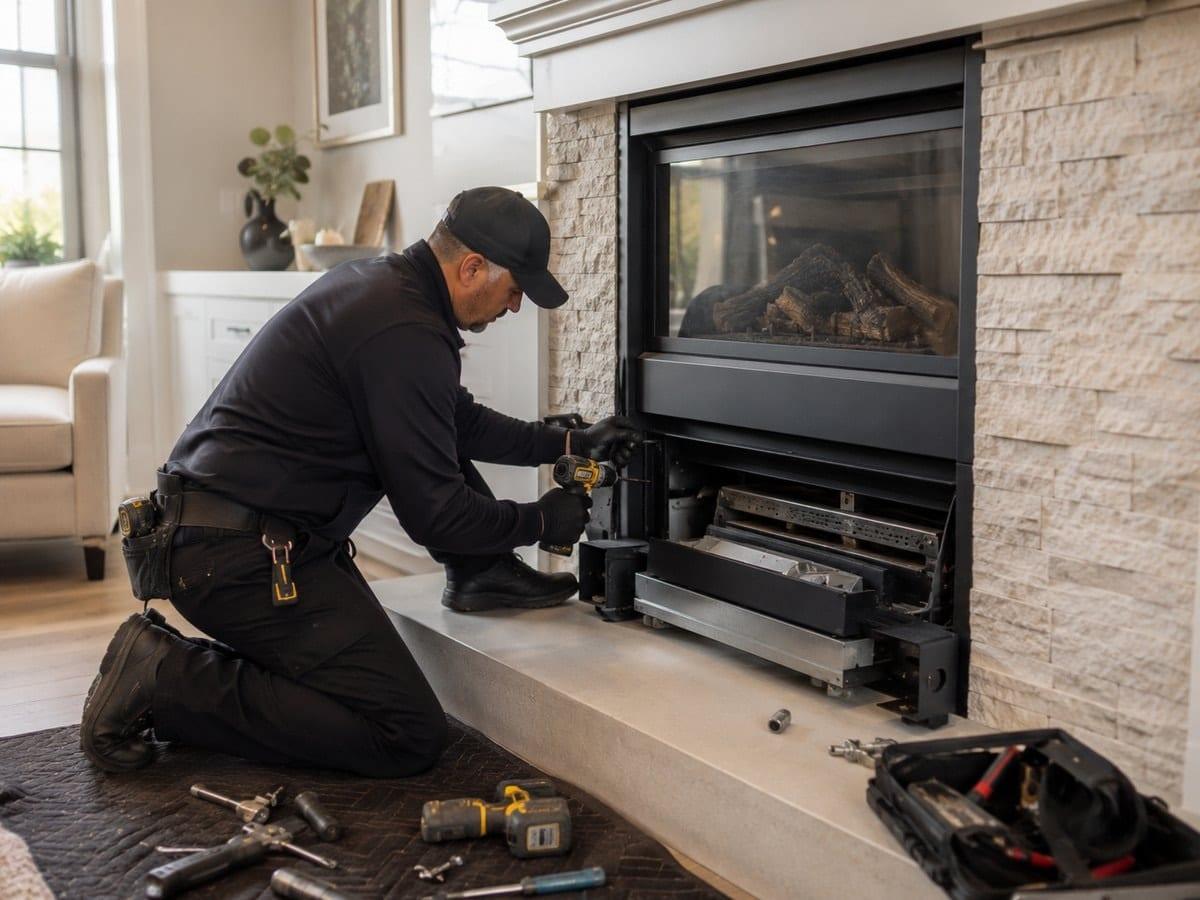
A damaged liner is repaired or replaced, so the chimney is safe to use again.
When the movement is minor and the structure is still sound, masonry repair for cracked brick and mortar may be enough to stop further damage. Damaged flashing, crowns or caps fall under general chimney repair. If you want to know what to expect before booking, here's how a rebuild is planned and carried out.
What not to do
- Don't climb onto the roof to inspect or brace a leaning chimney yourself.
- Don't try to pull the chimney back toward the house or tie it with straps or cables.
- Don't fill the gap with caulk or foam and treat the problem as solved. That hides the movement without stopping it.
- Don't keep using the fireplace or stove "just until it's fixed."
Request an estimate and the chimney can be looked at before the problem grows.