On this page
What chimney crown repair involves
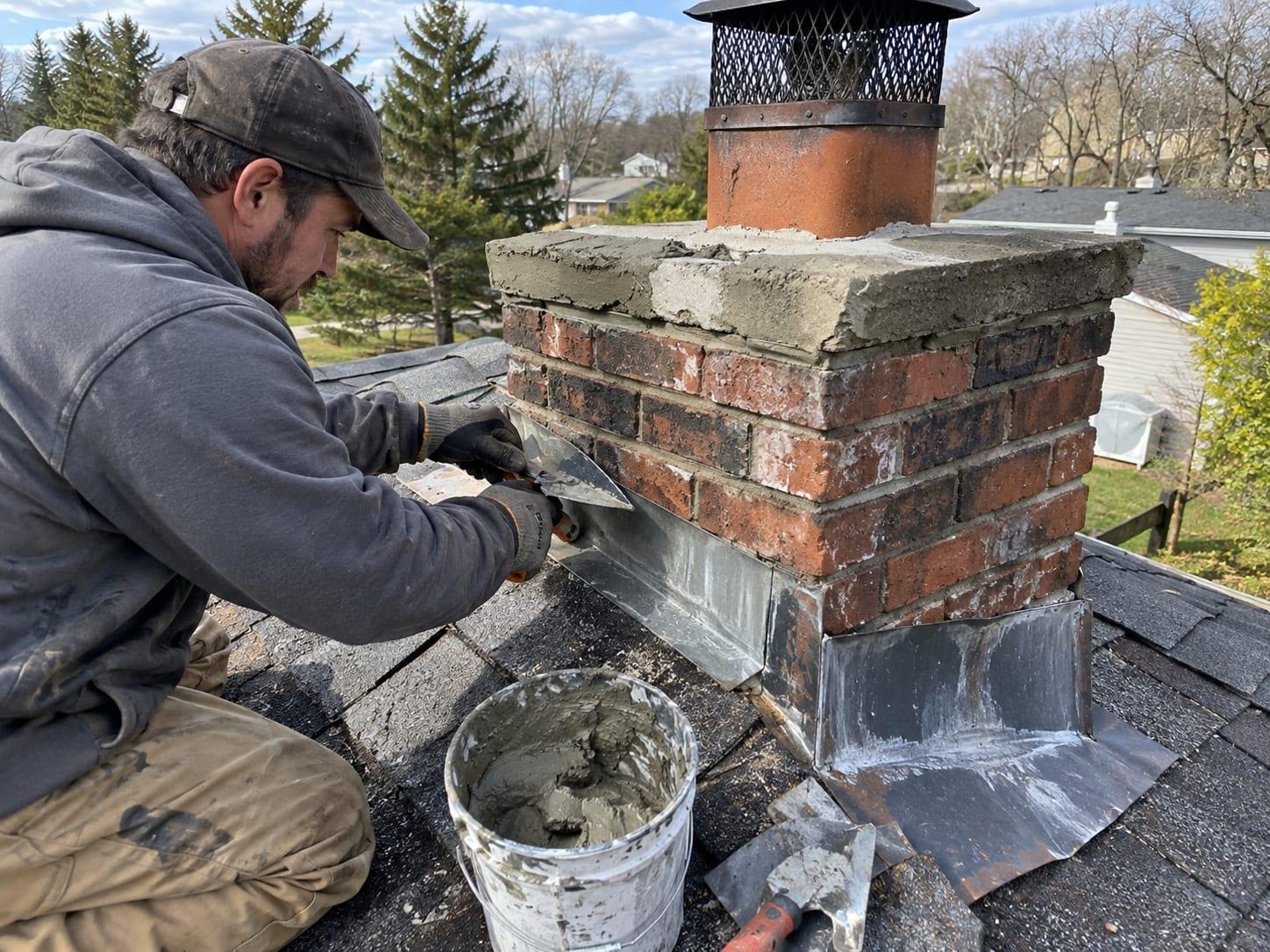
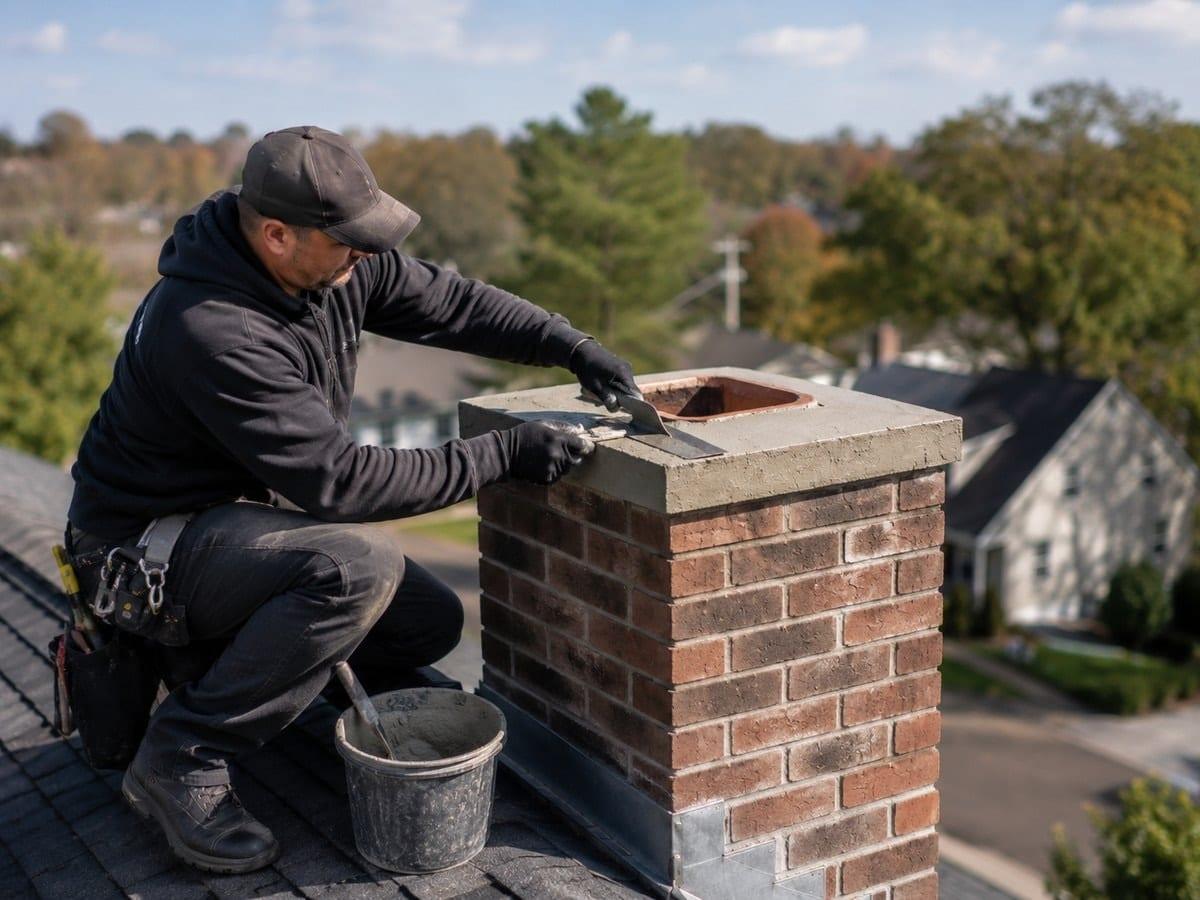
The crown is the concrete or cement cap covering the top course of brick on a masonry chimney, with the flue tile rising through it. It does two jobs: it sheds rain away from the chimney and seals the gap around the flue. A well-built crown slopes away from the flue and overhangs the brick slightly, so water drips clear of the chimney walls instead of running down them.
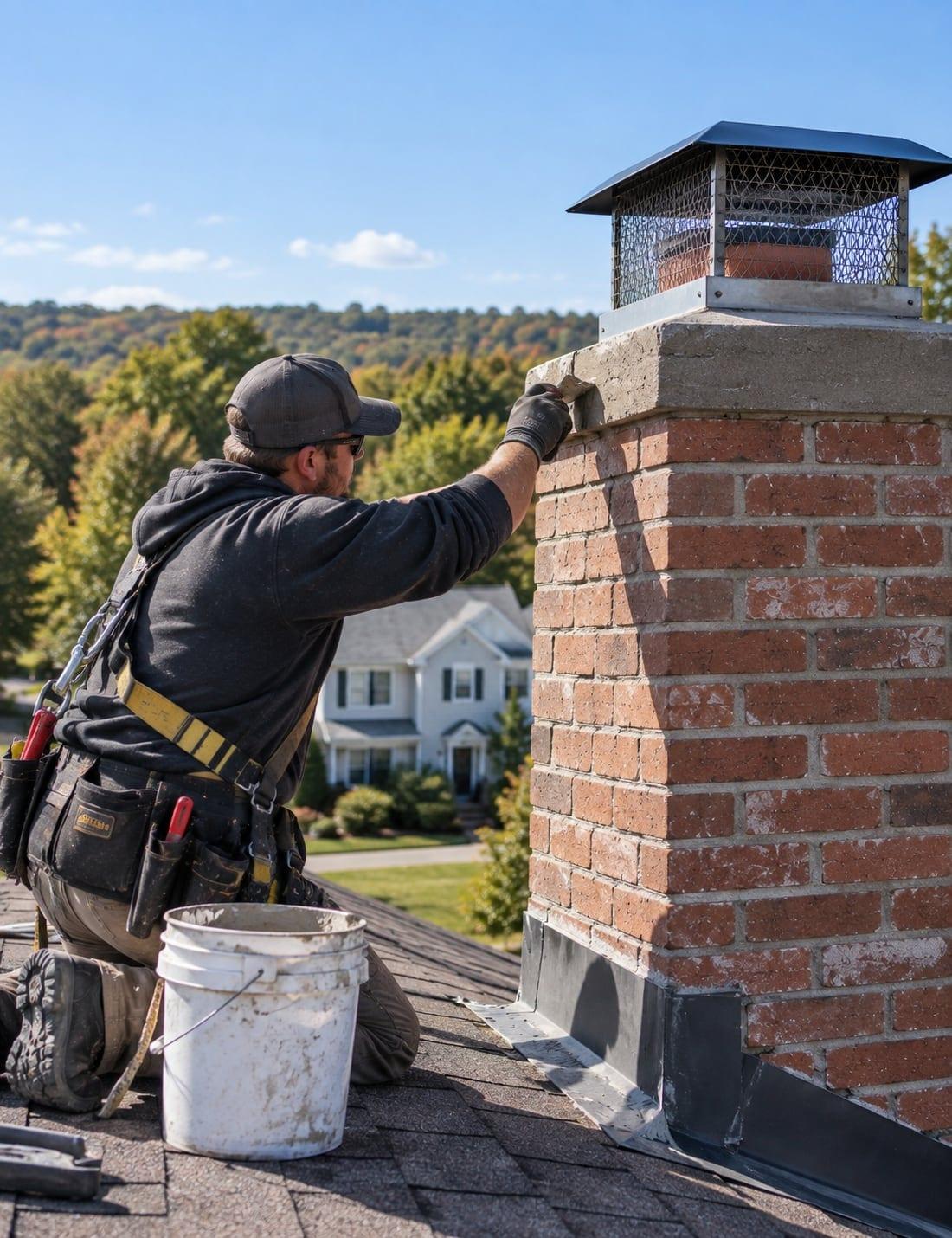
The right repair depends on how far the damage goes:
- Hairline cracks are cleaned and sealed with a flexible crown sealant that bridges the cracks and moves with the crown as temperatures change.
- Wider cracks and crumbling spots have loose material removed and are patched before the whole surface is sealed.
- A crown that is broken up, too thin or made of ordinary mortar is removed and recast with proper slope and overhang.
Where the flue tile meets the crown, a flexible seal rather than rigid cement lets the two expand and contract separately, which helps keep new cracks from forming.
Signs a chimney crown needs repair
- Cracks or missing chunks you can see from the yard or a ladder
- Bits of cement in the gutters, on the roof or in the firebox
- Water stains on a ceiling near the chimney, or dampness in the firebox after rain
- White, powdery residue (efflorescence) on the upper brick
- Flaking or crumbling brick near the top of the chimney
- A rusty damper
Several of these can also come from flashing or brick problems, so the crown is checked together with the rest of the chimney top.
What the visit involves, step by step
A crown repair visit
Look below first
The firebox, damper and any interior stains show whether water is already getting through.
Inspect the crown up close
Cracks, thickness, slope, overhang and the joint around the flue tile are all checked.
Check the surrounding masonry
The top courses of brick, the mortar joints and the cap are checked for damage the crown may have caused.
Recommend a repair
You hear whether sealing, patching or a new crown fits the damage, and why.
Do the work
Loose material is removed, cracks are patched or a new crown is formed, and the surface is sealed. A recast crown needs time to cure before it is sealed.
Chimney crown and masonry repair
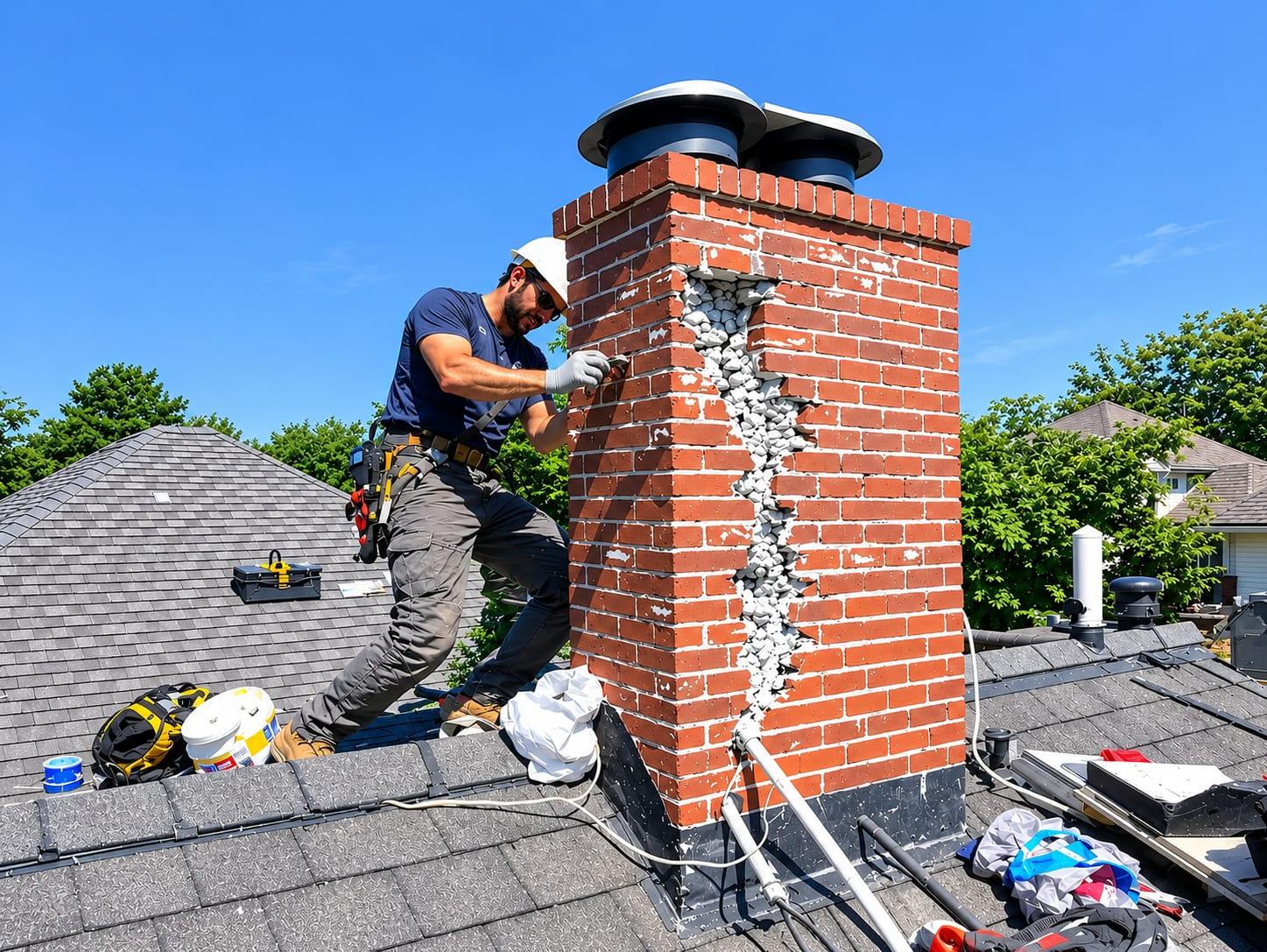
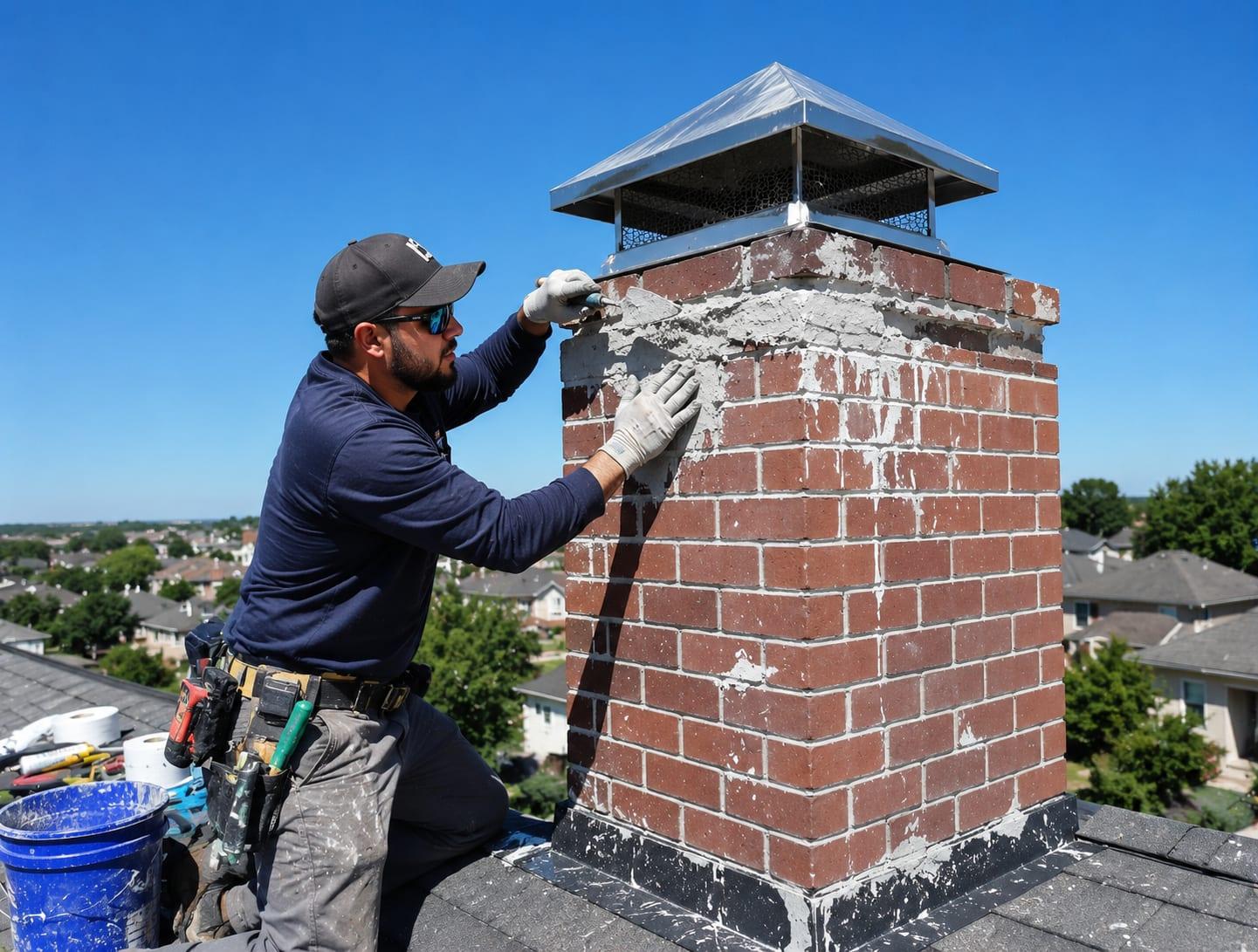
Crown damage rarely stays in the crown. Water that gets through cracks soaks the brick and mortar just below, and repeated wetting and drying breaks them down. When those courses are loose or the joints are eroded, the crown work is paired with chimney masonry repair so the new crown sits on solid brick. A cap with a wide hood keeps rain off the crown and out of the flue, so installing a chimney cap is often worth doing at the same time.
Can you repair a chimney crown yourself?
Only the smallest repairs, and only if you can work safely on your roof. Hairline cracks can be sealed with a sealant made for chimney crowns, but homemade patches of mortar or caulk tend to fail quickly. Mortar is the reason many crowns crack in the first place. If the crown is crumbling, cracked all the way through, or you can't tell how deep the damage goes, the job calls for proper roof safety gear and the materials to form a new crown.
Booking crown repair
Request an estimate and mention what you've seen, such as a visible crack, cement in the fireplace or a stain after rain. If crown damage turns up alongside other problems, it can be handled within a broader chimney repair job. Commercial and property-manager work is offered too.
What the technician checks
- Flashing where masonry meets the roof
- Stack alignment and loose courses
- Crown cracks and overhang
- Mortar joint depth and condition
- Brick faces for spalling
- Efflorescence and water staining
Before the technician arrives
- Let the fireplace or stove cool completely — ideally no fire for 24 hours before the visit.
- Move rugs, photos and anything fragile away from the work area.
- Write down what you've noticed and when it happens — smells, smoke, sounds or stains.
- Keep pets in another room while the work area is open.
Stay off the roof
Looking from the ground or with binoculars is safe. Climbing a steep or wet roof to inspect a chimney is not — leave that to someone with the right equipment.