On this page
What chimney flashing repair involves
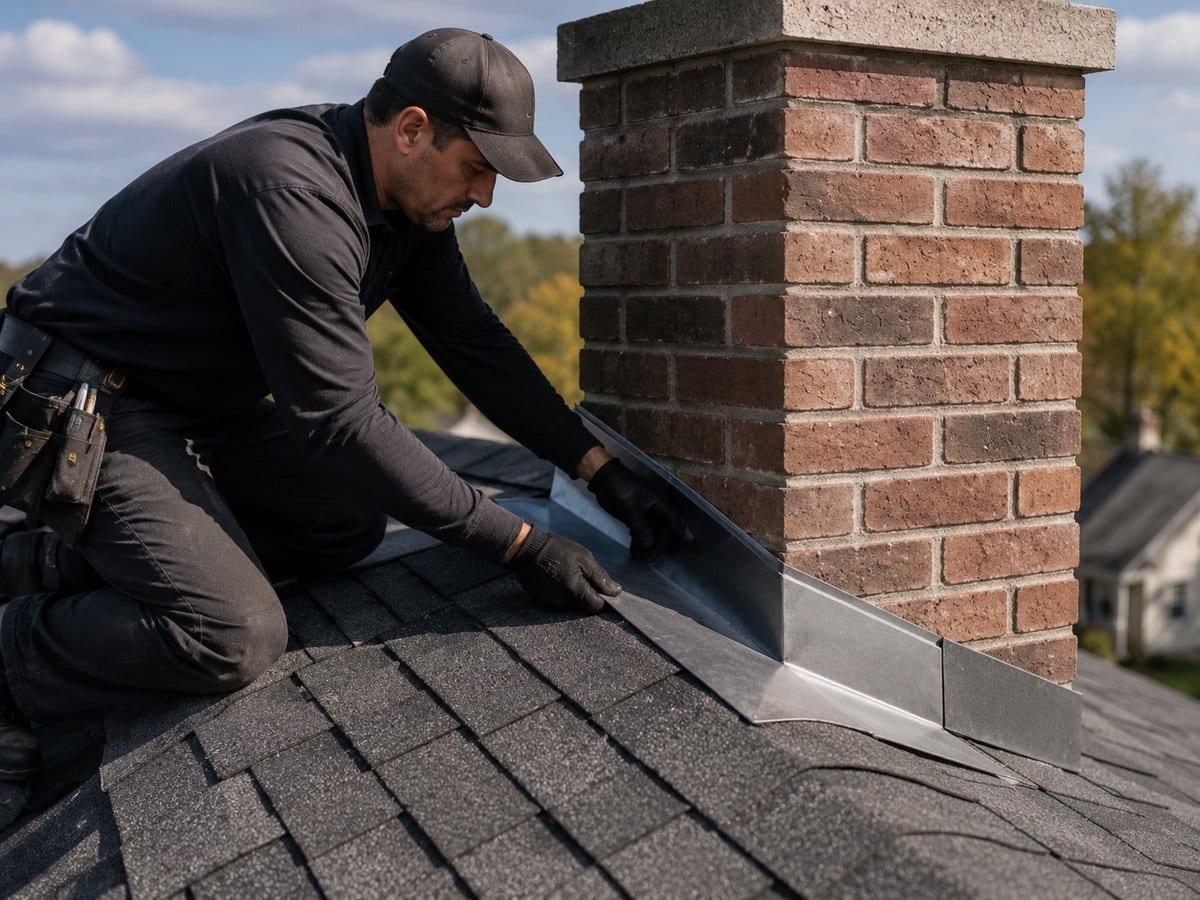
Flashing is the sheet metal that bridges the gap between a chimney and the roof around it. Brick and roofing move differently as they heat, cool and settle, so the joint can't just be caulked shut. Overlapping layers of metal shed water while letting the two surfaces move.
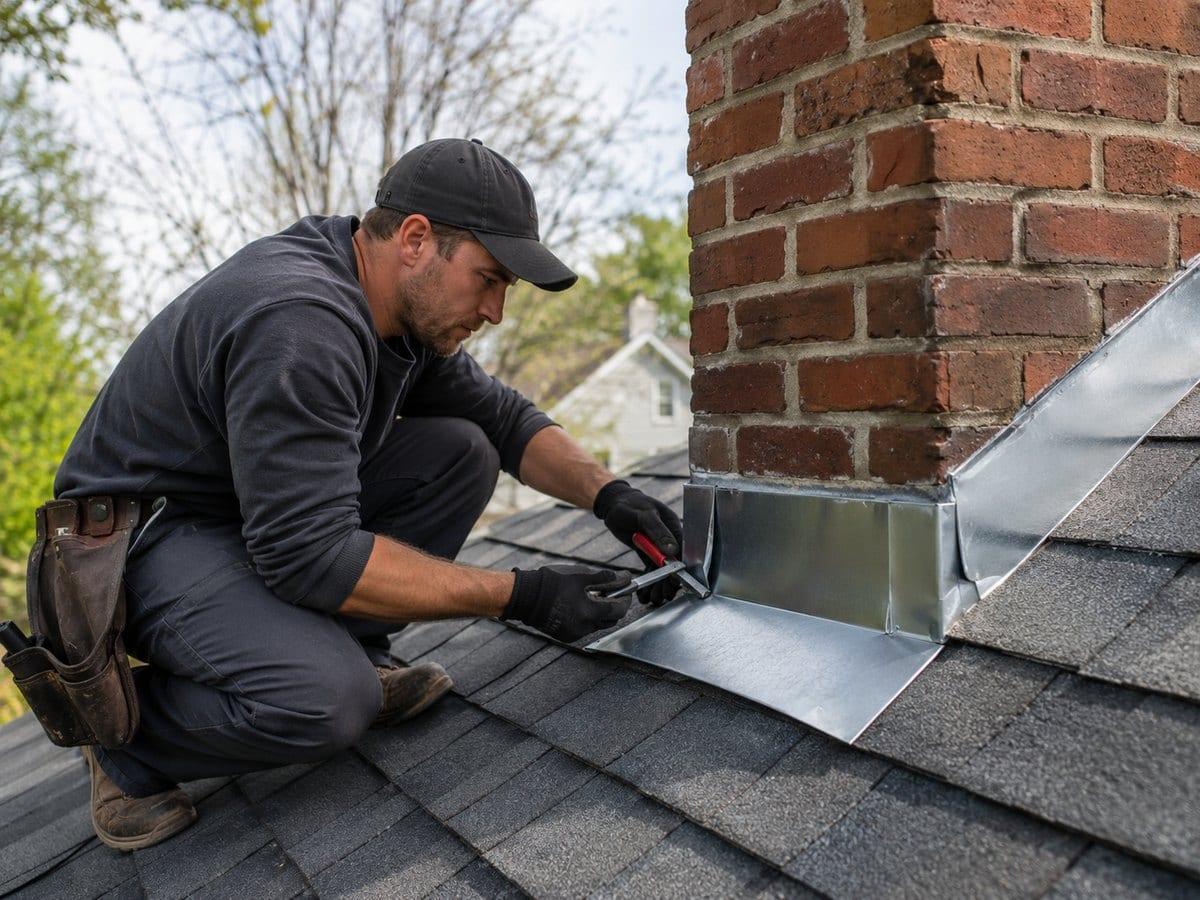
Chimney flashing repair means finding where that system has failed and fixing it. Sometimes that means resealing a joint or refastening a lifted section. Sometimes it means removing worn or poorly installed pieces and fitting new ones.
The parts of a flashing system
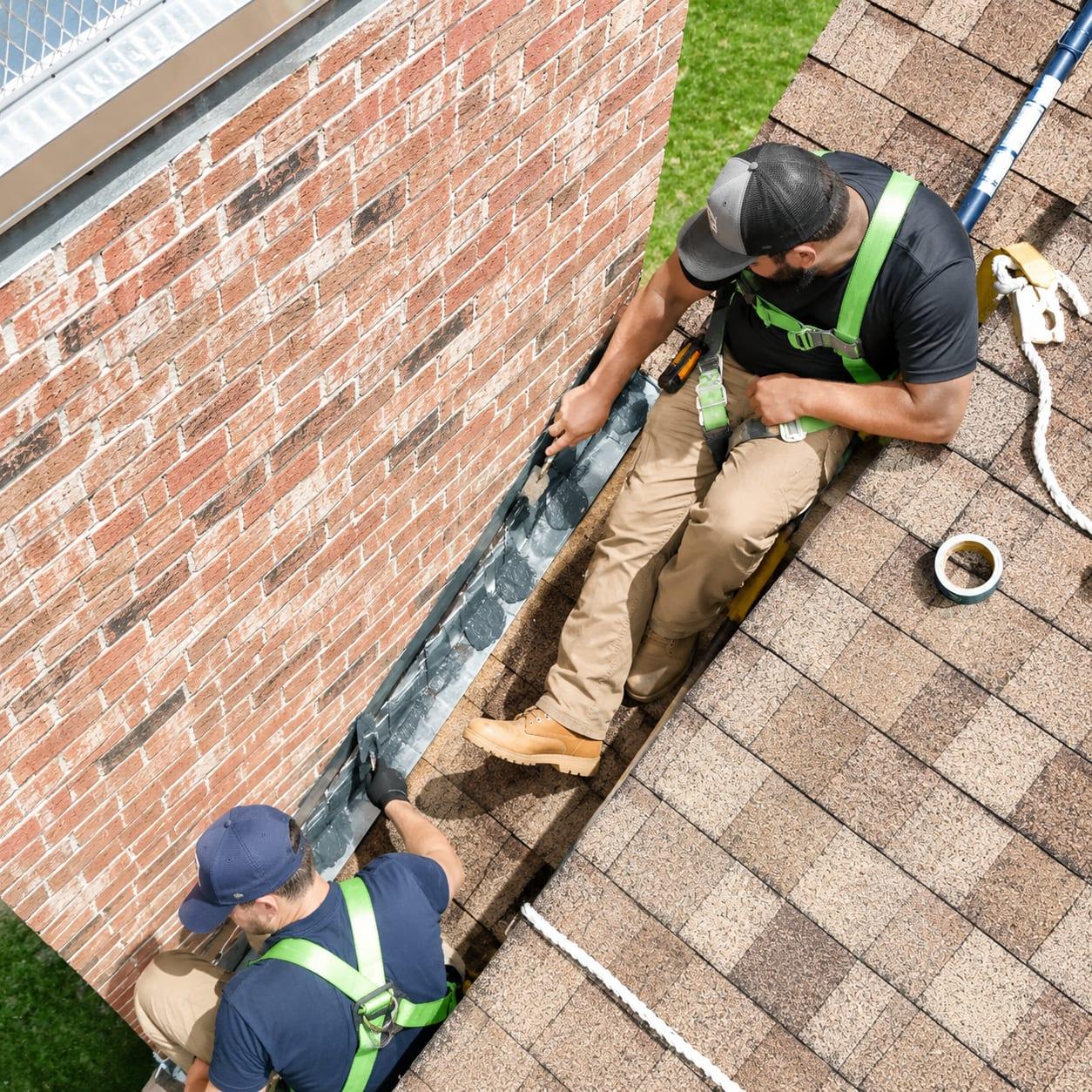
- Step flashing: individual L-shaped pieces woven in with the shingles along the sides of the chimney, one per course.
- Counter flashing: metal set into the mortar joints of the chimney and bent down over the step flashing, so water can't get behind it.
- Apron or base flashing: the piece across the downhill face of the chimney, lapping over the roofing below.
- Back flashing or a cricket: the upslope side, where water and debris collect against the chimney. Wider chimneys often have a small peaked cricket (also called a saddle) that splits the flow around it.
Flashing is commonly made of aluminum, galvanized steel or copper. The right choice depends on the roofing material and what is already on the house, since some metals corrode when they touch each other.
Signs your chimney flashing needs attention
Common signs of failing flashing
- Water stains or bubbling paint on the ceiling or wall next to the chimney
- Damp, darkened or soft wood on rafters or sheathing around the chimney in the attic
- Drips that show up during heavy or wind-driven rain but not light rain
- Flashing that looks lifted, bent, rusted or pulled away from the brick
- Cracked, dried-out caulk or sealant along the top edge of the counter flashing
- Layers of roofing tar smeared over the joint from earlier patch attempts
Not every chimney leak is flashing
Water can also come in through a cracked crown, missing cap, or porous and broken masonry, and the stain inside can look identical. If the inspection points elsewhere, the fix may fall under our broader chimney repair work, or adding a cap through chimney cap installation to keep rain out of the flue.
What the visit involves, step by step
How a flashing repair typically goes
Look at the damage from inside
We check the ceiling, walls and, where accessible, the attic around the chimney to see where water is showing up and how far it has spread.
Inspect the chimney and roof joint
On the roof, we examine each side of the flashing, the counter flashing's mortar joints, the crown and the surrounding shingles to separate a flashing leak from other entry points.
Explain what we found
You get a plain explanation of the cause and whether a reseal, a partial repair or full replacement makes sense, before work starts.
Remove failed material
Old sealant, tar patches and damaged flashing pieces come off so the new work seals against clean surfaces.
Repair or install new flashing
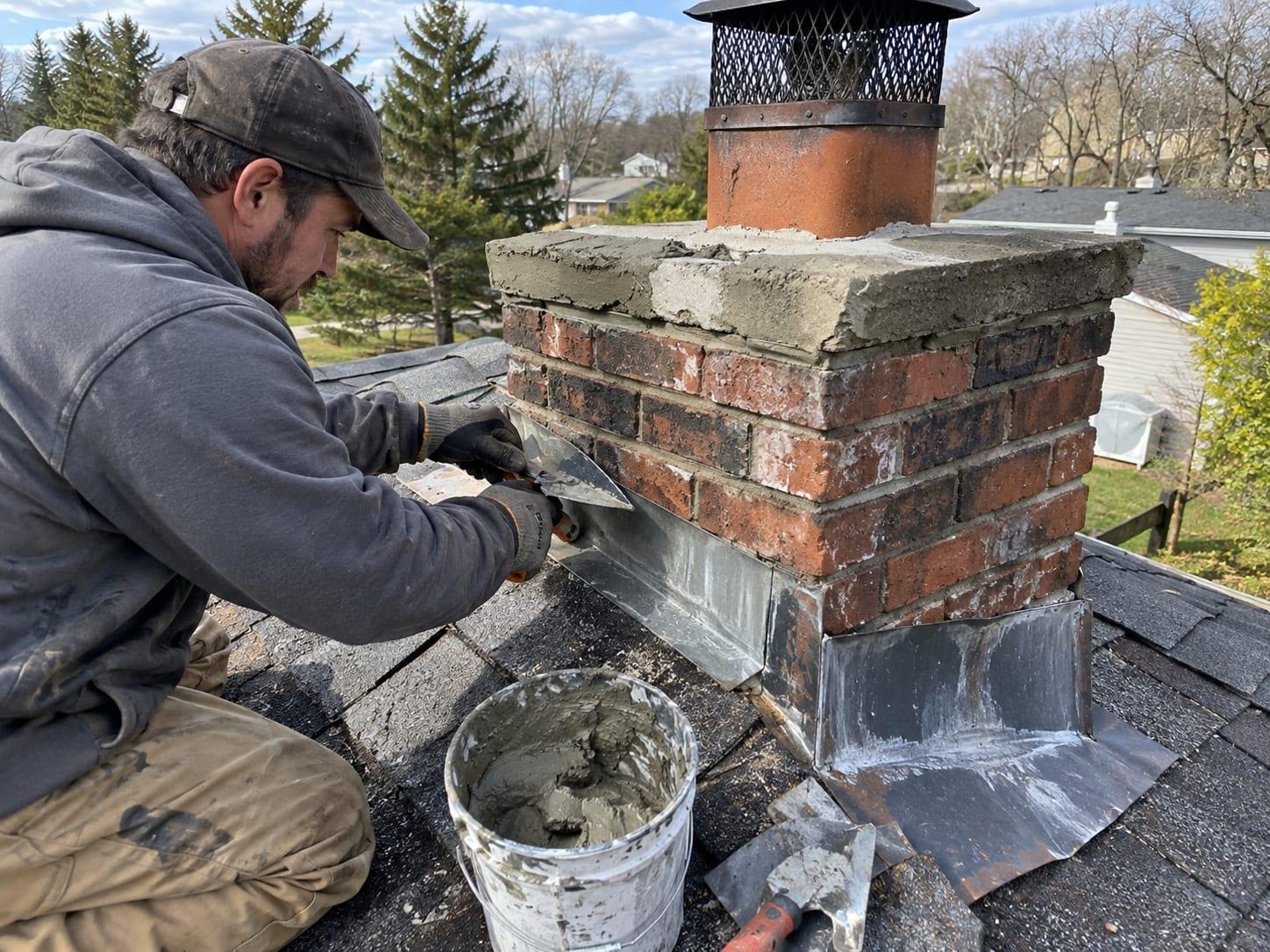
Step flashing is fitted with the roofing, counter flashing is set into cut mortar joints and sealed, and the base and back pieces are lapped so water always runs over a seam, not into it.
Check the finished joint
We go over every seam and fastener and clean up the work area before leaving.
When the masonry behind the flashing is the problem
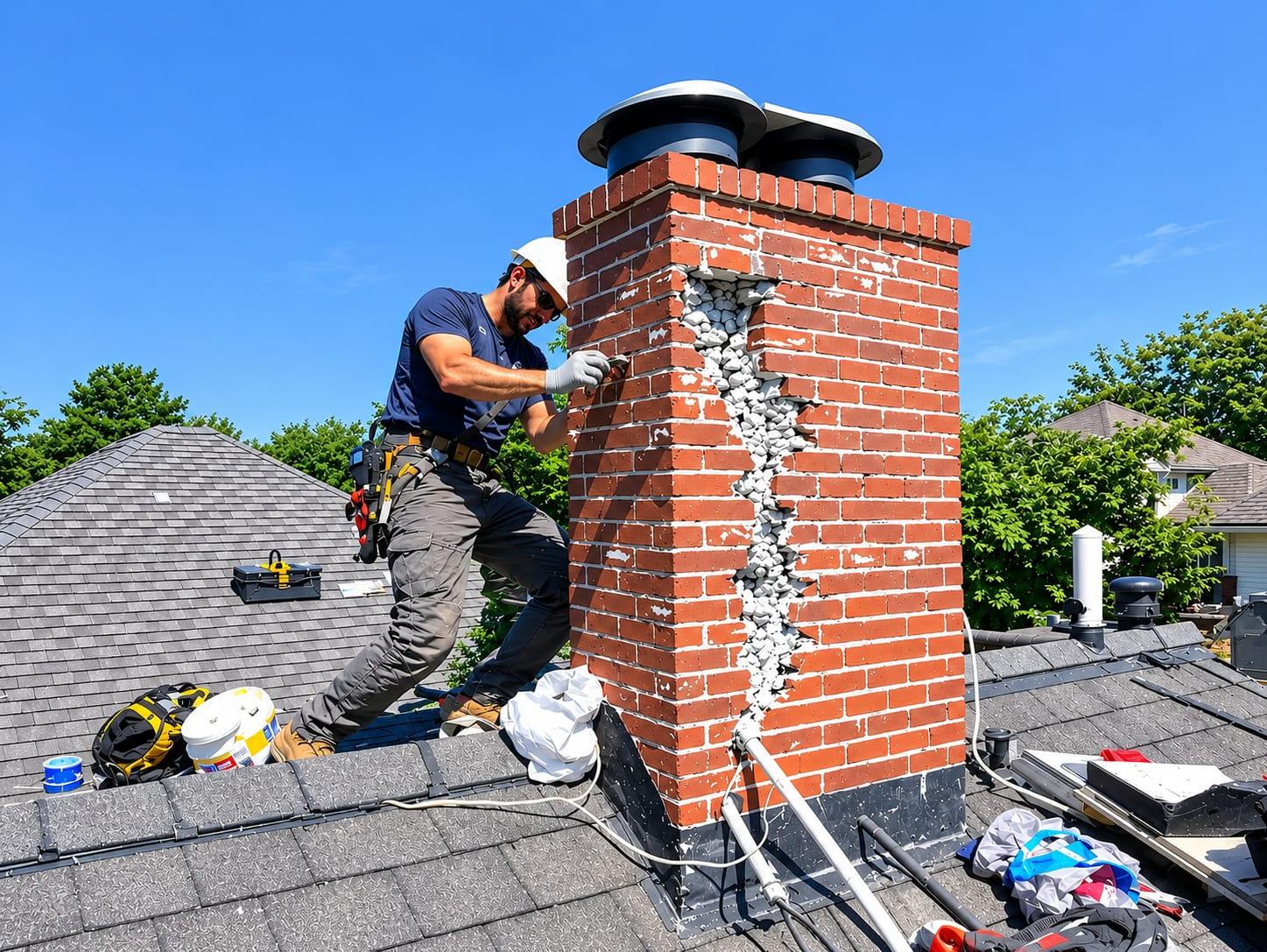
Counter flashing is only as sound as the mortar it's set into. If bricks are loose, joints are badly eroded or the chimney is leaning, new metal won't hold. In those cases the masonry has to be addressed first, and a severely deteriorated chimney may need a partial or full rebuild of the chimney above the roofline before flashing can be installed properly.
What to do while you wait
- Stay off the roof; the area around a chimney is steep and often slick.
- Put a container under any drip and move belongings away from the wet wall.
- Take photos of stains and note when they appear, such as during strong wind or only long storms. That pattern helps pinpoint the source.
- Avoid sealing the joint with roofing tar yourself; it tends to trap water and has to be removed before a proper repair.
Booking chimney flashing repair
Call or request an estimate, and tell us what you're seeing: where the stain is, how long it's been there and whether it changes with the weather. Commercial and property-manager work is offered.