On this page
What dryer vent cover replacement involves
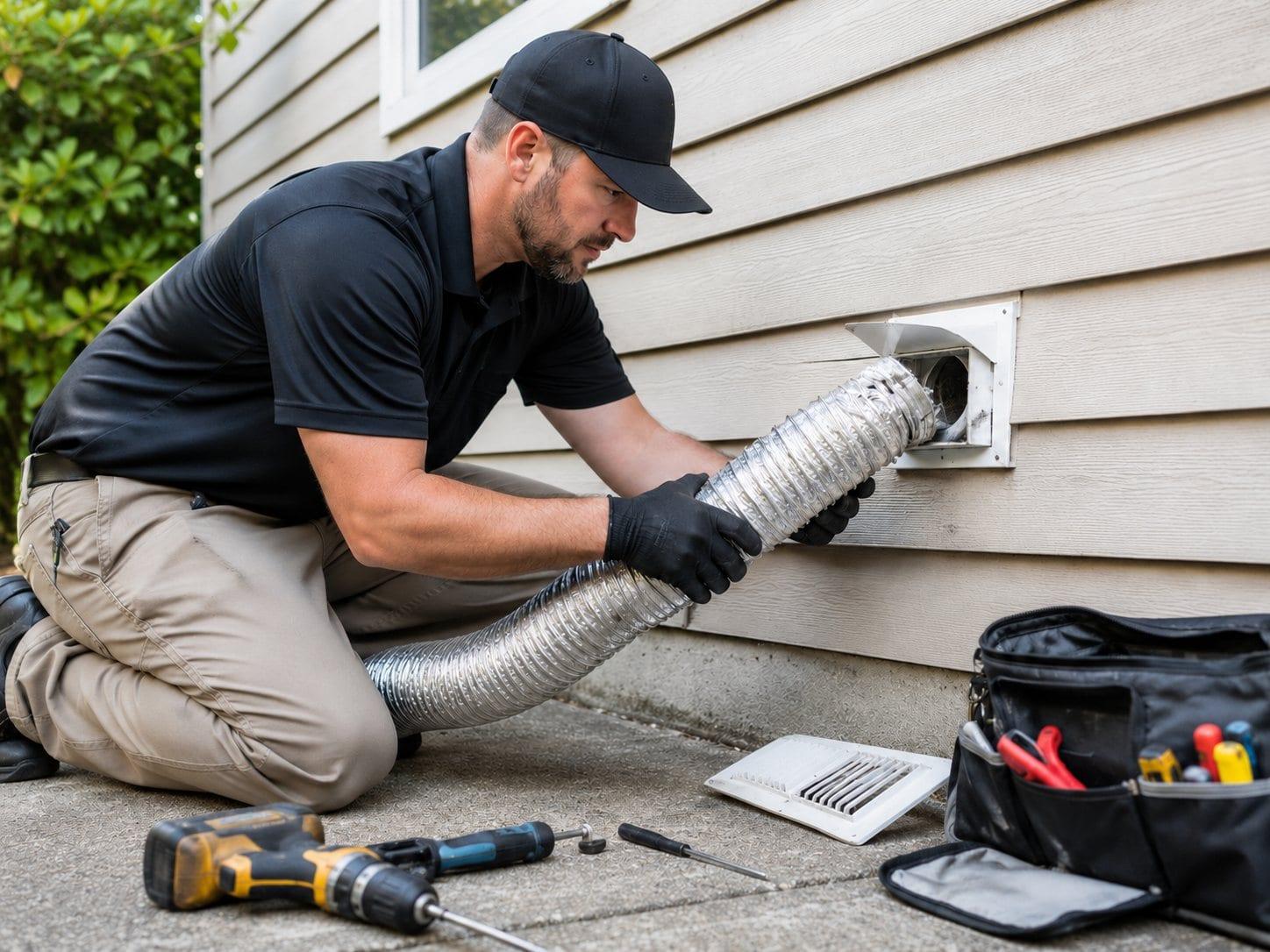
The cover, also called a vent hood or termination, is where dryer exhaust leaves the house. A working one lets hot, damp air and lint out with little resistance, then closes to keep out drafts, rain and animals. Replacement involves four things: removing the old hood, checking the duct it connects to, fitting a new cover of the right size and style, and sealing it to the siding or roof so water can't get behind it.
Cover styles and materials
| Type | How it works | Things to know |
|---|---|---|
| Louvered | Several slats open under airflow | More edges for lint to catch on, and slats can stick shut |
| Single flap or damper hood | One hinged flap swings open | Fewer catch points, but a bent or warped flap won't seal |
| Pest-guard hood | A flap with a built-in guard to keep animals out | Blocks nesting without a lint-trapping screen, but still needs to be kept clear |
| Roof termination | A dampered cap made for roof exits | Must be designed for dryer exhaust, not a plumbing or attic vent cap |
Metal covers resist cracking and chewing better than thin plastic, while plastic is lighter and won't rust. Either works if it matches the duct size and the flap swings freely.
When a dryer vent cover needs replacing
- Flaps that are cracked, broken off or missing
- Louvers stuck open, letting in cold air and insects, or stuck shut
- Birds or rodents nesting in or behind the hood
- A fine screen over the opening that keeps clogging with lint
- A hood pulling away from the wall, with gaps or water stains below it
- Brittle, faded plastic that breaks when touched
If lint is packed well inside the duct and not only at the hood, clearing the blocked vent comes first, so the new cover isn't fighting a clogged line.
What the visit involves, step by step
Replacing an exterior vent cover
Check the existing cover
We run the dryer and watch how the old hood behaves and how much air reaches it.
Remove the old cover
Fasteners and old sealant come off without damaging the siding or roofing around the opening.
Inspect the duct end
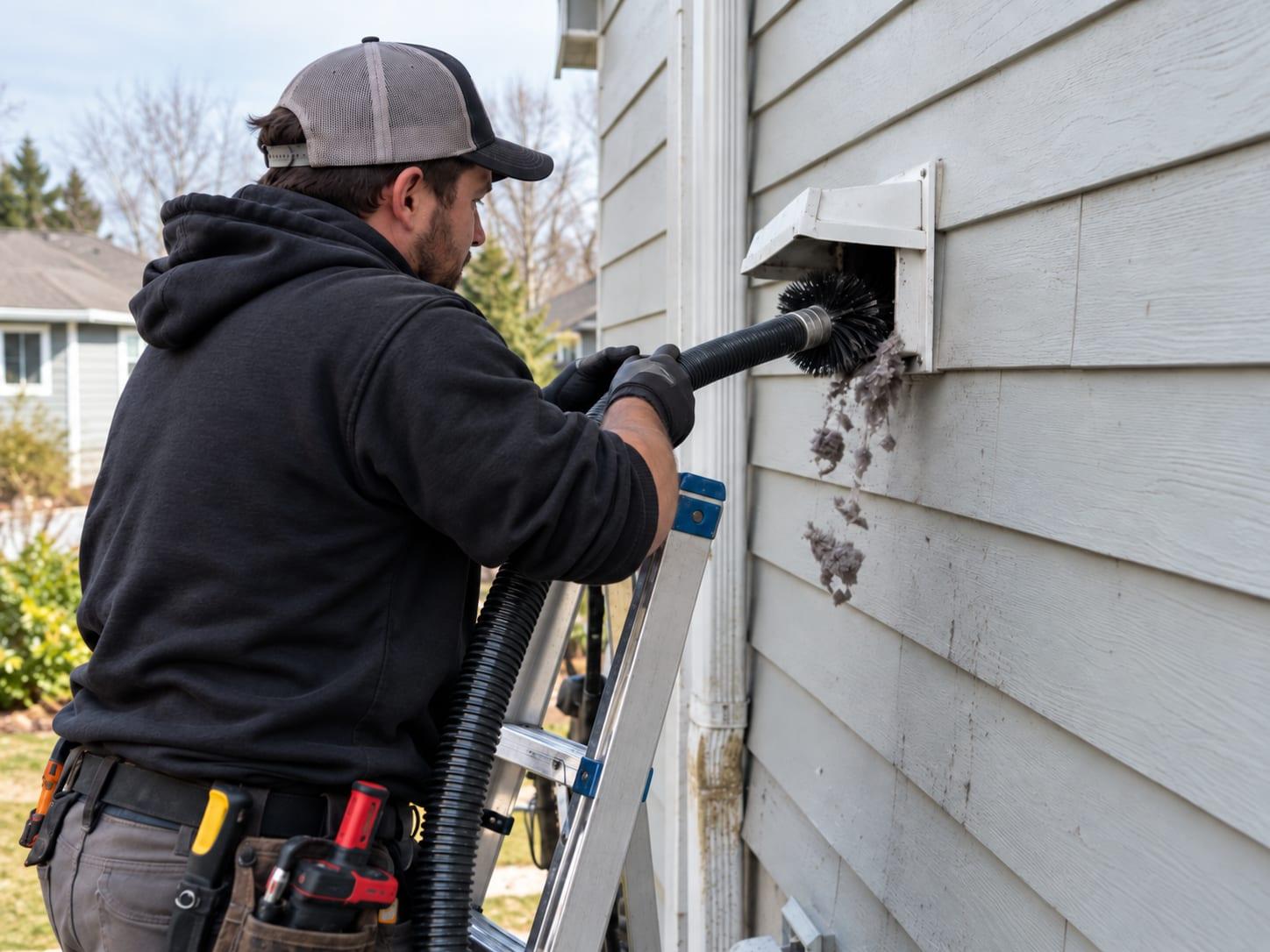
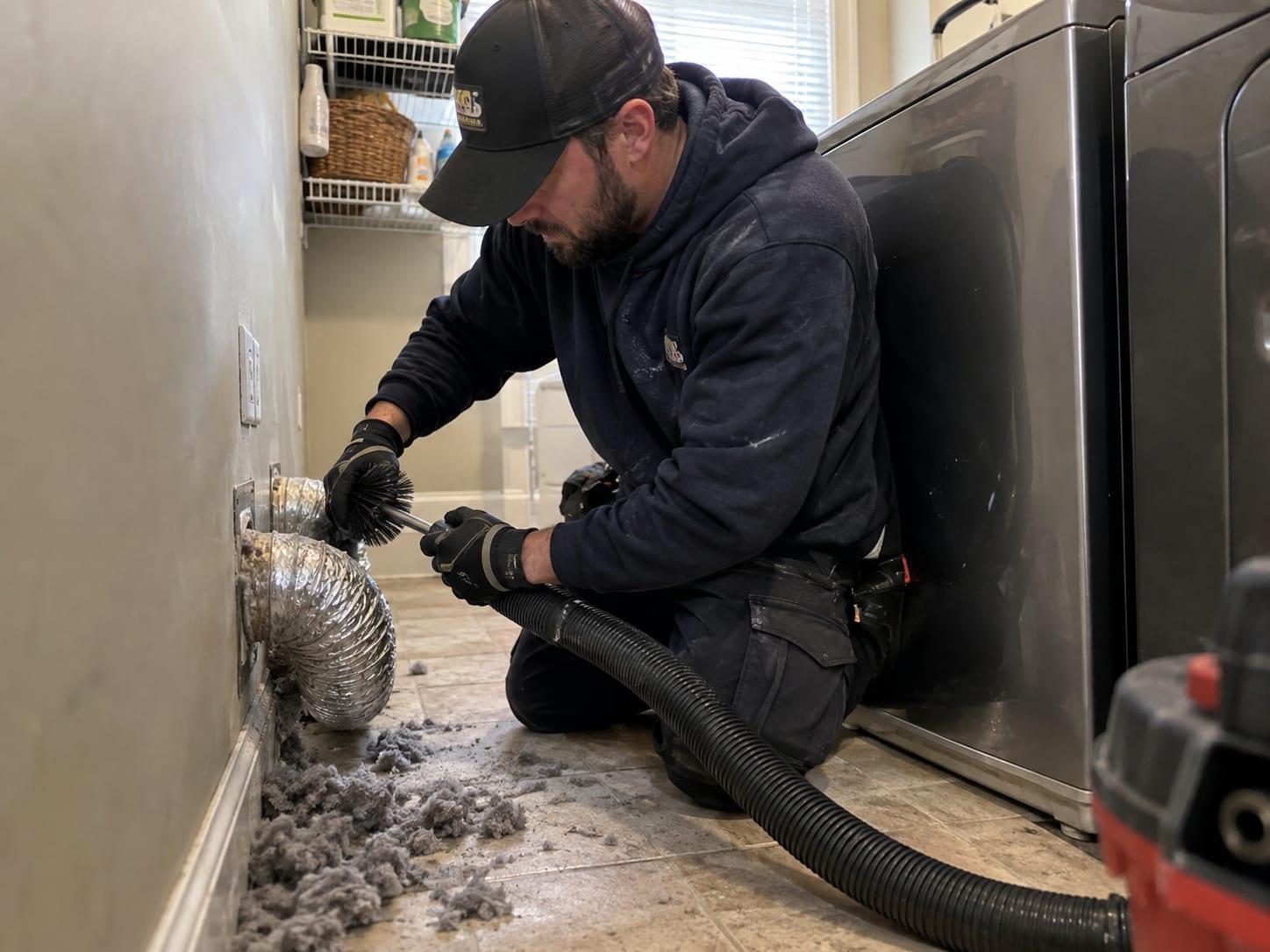
We make sure the connection is secure and clear any lint at the opening. A line full of lint is better handled with a full dryer vent cleaning.
Fit the new cover
The hood is matched to the duct size and to a wall or roof exit, then attached firmly to the duct.
Seal and test
The cover is sealed against weather, and the dryer is run to confirm the flap opens fully and closes again.
Safety and upkeep
A dryer exhaust cover shouldn't have a fine mesh screen over it. Screens trap lint quickly, and a clogged termination pushes heat and lint back into the duct and the dryer. Every few months, look at the hood while the dryer runs. The flap should open fully, and you should feel a strong stream of warm air. If the cover sits somewhere hard to reach or keeps getting damaged, moving the vent to a better exit may make more sense than another new hood.
Booking a cover replacement
Call or request an estimate. Tell us whether the vent exits through a wall or the roof, how high it is, and what's wrong with the current cover, and send a photo if you can. Owners of several units can be served too, since commercial and property-manager work is offered. Cover work can be combined with dryer vent cleaning for rentals and managed properties.
How to prepare
- Clear space around the dryer so it can be pulled out.
- If the dryer isn't overheating or smelling of burning, you can run an empty load first to compare airflow before and after.
- Make sure the outside vent hood can be reached.
Burning smell?
If you smell burning while the dryer runs, turn it off and unplug it until the vent is checked.
Checked on every visit
- Crushed or kinked sections
- Vent length and number of bends
- Airflow at the outside hood
- Outside hood, flap and screen
- Joints and foil tape
- Connector behind the dryer
Signs it's time for dryer vent cover replacement
- Clothes take two cycles to dry
- Lint around the outside vent hood or behind the dryer
- The dryer or laundry room gets very hot
- A burning smell when the dryer runs