When a storm hits the chimney
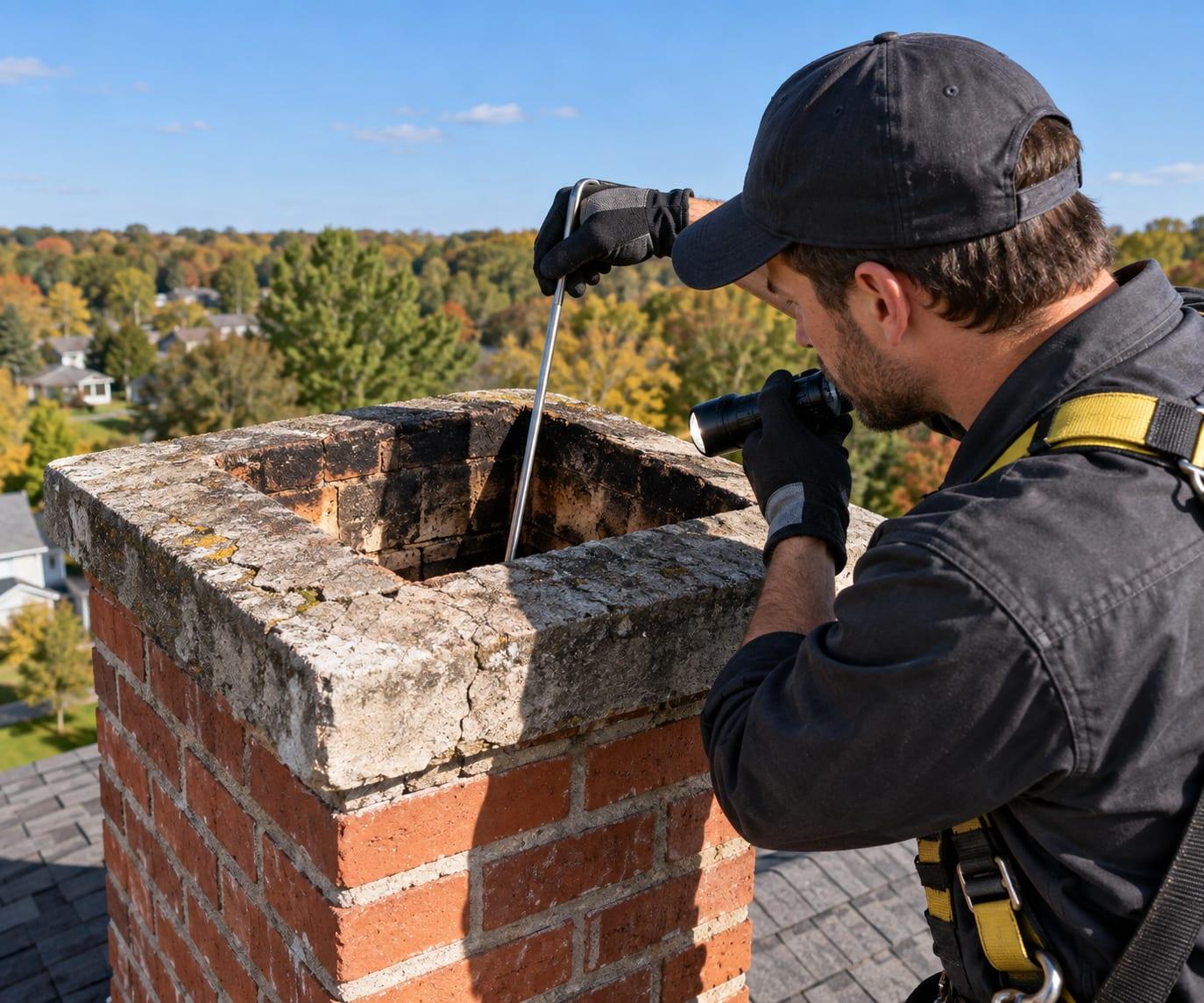
A chimney rises above the roofline, so it takes the full force of wind, rain, hail and anything the storm throws around. Damage can be obvious, like bricks on the lawn or a cap lying in the gutter. It can also be quiet, like a hairline crack in the crown or a lifted edge of flashing that only shows up later as a water stain on the ceiling. In both cases, the chimney may no longer keep water out of the house or smoke and gases inside the flue.
Common signs of chimney storm damage
What to look for after a storm
- Bricks, mortar chunks or pieces of the crown on the roof, in the gutters or on the ground
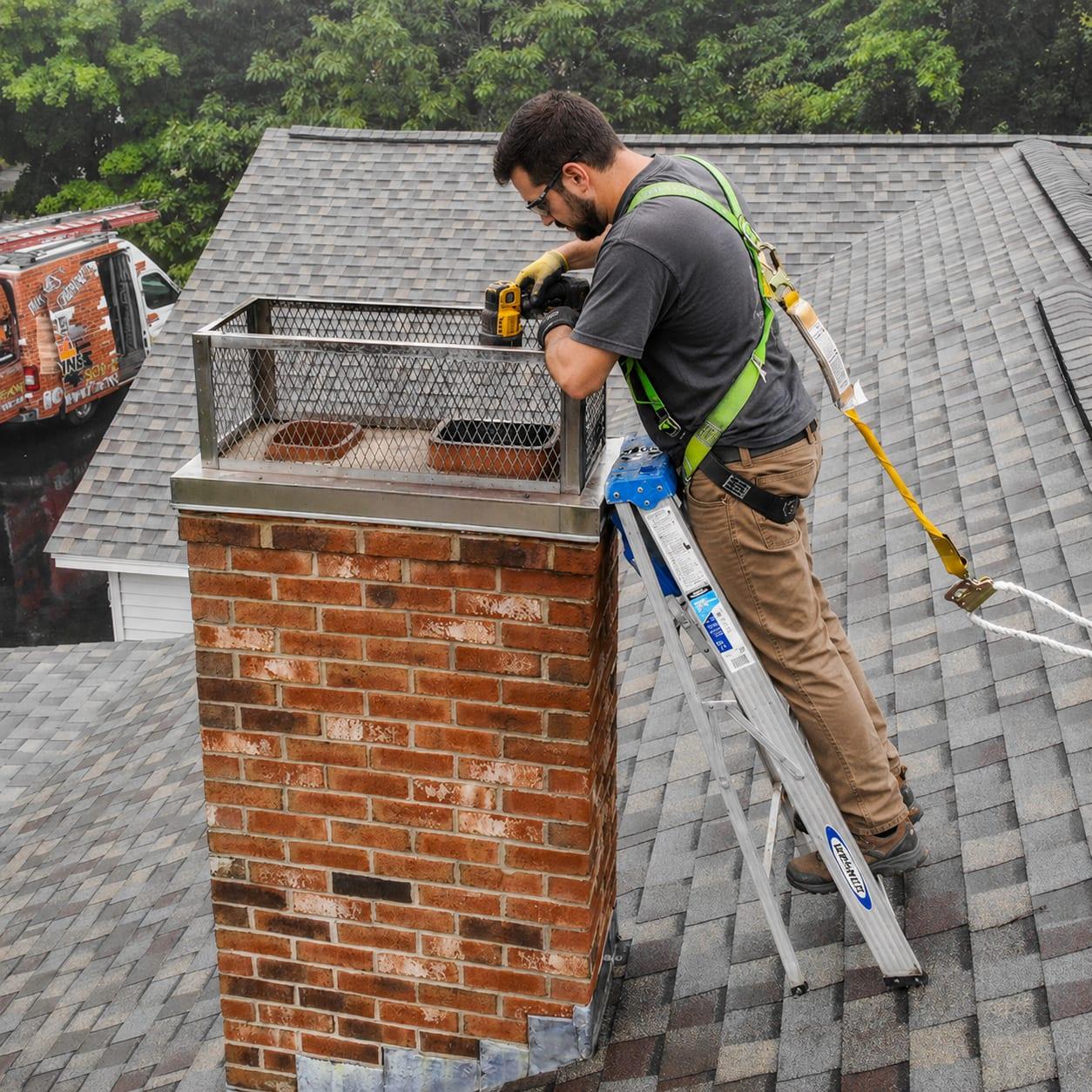
- A chimney cap or spark screen that is missing, bent or sitting crooked
- A chimney that looks like it is leaning or has pulled away from the house
- Flashing where the chimney meets the roof that looks bent, lifted or torn
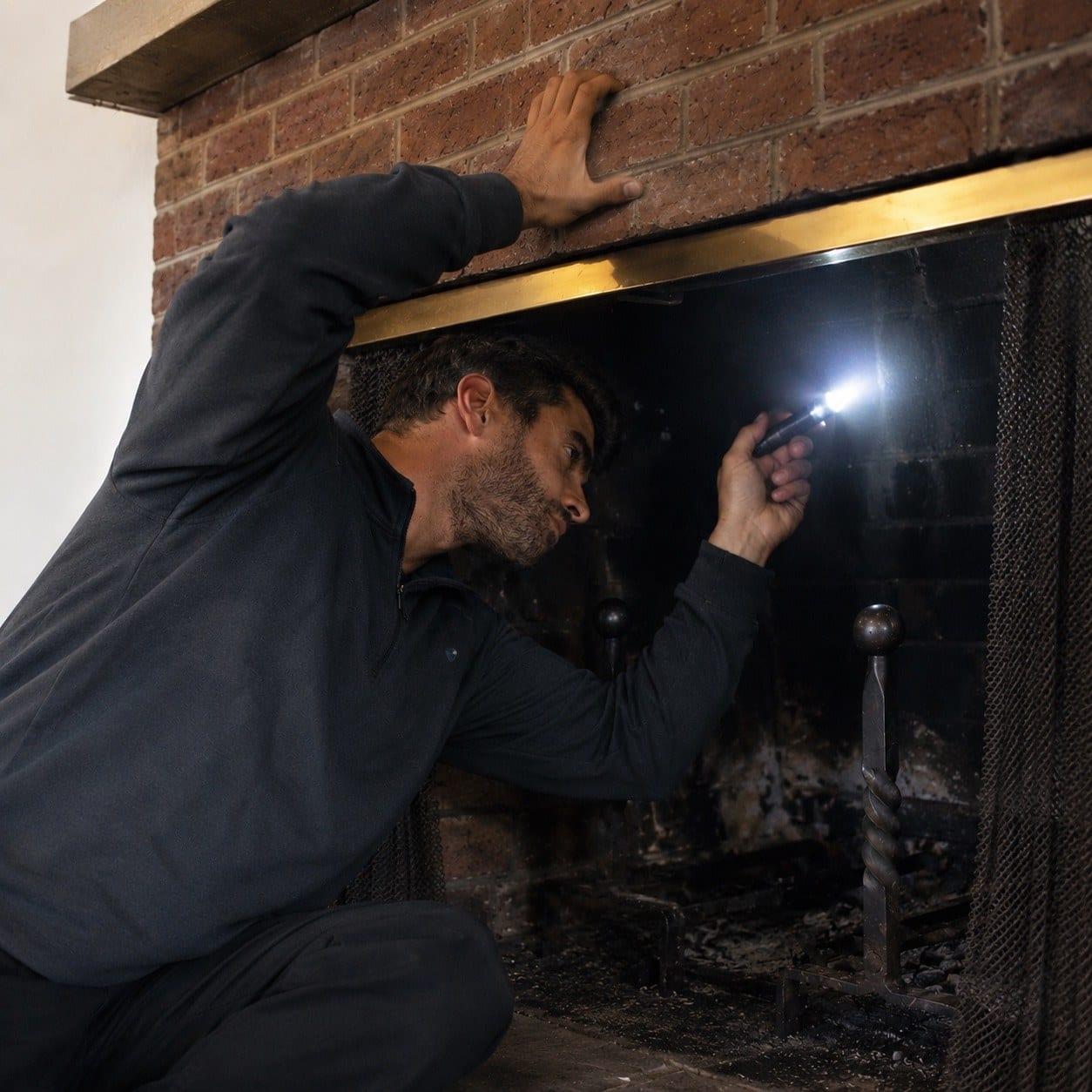
- New water stains on the ceiling or wall near the chimney, or water in the firebox
- Leaves, twigs, debris or pieces of tile falling into the fireplace
- Smoke drifting into the room, or a damp or musty smell from the fireplace
- On a metal or prefab chimney: a dented chase, a loose or rusted-through chase cover, or a damaged termination cap
Look from the ground or through a window. Binoculars help you see the top of the chimney without climbing onto a wet or damaged roof. Damage looks different from one chimney to the next, because the different types of chimneys are built from different parts. A masonry chimney tends to show cracked brick and crown damage, while a factory-built chimney is more likely to show a bent chase or a loose chase cover.
Possible causes
The following are possible causes. Only an inspection can confirm which one, if any, is behind what you see:
- High wind can tear off caps and chase covers, lift flashing, and put stress on a chimney that already had weak mortar.
- Falling trees or branches can crack the crown, knock bricks loose or dent a metal chase.
- Hail can chip brick and mortar and dent metal caps, covers and flashing.
- Heavy, wind-driven rain can push water through cracks in the crown, gaps in the flashing or porous brick, especially once the cap is gone.
- Lightning can crack masonry and damage the flue liner, sometimes with little visible from outside.
- Debris carried by wind, such as leaves, branches or nesting material, can fall into an uncapped flue and partly block it.
Debris in the flue can cause the same problems as any blocked chimney flue, including poor draft and smoke backing into the room. A cracked liner matters because the liner is the barrier that keeps heat and combustion gases away from the framing of the house. That is also the reason liners get a close look after a chimney fire.
How urgent it is, and when to stop using the fireplace
If a storm has left any sign of damage, stop using the fireplace, stove or insert until the chimney has been checked. Even a small crack in the liner or crown can let heat, smoke or water get where they don't belong.
Treat these as urgent
Get people away from the area and call right away if the chimney is leaning, bricks are falling, or part of the chimney has come down onto the roof. If you have a gas fireplace and smell gas, leave the house and call your gas utility or 911 from outside. Emergency calls are accepted, and 24-hour service runs seven days a week.
A missing cap, bent flashing or a new leak is less dangerous in the moment. It should still be dealt with soon, because every rain lets more water into the masonry, the flue and the roof framing. Damage you can't see is still worth checking if the storm was severe or a branch struck the roof near the chimney.
What normally fixes it
From storm to safe use again
Inspection
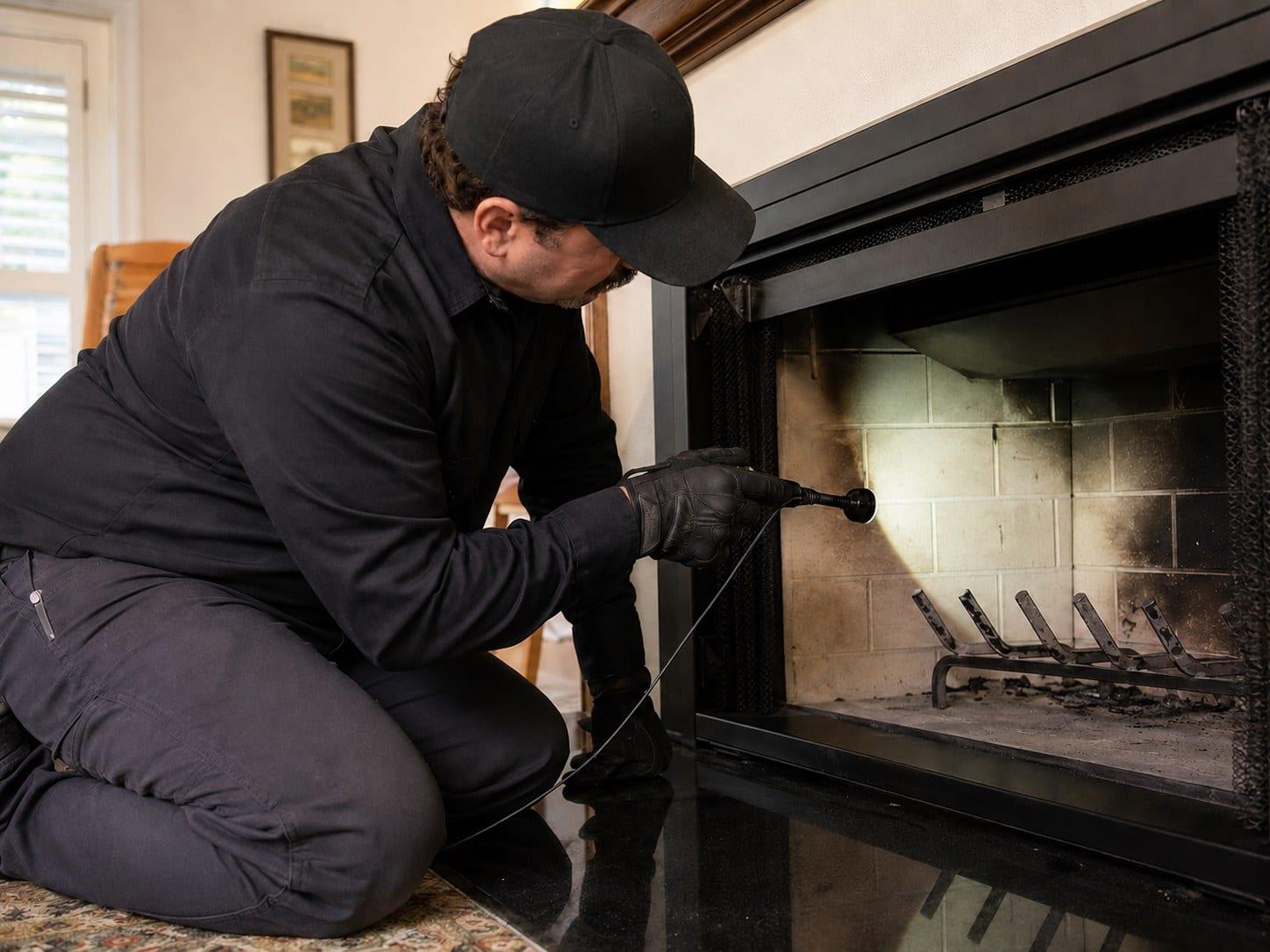
A storm damage chimney inspection looks at the exterior, the roofline, the firebox and the flue to find what the storm actually did. A chimney camera inspection can show cracks in the liner that aren't visible any other way.
Repair matched to the damage
Depending on what is found, the fix might be chimney cap replacement, chimney flashing repair, chimney crown repair, masonry repair or tuckpointing, chase cover replacement, chimney liner repair, or removing debris from the flue. Severe structural damage can call for a partial or full chimney rebuild.
Keeping water out
Once repairs are done, a new cap and chimney waterproofing help keep the next storm from causing the same leak.
If you aren't sure whether the storm did anything at all, a general chimney inspection service is a good way to check the system before the next time you light a fire. Estimates are free, and same-day visits are available where the schedule allows.
What not to do
- Don't climb onto a wet, icy or storm-damaged roof to look at the chimney.
- Don't light a fire to dry out a damp chimney or to test whether it still drafts.
- Don't rely on caulk or tape over lifted flashing or cracks as a permanent fix. It can trap water and hide the real damage.
- Don't reach into the flue to pull out branches or nesting material. The same risks covered in DIY vs. chimney cleaning apply here.
- Don't ignore a small new ceiling stain. Leaks around a chimney usually get worse with each rain.