On this page
What a storm damage chimney inspection covers
A storm damage chimney inspection focuses on what weather does to a chimney. Wind bends or removes caps. Rain finds its way past lifted flashing. Falling limbs crack crowns and knock loose bricks. Debris can drop into the flue and block it. The inspection starts at the top of the chimney and works down into the fireplace, looking for anything the storm changed.
| Feature | Storm damage inspection | Routine inspection |
|---|---|---|
| What prompts it | A specific event: high wind, heavy rain or a falling limb | Regular upkeep, usually once a year |
| Where it starts | The exterior: cap, crown, flashing, masonry or chase | The whole system, inside and out |
| The main question | Did the storm damage or block anything? | Is the system clean, sound and safe to use? |
What prompts it
- Storm damage inspection
- A specific event: high wind, heavy rain or a falling limb
- Routine inspection
- Regular upkeep, usually once a year
Where it starts
- Storm damage inspection
- The exterior: cap, crown, flashing, masonry or chase
- Routine inspection
- The whole system, inside and out
The main question
- Storm damage inspection
- Did the storm damage or block anything?
- Routine inspection
- Is the system clean, sound and safe to use?
For yearly upkeep, a standard chimney inspection is the better fit. If the home is being bought or sold, the chimney inspection for real estate transactions is set up for that purpose.
Getting ready for the visit
- Note the make and model of any insert, stove or gas unit if you have it.
- Make sure the technician can reach the roof or attic access if it's needed.
- Move rugs, photos and anything fragile away from the work area.
- Clear a few feet of space in front of the hearth or appliance.
What we look at
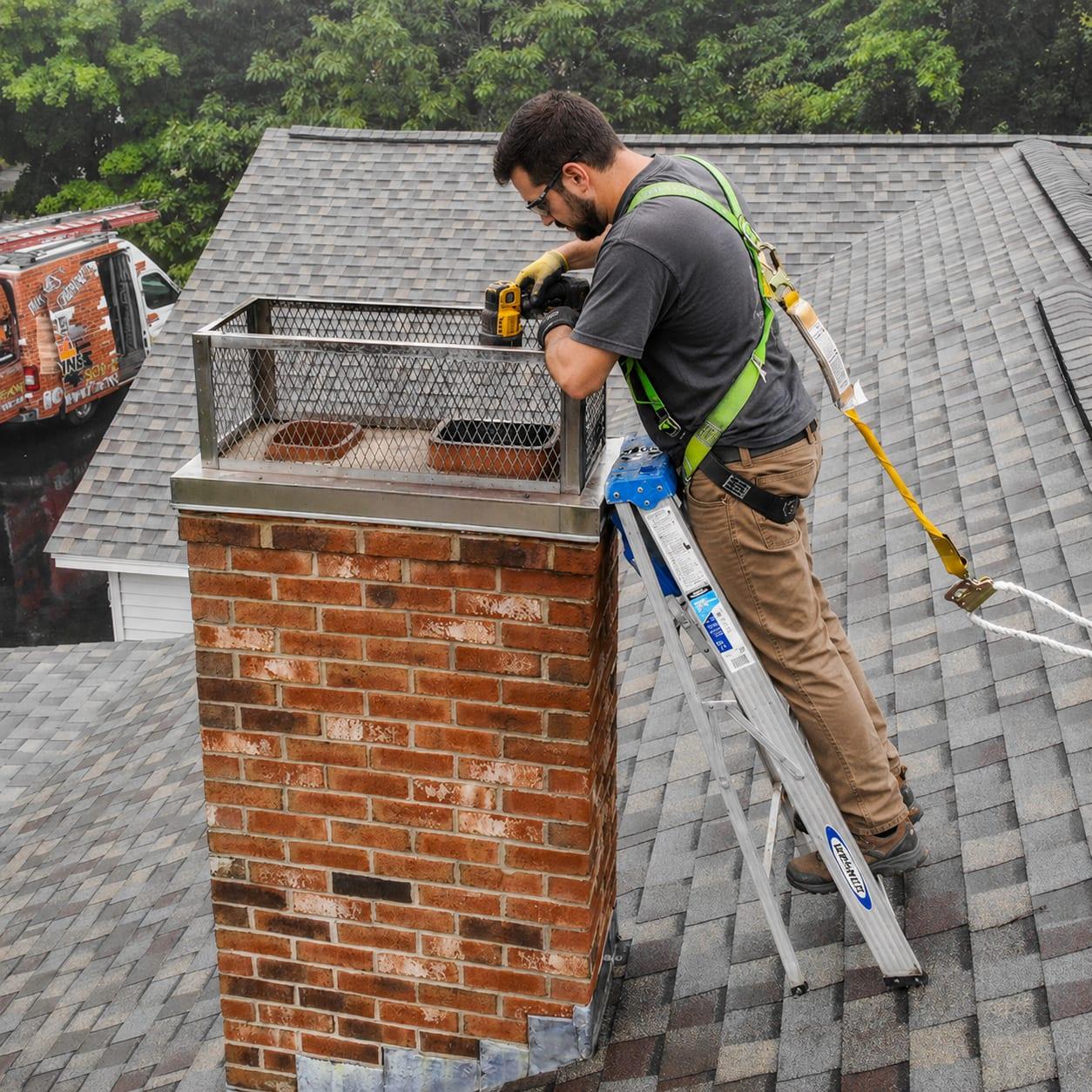
- Cap, screen and spark arrestor
- Damper operation and seal
- Smoke chamber and smoke shelf
- Firebox walls, floor and joints
- Clearances to framing and combustibles, where visible
- Flue liner for cracks, gaps and missing mortar
- Flashing where the chimney meets the roof
Carbon monoxide
A blocked or damaged flue can push carbon monoxide into the home. If an alarm sounds or anyone feels dizzy or sick near the fireplace, get everyone outside and call 911.
Signs that call for a storm damage inspection
Book an inspection if you notice any of these after bad weather
- The chimney cap is missing, tilted or dented
- Bricks, mortar or pieces of the crown on the roof, in the gutters or in the yard
- The chimney looks like it is leaning or pulling away from the house
- New water stains on a ceiling or wall near the chimney, or water in the firebox
- Flashing that is lifted, bent or separated from the masonry
- Leaves, twigs or branches in the firebox or resting on the damper
- A tree or large limb struck the roof near the chimney
- On a prefab chimney, a loose chase cover or displaced siding
What the visit involves, step by step
How the inspection is done
Look from the ground
First we check for leaning, missing pieces and debris around the base of the chimney.
Check at roof level
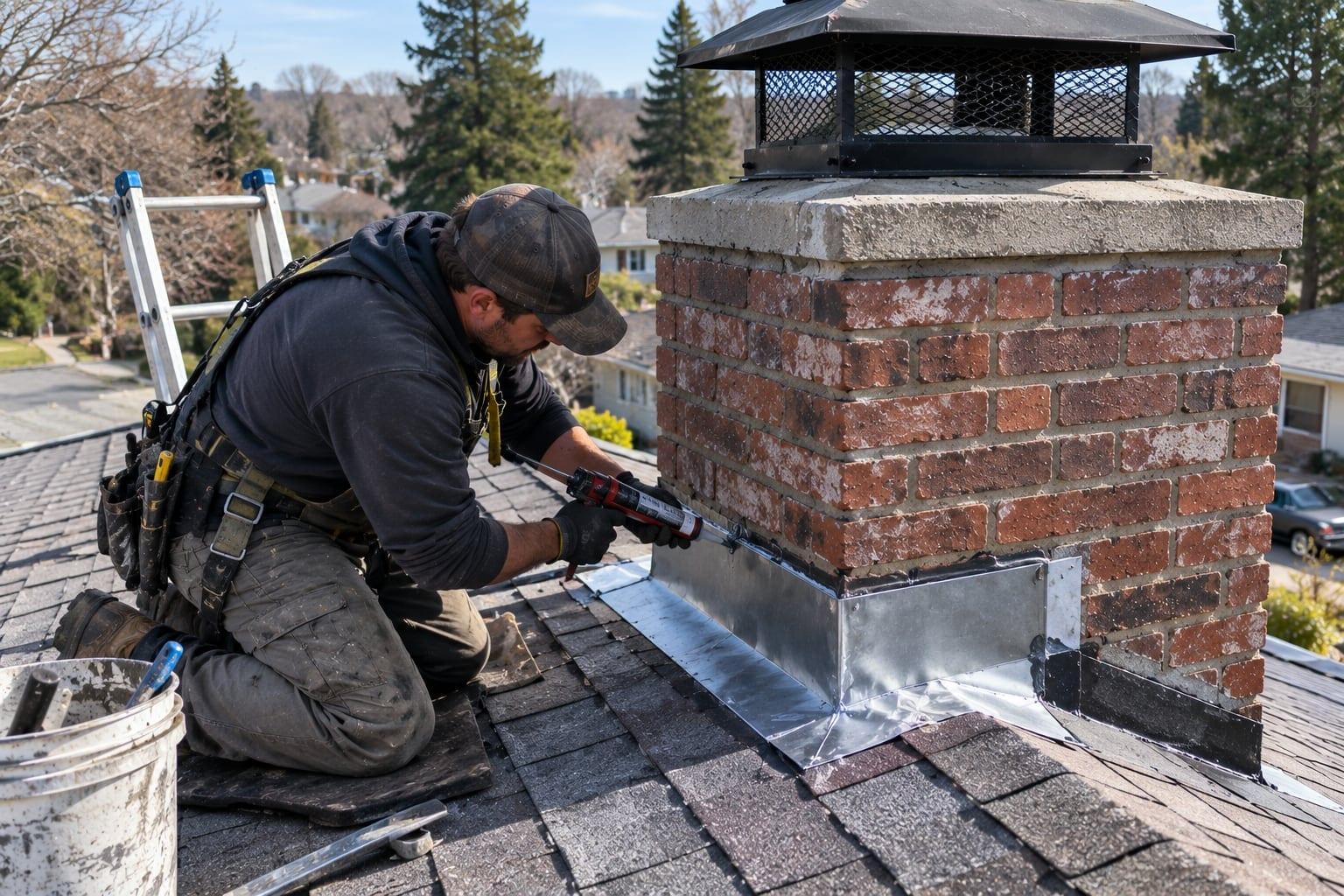
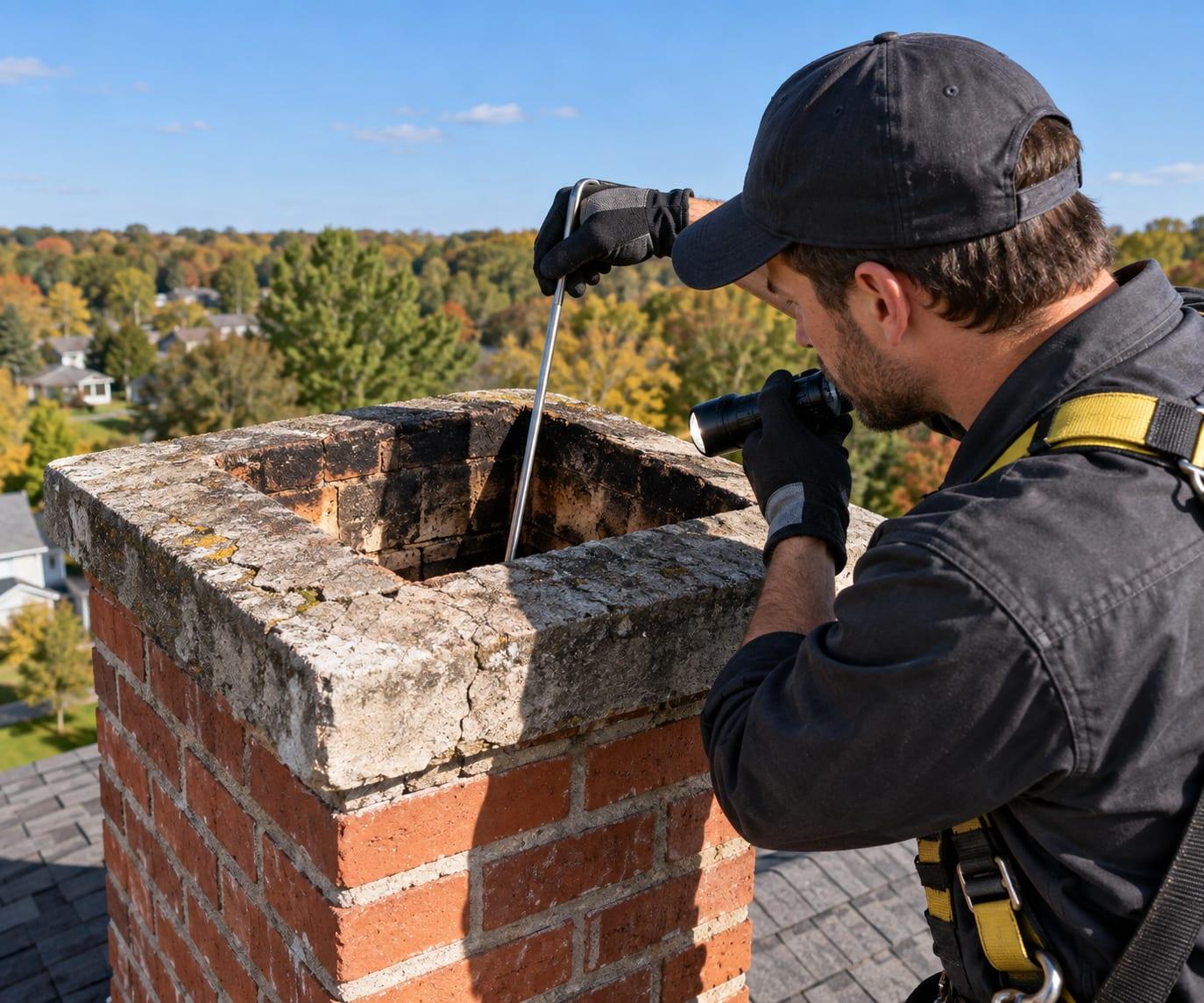
Next we examine the cap, crown, masonry joints and flashing, or the chase cover on a prefab chimney.
Look inside the fireplace
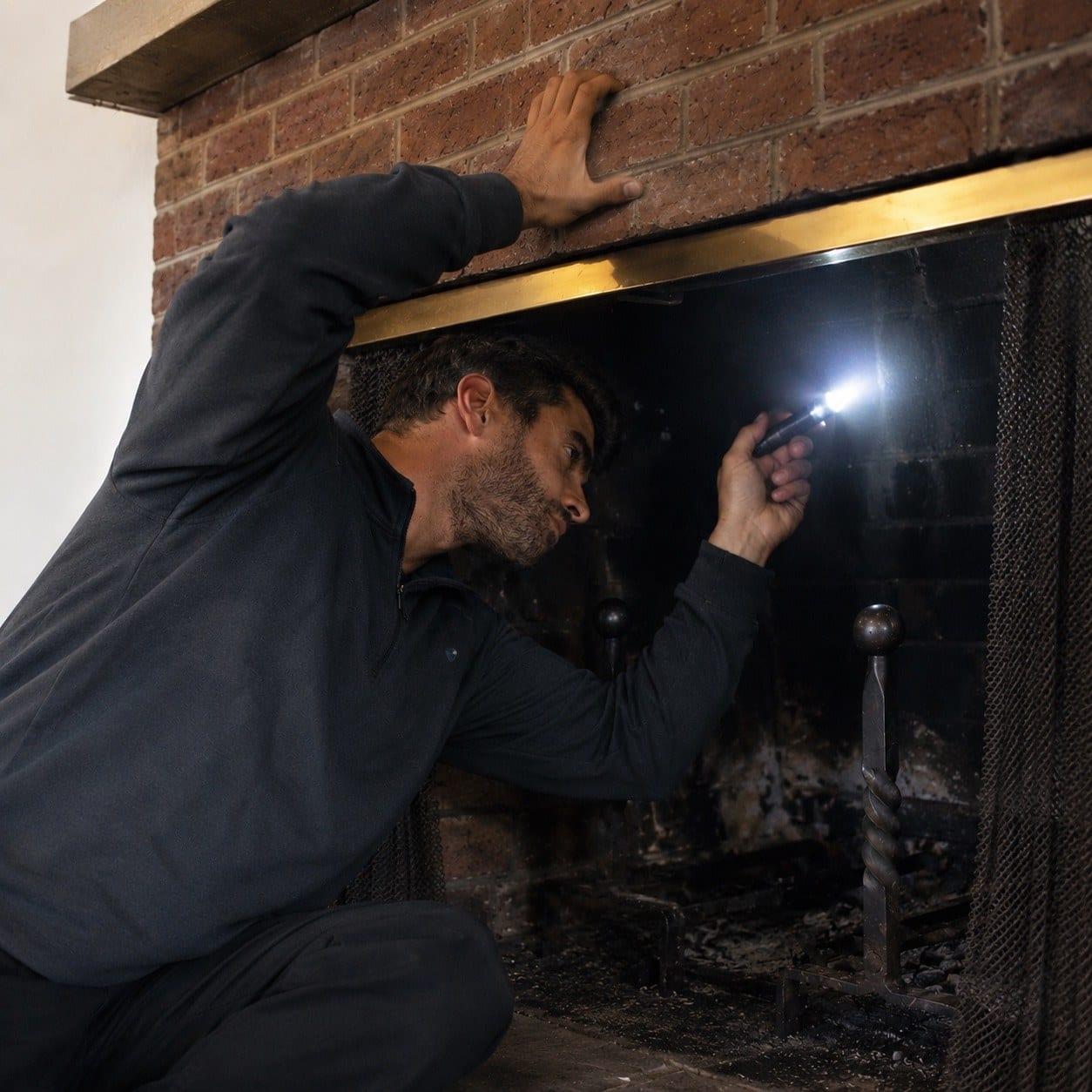
Then we check the firebox, damper and smoke chamber for water, fallen debris and new cracks.
Run a camera up the flue
Where cracking, a shifted liner or a blockage is suspected, a camera shows what the eye can't reach.
Explain the findings
Finally we walk you through what was damaged, what needs attention first, and the repair options. If debris came down the flue, a chimney sweep clears it.
Safety and maintenance until the chimney is checked
- Don't light a fire until the flue and cap have been checked
- Stay off the roof, since wet and wind-loosened surfaces are dangerous
- Keep people, pets and vehicles away from the area below a chimney with loose bricks
- Catch any water coming in near the chimney and move belongings out of the way
- Don't try to pull debris down the flue yourself.
Booking a storm damage chimney inspection
When you get in touch, tell us what happened and what you've seen: a missing cap, debris on the roof, a new leak or a limb that hit near the chimney. Request an estimate to get the inspection scheduled.