A chimney is a tall, open shaft connected to the living room, so it carries sound well. That means a small animal on the smoke shelf or a loose cap on the roof can sound much closer, and much worse, than it is. It also means a serious problem can be mistaken for a harmless one. The sections below cover what the different sounds can point to, which ones call for stopping use right away, and how each is usually fixed.
Common signs of a noisy chimney
Sounds homeowners report
- Scratching, scurrying or fluttering, often around dawn or dusk
- Chirping, squeaking or chattering that gets louder over several days
- Whistling, howling or moaning when it is windy
- Dripping, tapping or pinging on the damper during rain
- Rattling or banging that comes and goes with wind gusts
- Popping or ticking as a fire gets going or the chimney cools down
- A loud roaring or rumbling, like a freight train or jet, while a fire is burning
Noise often comes with other clues: twigs, leaves or droppings in the firebox, a musty or animal odor, or smoke drifting into the room instead of going up. Note when the sound happens (windy days, rain, with a fire, at certain times of day). That pattern helps narrow down the cause during an inspection.
Possible causes of chimney noise
The sound alone rarely settles the cause, and more than one can be at work at once. These are the usual possibilities; an inspection of the top of the chimney, the damper and the flue confirms which one applies.
What the sound may point to
01An animal or nest in the chimney
- What you may notice
- Scratching, fluttering, chirping or chattering, often at the same times each day; nesting material or droppings in the firebox; an odor.
- How it’s confirmed
- The cap, crown and smoke shelf are checked for an entry point and for animals or nests, and the flue is viewed from above or below, with a camera where needed.
02Wind or rain entering an uncapped or damaged top
- What you may notice
- Whistling or howling in wind; dripping or pinging on the damper during rain; water stains in the firebox.
- How it’s confirmed
- The chimney top is checked for a missing, damaged or loose cap, and the flue opening and crown are examined for gaps.
03A nest, debris or other obstruction in the flue
- What you may notice
- Muffled scraping or debris falling into the firebox, often with smoke backing into the room or a poor draft.
- How it’s confirmed
- The flue is examined along its length, often with a camera, to find what is blocking it and where.
04A chimney fire
- What you may notice
- A loud roaring or rumbling during a fire, sometimes with intense heat, dense smoke, or sparks or flames from the chimney top. If you hear roaring or see flames or sparks from the top of the chimney, get everyone out and call 911.
- How it’s confirmed
- After any suspected chimney fire, the flue, liner and masonry are inspected for heat damage before the fireplace is used again.
Rattling and popping are often about hardware. A damper plate that no longer seats, a loose chimney cap or a loose chase cover can rattle or bang in gusty wind. Metal flues in factory-built systems expand as they heat and contract as they cool, so some ticking is expected, but new, louder or changing sounds deserve a look. Whether a home has a masonry or prefab system changes what gets checked, and how masonry and factory-built chimneys differ covers the basics.
How urgent is a noisy chimney?
Roaring while a fire is burning
A loud roar or rumble from a chimney with a fire going can be a chimney fire. Get everyone out of the house and call 911. Do not go onto the roof or pour water down the flue. Learn what a chimney fire looks and sounds like so you can recognize it quickly.
When to stop using the fireplace
- Stop right away if you hear an animal or see nesting material. Smoke and heat can harm the animal, and dry nest material can catch fire.
- Stop if smoke comes into the room, since a nest or debris may be blocking the flue.
- Stop after any roaring episode until the chimney has been inspected. If you hear roaring or see flames or sparks from the top of the chimney, get everyone out and call 911.
- Wind whistling or rain pinging is usually not an emergency, but it often means the top of the chimney is open to water and animals, so have it checked before the next burning season.
While you wait for a visit, keep the damper closed and the fireplace doors shut. Only close it once the fireplace is completely cold and no stove, furnace or water heater vents into that flue. That keeps an animal from getting into the house and keeps rain and drafts out of the room.
What fixes a noisy chimney
How the repair usually goes
Find the source
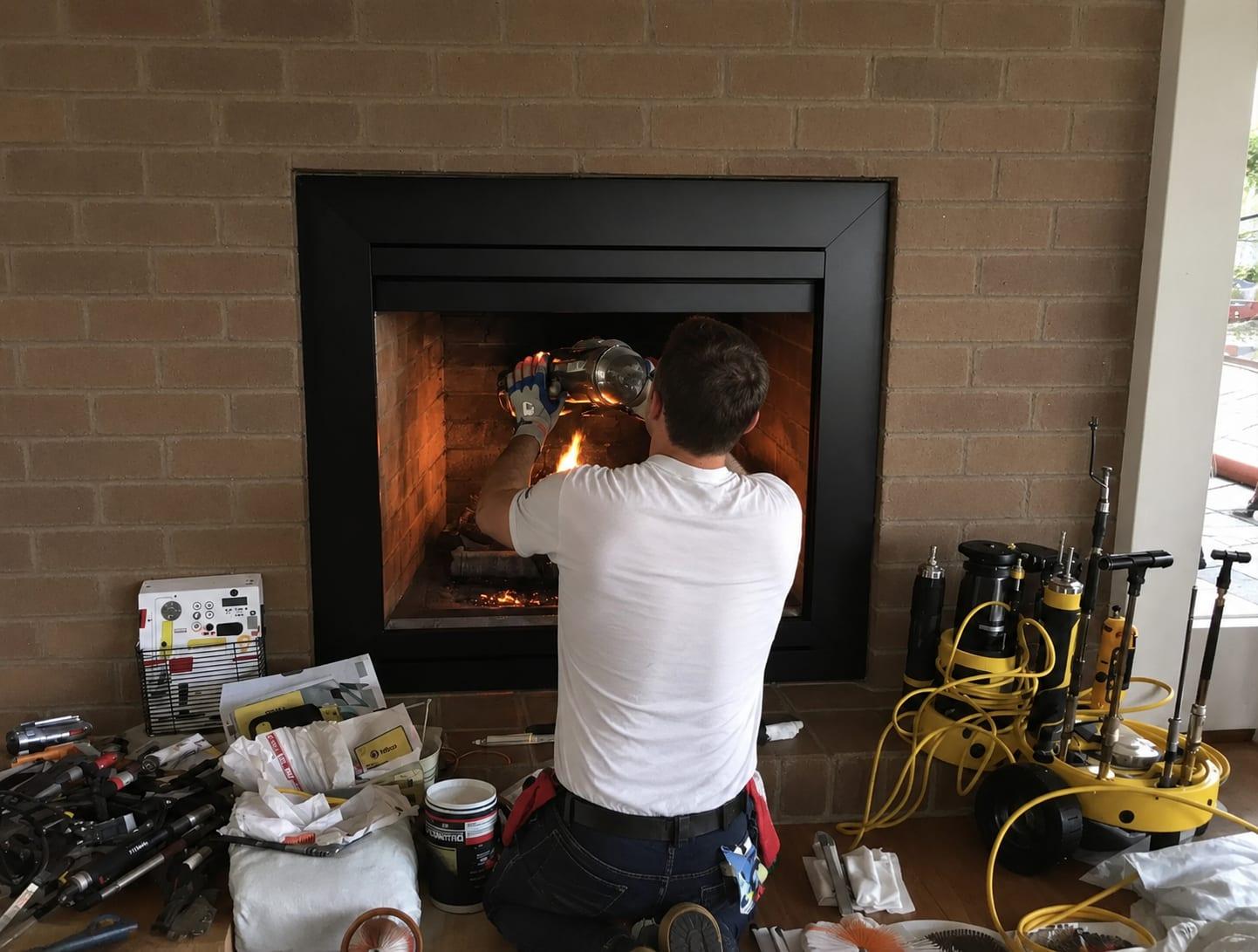
A chimney and fireplace inspection, with a camera inspection when the flue needs a closer look, confirms what is making the noise and whether anything has been damaged.
Remove what doesn't belong
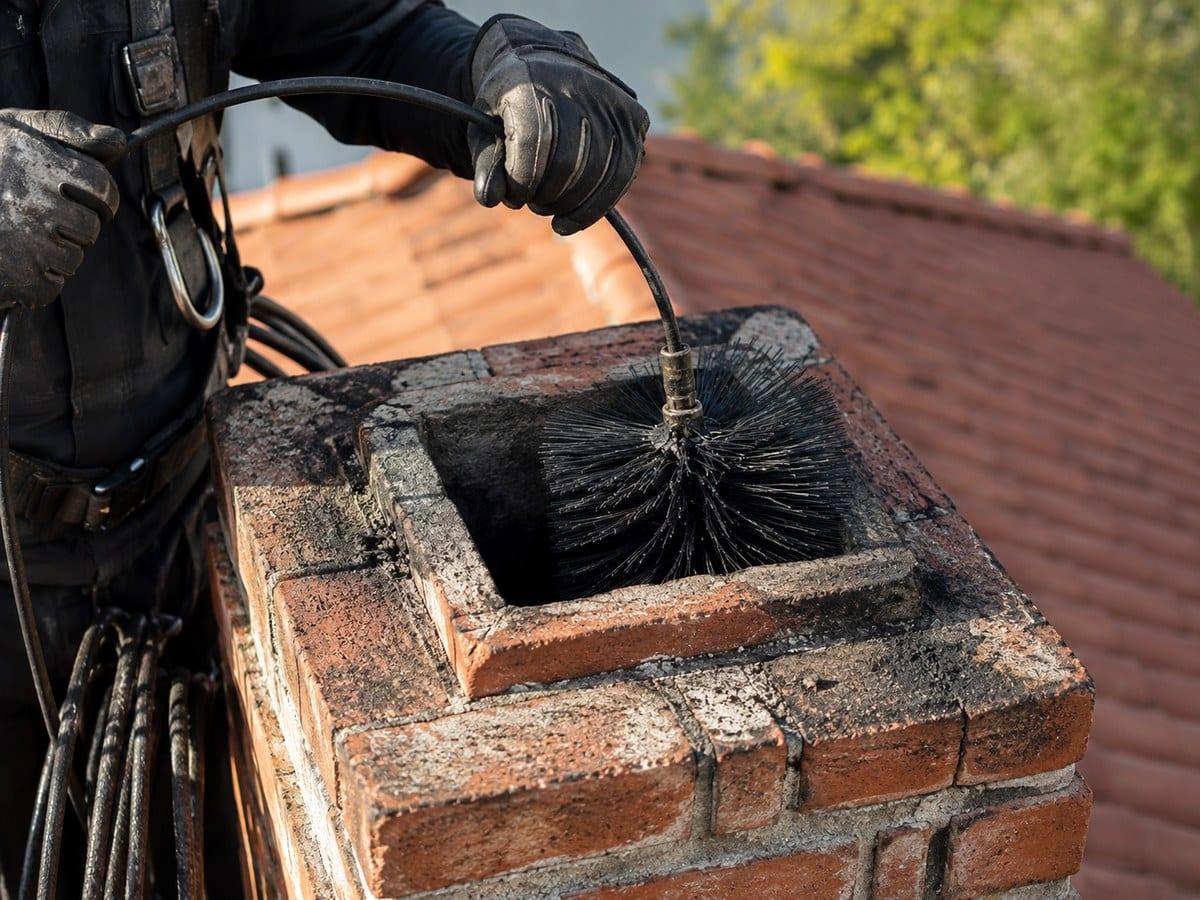
Animals and nests are taken out through chimney animal and nest removal. Leftover nesting material, debris and odors are cleared with blockage removal, a chimney sweep or odor removal as needed.
Close the opening
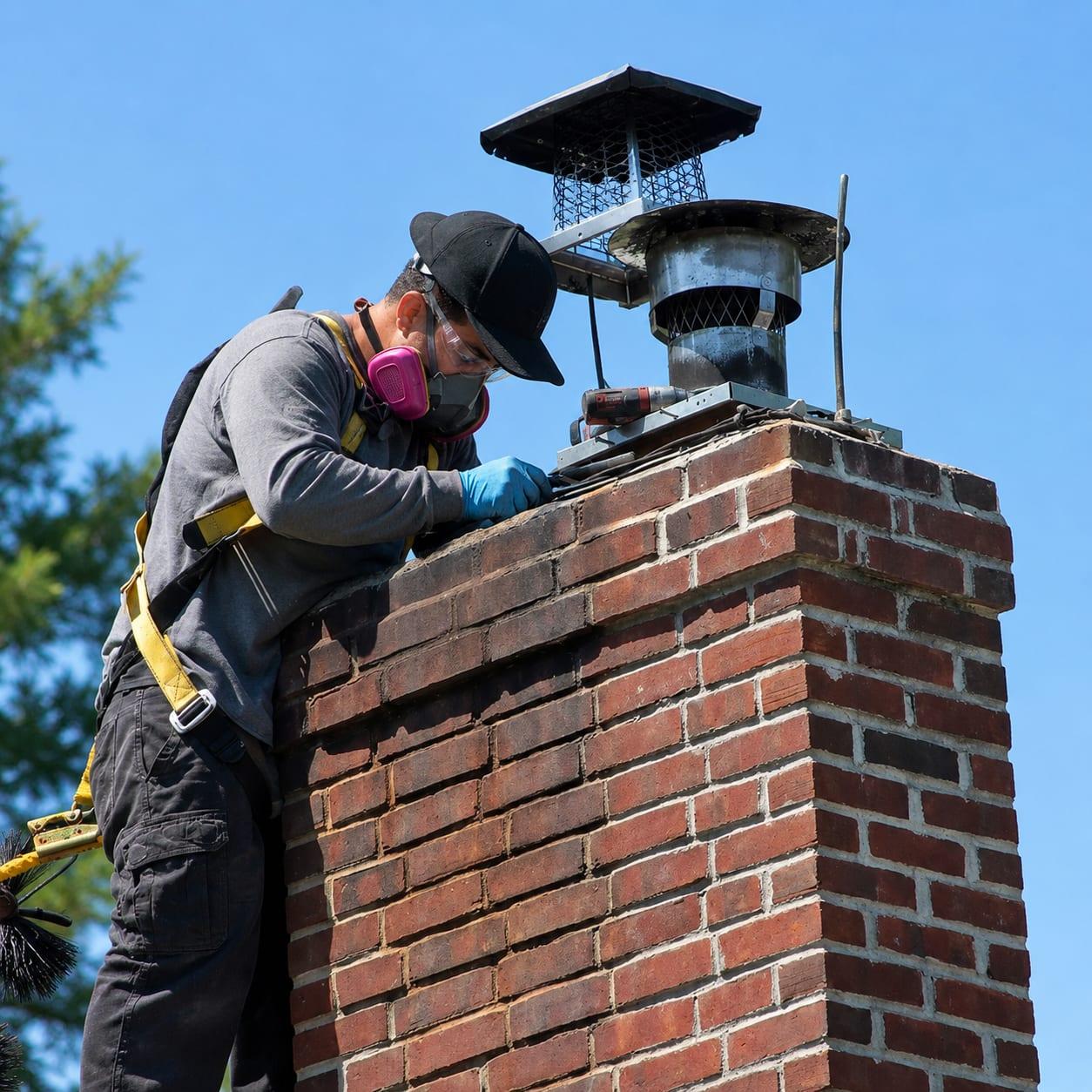
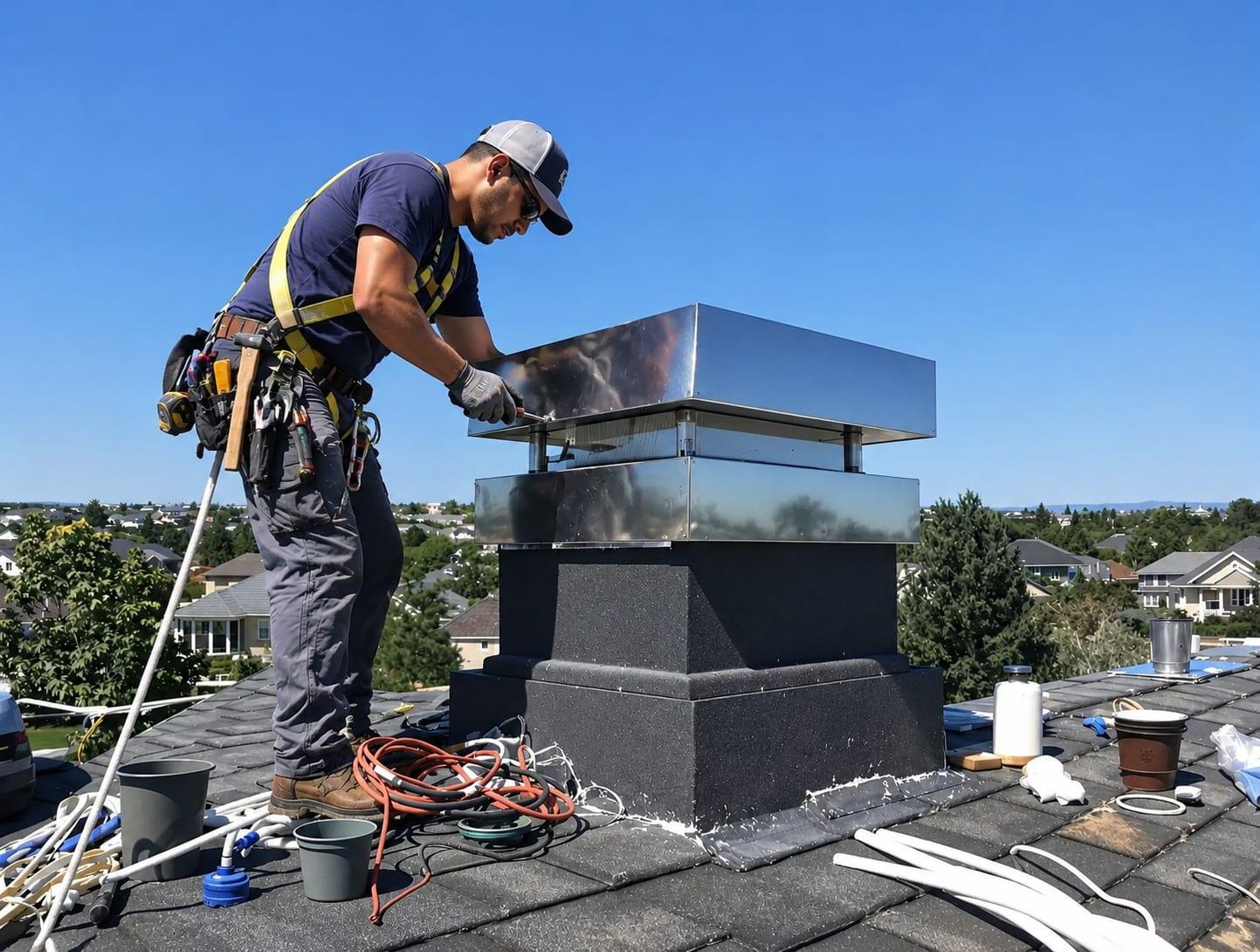
Keeping wind, rain and animals out usually means having a chimney cap installed or replacing a damaged one, often with an animal screen or broader chimney animal proofing.
Repair loose or worn parts
Rattling and banging are addressed with chimney damper repair, chimney chase cover repair, or prefab chimney and chase repair on factory-built systems.
If the noise came with smoke backing into the room, the flue may also be obstructed. Nests and fallen debris are common causes of a blocked chimney flue, and both problems are handled in the same visit when they show up together.
What not to do
- Don't light a fire or burn anything to drive an animal out. It can trap the animal, fill the house with smoke or ignite the nest.
- Don't reach up the flue, open the damper to look, or climb onto the roof to check the cap yourself.
- Don't seal or cap the top while an animal may still be inside.
- Don't put poisons, repellents or chemicals down the chimney.
- Don't assume a cleaning will stop the noise. If you're weighing DIY cleaning against a professional sweep, keep in mind that noise usually points to a problem that needs to be found, not just soot.
Free estimates.
Get in touch to request an estimate. Same-day visits are available where the schedule allows, and emergency calls are accepted.