On this page
What chimney animal & nest removal involves
Chimney animal & nest removal means clearing animals and everything they bring in or leave behind out of the flue, the smoke chamber and the smoke shelf above the damper. That can include twigs, leaves, fur, droppings and sometimes the remains of an animal that couldn't climb back out. Taking out the animal is only part of the job. Leftover debris can block the draft or catch fire, and an open chimney top will attract the next animal.
Signs an animal or nest is in your chimney
Common signs
- Scratching, chirping, fluttering or squeaking from inside the chimney, often around dawn and dusk
- Twigs, leaves or nest material dropping onto the damper or into the firebox
- A musty, ammonia-like or rotting smell near the fireplace
- Smoke rolling back into the room when you light a fire
- Droppings or insects showing up around the hearth
- Birds or animals going in and out at the top of the chimney
- A missing, bent or rusted-through chimney cap
Sounds are usually the first clue. If you're hearing activity but haven't seen anything yet, these are the usual reasons for a noisy chimney, from animals to loose parts and wind.
Don't light a fire to drive it out
Smoke and heat can trap young animals that can't climb yet, set dry nest material on fire and push smoke into the house. Keep the damper and any glass doors closed, keep pets away from the fireplace and call to have it removed. Only close it once the fireplace is completely cold and no stove, furnace or water heater vents into that flue.
How the visit works, step by step
What happens during chimney animal & nest removal
Tell us what you're hearing or smelling
When you get in touch, describe the sounds, when you hear them and any smell. That tells us how urgent the visit is and what to bring.
Look before anything is removed
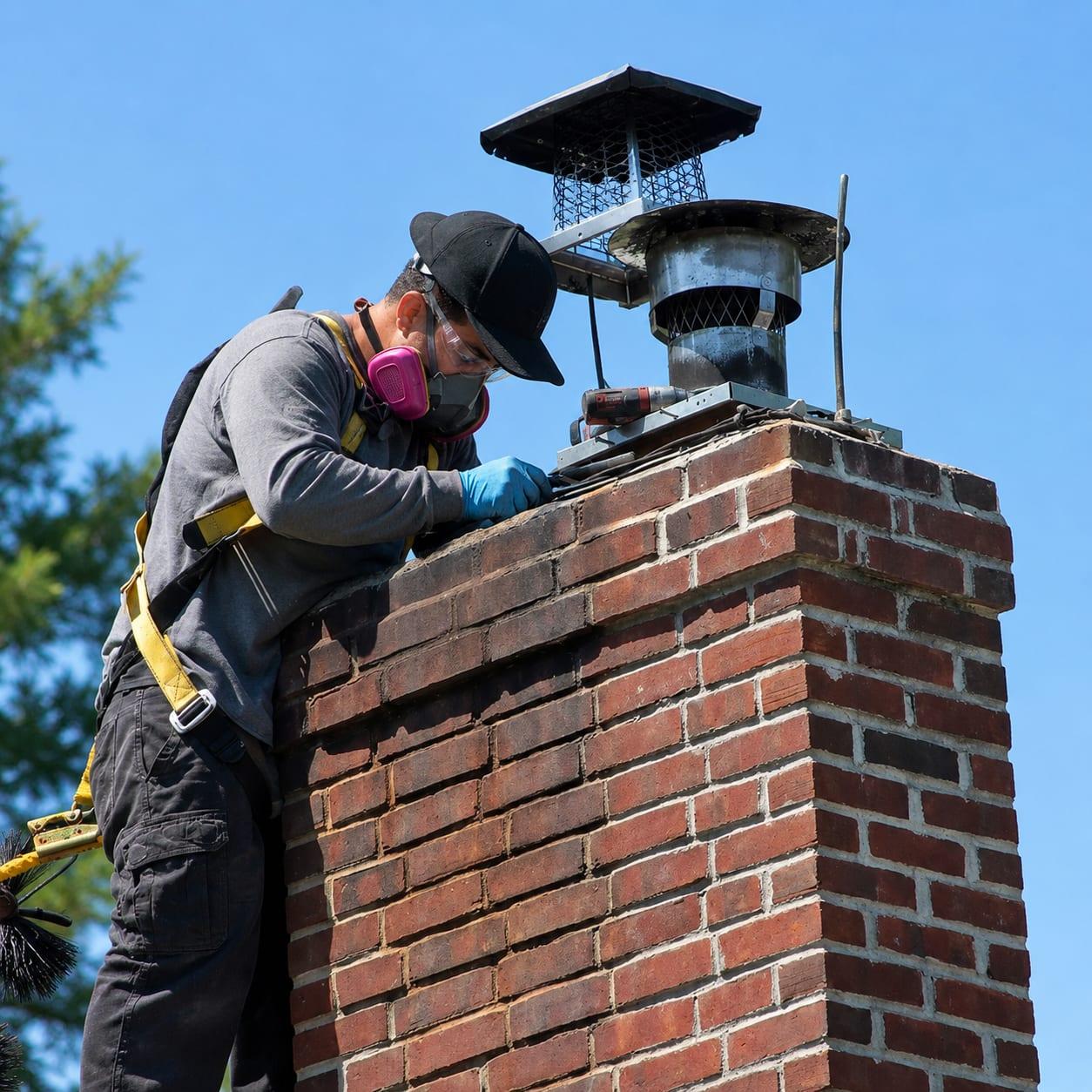
We check from the firebox and from the top of the chimney. Where the flue is hard to see, a camera inspection shows whether an animal is still inside and exactly where the nest sits.
Get any animal out first
A live animal is dealt with before anything else. The chimney isn't closed off while an animal is still inside.
Remove the nest and debris
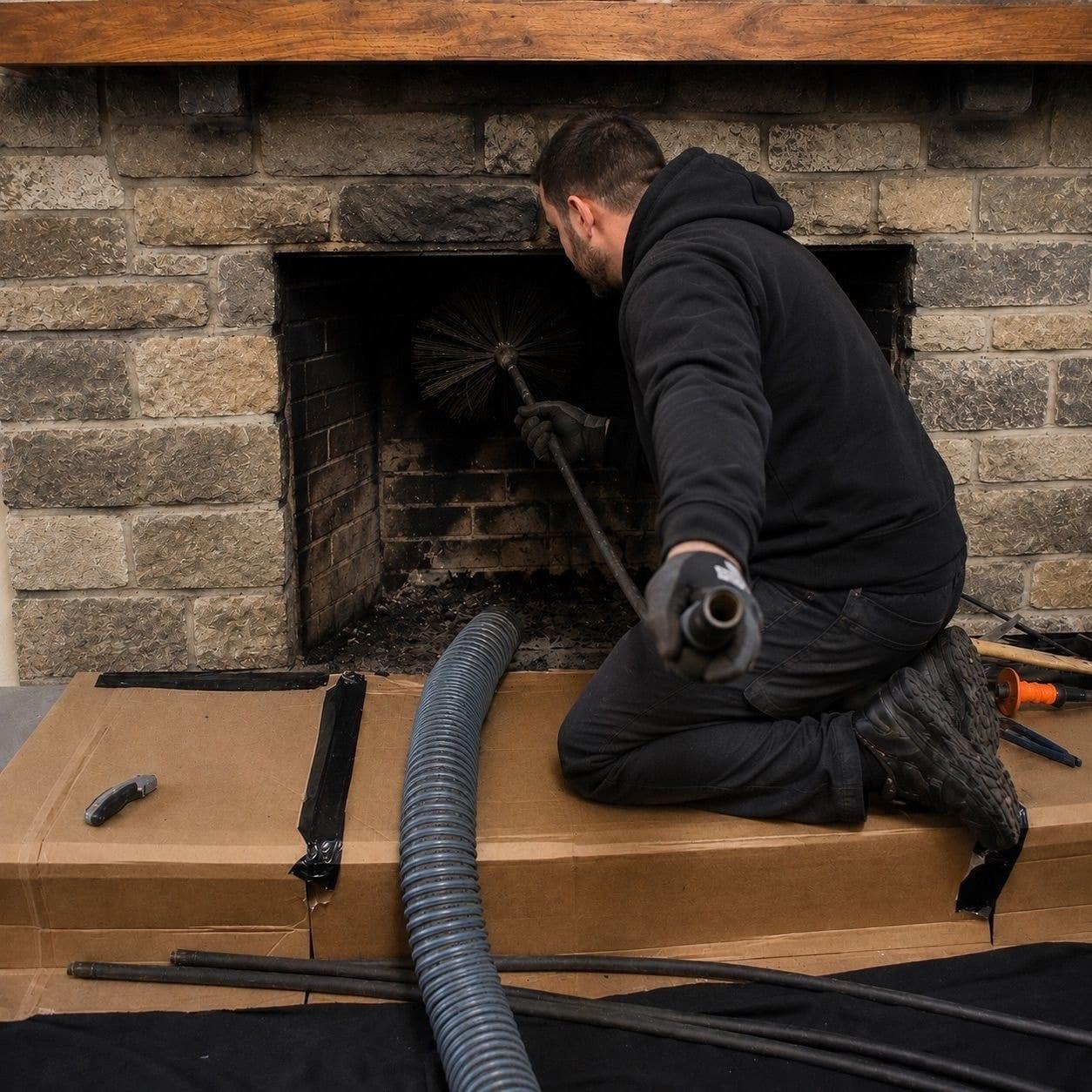
Nest material, droppings and loose debris come off the damper, the smoke shelf and the flue walls. Material packed tight or wedged deep in the flue is handled as chimney blockage removal.
Clean the flue
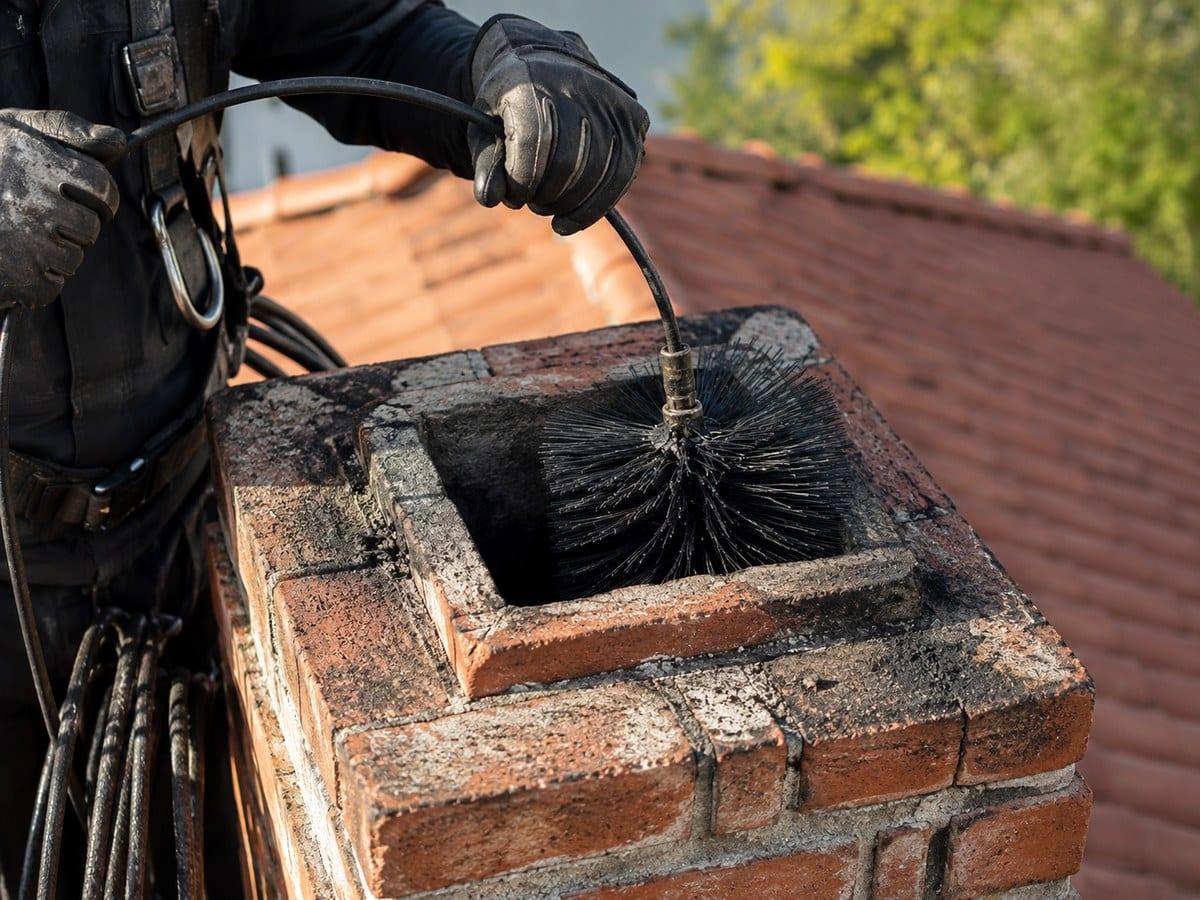
Once the nest is out, the flue gets a full cleaning through our chimney sweep service. If we find heavy buildup from past fires, we'll talk with you about creosote removal.
Check for damage
Animals scratch, chew and pull at things. We look at the damper, liner, cap, crown and flashing and tell you what we find before any repair is done.
Close the way in
The last step is shutting the opening the animal used, which is the animal proofing work described below.
Chimney animal proofing: keeping the next one out
Most animals come in through an open or damaged chimney top. Chimney animal proofing closes that route without blocking the draft. Depending on the chimney, it can include:
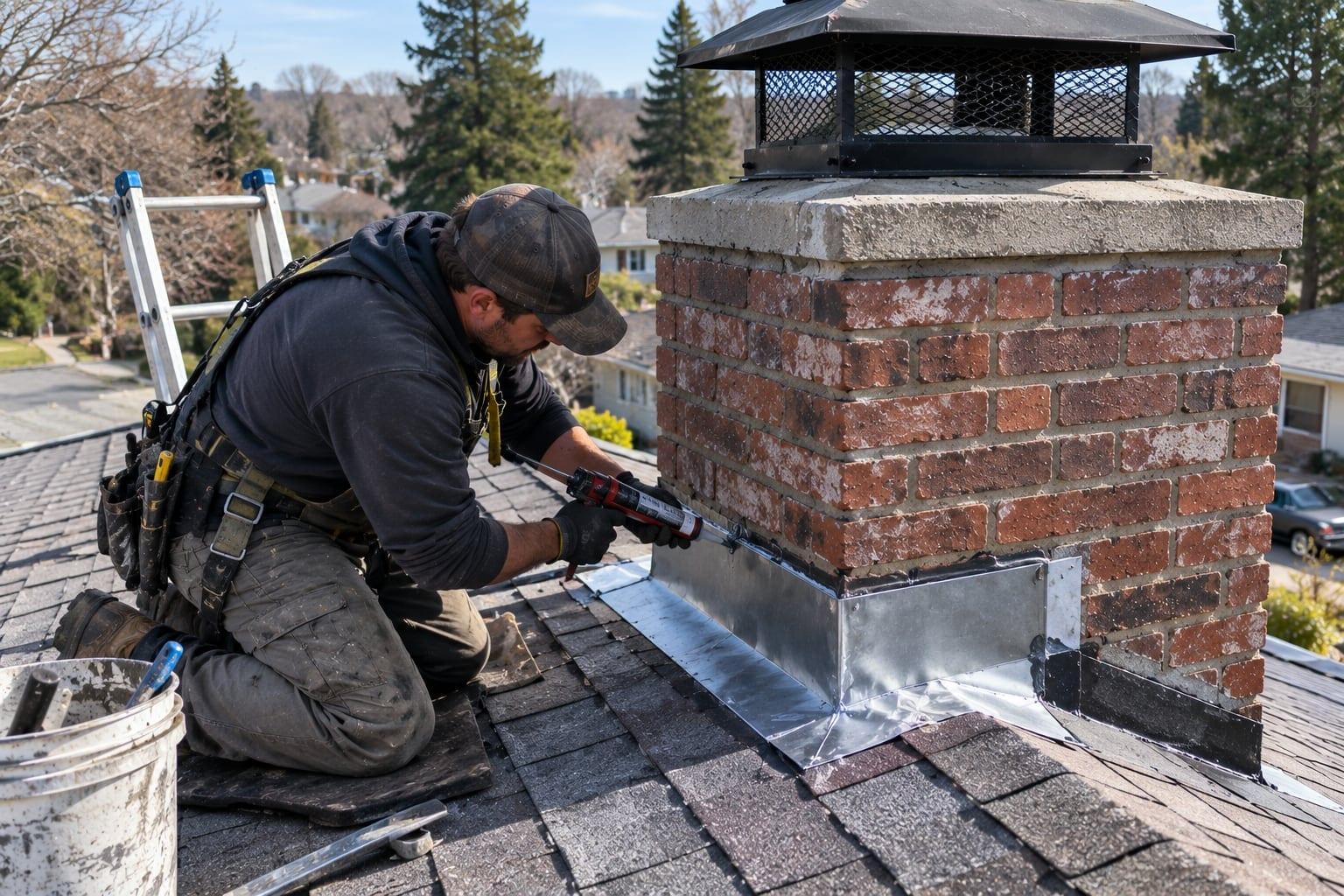
- Installing a chimney cap with a mesh animal screen, or replacing a cap that's damaged or rusted through
- A spark arrestor screen where one fits the chimney
- Replacing a chase cover on a prefab chimney when it's rusted, cracked or gapped
- Repairing a damper that no longer closes tight
- Repairing the chimney crown or tuckpointing loose mortar where gaps give animals a way in
A good cap also keeps rain out of the flue, and the cracks animals use are often the same ones that let water in. If you've noticed staining or crumbling mortar, it's worth knowing the signs of a water-damaged chimney.
Safety after an animal has been in the flue
Dry nest material burns easily, and a nest on the smoke shelf sits right in the path of hot gases. Droppings and remains can also bring odor, insects and parasites into the house. Reaching up into the flue to pull material down usually leaves debris behind and puts you in contact with whatever is up there. Our guide to DIY vs. professional chimney cleaning covers where doing it yourself makes sense and where it doesn't.
Gas fireplaces and gas appliance vents can be nested in too, often at the vent cap. Gas fireplace and gas appliance work is offered, so those vents can be cleared and checked the same way. If a smell is still there after the nest is gone, chimney odor removal treats the source instead of covering it up.
Booking chimney animal & nest removal in San Jose
Free estimates. Commercial and property-manager work is offered, and we work on all major fireplace and chimney brands. Call or request an estimate, and tell us what you've been hearing or smelling.
Related work covered on this page
- Chimney Animal Proofing