On this page
What chimney damper repair involves
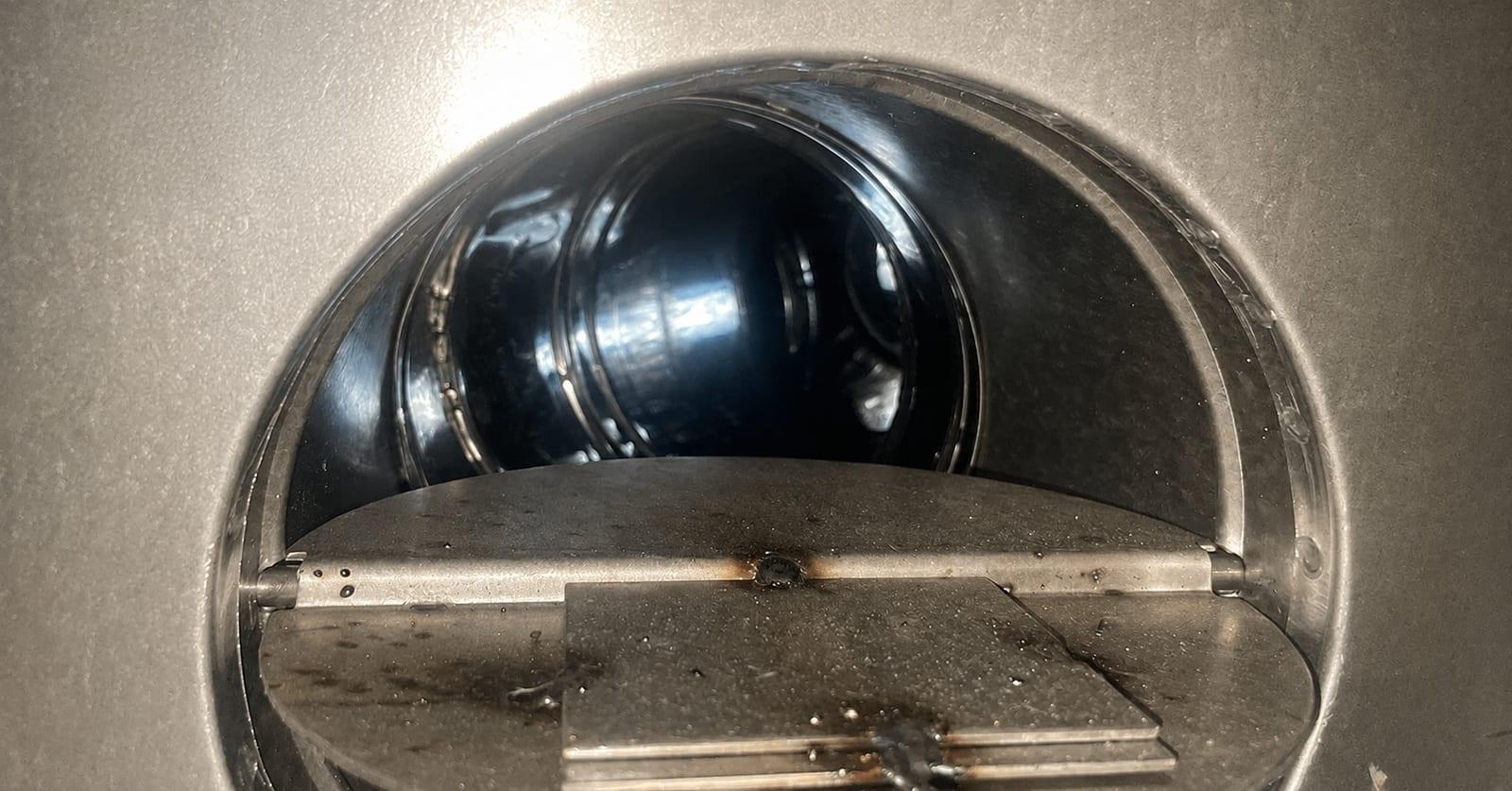
The damper is the movable plate that closes off the flue when the fireplace sits unused and opens to let smoke out when a fire is burning. When it fails, the fireplace either smokes, leaks air, or can't be used safely at all. Chimney damper repair means getting that plate working again: freeing a seized pivot, replacing a bent handle, rod or broken cable, straightening or swapping a warped plate, fitting a new gasket, and clearing the debris that keeps it from seating.
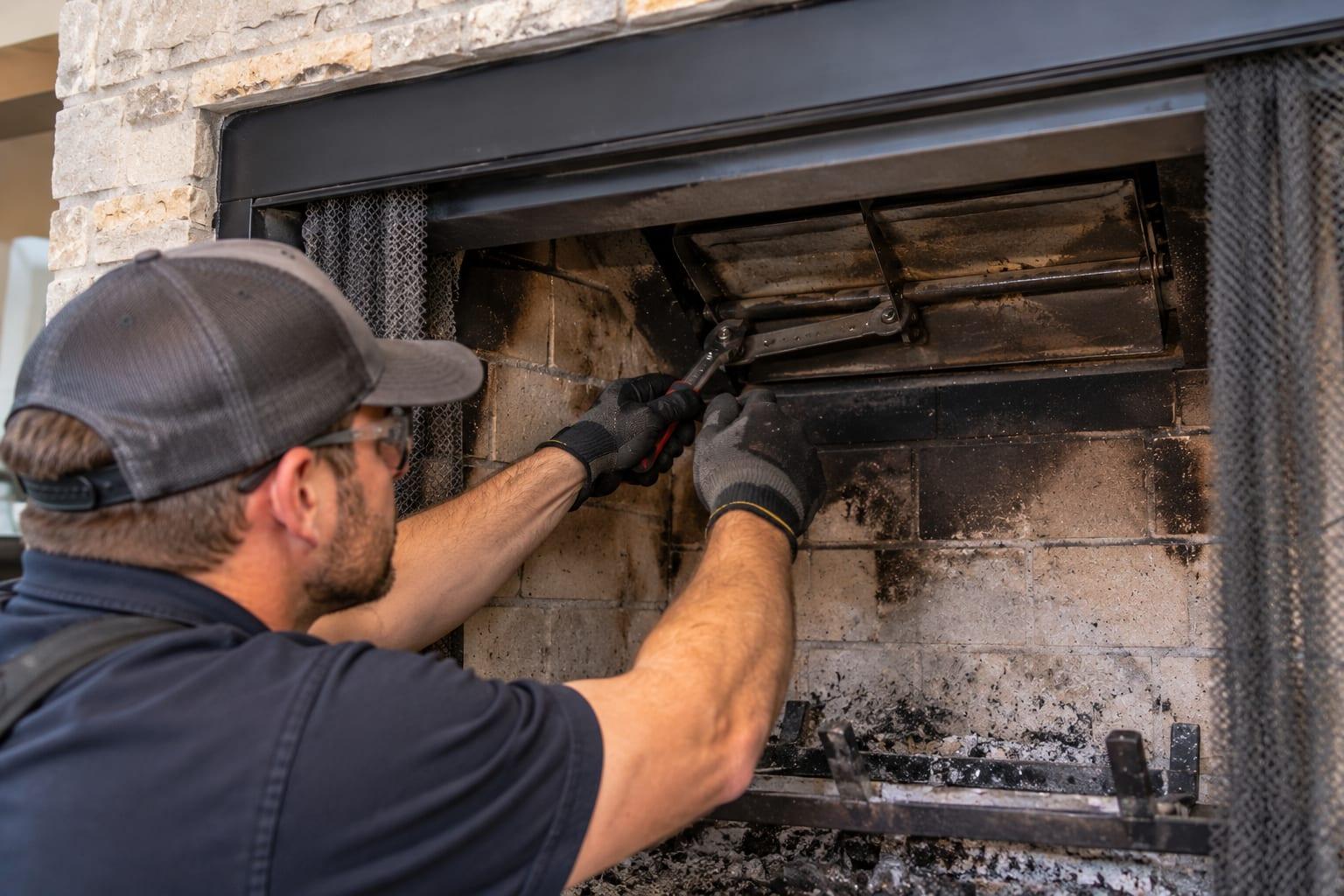
Most fireplaces have one of two kinds of damper, and they fail in different ways.
| Feature | Throat damper | Top-sealing damper |
|---|---|---|
| Where it sits | Just above the firebox, at the base of the smoke chamber | At the top of the flue, on the chimney |
| How you work it | Handle, poker lever or rotary knob in the firebox | A cable that runs down the flue to a bracket in the firebox |
| Common failures | Rusted pivots, warped plate, cracked frame, plate knocked off its seat | Broken or stretched cable, worn gasket, weak spring, plate stuck open or shut |
| Usual fix | Free and adjust the mechanism, replace parts, or replace the damper | New cable, gasket or spring, or replace the damper assembly |
Where it sits
- Throat damper
- Just above the firebox, at the base of the smoke chamber
- Top-sealing damper
- At the top of the flue, on the chimney
How you work it
- Throat damper
- Handle, poker lever or rotary knob in the firebox
- Top-sealing damper
- A cable that runs down the flue to a bracket in the firebox
Common failures
- Throat damper
- Rusted pivots, warped plate, cracked frame, plate knocked off its seat
- Top-sealing damper
- Broken or stretched cable, worn gasket, weak spring, plate stuck open or shut
Usual fix
- Throat damper
- Free and adjust the mechanism, replace parts, or replace the damper
- Top-sealing damper
- New cable, gasket or spring, or replace the damper assembly
We work on all major brands of fireplaces and damper hardware, on both masonry and factory-built units.
Signs the damper needs repair
Call about the damper if you notice any of these
- The handle won't move, or stops partway
- The damper won't stay open and drifts or drops shut
- Smoke rolls into the room even though the damper is set to open
- Cold drafts, whistling or a sooty smell from the fireplace when no fire is burning
- Rust flakes, mortar bits or debris landing in the firebox
- A visible gap or daylight around the plate when it's closed
- On a top-sealing damper, a loose, snapped or slack pull cable
If the handle won't budge at all, it helps to understand what causes a stuck chimney damper before you lean on it. Forcing a rusted lever can snap the pivot or knock the plate loose into the throat, which turns a simple repair into a replacement.
Don't light a fire you can't vent
If you can't confirm the damper is fully open, don't light the fireplace. A closed or half-closed damper sends smoke and carbon monoxide into the house. Our guide to the signs a chimney needs immediate repair covers other problems that should stop you from using the fireplace.
Smoky fireplace repair: when the damper is the cause
A fireplace that smokes has a handful of possible causes, and the damper is the first thing we check because it's the quickest to confirm. A plate that only opens partway, a warped plate that blocks part of the throat, a plate that has fallen off its pivot, or a pile of debris on the damper shelf can all choke the opening enough to push smoke back into the room.
When the damper turns out to be fine, the smoke is coming from somewhere else: a blocked flue, a rough or damaged smoke chamber, or a missing cap letting downdrafts in. We look at those on the same visit so you aren't paying to fix a damper that was never the problem.
Chimney draft repair and the damper
Draft problems run in two directions. When the fire is lit, the chimney needs to pull smoke up steadily, and a damper that won't open fully restricts that pull. When the fire is out, the chimney should stay quiet, and a damper that doesn't seal lets cold air pour down and warm room air escape up. Fixing the damper is often one part of draft repair, alongside clearing the flue and checking the smoke chamber and cap.
Chimney smoke chamber cleaning and repair
The smoke chamber sits directly above the damper, so with the damper open we get a clear look at it. Soot and creosote collect on its sloped walls and on the smoke shelf behind the damper, along with leaves, nesting material and fallen mortar. Cleaning that area is part of a chimney sweep, and a clean shelf is often what lets a damper close properly again.
If the chamber walls are cracked or the brick steps are rough and unparged, cleaning alone won't fix the draft, and smoke chamber repair is the next step. A throat damper's frame is usually set into the same masonry, so a loose or shifting frame can point to brick and mortar problems that call for masonry chimney repair.
What the visit involves
Hear the symptoms
We ask what happens when you open and close the damper, when the smoke or drafts show up, and what kind of fireplace or insert you have. If the fireplace has gas logs, leave the damper as the installer set it — vented gas logs need it open.
Protect the room
Drop cloths go down over the hearth and floor before anything in the firebox is touched.
Work and inspect the damper
We run the damper through its full range and check the pivot, plate, frame, gasket, and handle or cable. When we need to see above the throat, we use a chimney camera.
Check the throat, smoke shelf and smoke chamber
We look for debris, creosote, nesting material and damaged masonry that could be keeping the damper from seating or the fireplace from drafting.
Explain the options and give a free estimate
You hear whether the damper can be repaired or should be replaced, and what each option involves, before any work starts.
Repair and test
After the repair or replacement, we confirm the damper opens fully, stays open, and closes with a proper seal.
Repair or replace the damper?
Repair makes sense when the plate and frame are sound and the trouble is in the moving parts: a seized pivot, a bent handle, a frayed cable or a worn gasket. Chimney damper replacement is the better choice when the plate has rusted through, the frame is cracked, or the parts can no longer be found.
A throat damper is built into the firebox and smoke chamber, so replacing it in place can mean opening up masonry. A top-sealing damper mounted at the top of the flue is a common alternative and seals more tightly when closed. On a factory-built fireplace, the damper is part of the unit and has to match it. Our guide to masonry vs prefab chimney construction explains why those two are handled differently.
Keeping the damper working
Water is the most common reason dampers rust and seize. Rain running down the flue settles on the damper and the smoke shelf, and a cracked chimney crown and the signs that go with it is one of the usual entry points. Fixing the leak source as part of a broader chimney repair keeps a new damper from failing the same way.
- Open and close the damper a few times before the first fire of the season, so a stiff pivot shows up before it matters. If the fireplace has gas logs, leave the damper as the installer set it — vented gas logs need it open.
- Leave the damper open until the ashes are fully cold.
- With gas logs, the damper must be open whenever the logs are lit, and many gas log setups call for a clamp that keeps it from closing fully. We check that it's set correctly.
- Have the fireplace cleaned and inspected each year so buildup on the smoke shelf doesn't jam the damper.
Book a damper repair
24-hour service runs seven days a week, and emergency calls are accepted. We take on commercial and property-manager work, and gas fireplace and gas appliance work is offered too. Call or request an estimate to have the damper looked at in your San Jose home.
Free estimates.
Tell us what the damper is doing, whether it's stuck, smoky or drafty, and we'll set up a visit to inspect it and explain the repair before any work begins.