On this page
What chimney liner repair involves
The liner is the inner wall of the flue, the channel that carries smoke and combustion gases up and out. It keeps heat away from the chimney's brick and nearby framing, holds in the corrosive byproducts of burning, and gives the flue a smooth, properly sized path for draft. Repair restores those jobs in the parts of the liner that have failed.
Liner types and how they're repaired
- Clay tile is the most common liner in masonry chimneys. Tiles crack or flake and the joints between them erode, and limited damage can be repaired by rebuilding joints or sealing cracks with a heat-resistant resurfacing compound applied inside the flue.
- Stainless steel liners serve many inserts and stoves. Trouble usually shows up as a corroded or damaged section or a loose connection at the top or bottom, which can sometimes be fixed by replacing that component.
- Cast-in-place liners are formed inside the flue from a mortar-like material, and isolated cracks can sometimes be patched.
When the damage is widespread, with many cracked tiles, missing sections or a liner that's the wrong size for the appliance, repair is not the right job and chimney liner installation is.
Signs a chimney liner needs repair
- Pieces of tile in the firebox or on the smoke shelf
- A past chimney fire, often noticed as a loud roaring sound, heavy smoke or flakes of creosote outside. If you hear roaring or see flames or sparks from the top of the chimney, get everyone out and call 911.
- Smoke smell or haze in rooms, the attic or another flue
- Heavy creosote collecting in cracks and joints
- Water getting into the flue, shown by a rusty damper or damp firebox
- An inspection report, including one from a home sale, noting liner cracks
Most liner damage can't be seen from the firebox. A camera run up the full flue is what shows where the cracks and gaps are.
What the visit involves, step by step
A liner repair visit
Clean the flue
Soot and creosote are removed so the liner surface is visible.
Run a camera inspection
A camera travels the length of the flue to record cracks, gaps and damaged sections.
Explain the findings
You see what the camera found and hear whether it can be repaired or the flue needs relining.
Make the repair
Joints are rebuilt, cracks are resurfaced or components are replaced, depending on the liner type.
Protect the flue
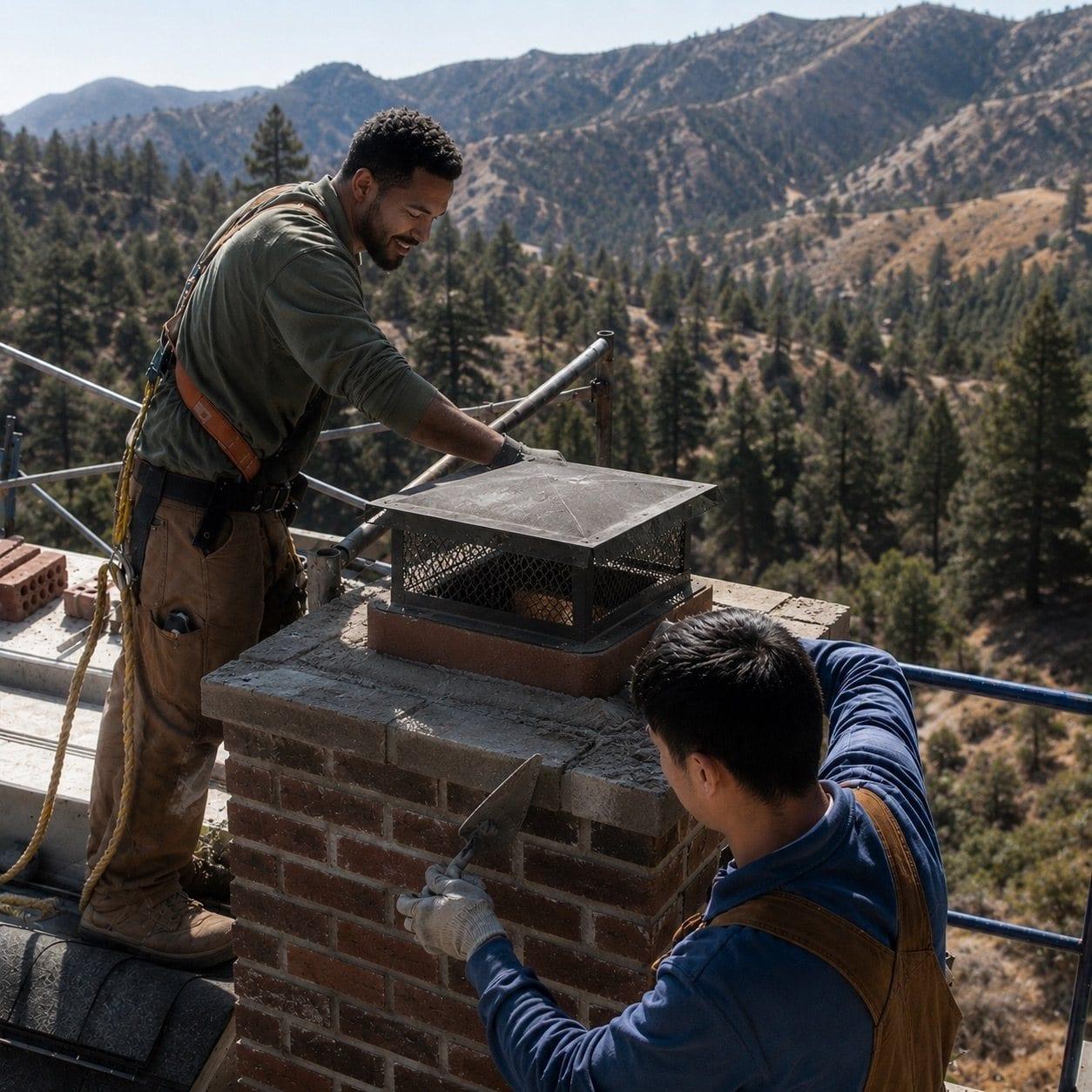
Keeping rain and debris out protects the repaired liner, so a missing cap is addressed through chimney cap installation.
Safety and maintenance context
A damaged liner is a safety issue, not a cosmetic one. Cracks can let enough heat through to reach wood framing beside the chimney, and with gas or oil appliances, gaps can let combustion gases, including carbon monoxide, leak into the house.
Keeping a liner in good shape
- Have the chimney inspected once a year
- Sweep often enough to keep creosote from building up
- Don't use the fireplace or appliance after a suspected chimney fire until the flue has been inspected
- Keep a cap on the chimney to keep out water, debris and animals
- Keep working carbon monoxide alarms in the home
Booking liner repair
When you get in touch, mention what prompted the call, such as tile pieces, an inspection report, a chimney fire or a smoke smell. Liner damage is often found along with other wear, and it can all be handled as part of chimney repair.
Getting ready for the visit
- Let the fireplace or stove cool completely — no fire the day before.
- Clear access to the fireplace and to the roof or attic.
- Have the appliance's make and model handy.
What we look at
- Liner size against the appliance
- Connection at the appliance or smoke chamber
- Missing or displaced sections
- Signs of a past chimney fire
- Tile cracks and joint gaps
- Top plate, cap and seal
Stop using it until it's checked
Pieces of flue tile in the firebox or a known crack mean the liner can't be trusted to contain heat and exhaust. Don't use the fireplace or stove until it has been inspected.