On this page
What chimney liner installation involves
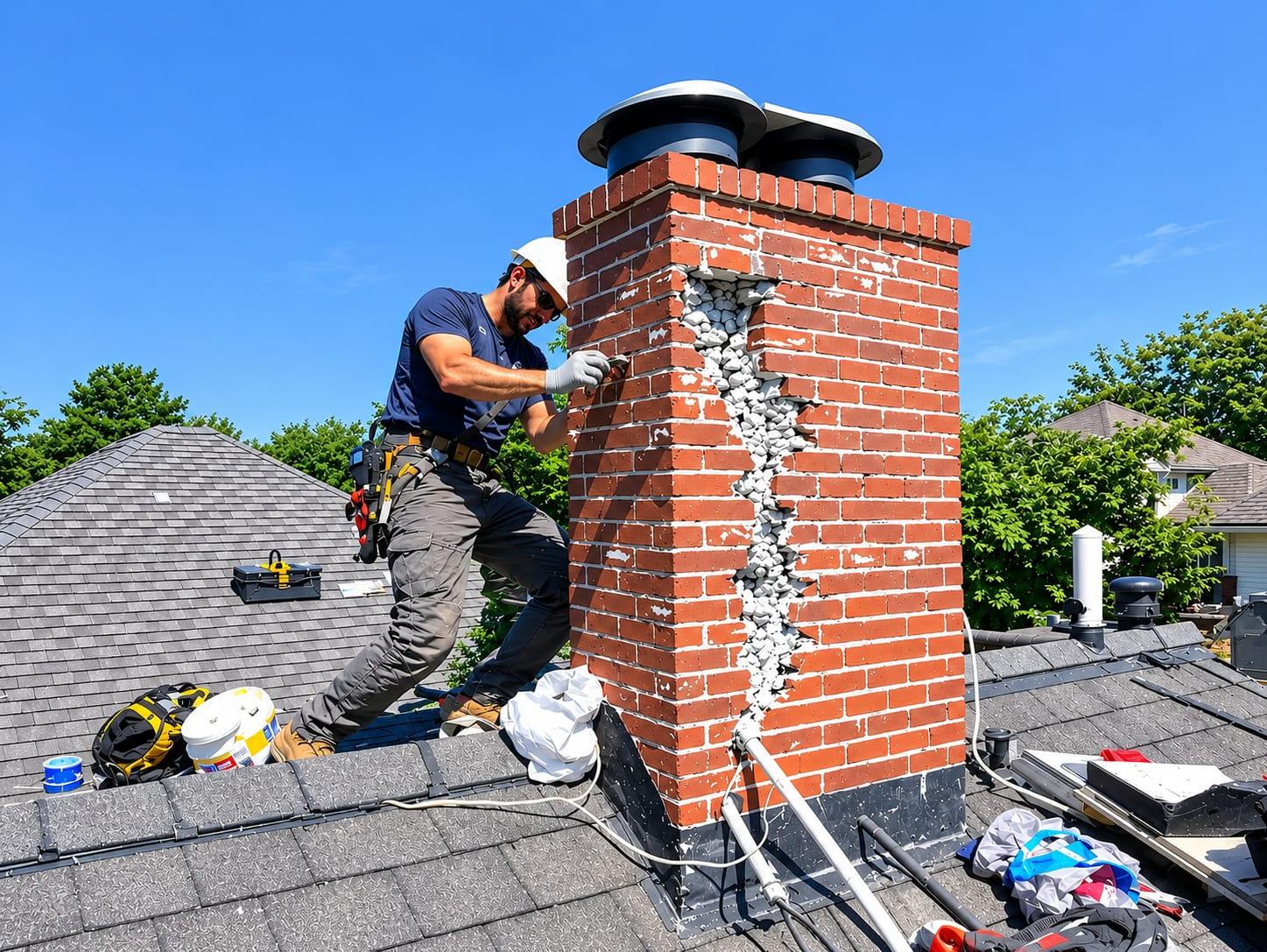
A chimney liner is the channel inside the chimney that exhaust travels through on its way out. It contains heat so it doesn't pass into nearby wood framing. It also shields brick and mortar from the acidic moisture that combustion produces, and it gives the flue the right shape and size for good draft. Chimney liner installation means fitting a new liner from the appliance or smoke chamber up to the top of the chimney. The job also covers the connections at both ends and the finishing work at the crown.
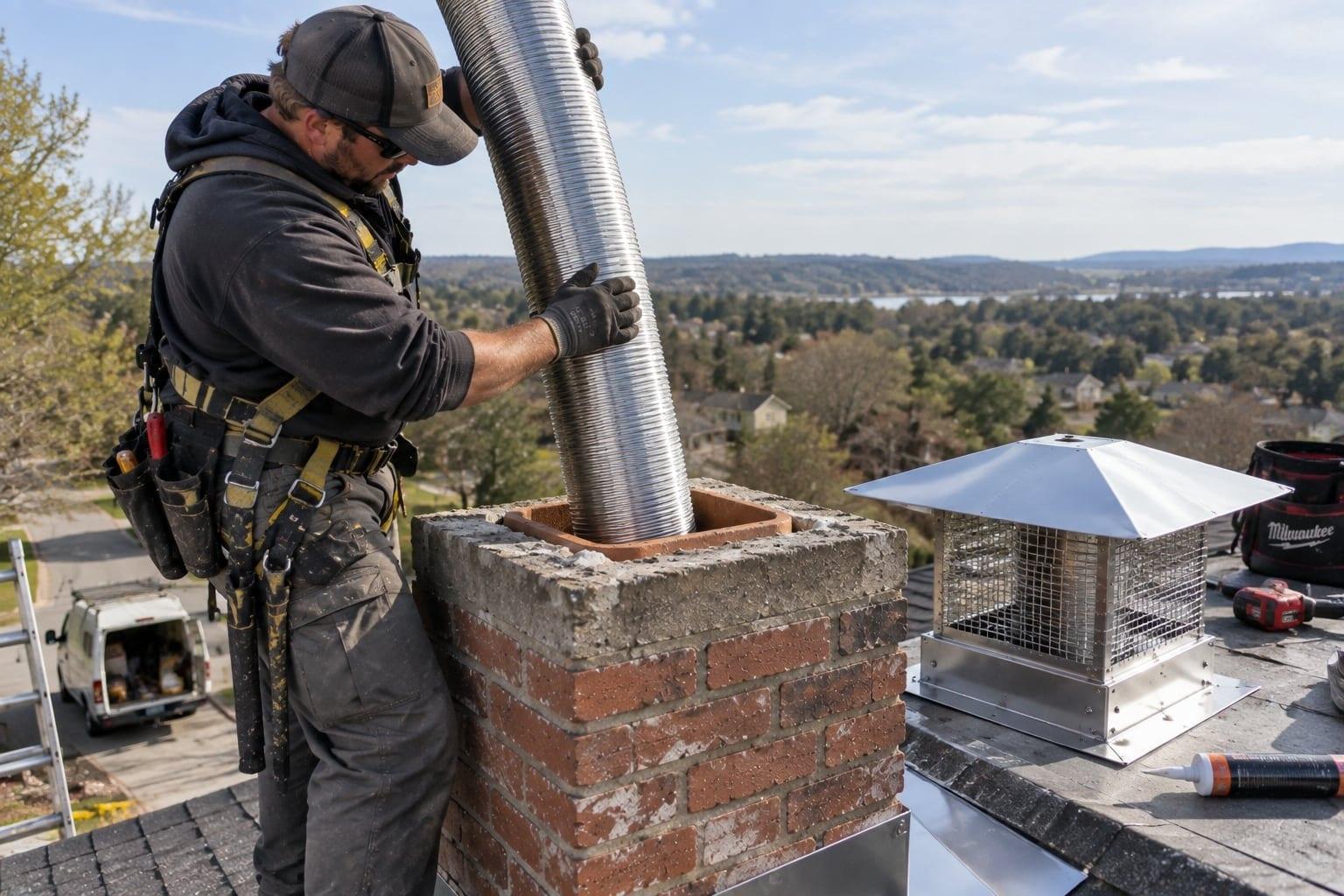
Chimney liner installation is different from patching an existing liner. If the current liner is basically sound and only has isolated damage, chimney liner repair is usually the right job instead.
Signs your chimney may need a new liner
- Cracked, shifted or missing flue tiles found during an inspection.
- Pieces of tile or flaky debris showing up in the firebox or at the base of the chimney.
- An older masonry chimney that was never lined at all.
- Switching to a fireplace insert, wood stove or gas appliance whose outlet doesn't match the existing flue size.
- Smoke spilling into the room or a fire that struggles to draw, when the flue is too large or too small for the appliance.
- A chimney fire, which can crack tiles or warp a metal liner even when nothing looks wrong from the firebox.
- Mortar and brick deterioration from the inside, which can point to exhaust moisture reaching the masonry.
None of these signs confirms a new liner on its own. An inspection, often with a camera run up the flue, shows whether the liner can be repaired or needs replacing.
What the visit involves, step by step
How a liner installation typically goes
Inspect the flue
We look at the chimney inside and out. A camera inspection shows the condition of the existing liner and any obstructions.
Measure and match the appliance
We measure the flue's height and dimensions and size the liner to the fireplace, insert or stove it will serve.
Clean and clear the chimney
Creosote, debris and any loose or broken tile pieces are removed so the new liner can run cleanly.
Install the liner
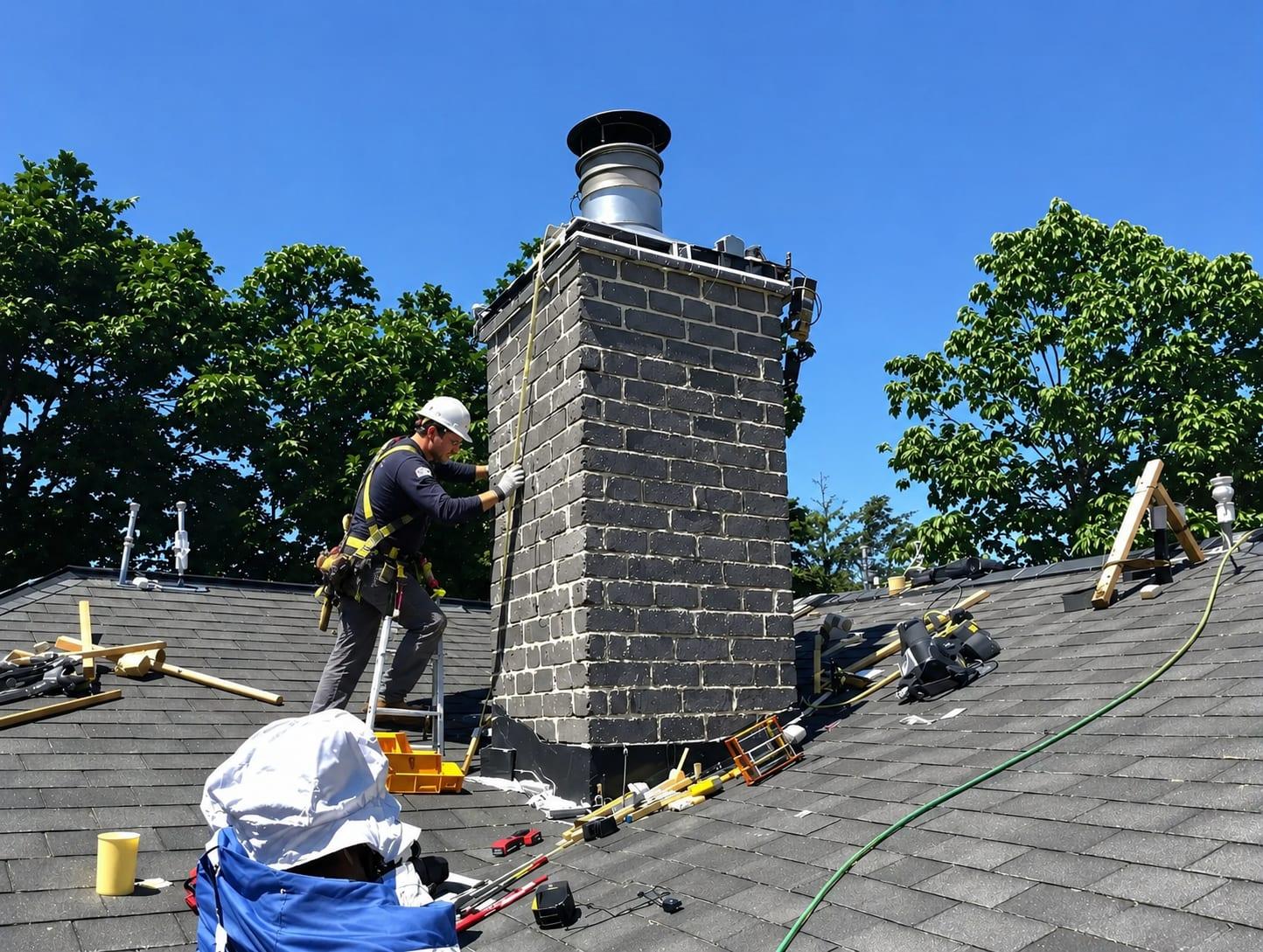
The liner goes in from the top and runs down to the appliance or smoke chamber. Insulation is added where the chimney needs it.
Make the connections
We connect the bottom to the appliance or the fireplace, and seal the top with a plate at the crown.
Finish the top
A cap goes on to keep rain, debris and animals out of the new flue.
Check the draft
We confirm the system draws properly and walk you through what was done.
Liner materials and the appliances they serve
Stainless steel chimney liners
A stainless steel chimney liner is a common choice for relining because it can be fed down an existing chimney without tearing it apart. Flexible stainless liners can follow slight bends or offsets in a flue. Rigid sections suit straight runs. The right grade and diameter depend on the fuel and the appliance it serves.
Matching the liner to the fuel
Wood, gas and pellet appliances produce different exhaust and temperatures, and each needs a flue sized for its output. A liner chosen for an open wood fireplace may be wrong for a gas insert. That's why the appliance is settled before the liner is chosen. If you're planning a new unit as well, our fireplace installation work and the liner can be planned together.
Chimney liner replacement
Chimney liner replacement follows the same process as a first-time install. The difference is that the old liner, or broken pieces of it, may need to come out first. Damaged clay tile is sometimes left in place when a new stainless liner fits through it. That depends on what the inspection shows.
Safety and upkeep after a new liner
Don't use a fireplace with a damaged liner
If an inspection finds a cracked or missing liner, hold off on fires until it's fixed. Heat and exhaust can reach the surrounding structure through the gaps.
A new liner still needs care. Creosote builds up in a stainless flue just as it does in tile, so regular sweeping and inspection still matter. Use the appliance the liner was sized for. Burn dry, seasoned wood in wood-burning units, and watch for changes in draft or smoke.
The top of the chimney protects the liner as well. A properly fitted chimney cap keeps water off the liner connections. An animal screen for the flue opening stops birds and small animals from nesting in it. For wood-burning chimneys, adding a spark arrestor helps keep embers from leaving the flue.
Booking a liner installation
Get in touch and tell us what you burn, what appliance the chimney serves, and anything you've noticed, such as smoke, debris or a failed inspection. We'll arrange an inspection to confirm whether a new liner is the right fix.