On this page
What chimney tuckpointing is
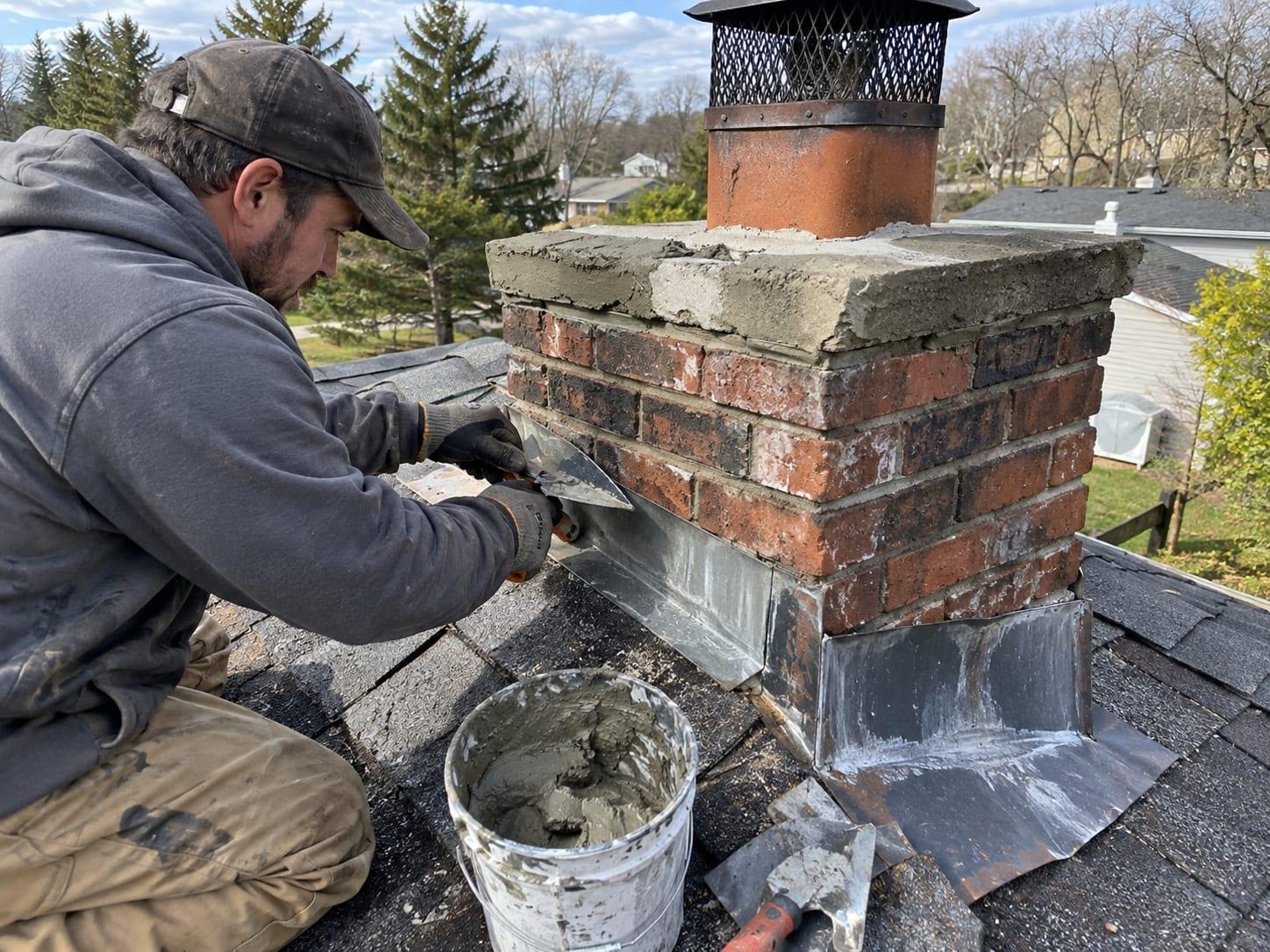
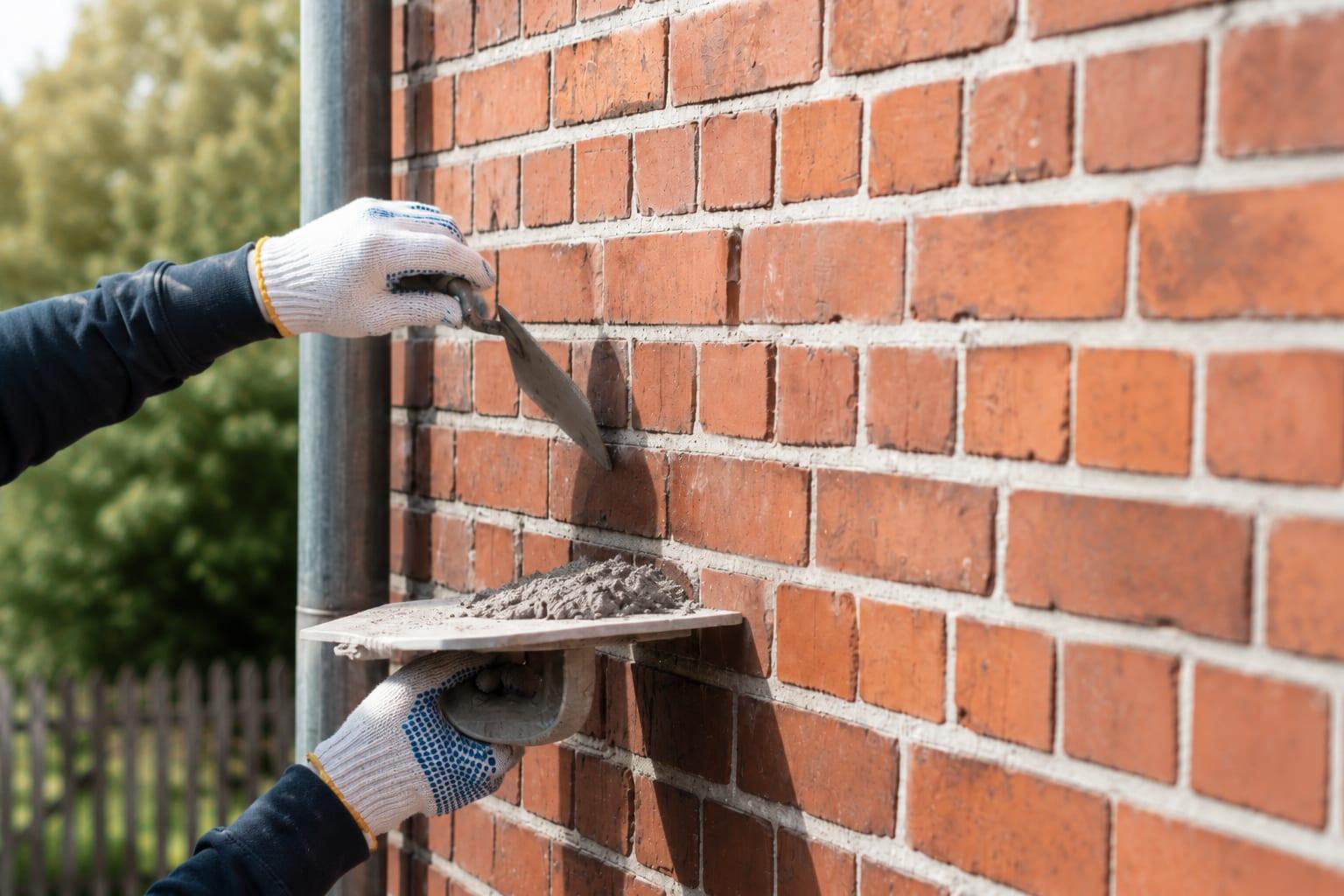
Tuckpointing, often called repointing, means cutting out deteriorated mortar to a consistent depth. The joints are then filled with new mortar, packed in layers and tooled to shape. Traditional tuckpointing also adds a thin contrasting line along each joint for looks, but on chimneys the term usually means the repair itself. The bricks stay where they are, and only the mortar is replaced. It's one of the most common forms of masonry chimney repair, and far less disruptive than taking brick down.
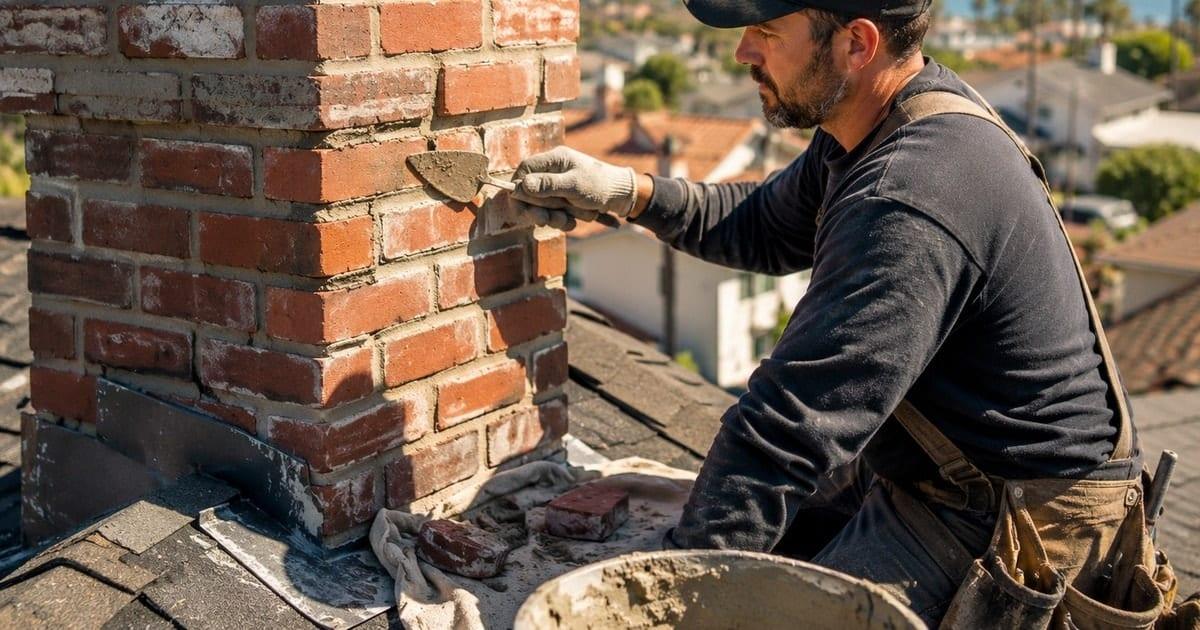
The mortar matters as much as the method
New mortar should be no harder than the brick it holds. Very hard mortar on soft or older brick forces moisture and movement into the brick faces, which then crack and flake (spalling). Part of the job is judging the existing brick and mortar, then choosing a mix and color that suit them instead of defaulting to the strongest bag on the shelf.
Signs your chimney needs tuckpointing
- Mortar that crumbles or turns to sand when scraped with a key
- Joints recessed well behind the brick face, or visible gaps and holes
- Sand or mortar grit on the roof, in the gutters or at the base of the chimney
- White, chalky staining (efflorescence), which shows water is moving through the masonry
- Damp spots or stains on ceilings or walls next to the chimney
- Loose bricks near the top, where weather exposure is greatest
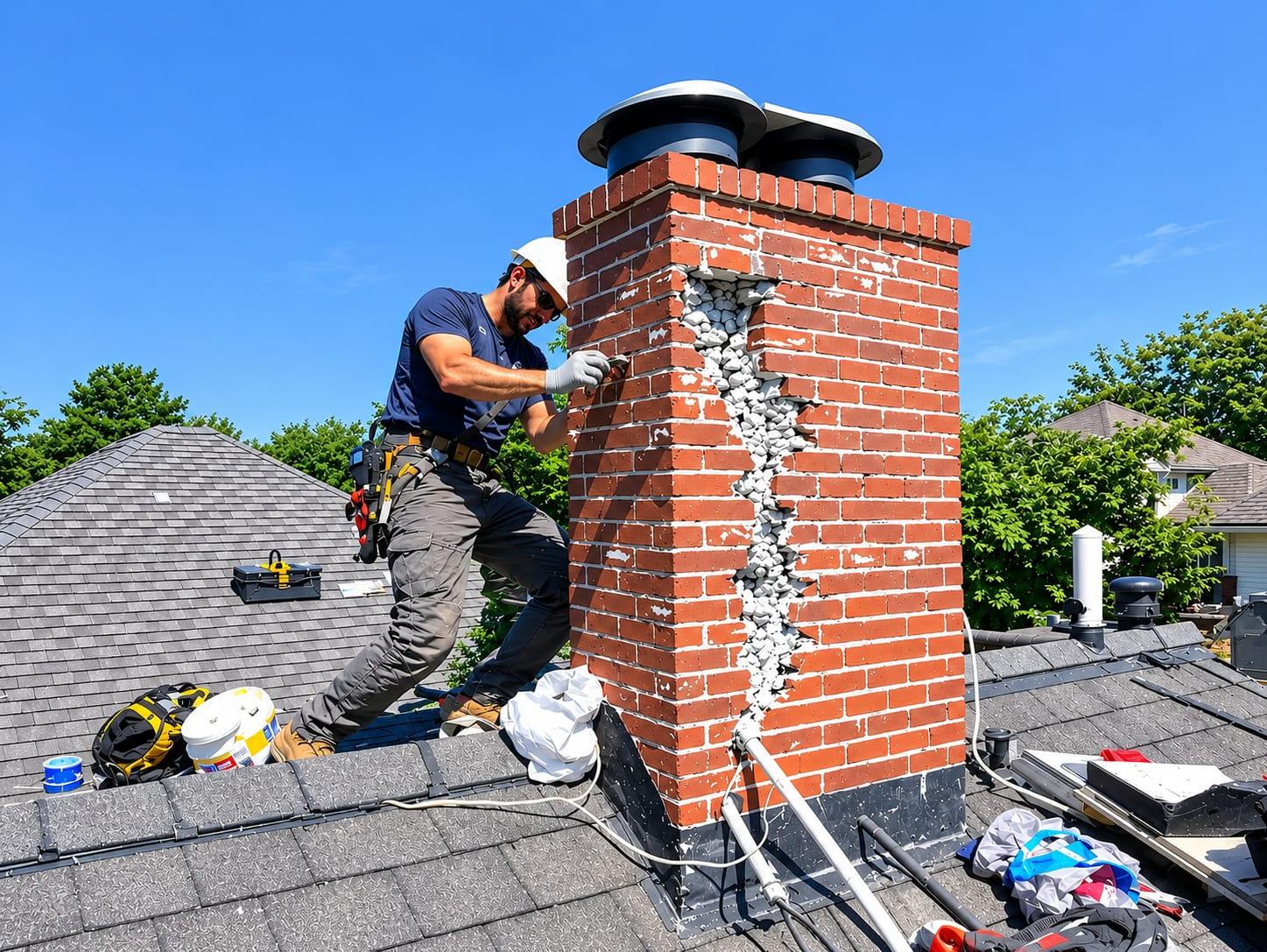
Tuckpointing works when the bricks themselves are sound. If many bricks are cracked, spalled or loose, or the stack is leaning, repointing alone won't hold. In that case, a partial or full chimney rebuild may be the honest recommendation.
What the visit involves, step by step
Repointing a chimney
Assess the masonry
We check the joints, bricks, crown and flashing. This confirms that tuckpointing is the right repair and shows how much of the chimney needs it.
Protect the surroundings
Roofing, plantings and nearby openings are covered, and dust is kept under control.
Cut out failing mortar
Joints are cleared with grinders and hand tools to an even depth, without widening them or chipping brick edges.
Clean and dampen
Dust is cleared from the joints, and the brick is lightly wetted so it doesn't pull water out of the new mortar too fast.
Repoint
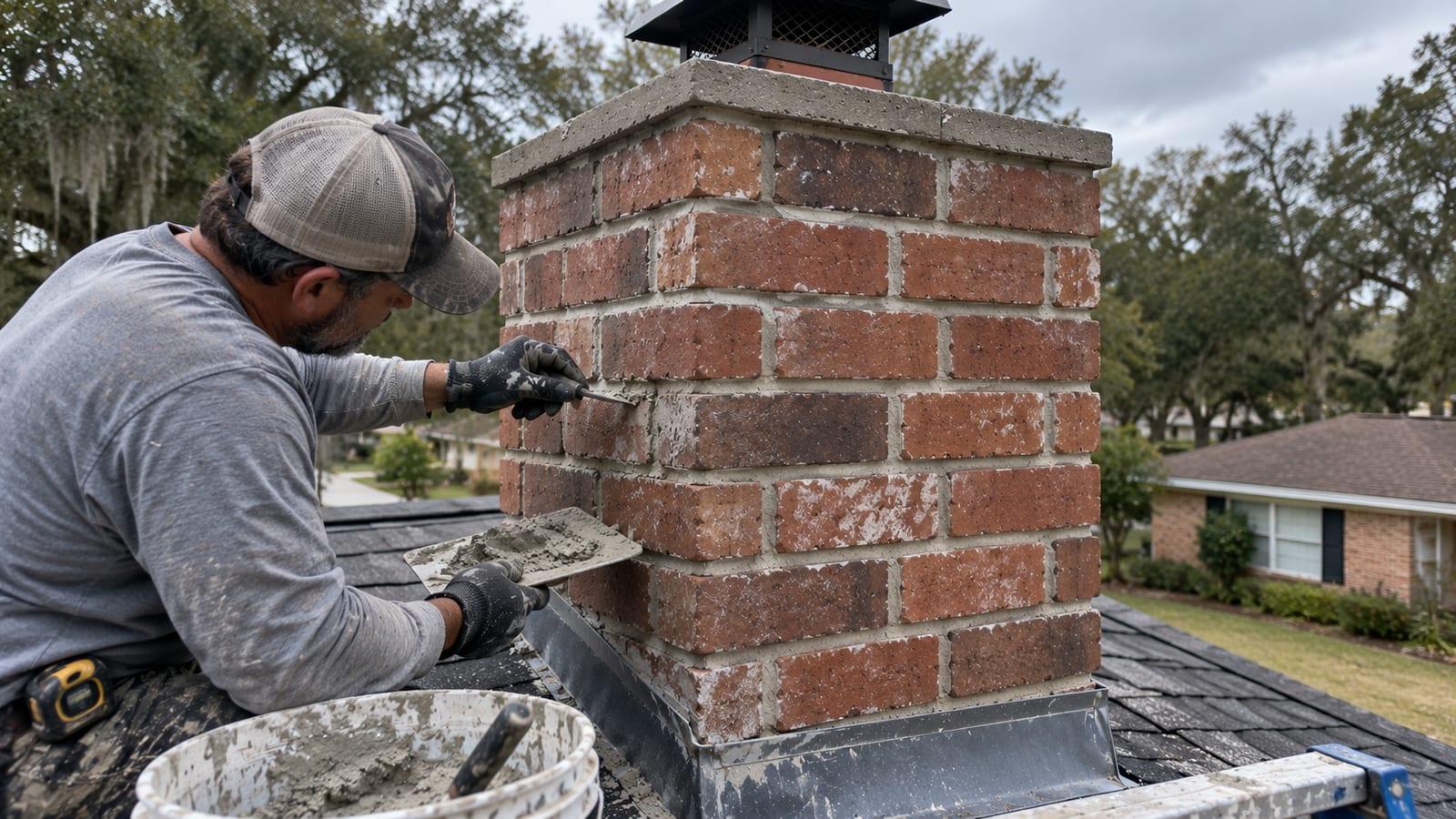
Fresh mortar is packed in layers and tooled to match the existing joint profile.
Cure and clean up
The new joints are kept from drying too quickly. Excess mortar is brushed off the brick faces and all debris is removed.
Protecting the new mortar
Cutting out mortar throws off fine silica dust, and the work happens on a roof, so it isn't a good weekend project. After repointing, most of the protection comes from keeping water off the top of the chimney. A sound crown and a cap stop rain from running down inside the masonry. If the chimney has no cover, consider adding a chimney cap at the same time. Chimney waterproofing can also be applied once the mortar has cured.
Booking chimney tuckpointing
Call or request an estimate and describe what you're seeing: crumbling joints, loose brick or a leak. A photo of the chimney taken from the ground helps. Commercial and property-manager work is offered too, for apartment buildings and rental homes with masonry chimneys.
What we look at
- Stack alignment and loose courses
- Brick faces for spalling
- Flashing where masonry meets the roof
- Crown cracks and overhang
- Mortar joint depth and condition
- Efflorescence and water staining
Getting ready for the visit
- Keep pets in another room while the work area is open.
- Let the fireplace or stove cool completely — ideally no fire for 24 hours before the visit.
- Write down what you've noticed and when it happens — smells, smoke, sounds or stains.
- Clear a few feet of space in front of the hearth or appliance.
Stay off the roof
Looking from the ground or with binoculars is safe. Climbing a steep or wet roof to inspect a chimney is not — leave that to someone with the right equipment.