On this page
- What chimney waterproofing is and what it does
- Signs a chimney is taking on water
- Chimney water damage repair comes before sealing
- How to fix a common chimney leak
- Chimney crown sealing
- Chimney flashing sealing
- The cap and damper: keeping rain out of the flue
- What the visit involves, step by step
- The components and materials involved
- Keeping a sealed chimney dry
- Booking chimney waterproofing
What chimney waterproofing is and what it does
Brick, stone and especially mortar are porous. Rain soaks into them, and the trapped water slowly works on the chimney. It loosens mortar joints, pops the faces off bricks, rusts the damper and cap, and can wick into the framing and drywall around the chimney.
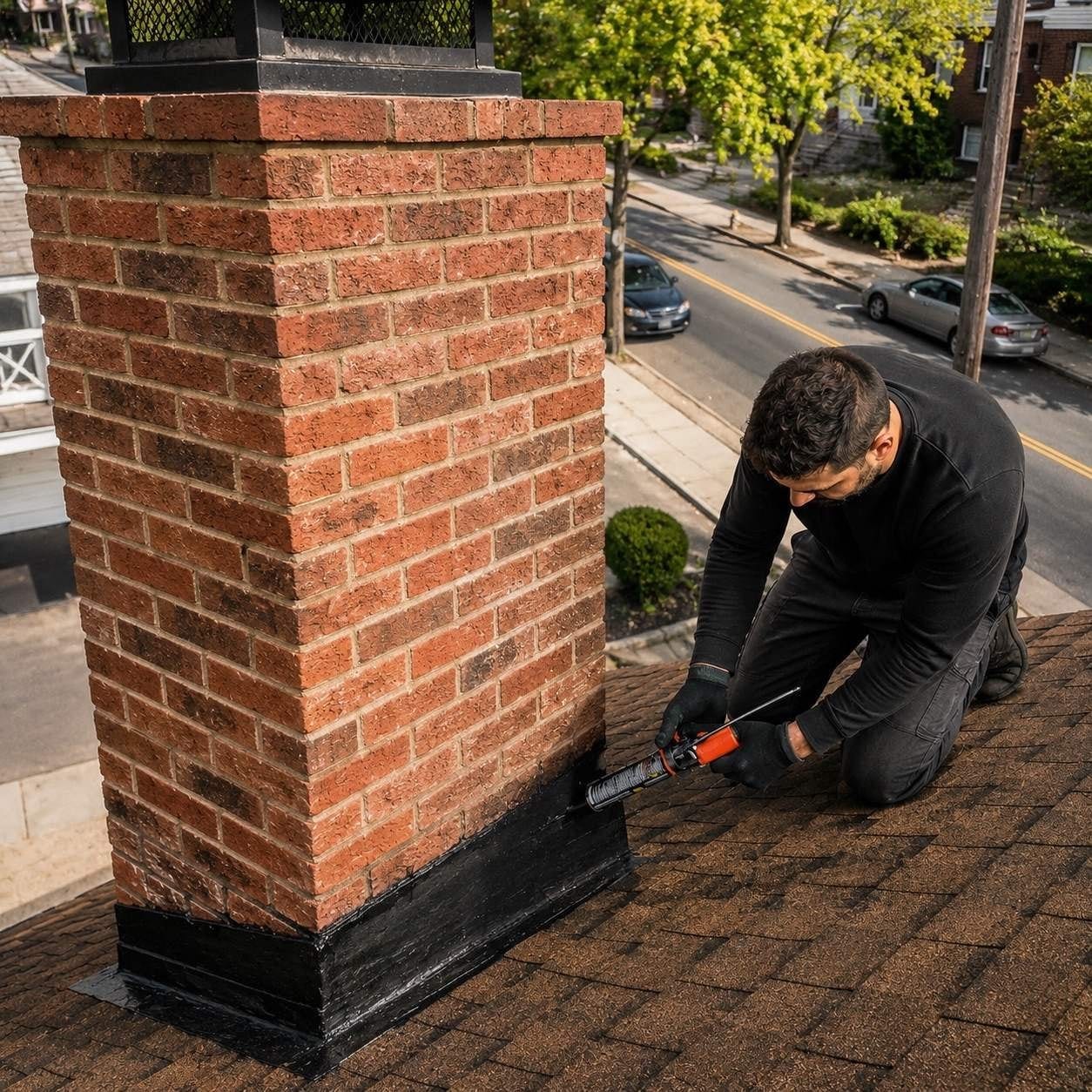
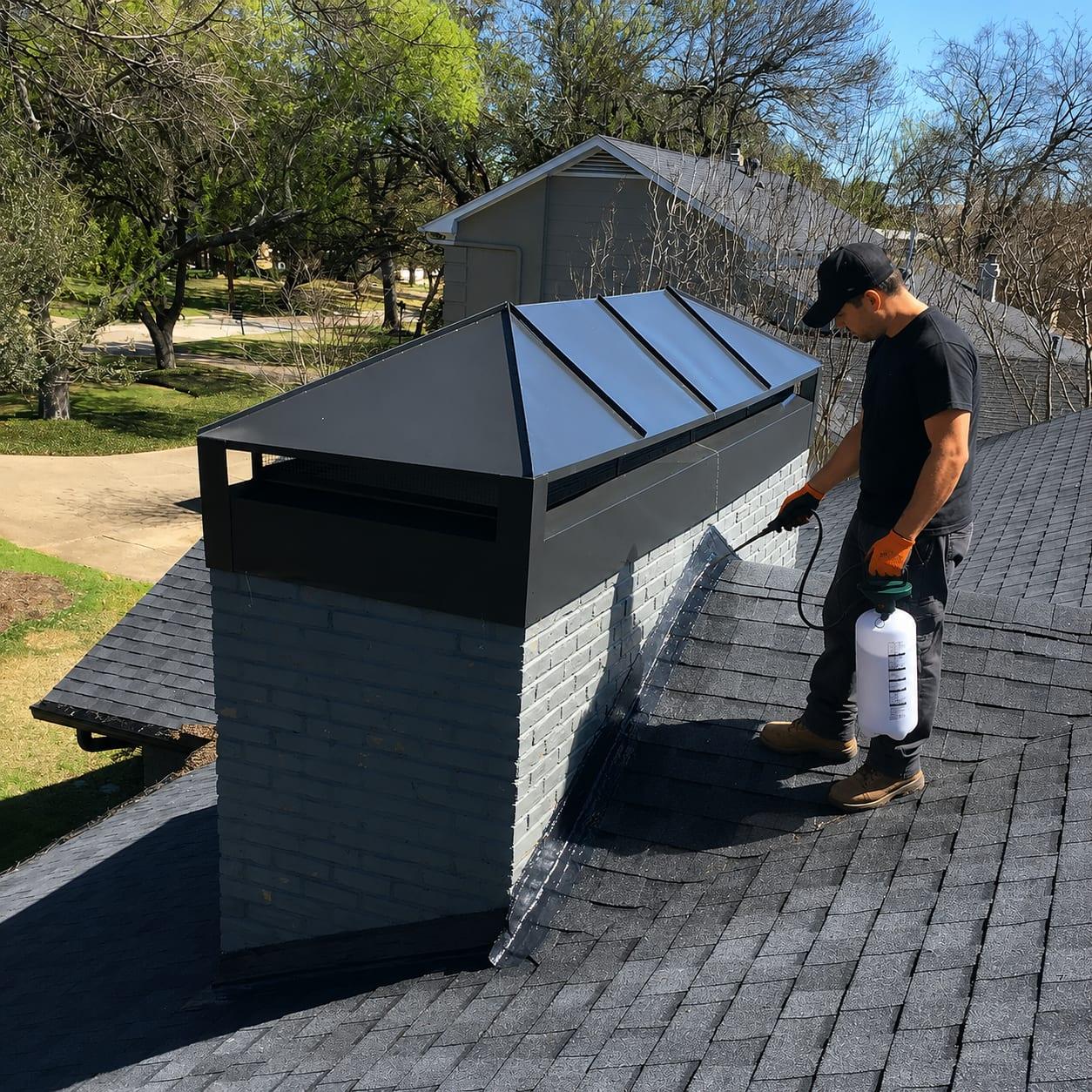
Waterproofing means applying a vapor-permeable water repellent to the exterior masonry. The product soaks into the pores instead of sitting on the surface. Liquid water beads off, while moisture already inside the brick can still escape as vapor. That last part is what separates proper masonry waterproofing from paint or an ordinary sealer.
| Feature | Breathable water repellent | Paint or film-forming sealer |
|---|---|---|
| How it works | Soaks into the masonry and repels liquid water | Forms a skin on the surface |
| Moisture already in the brick | Can escape as vapor | Gets trapped behind the film |
| Typical result over time | Masonry stays drier | Trapped moisture can flake brick faces and peel the coating |
| Appearance | Usually little visible change | Often shiny or discolored |
How it works
- Breathable water repellent
- Soaks into the masonry and repels liquid water
- Paint or film-forming sealer
- Forms a skin on the surface
Moisture already in the brick
- Breathable water repellent
- Can escape as vapor
- Paint or film-forming sealer
- Gets trapped behind the film
Typical result over time
- Breathable water repellent
- Masonry stays drier
- Paint or film-forming sealer
- Trapped moisture can flake brick faces and peel the coating
Appearance
- Breathable water repellent
- Usually little visible change
- Paint or film-forming sealer
- Often shiny or discolored
Signs a chimney is taking on water
Common signs of a water damaged chimney
- Water stains on the ceiling or wall beside the chimney
- Dripping, puddles or damp ash in the firebox after rain
- Rust on the damper, firebox doors, cap or chimney chase top
- White, powdery deposits (efflorescence) on the brick
- Brick faces that flake, chip or pop off (spalling)
- Mortar joints that are soft, crumbling or missing
- A musty or old-campfire smell that gets stronger after rain
- Peeling paint or bubbling wallpaper near the chimney
Some of these call for prompt attention. A badly spalled chimney or a leaning stack is a different job from a sealing project. Our article on the signs a chimney needs immediate repair explains which symptoms shouldn't wait.
Chimney water damage repair comes before sealing
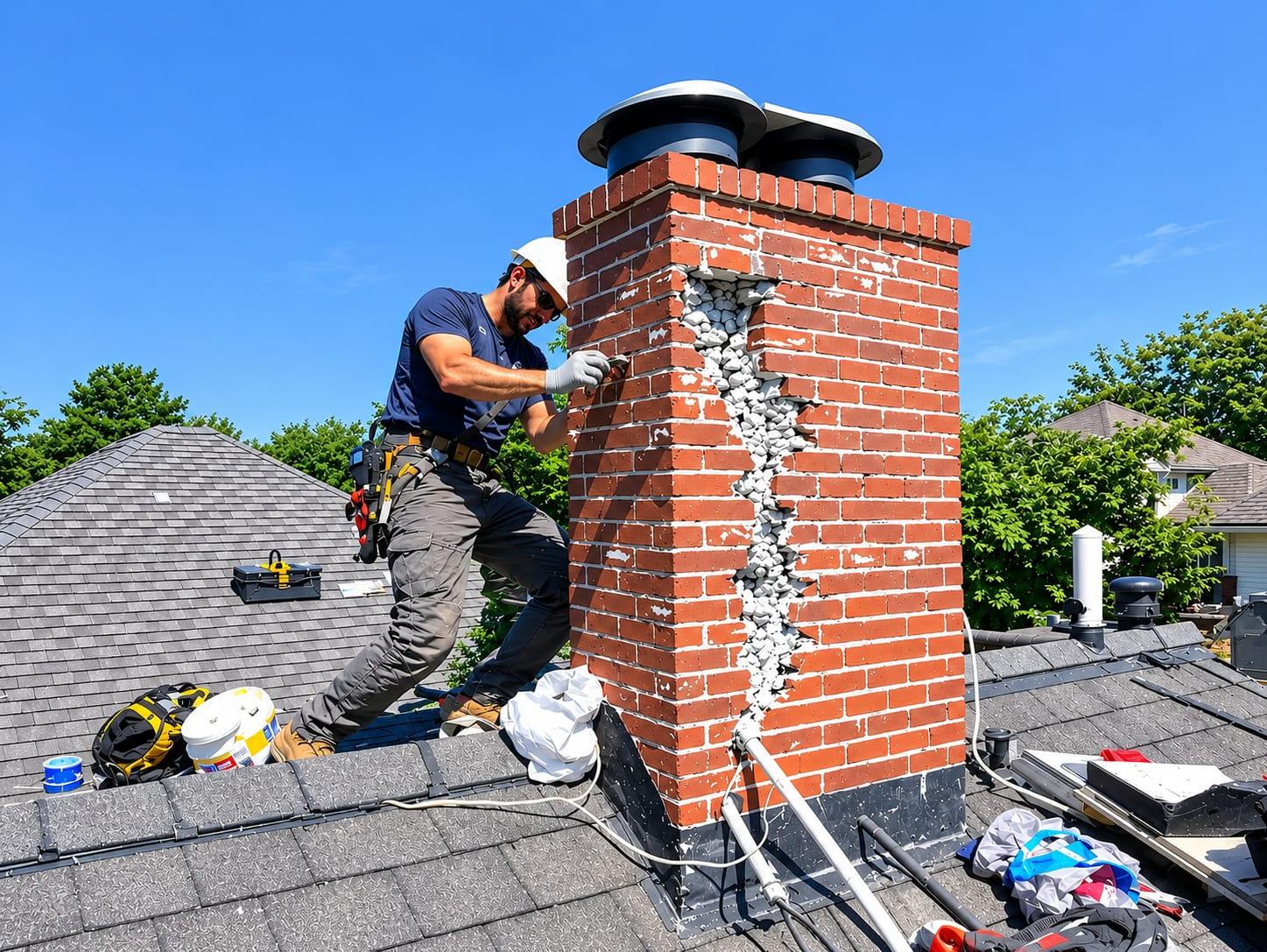
A water repellent only works on sound masonry. It does not fill cracks, replace missing mortar or reattach broken brick faces. When water has already done damage, we repair it first. That can mean tuckpointing open joints, replacing spalled bricks, or rebuilding the top courses when they have deteriorated. This is part of our masonry chimney repair work.
The masonry also has to be dry before sealing. Sealer applied over wet brick locks the moisture in, which defeats the purpose.
How to fix a common chimney leak
Most chimney leaks come from a specific failure point, not from water seeping evenly through the brick. Fixing the leak means finding that point, and many chimneys have more than one. These are the usual sources:
- Flashing: the metal seal where the chimney meets the roof is the most frequent culprit.
- Crown: cracks in the concrete or mortar top let water straight into the chimney structure.
- Missing or damaged cap: rain falls directly down the flue onto the damper and smoke shelf.
- Porous brick and mortar: water soaks through the walls of the chimney itself, which is the problem waterproofing addresses.
- Condensation: sometimes the moisture isn't rain at all and comes from flue gases cooling inside the flue.
If you want to know how chimney leak repair works from tracing the water to fixing the source, that service covers the full process. Waterproofing is often the final step of a leak repair, not the only step.
Chimney crown sealing
The crown is the slab that caps the top of a masonry chimney around the flue. It takes more direct weather than any other part of the chimney. Hairline cracks can be sealed with a flexible crown sealant that bridges small gaps and sheds water. A crown that is broken, crumbling or badly built needs chimney crown repair or a rebuild before any coating will help.
For more detail on what cracks a crown and how to tell a sealing job from a repair job, read our guide to cracked chimney crown causes, signs and repair.
Chimney flashing sealing
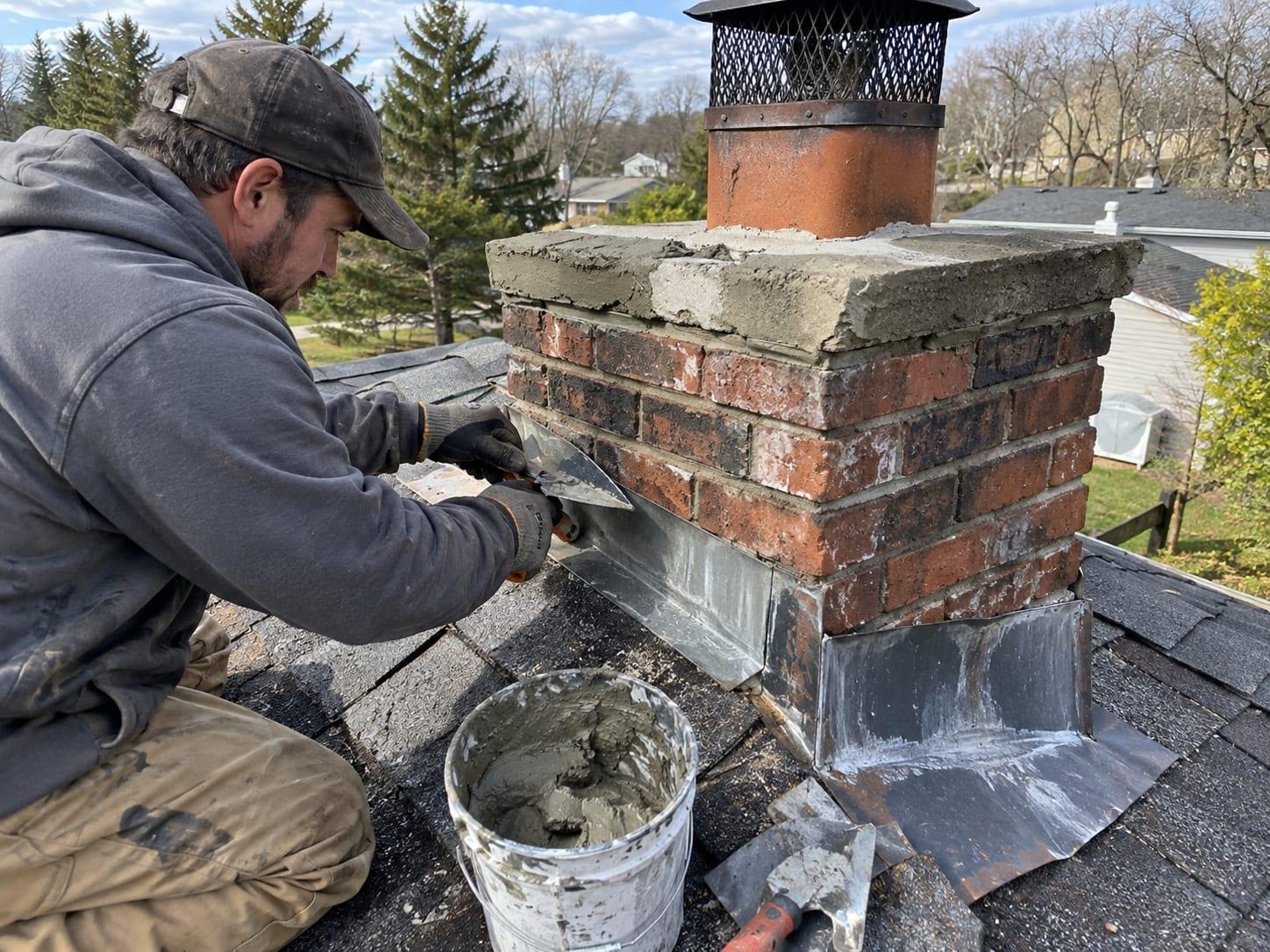
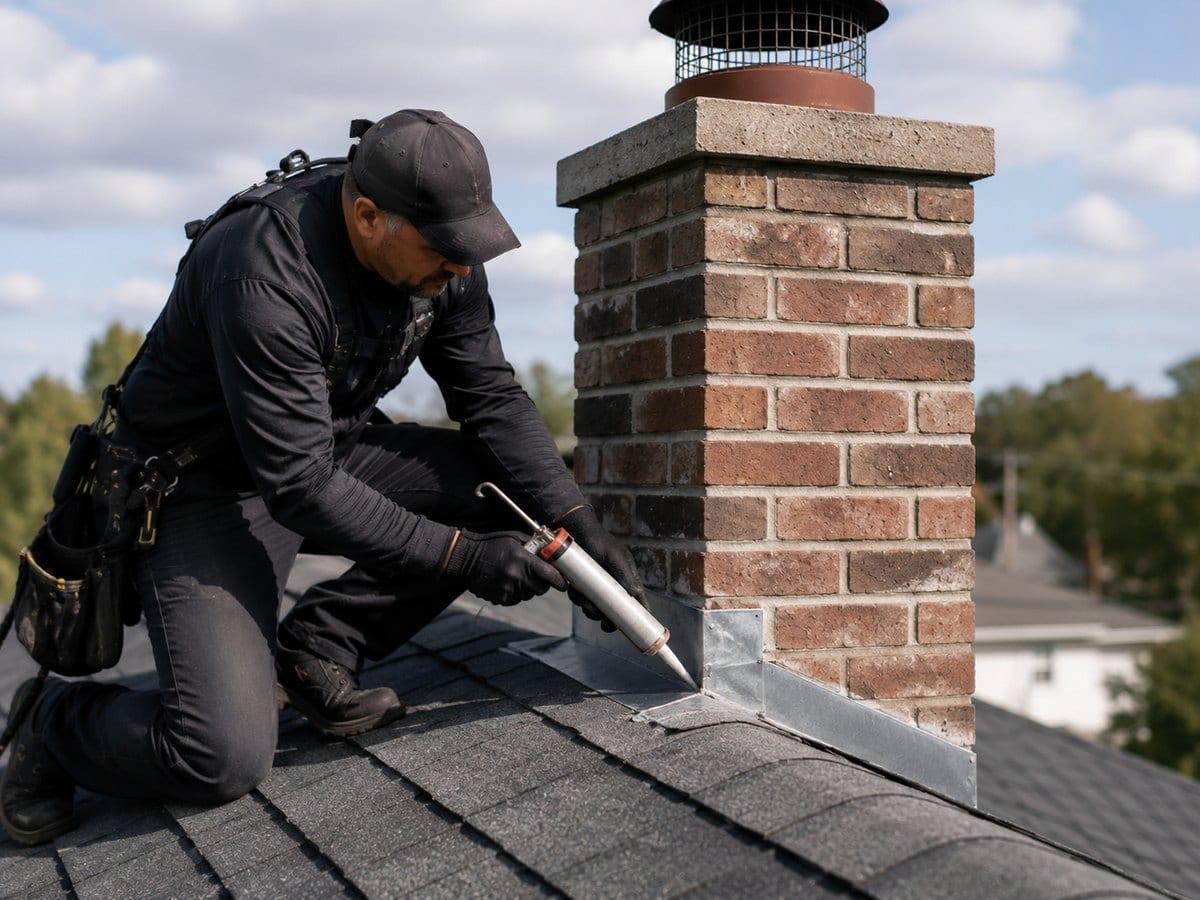
Flashing is layered metal, step flashing tucked under the shingles and counterflashing set into the mortar joints. Sealant at the counterflashing joint wears out and can be renewed. Flashing that is bent, rusted through, pulled loose or was never installed correctly can't be fixed with more caulk; it has to be repaired or replaced. When flashing is the problem, our chimney flashing repair service handles it, and we reseal the joints as part of that job.
The cap and damper: keeping rain out of the flue
Waterproofing the outside of the chimney does nothing about rain falling straight down an open flue. A properly fitted chimney cap keeps it out and also blocks animals and debris. We install and replace caps as needed.
There is no coating that waterproofs a damper. Protecting it comes down to keeping water off it and making sure it closes properly. A rusted, warped or stuck damper is often one of the first signs that water has been getting in. We handle chimney damper repair when the damper no longer seals or opens correctly.
What the visit involves, step by step
From first look to finished sealing
Check the inside signs
We look at the stains, the firebox, the damper and the smoke chamber to see where water has been showing up.
Inspect the chimney from the roof
We check the crown, flashing, cap, brick and mortar joints. If we need to see inside the flue, we can do a camera inspection.
Explain what we found
We tell you where the water is coming from, what needs repair, and whether waterproofing makes sense for your chimney. Estimates are free.
Make the repairs first
Crown, flashing, cap and masonry problems are fixed before any repellent goes on.
Clean and dry the masonry
The surface has to be clean and dry so the repellent can soak in evenly.
Apply the water repellent
We apply a breathable masonry water repellent following the product directions and protect the roof and surrounding surfaces while we work.
Walk you through the result
We show you what was done and which signs to watch for in the future.
The components and materials involved
| Part | What keeps water out | Notes |
|---|---|---|
| Brick, stone and mortar faces | Breathable water repellent | Applied only to sound, dry masonry |
| Crown | Crown sealant, or repair if cracked or broken | Sealant suits hairline cracks only. Only use a product rated for direct flame in a firebox, as a short-term fix for a hairline gap; open joints and larger cracks need a proper repair before the next fire. |
| Flashing | Repair or replacement, then resealing | Caulk alone is not a fix for failed flashing |
| Flue opening | Chimney cap | Also keeps out animals and debris |
| Damper | Repair or replacement | Rust is a common early sign of water |
| Prefab chimney chase | Chase cover | Masonry sealer doesn't apply to siding-clad chases |
Not every chimney is brick. Factory-built chimneys enclosed in a framed chase keep water out with a metal chase cover, not a masonry sealer. If you aren't sure which type you have, our article comparing a masonry vs. prefab chimney explains how to tell them apart.
Keeping a sealed chimney dry
Water repellents wear down over time. How long they last depends on the product and how much weather the chimney takes. Checking the masonry, crown, flashing and cap during a regular chimney inspection catches small problems before they turn into leaks. After a severe storm, it is worth having the chimney looked at even if nothing shows inside yet.
If water is coming in right now
Don't light a fire in a wet firebox. Move rugs and furniture away from the chimney, catch dripping water, and get in touch so the source can be found and repaired.
Booking chimney waterproofing
Free estimates. Call or request an estimate and tell us what you're seeing, whether that's stains, a damp firebox, flaking brick or a smell after rain. Same-day visits are available where the schedule allows. We work on homes in San Jose, and commercial and property-manager work is offered too.