On this page
What dryer vent repair covers
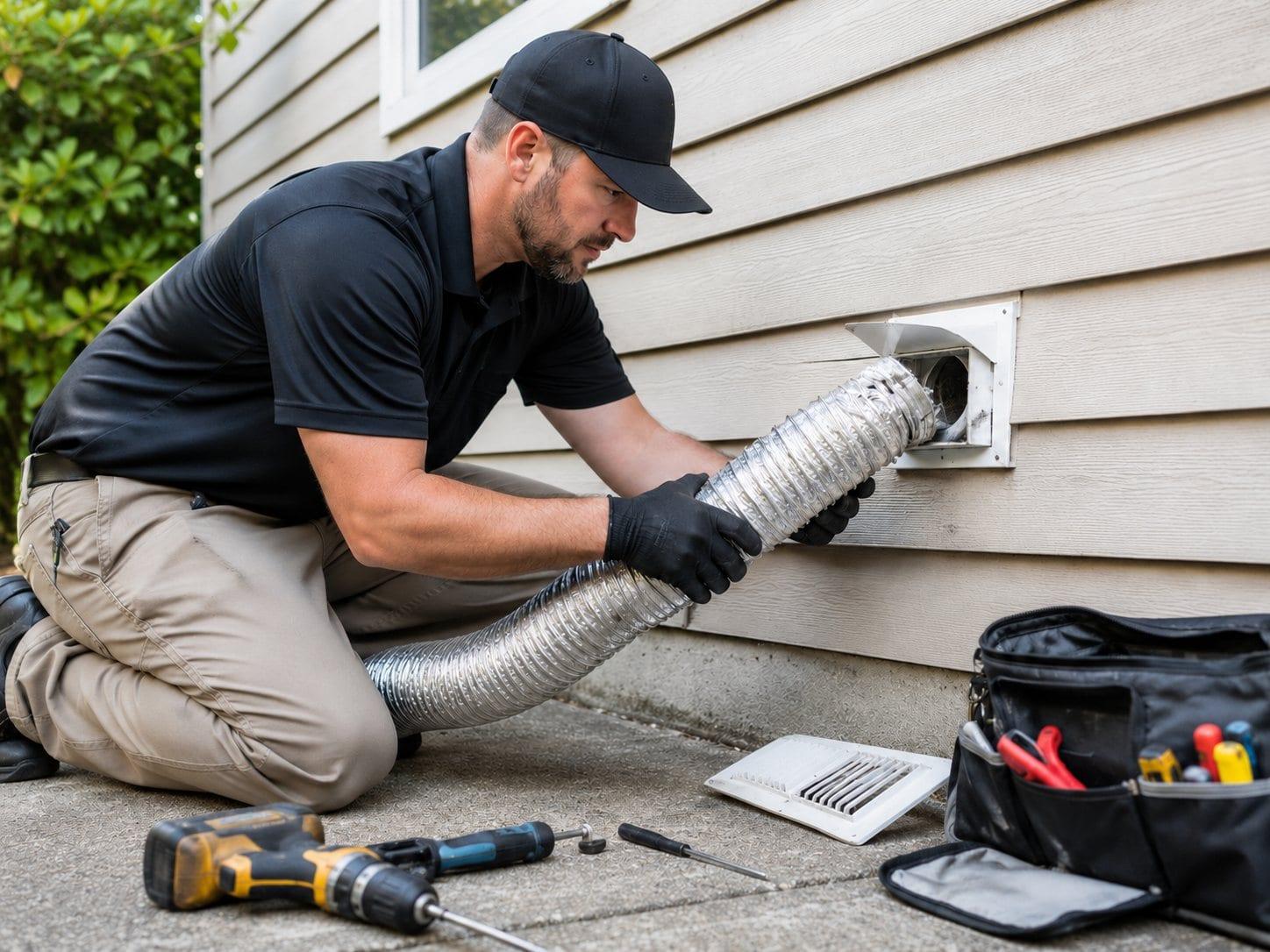
A dryer vent is the duct that runs from the back of the dryer to an exit on an outside wall or the roof. Repair deals with the duct itself. That can mean reconnecting joints that have pulled apart, replacing crushed or punctured sections, swapping out the flexible transition hose behind the dryer, re-supporting a run that sags, or fixing an outside hood whose flap no longer closes. When a length of duct is too damaged to patch sensibly, we replace that length with new duct.
If the duct is intact and simply packed with lint, dryer vent cleaning is the job you need instead.
Signs your dryer vent needs repair
Common signs of a damaged or disconnected vent
- Clothes take noticeably longer to dry, or come out damp after a normal cycle
- The laundry room gets hot or humid while the dryer runs
- Lint builds up behind the dryer, on the floor, or around the wall opening
- The hose behind the dryer is kinked, flattened or torn from being pushed against the wall
- The outside flap stays open, is broken, or is missing
- You feel little or no air at the outside exit while the dryer is running
- A burning or musty smell shows up during drying
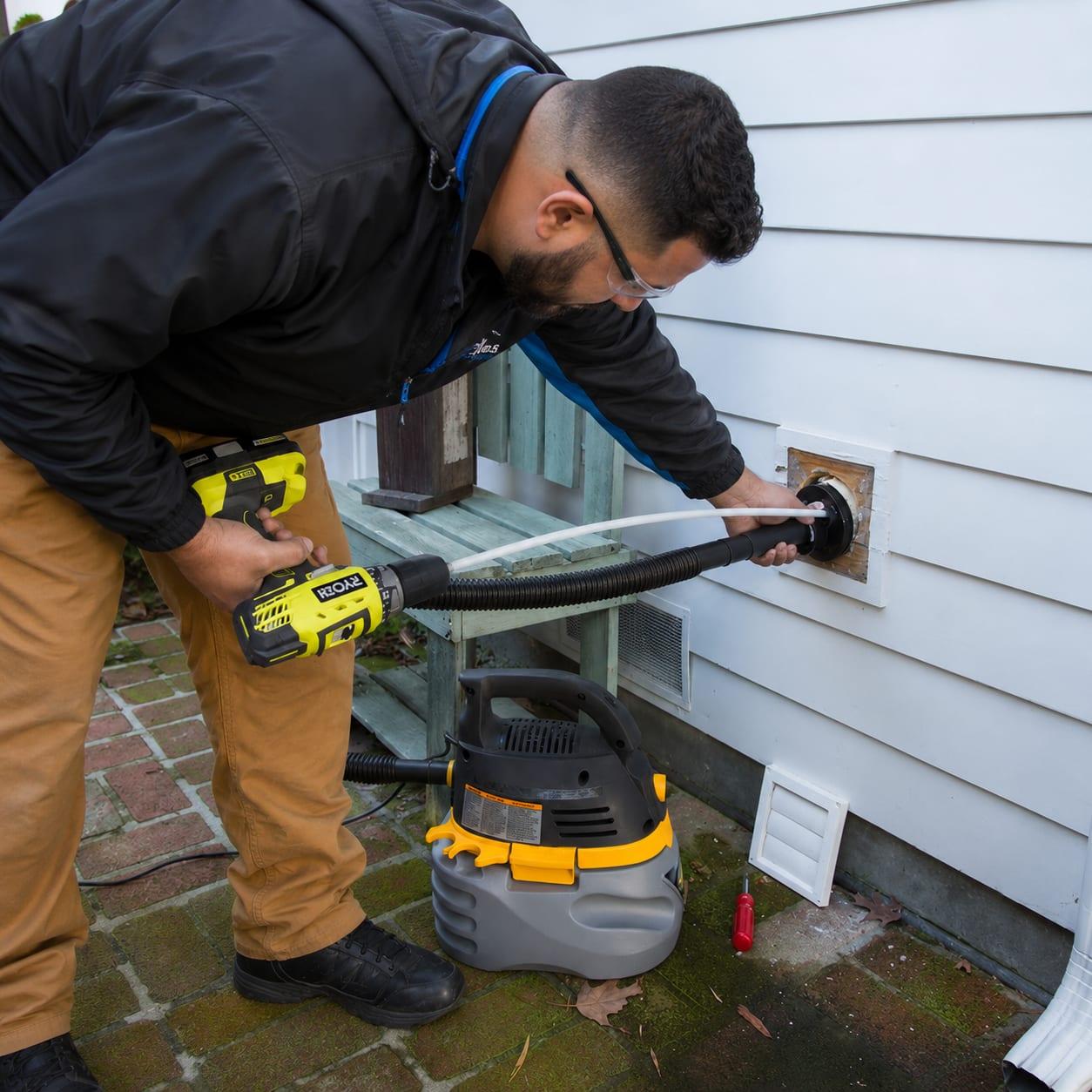
Some of these signs overlap with a clogged duct. When a wad of lint or a nest is stopping the air, clearing a blocked dryer vent may solve the problem without new parts. When the only damage is a broken flap or hood outside, replacing the exterior vent cover is usually enough.
How a dryer vent repair visit works
What happens during the visit
Start with what you've noticed
Tell us about long drying times, heat in the laundry room, lint, or smells. It points us to the likely trouble spot.
Check the connection behind the dryer
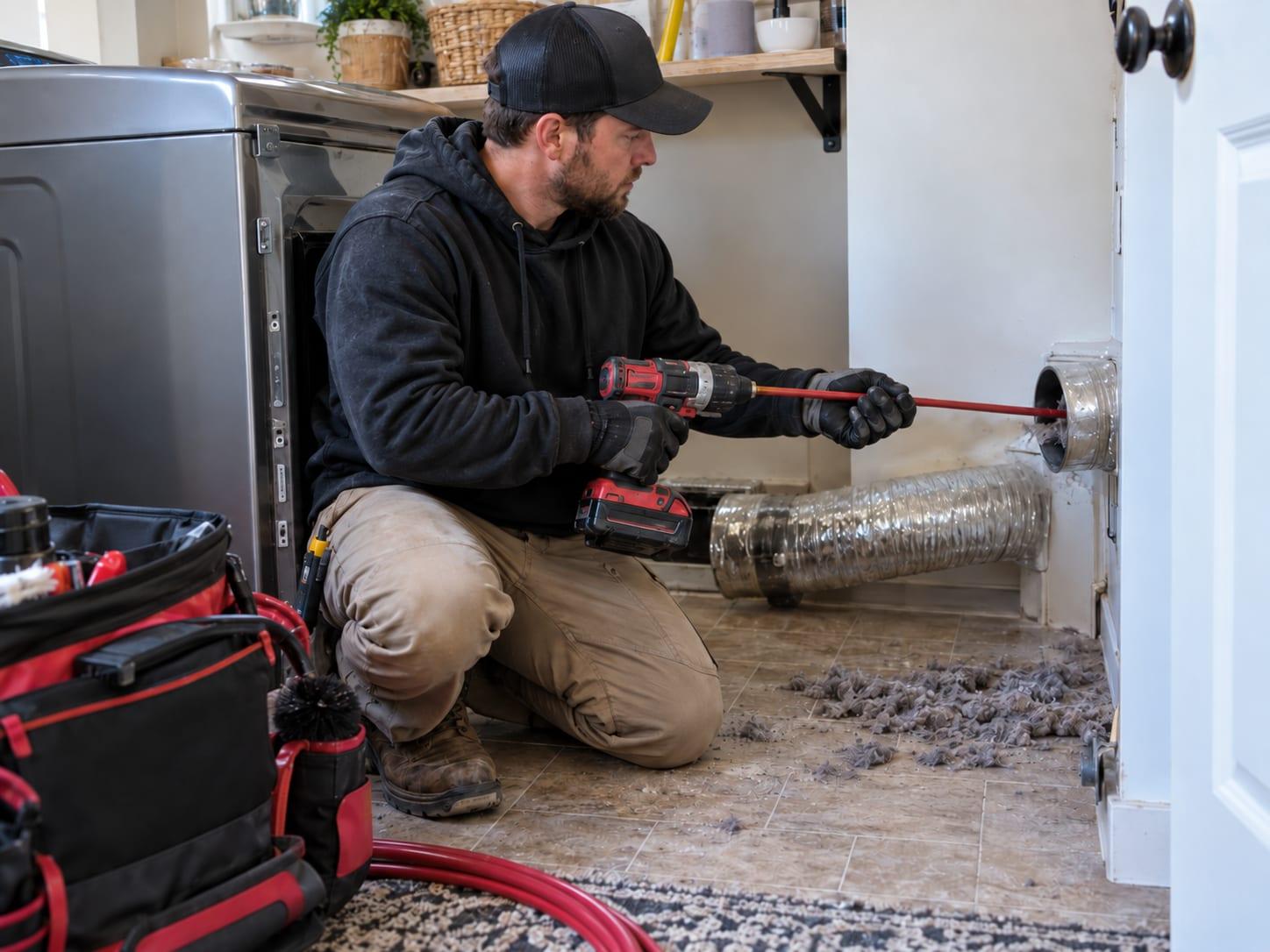
We pull the dryer out and look at the transition hose and the point where it meets the wall duct. This is where many vents get crushed or come loose.
Trace the duct run
We follow the accessible parts of the run, check joints and supports, and look at the outside termination. We also check how much air actually reaches the exit.
Explain what's wrong before any work starts
You'll hear what is damaged and what we recommend, whether that means reconnecting a joint, replacing one section, or replacing the run where it can be reached.
Make the repair
Loose joints are reconnected and sealed with foil tape rather than screws that poke into the duct and snag lint. Crushed or torn sections are replaced with metal duct.
Reconnect and confirm airflow
We reattach the dryer, run it, confirm that air is moving out the exit, and set the dryer back without flattening the hose.
Ducts hidden inside walls or ceilings can't always be reached without opening up an access point. If that applies to your vent, we'll talk through the options with you before doing anything.
Vent parts and duct materials
| Part | What it does | Common problems |
|---|---|---|
| Transition hose | Connects the dryer to the wall duct | Crushed, kinked or torn when the dryer is pushed back |
| Main duct run | Carries exhaust through the wall, attic or crawlspace | Separated joints, sagging, punctures, thin plastic or foil duct |
| Joints | Join one section of duct to the next | Failed tape, gaps, screws that catch lint |
| Exterior hood or roof exit | Ends the run and closes when the dryer is off | Flap stuck open or shut, broken or missing hood |
Rigid or semi-rigid metal duct is the usual choice because it holds its shape and has a smooth inside. Plastic and thin foil accordion duct crush easily and trap lint in their ridges. Your dryer's installation instructions list the duct types approved for that model, so they're worth checking.
Safety and keeping the vent in shape
A disconnected vent is more than a nuisance
Dryer lint burns easily, and a gas dryer's exhaust carries combustion gases along with the moisture. If the vent has come loose, is crushed flat, or is blowing into the house, stop using the dryer until it's fixed.
- Empty the lint screen before every load.
- Leave enough room behind the dryer that the hose isn't squeezed against the wall.
- Check now and then that the outside flap opens while the dryer runs and closes when it stops.
- Watch your drying times. A slow increase is often the first sign of trouble.
- Schedule a periodic professional duct cleaning so lint doesn't build up in the run.
Booking dryer vent repair in San Jose
Get in touch and describe what you're seeing. It helps to mention where the dryer sits, where the vent exits, and whether the dryer is gas or electric. If you manage rental units or a commercial building, mention that when you call.