On this page
What dryer vent rerouting & relocation involves
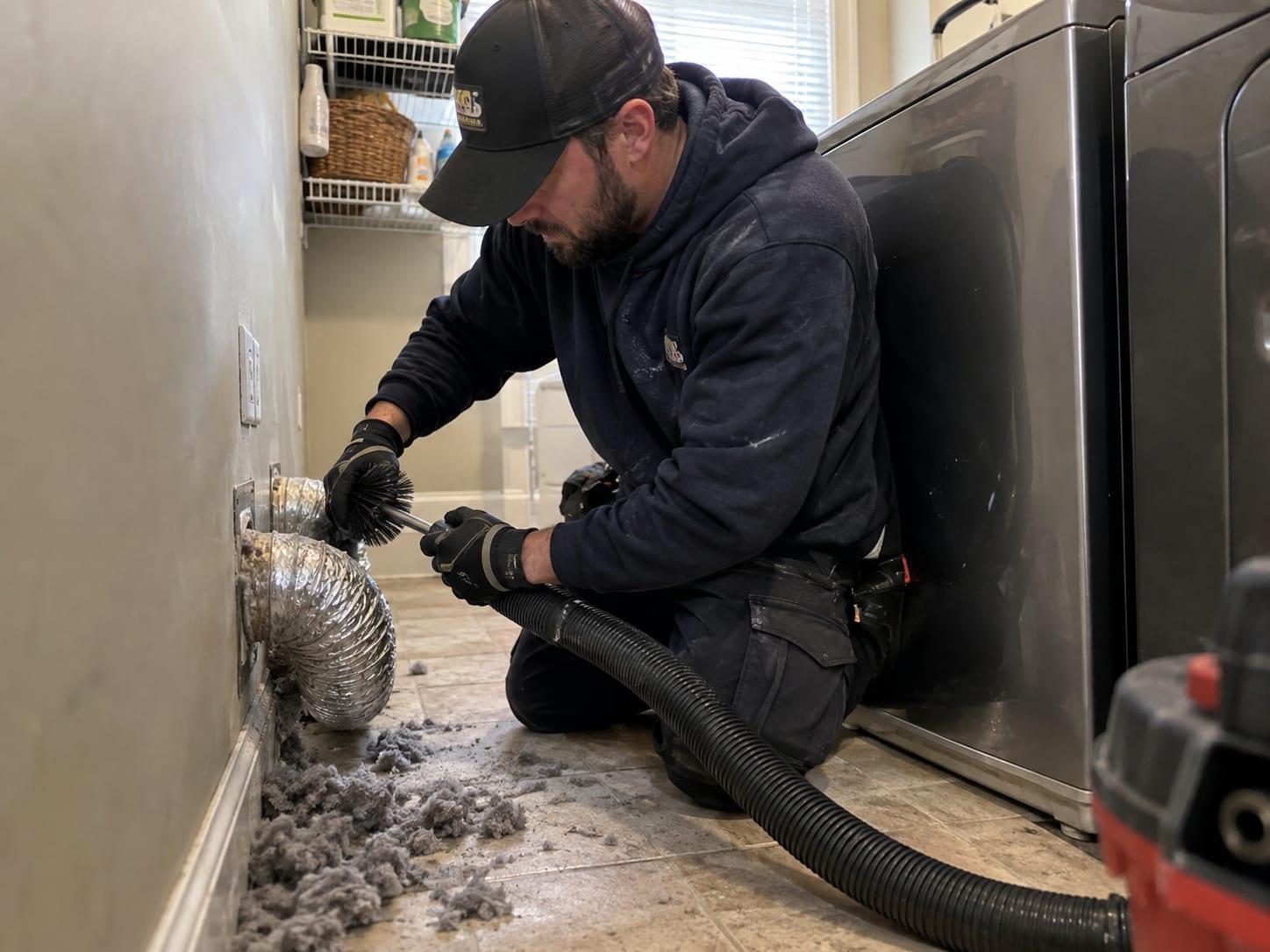
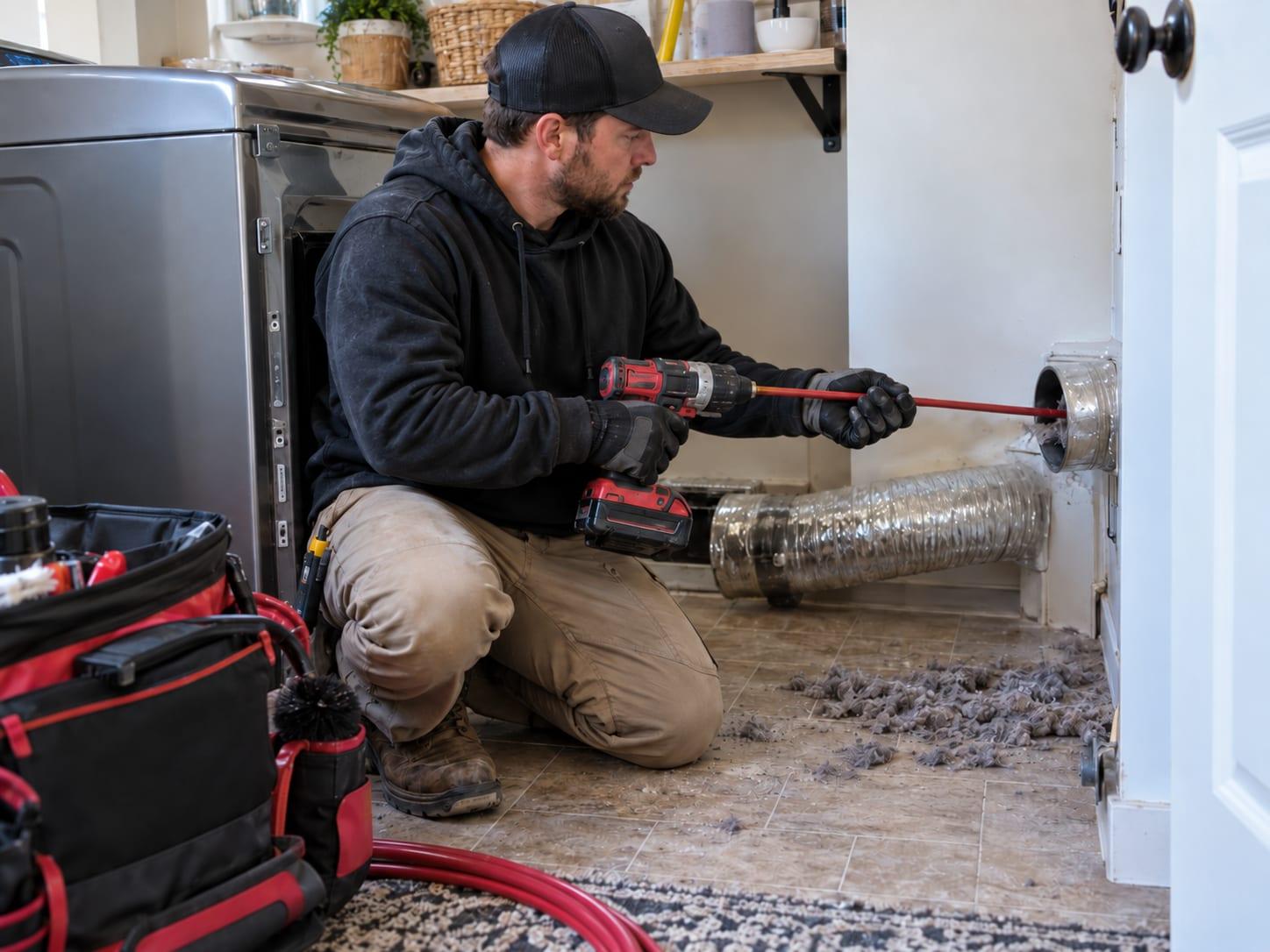
Rerouting changes the path the exhaust duct takes between the back of the dryer and the outside. Relocation moves the exit point itself: a new opening through a wall or roof, a new exterior hood, and the old opening closed and sealed. Most jobs combine both. The run gets fewer turns and less length. Smooth metal duct replaces flexible plastic or foil, and the new termination opens freely.
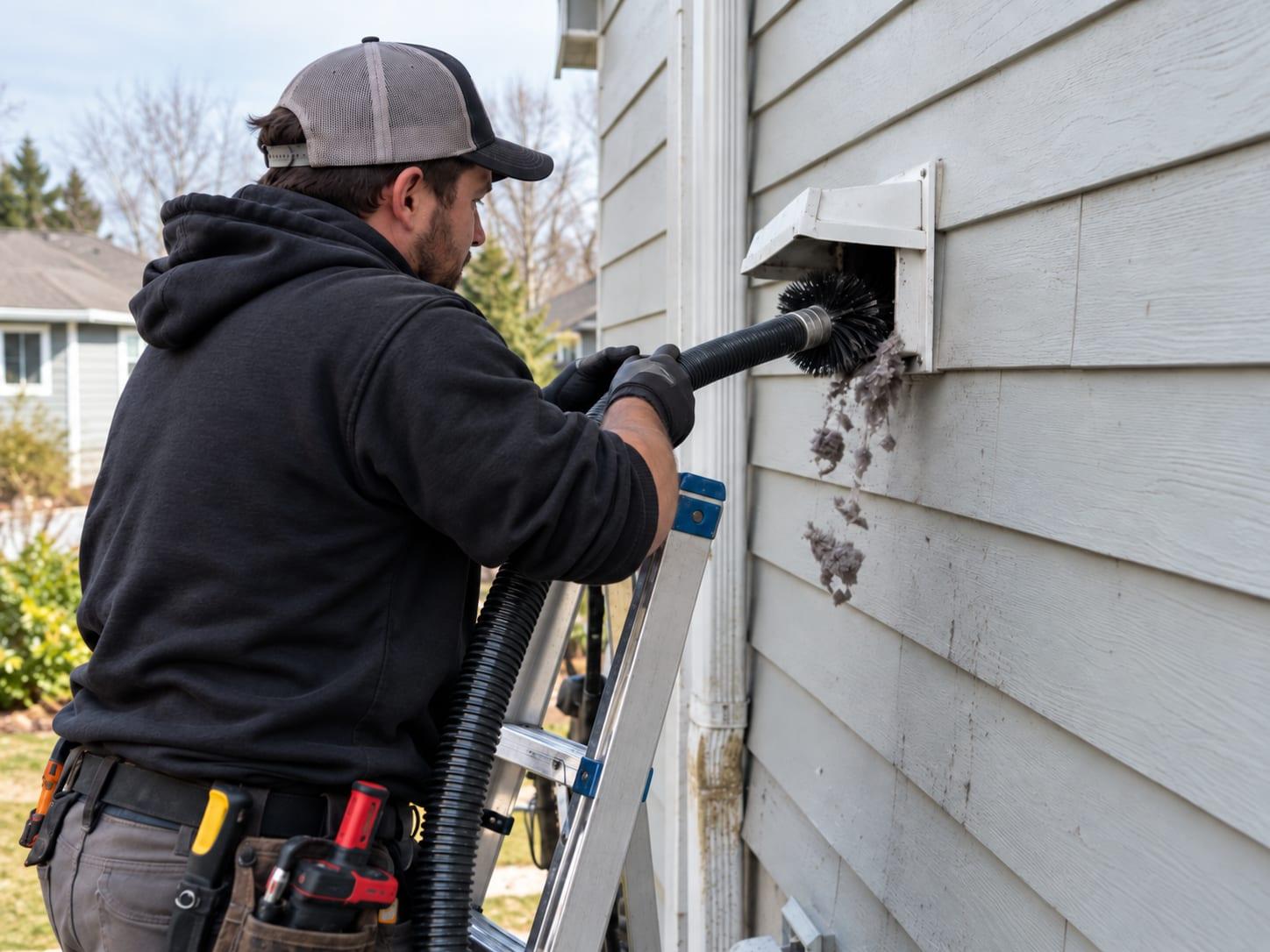
The goal is airflow. Every foot of duct and every elbow adds resistance, and dryer manufacturers publish a maximum duct length for their machines. When a run goes past that limit, the exhaust slows and lint settles inside the duct instead of leaving the house.
Getting ready for the visit
- Clear space around the dryer so it can be pulled out.
- If the dryer isn't overheating or smelling of burning, you can run an empty load first to compare airflow before and after.
- Make sure the outside vent hood can be reached.
Burning smell?
If you smell burning while the dryer runs, turn it off and unplug it until the vent is checked.
What we look at
- Vent length and number of bends
- Outside hood, flap and screen
- Airflow at the outside hood
- Joints and foil tape
- Crushed or kinked sections
- Connector behind the dryer
Signs a dryer vent needs a new route
- Clothes take longer than one normal cycle to dry, even with a clean lint screen
- The laundry room gets unusually hot, or the top of the dryer feels hot to the touch
- The duct travels a long way or makes several sharp turns before it reaches the outside
- The vent ends in an attic, crawlspace or garage instead of outdoors
- White vinyl or thin foil duct is crushed or kinked behind the machine
- The laundry area is being moved or remodeled, and the old vent no longer lines up
- A roof termination is hard to reach and keeps clogging
Some problems don't need a new route. If the route is reasonable and the duct is simply packed with lint, dryer vent cleaning is the right job. A nest or a single hard clog calls for clearing the blockage from the vent. When the run is fine and only the outside flap is broken or stuck, replacing the exterior vent cover may be all it takes.
What the visit involves, step by step
From old run to new route
Trace the existing run
We follow the duct from the dryer connection to the outside exit, noting its length, the number of elbows, the duct material and any damage.
Plan the new path
We look for the shortest practical route to an exterior wall or the roof, working around framing, plumbing and wiring. The planned length is checked against the dryer's limit.
Remove and close off
Duct that won't be reused comes out. An abandoned wall or roof opening is closed and sealed against weather and pests.
Install the new run
Metal duct goes in with each joint facing the direction of airflow. Joints are sealed with foil tape rather than screws, because screws snag lint.
Fit the termination
A new exterior hood with a damper flap is installed and sealed. The flap should open with the exhaust and close when the dryer stops.
Test the airflow
With the dryer running, we confirm that air exits strongly outside and that the connector behind the machine isn't pinched.
Safety and upkeep after a reroute
Lint burns easily, and a long, restricted duct gives it more places to collect near a heat source. With a gas dryer, a blocked or disconnected vent can also let combustion gases, including carbon monoxide, back into the house. A shorter route lowers both risks, but the vent still needs regular attention.
Keeping the new vent working
- Clean the lint screen with every load
- Check now and then that the outside flap opens while the dryer runs and closes when it stops
- Leave space behind the dryer so the connector duct isn't crushed against the wall
- Treat drying times that creep back up as the earliest sign of buildup
- Never cover the exterior opening with window screen or mesh, which traps lint
Booking a dryer vent reroute
Get in touch to request an estimate. Describe where the dryer sits and where the vent exits now, because photos of both ends make planning easier. Commercial and property-manager work is offered, so landlords and building managers can bring shared laundry rooms or several rental units to us as well.