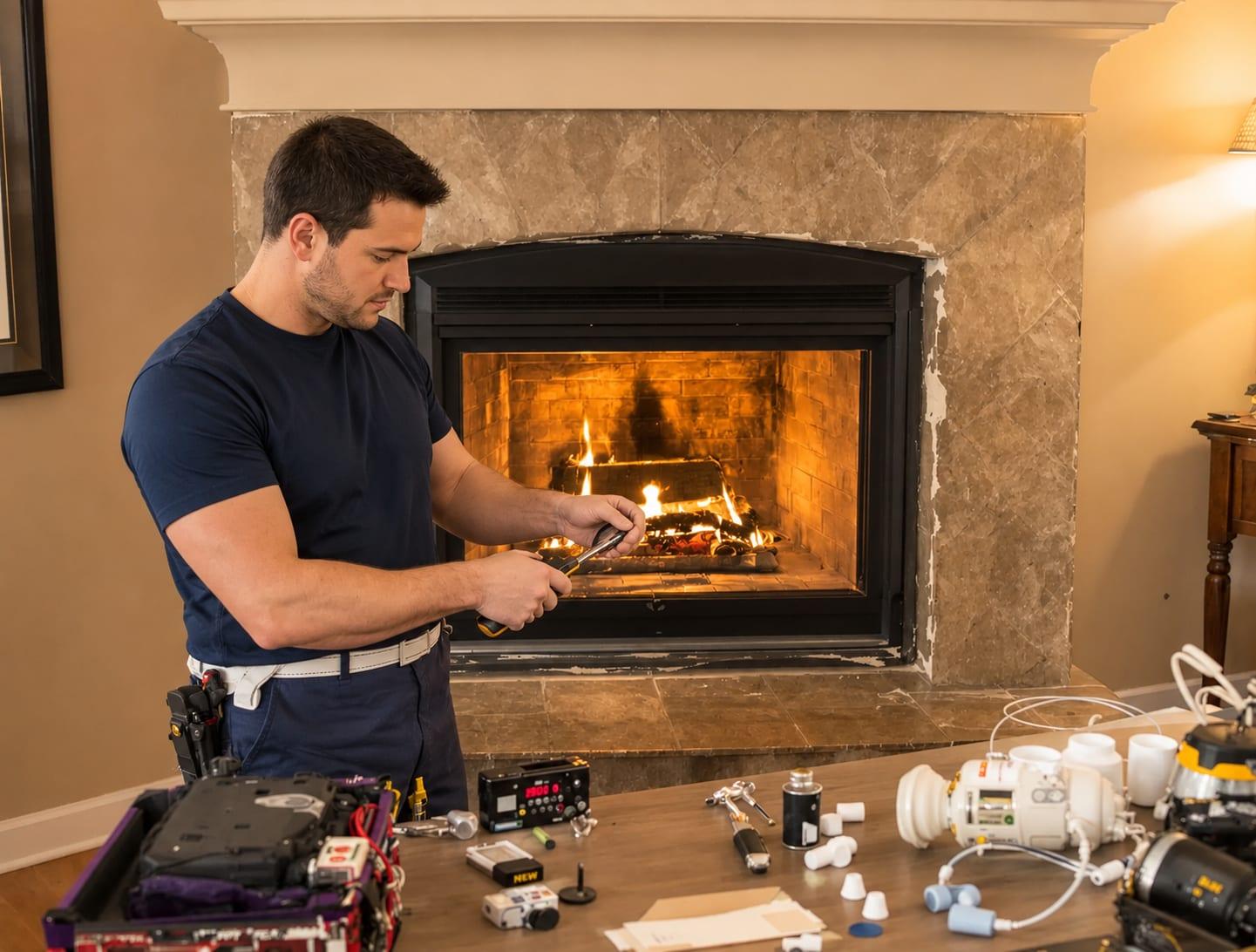
Old fireplace repair in brief
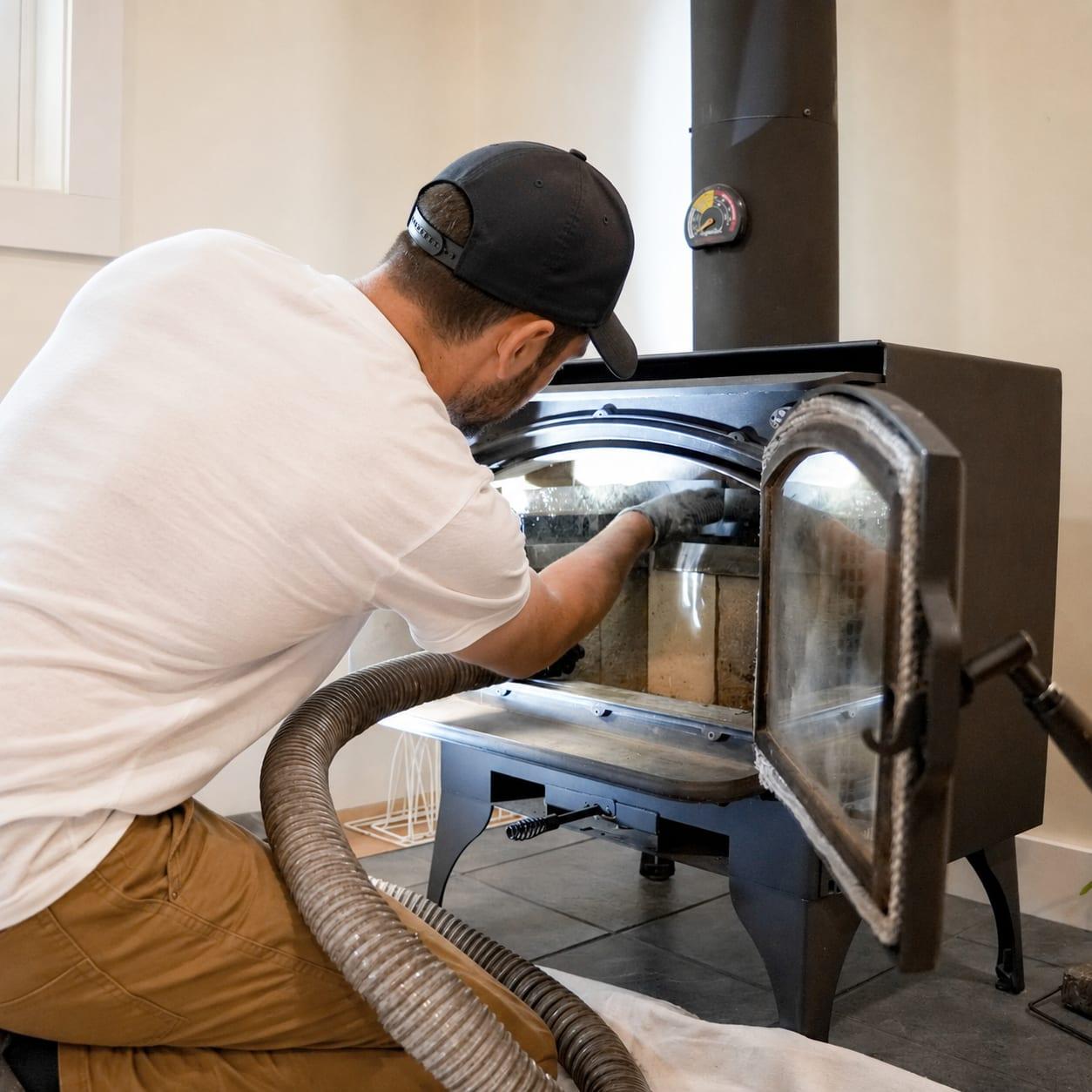
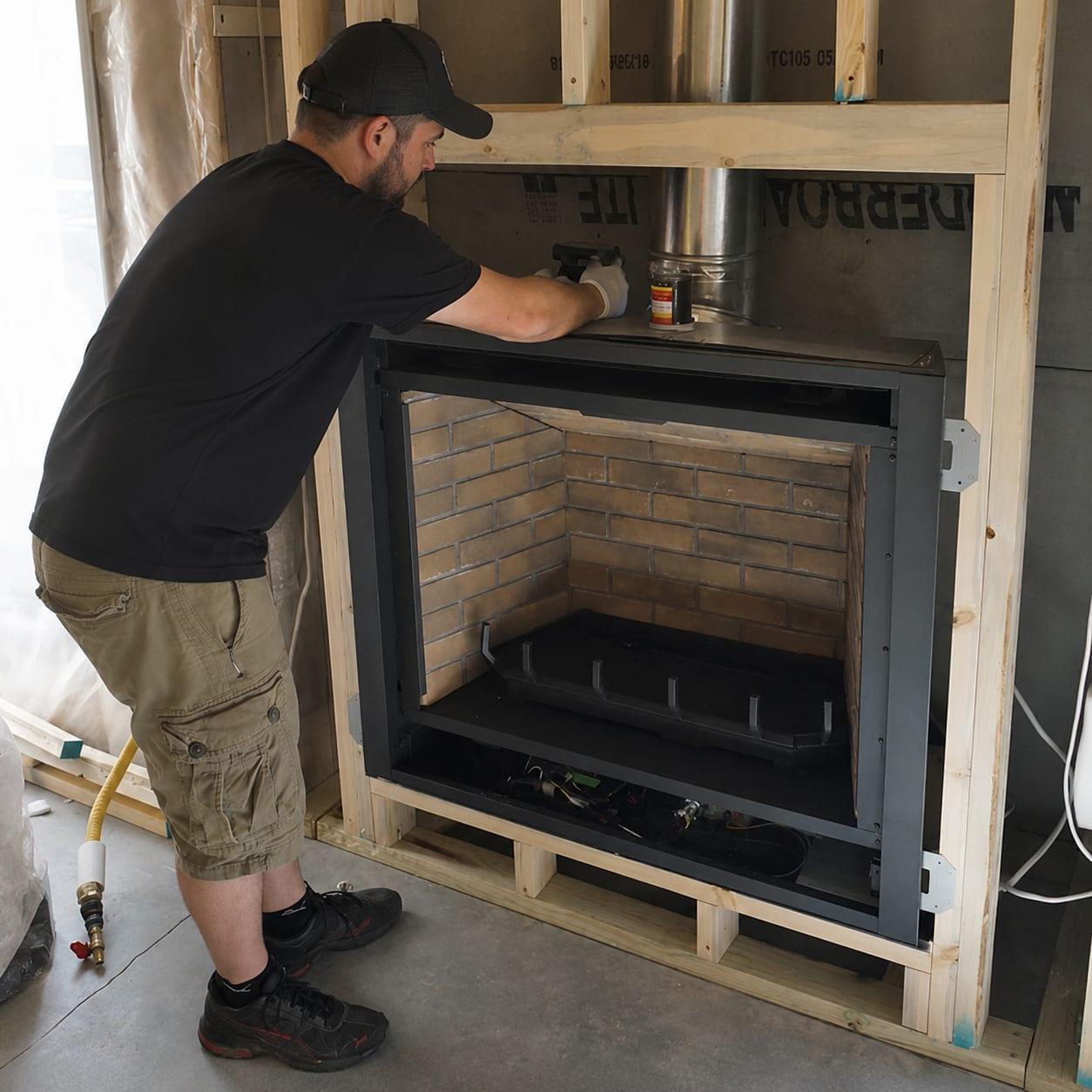
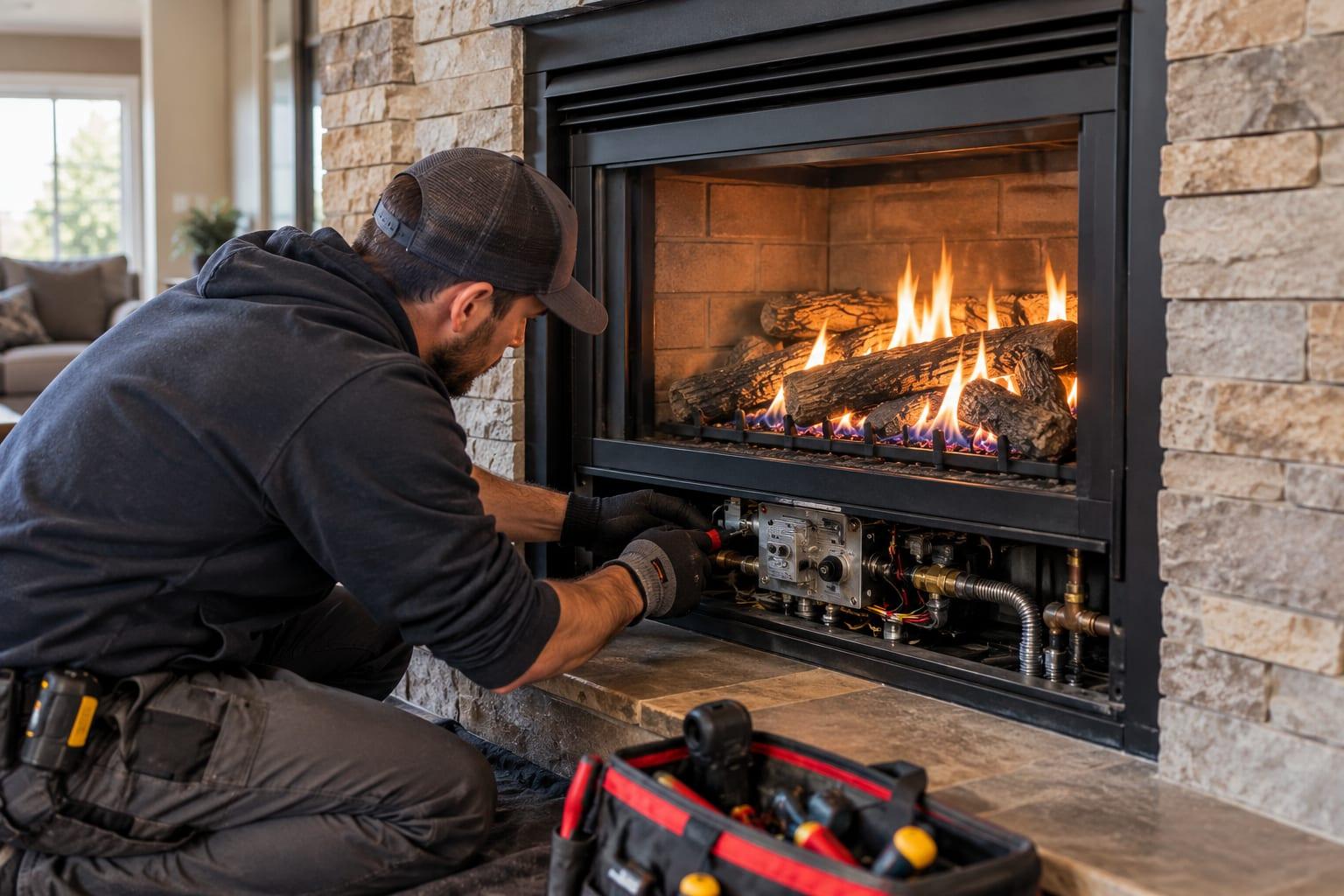
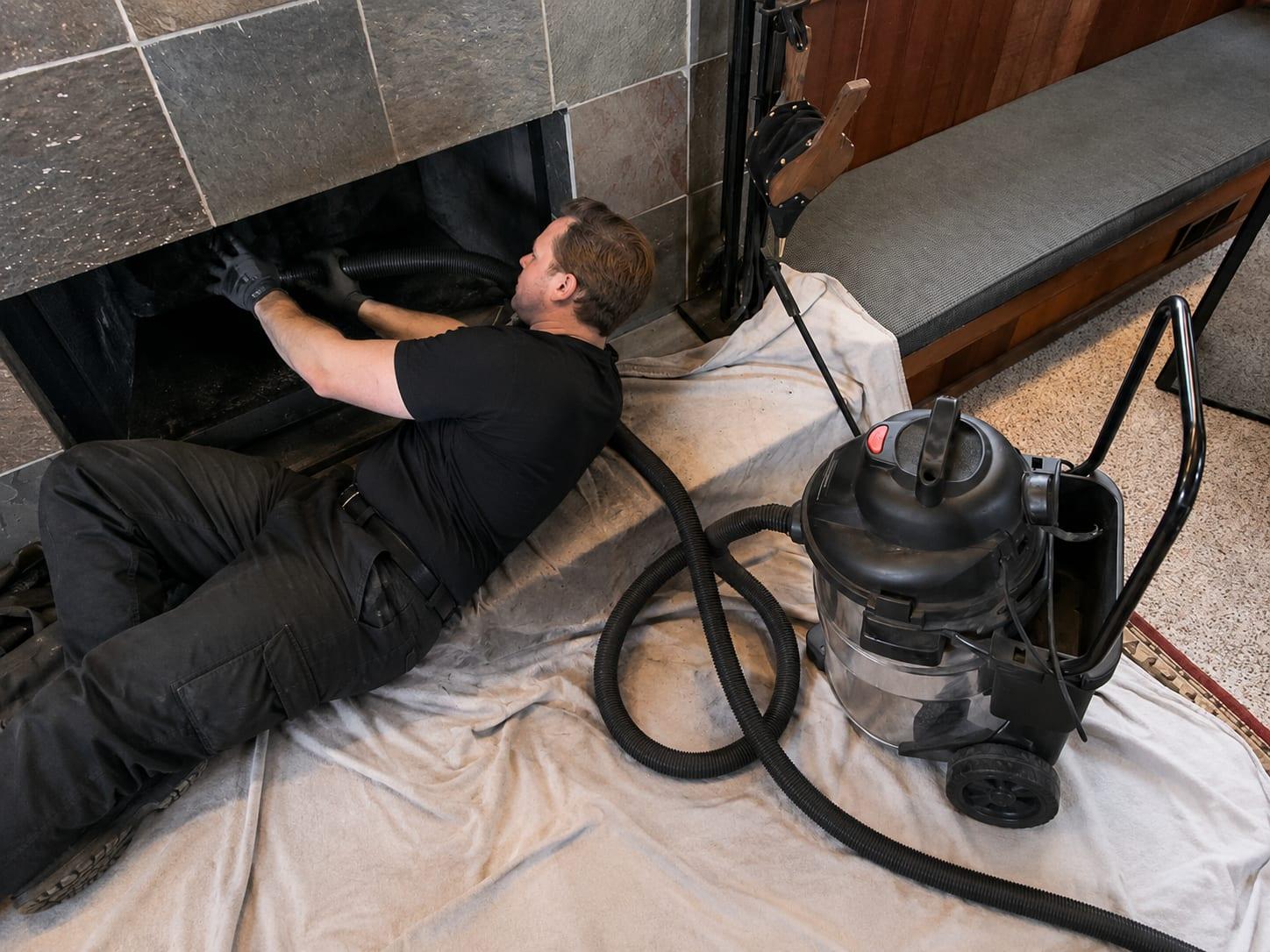
Old fireplace repair covers the parts that wear out with age: cracked or loose firebrick, failing mortar joints, a damper that sticks or no longer seals, and worn doors or glass. When a unit is past fixing, replacement means removing the old fireplace and fitting a new one. We look at the fireplace and the chimney above it first, then explain which path makes sense and why. For the full scope, read how old fireplace repair and replacement works.

What the city's rules and housing figures mean for an older fireplace
Close to half the homes date from before 1960
About 47% of the housing units in Menlo Park were built before 1960, and about 7% in 1939 or earlier (source: U.S. Census Bureau, American Community Survey 2019–2023 5-year estimates, table B25034, Year Structure Built).
If your home is one of them and the fireplace is original, the visit focuses on age-related wear: mortar joints, firebrick, the damper, and the connection between the firebox and the chimney. Older houses have often had work done over the years without records, so we look at what is there rather than assume.
Seismic reinforcement and anchoring for masonry chimneys
Menlo Park's chimney, fireplace and wood-burning requirements state that masonry or concrete chimneys in all structures assigned to seismic design categories C, D0, D1 and D2 shall be reinforced. They also state that these chimneys shall be anchored at each floor, ceiling or roof line more than 6 feet above grade, except where constructed completely within the exterior walls (source: Menlo Park city rules, Chimneys, Fireplaces and Wood Burning Requirements).
Who it applies to: owners of a home with a masonry or concrete chimney in a structure assigned to one of those categories. A chimney built entirely inside the exterior walls is excepted from the anchoring requirement. What it changes: when an old fireplace is being replaced or the chimney above it is being rebuilt, reinforcement and anchoring have to be planned from the start, not added later. If you aren't sure which seismic design category applies to your house, the city can confirm it.
What we note about the chimney before recommending repair or replacement
- Whether the chimney is masonry or concrete, or a factory-built metal system
- Whether it runs completely within the exterior walls or stands along the outside of the house
- Each floor, ceiling and roof line it crosses more than 6 feet above grade
- Visible cracking, loose brick or separation where the chimney meets the house
Work the city lists as exempt
The same requirements list these as exempt scopes of work: new and existing natural gas fireplaces, log sets and inserts; and existing wood-burning fireplaces, wood-burning heaters and other wood-burning appliances that are unaltered during construction and where the surrounding walls are undisturbed within 12 inches of the appliance (source: Menlo Park city rules, Chimneys, Fireplaces and Wood Burning Requirements).
Who it applies to: any owner planning work on or around a fireplace, including remodels that touch the wall around it. What it changes: the second exemption depends on two conditions, so we tell you before work starts whether a proposed repair alters the wood-burning appliance itself and whether it would open the surround, mantel wall or framing within that 12-inch zone. When neither happens, the job matches the exempt description. When either does, it no longer matches, and it's worth confirming with the city how the project is treated before work begins.
| Feature | Keep and repair the wood-burning fireplace | Replace it with a gas fireplace, log set or insert |
|---|---|---|
| How the city's exempt list describes it | Exempt when the appliance is unaltered during construction and walls within 12 inches are undisturbed | New and existing natural gas fireplaces, log sets and inserts are listed as exempt |
| Typical work | Mortar and firebrick, damper, doors and glass | Removing the old unit and fitting the new one |
How the city's exempt list describes it
- Keep and repair the wood-burning fireplace
- Exempt when the appliance is unaltered during construction and walls within 12 inches are undisturbed
- Replace it with a gas fireplace, log set or insert
- New and existing natural gas fireplaces, log sets and inserts are listed as exempt
Typical work
- Keep and repair the wood-burning fireplace
- Mortar and firebrick, damper, doors and glass
- Replace it with a gas fireplace, log set or insert
- Removing the old unit and fitting the new one
When repair is the right call, and when another job fits better
- Repair fits when the firebox, damper or doors are worn but the fireplace and chimney are structurally sound.
- Replacement fits when the unit is damaged beyond repair or no longer suits how you use the room.
- If you don't know the condition of the flue and chimney yet, start with a chimney inspection before deciding on repair or replacement.
- If you're weighing whether an insert or a separate stove would serve the room better, read fireplace insert vs freestanding wood stove before deciding.
More about this service and the area
The old fireplace repair and replacement service is described in full on its own page, including the kinds of damage we fix. The overview of everything we handle for homeowners in Menlo Park covers the other fireplace and chimney work available there.
Free estimates.
Request an estimate and we'll look at the fireplace and chimney, then explain whether repair or replacement makes sense.
Sources (2)
The sources of the Menlo Park facts on this page.
- 1U.S. Census Bureau, American Community Survey 2019–2023 5-year estimates, table B25034 (Year Structure Built)
- 211 revised chimneys fireplaces wood burning requirments 202108041933063807