The short answer
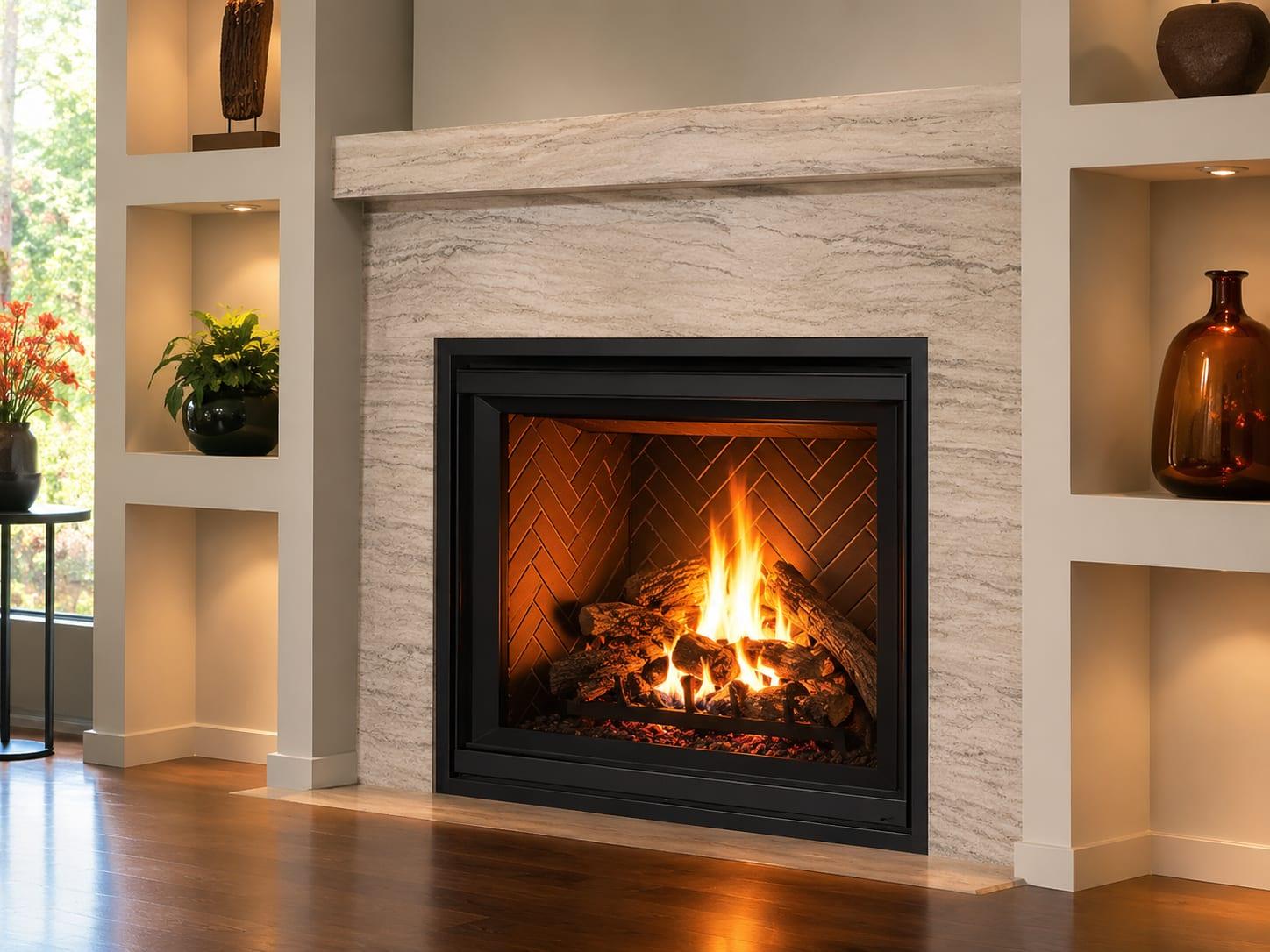
Choose a fireplace insert if you already have a structurally sound fireplace and chimney and want that opening to heat the room instead of sending most of its warmth up the flue. Choose a freestanding wood stove if there is no fireplace where you want the heat, if you want the most heat coming off the unit itself, or if you have the floor space and like a stove standing in the room. Both burn wood in a closed firebox behind a glass door, and both depend on a correctly sized, clean and intact venting system.
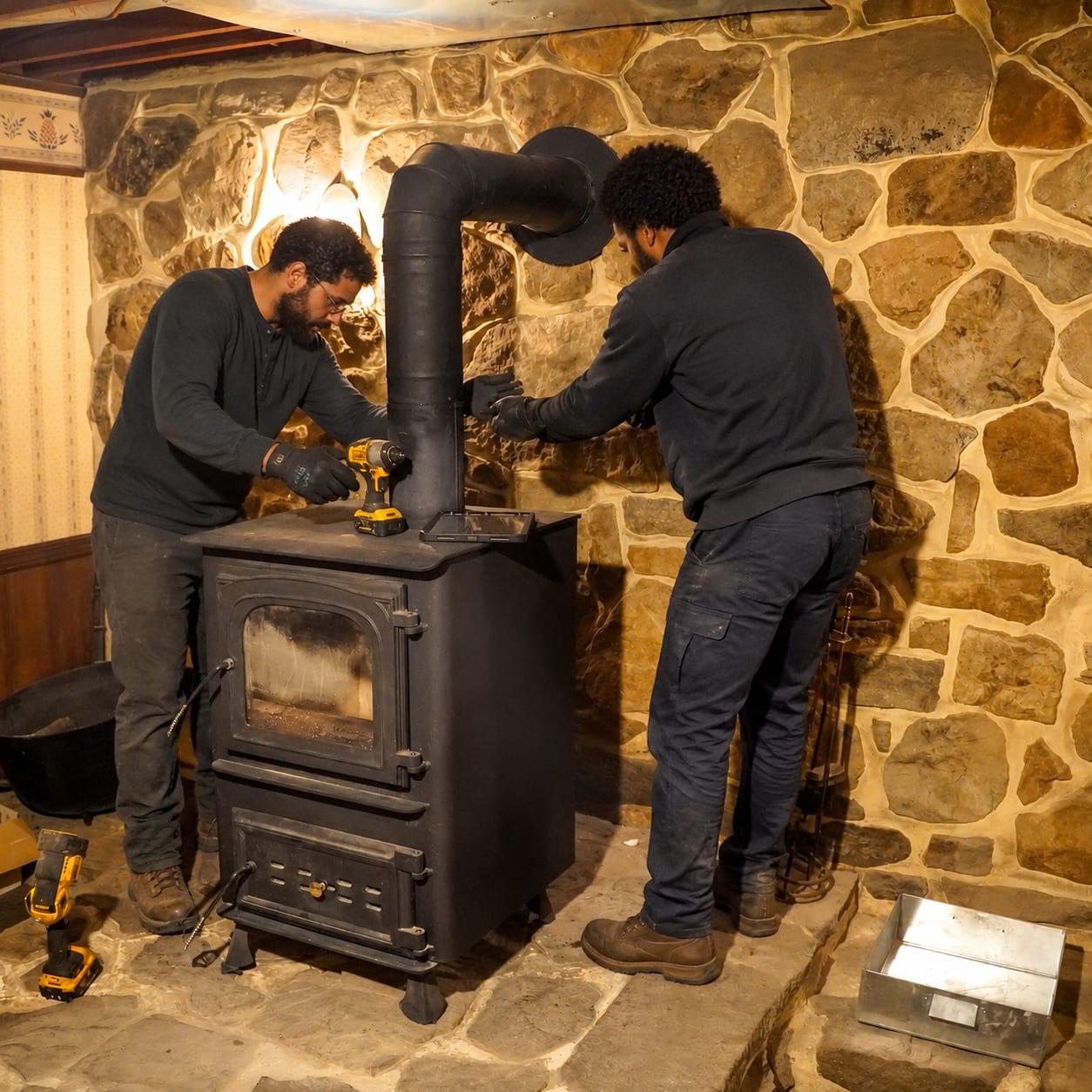
How an insert and a freestanding stove compare
| Factor | Fireplace insert | Freestanding wood stove |
|---|---|---|
| Where it goes | Inside an existing fireplace opening | On a noncombustible hearth pad anywhere with room for clearances and a vent route |
| Venting | Usually a liner run the full height of the existing chimney | Stove pipe into an existing chimney, or a new factory-built chimney through the ceiling or wall |
| How heat reaches the room | Mostly from the front face; many models rely on a blower to move warm air out | Radiates from the top, sides and front; a blower is optional on many models |
| Floor space | Little beyond the hearth it sits on | Needs floor space plus required clearances to walls and furniture |
| Look | The fireplace stays the focal point, with a surround covering the opening | The stove itself becomes the focal point |
| Firebox size | Limited by the size of the fireplace opening | A wider range of sizes to choose from |
| Cleaning access | The chimney is often swept through the insert or with the insert pulled out | The connector pipe and chimney are usually easier to reach |
When a fireplace insert is the better fit
- You have a working masonry or compatible fireplace in the room you want to heat.
- An open fire loses too much heat and pulls warm air out of the house, and you want a closed, controllable fire instead.
- You want to keep the fireplace look without giving up floor space.
- The chimney is in good shape and can take a properly sized liner.
An insert is only as good as the fireplace it goes into. Cracked firebrick, a damaged smoke chamber or loose masonry should be dealt with first, and wood burning fireplace repair is often the step that comes before an insert, not after.
Diagnose a smoky fireplace before you choose
Closing in the fire does not automatically fix a draft problem. If your open fireplace already puts smoke into the room, find out what causes smoky fireplace trouble first; a blockage, a short chimney or a mismatched flue can carry over to an insert or a stove.
When a freestanding wood stove is the better fit
- There is no fireplace, or the fireplace is in a room you rarely use.
- You want the strongest radiant heat from the unit, including from its sides and top.
- You have room for the stove, its hearth pad and its required clearances to combustibles.
- You want to place the heat source centrally so it reaches more of the house.
- The existing fireplace is too small, too shallow or in too poor a condition to take an insert.
A freestanding stove can sometimes sit on an existing hearth and vent into the old chimney, which gives you some of both worlds. Where there is no chimney at all, it needs a new venting system, usually a factory-built metal chimney.
What both options need
Shared requirements
- A venting system sized to the appliance and in sound condition
- Clearances to combustibles as listed for that specific unit
- A noncombustible floor protection area of the size the unit requires
- Dry, seasoned firewood, which keeps creosote down and the glass clearer
- Regular inspection and sweeping once it is in use
Questions that help you decide
Answer these before choosing
- Is there a sound fireplace in the room where you want the heat?
- Do you want to keep the fireplace look, or would you rather have a stove in the room?
- How much floor space can you give up, including clearances?
- Do you want to heat one room or move heat toward the middle of the house?
- Are you prepared to haul, stack and dry firewood, or would another fuel suit you better?
If the last question gives you pause, our guide to pellet stove vs wood stove covers a fuel that loads from a hopper, and our guide to electric vs gas fireplace insert covers inserts that burn no wood at all.
Upkeep once it is installed
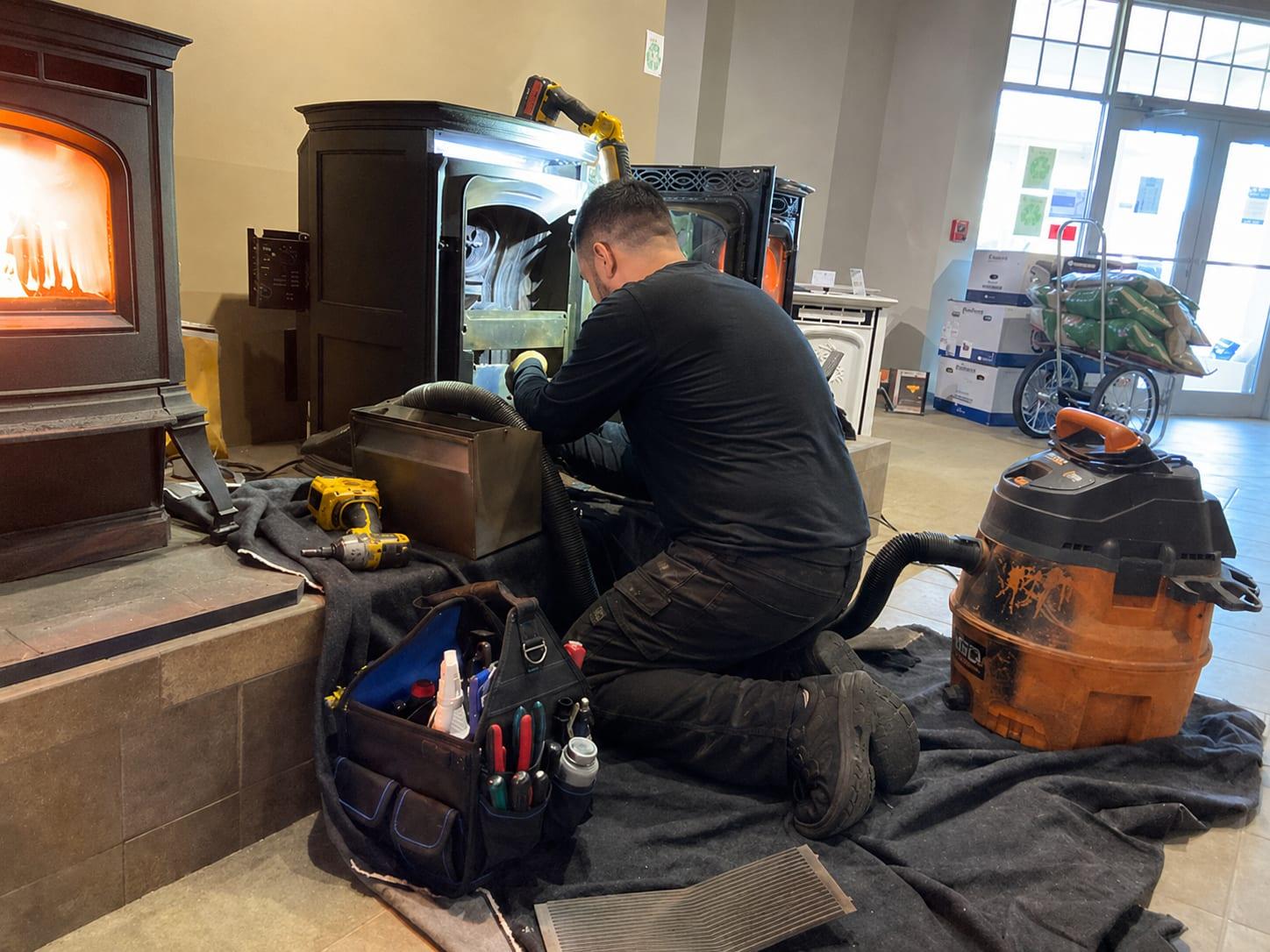
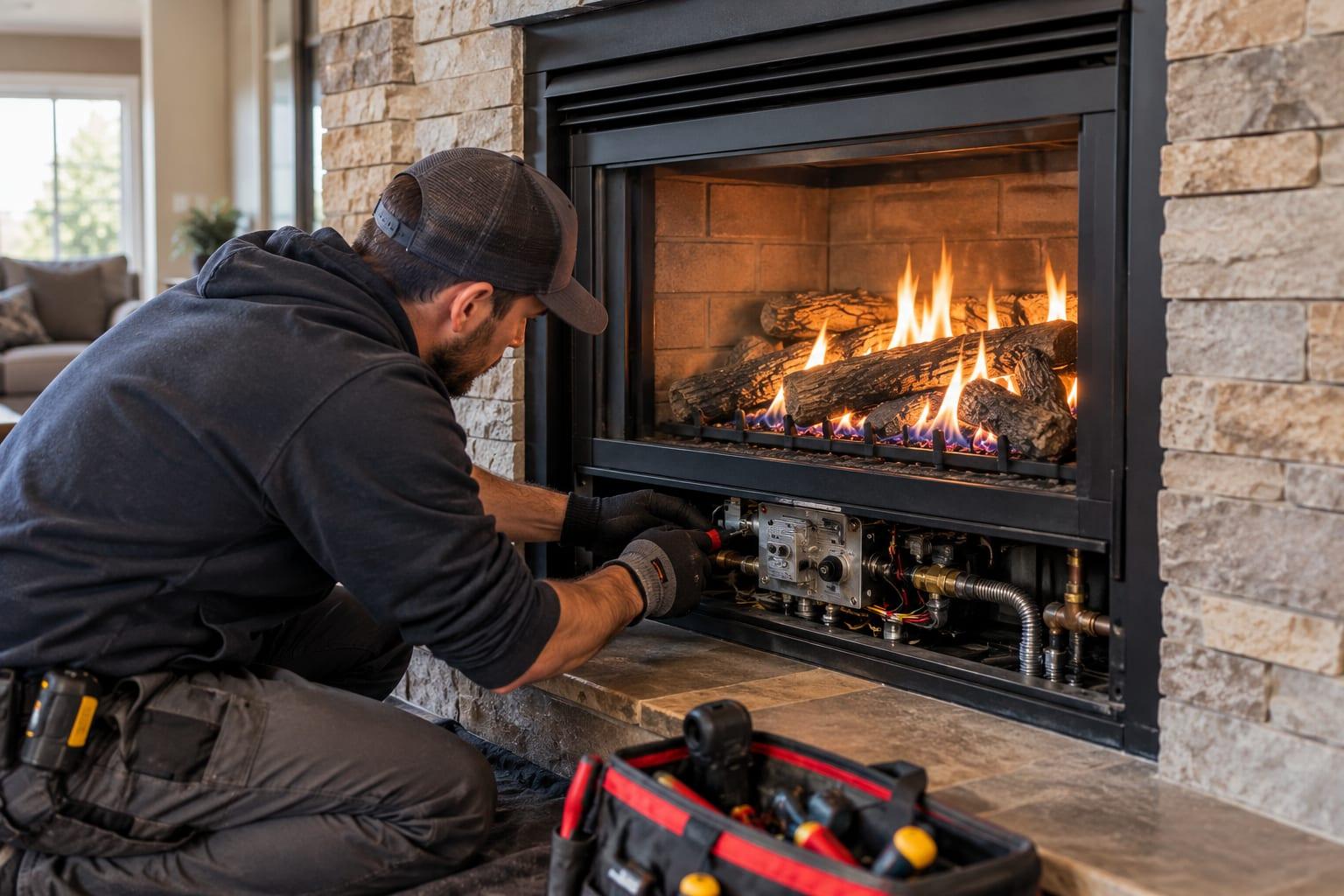
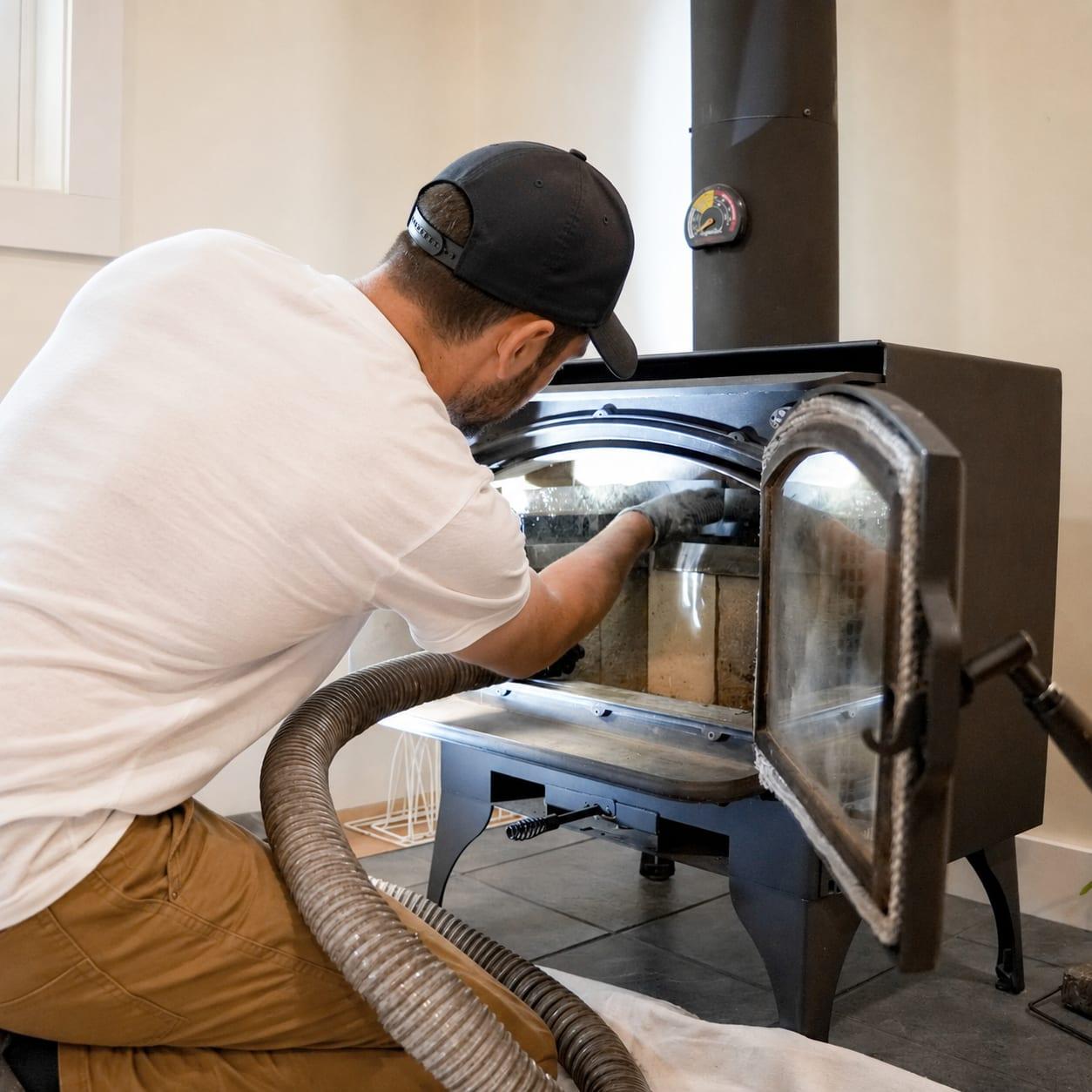
An insert's liner and the space behind its surround collect creosote and debris that you cannot see from the room, which is why a fireplace insert cleaning service usually involves working through the insert or pulling it out. A freestanding stove's pipe and chimney are generally easier to reach, but its baffle and connector still need attention. On either one, glass that clouds over quickly often points to wet wood or a fire run too cool; fixing cloudy fireplace glass starts with those two habits.
We handle fireplace insert installation, wood stove installation, and the cleaning and repairs that keep either one burning well, and estimates are free.