On this page
What chimney blockage removal involves
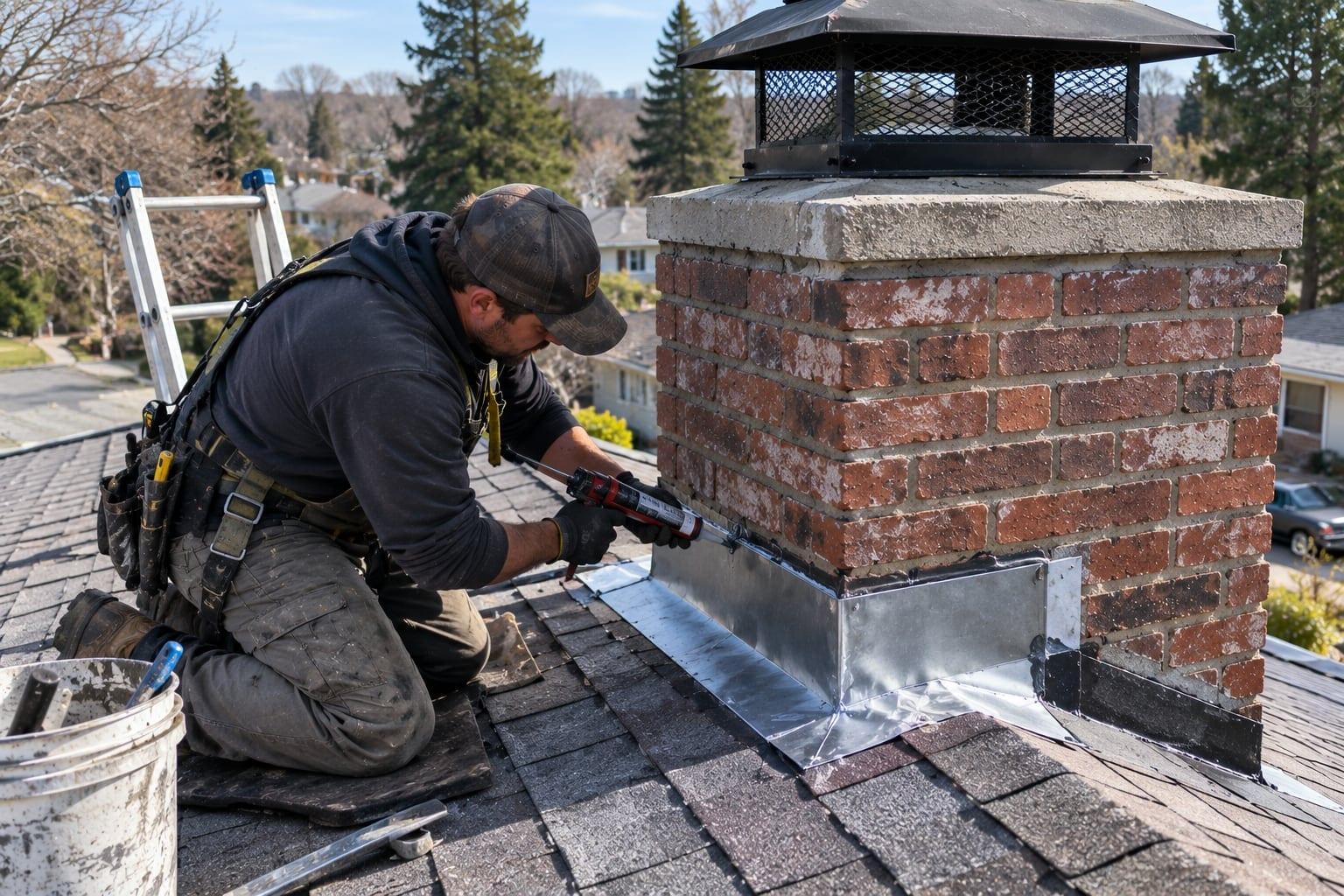
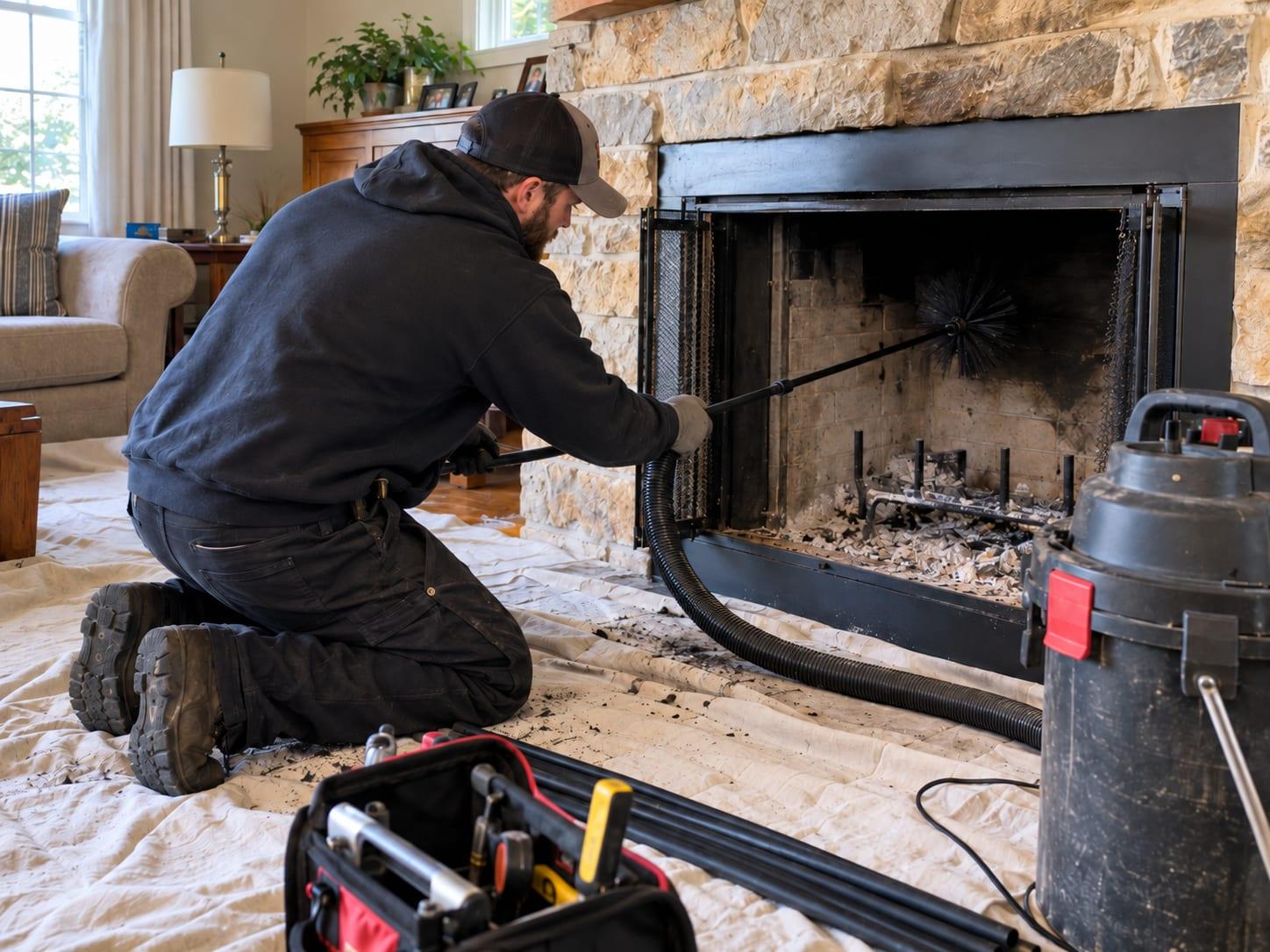
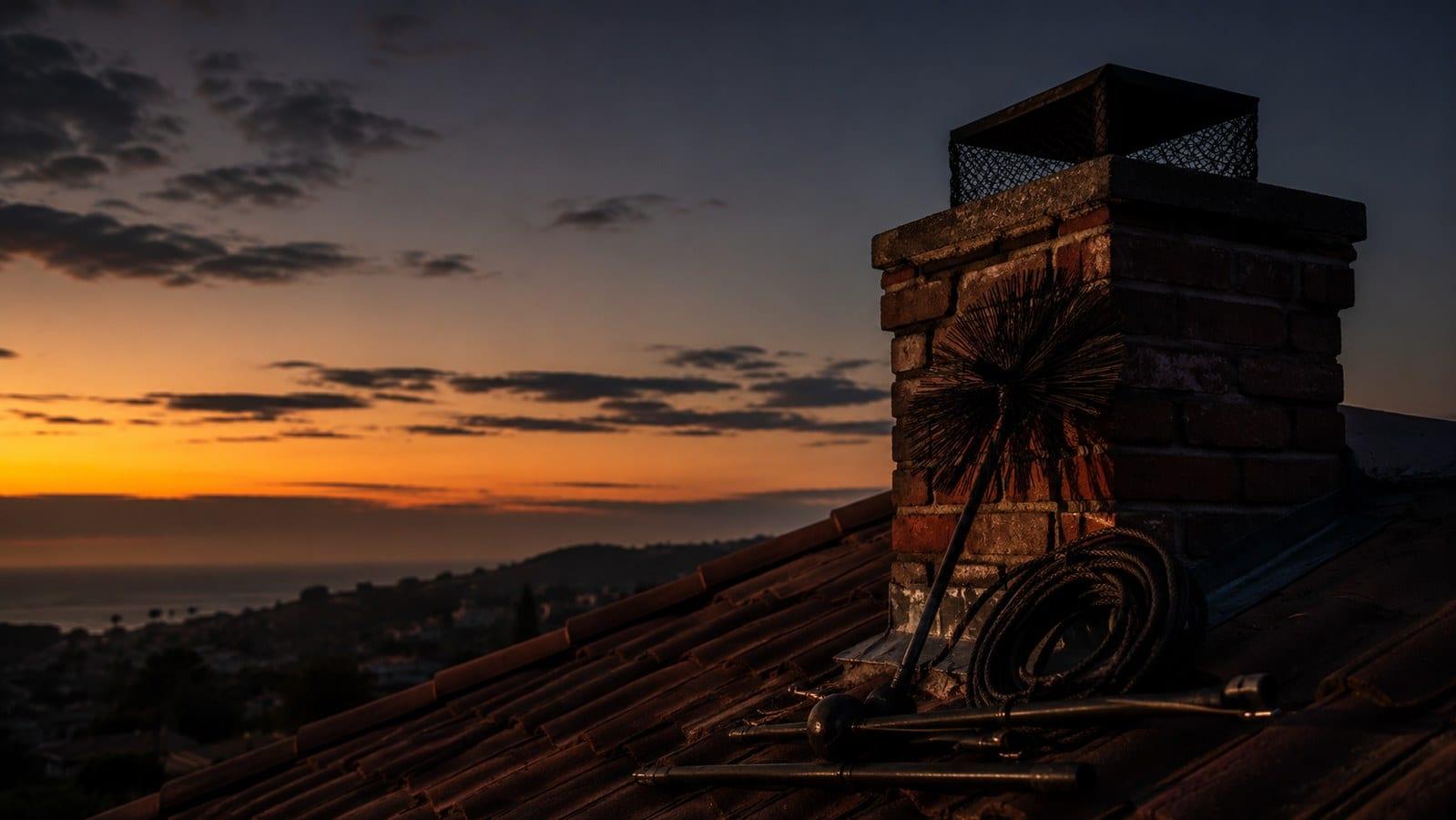
A flue has one job: carrying smoke and combustion gases out of the house. Blockage removal clears whatever is stopping it. Common culprits are a nest, leaves and twigs blown in from above, a piece of flue tile or mortar that has fallen loose, a dead animal, or creosote built up thick enough to narrow the flue. Each one comes out differently. Loose debris can usually be pulled or brushed out. Fallen masonry has to be handled carefully so it doesn't damage the damper. Hardened, glazed deposits may need dedicated creosote removal rather than routine brushing.
What gets checked
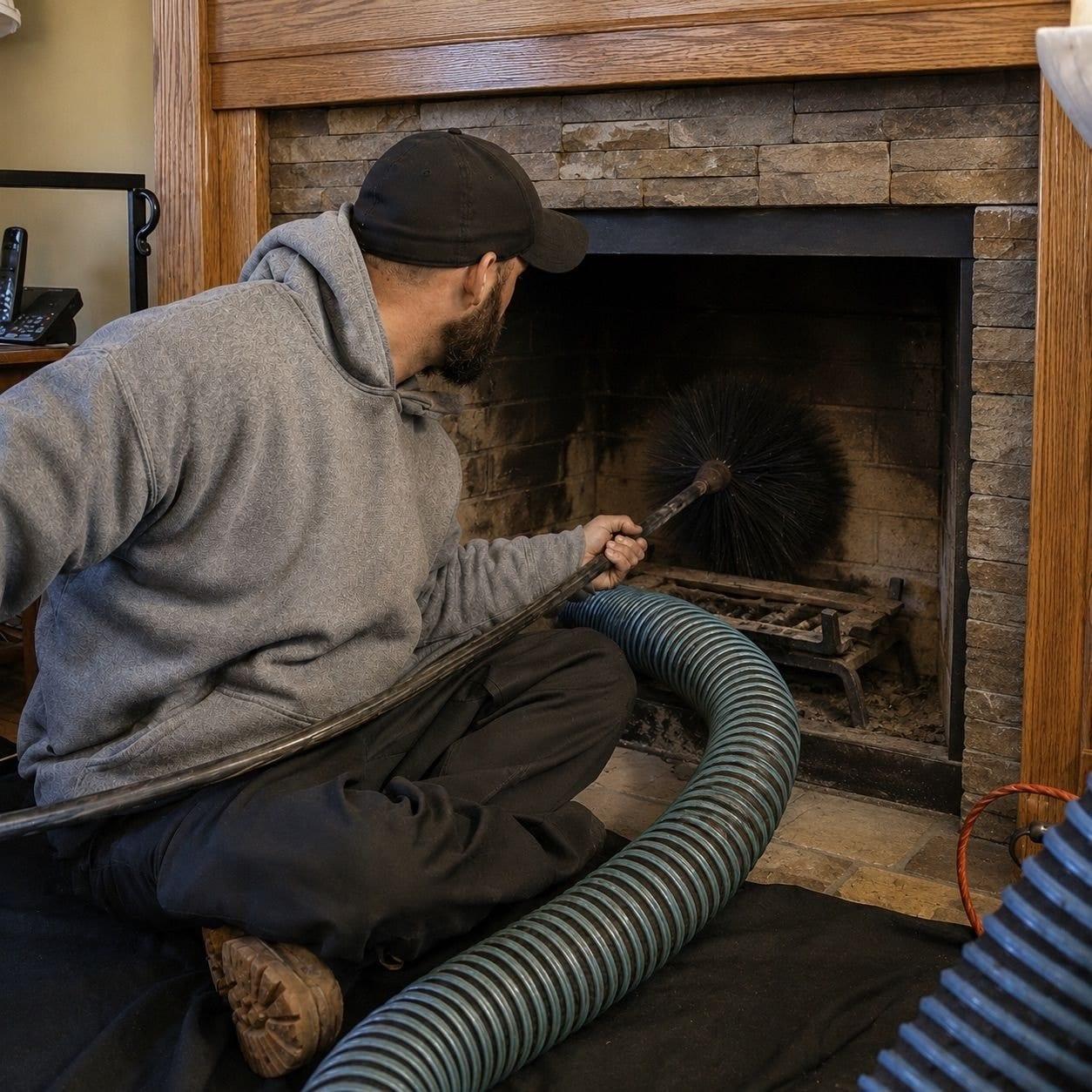
- Cap and screen condition, where it can be seen safely
- Creosote level and type in the flue
- Visible liner sections for cracks or gaps
- Signs of animals or nesting material
- Damper opening, closing and seal
- Smoke shelf and smoke chamber
- Draft — how readily smoke moves up the flue
Signs of a chimney fire
A loud roaring sound, dense smoke or sparks from the top of the chimney can mean a chimney fire. Get everyone out and call 911; have the chimney inspected before the next fire.
How to prepare
- Keep pets in another room while the work area is open.
- Note the make and model of any insert, stove or gas unit if you have it.
- Make sure the technician can reach the roof or attic access if it's needed.
- Clear a few feet of space in front of the hearth or appliance.
Signs the chimney is blocked
- Smoke spilling into the room instead of drawing up the flue
- A fire that's hard to start or keep burning
- Leaves, twigs, pieces of tile or mortar landing in the firebox
- A stale or rotten smell from the fireplace, often worse in humid weather
- Little or no daylight when you look up a straight flue with the damper open
- If a carbon monoxide alarm sounds, get everyone outside and call 911.
If a carbon monoxide alarm sounds
Stop using the fireplace or stove, get everyone outside and call emergency services before anything else. A blocked flue can push combustion gases back into the home.
What the visit involves, step by step
Talk through the symptoms
We start with what you've noticed. Then we look at the firebox, damper and smoke chamber.
Locate the blockage
We check the flue from below and from the roof. For obstructions out of sight, a chimney camera inspection shows exactly where they sit.
Clear it
Debris is pulled or brushed out from the top or bottom, depending on where it is. Nests and remains are bagged and removed. If a live animal is involved, the job becomes chimney animal and nest removal.
Confirm the flue is open
We check that the flue is clear along its full length. We also look for the cause, such as a missing cap or crumbling flue tile.
Recommend next steps
Heavy buildup points to a full chimney sweep. Falling tile or mortar points to a repair, so the blockage doesn't come back.
Booking blockage removal
Call or request an estimate and describe what's happening when you use the fireplace or stove. If a smell hangs on after the flue is clear, chimney odor removal deals with residue left in the flue. We also take on commercial and property-manager work.