On this page
What brick chimney installation involves
Brick chimney installation means building a new masonry chimney where there isn't one, or where the old one has been removed entirely. It is different from patching or partly rebuilding an existing stack. The chimney has to carry its own weight, contain heat and smoke safely, and keep water out of the house for decades. Every part of the build works toward those three jobs.

A brick chimney is a structure, not a single part. A typical installation includes:
- A footing or foundation sized to carry the weight of the masonry.
- The firebox and smoke chamber, or the connection point for a stove or insert, depending on what will burn below.
- A flue liner set inside the brick as the chimney rises, sized to match the appliance.
- Brick and mortar walls laid around the liner with the required clearances to wood framing.
- A crown at the top to shed water away from the brick and the flue.
- Flashing where the chimney passes through the roof, and a cap over the flue opening.
Signs a new brick chimney is the right project
Most homeowners come to this work from one of the situations below. The first step is always confirming that new construction, and not a repair, is what the home actually needs.
When brick chimney installation makes sense
- The house has no chimney and you want a wood-burning fireplace, wood stove or other appliance that needs a masonry flue.
- An addition or major remodel is creating a new space for a fireplace.
- An existing chimney has been torn down, or has failed to the point that little of it can be saved.
- A prefab chimney and its chase are being replaced with real masonry.
- You want the look and long service life of brick and are planning the fireplace around it.
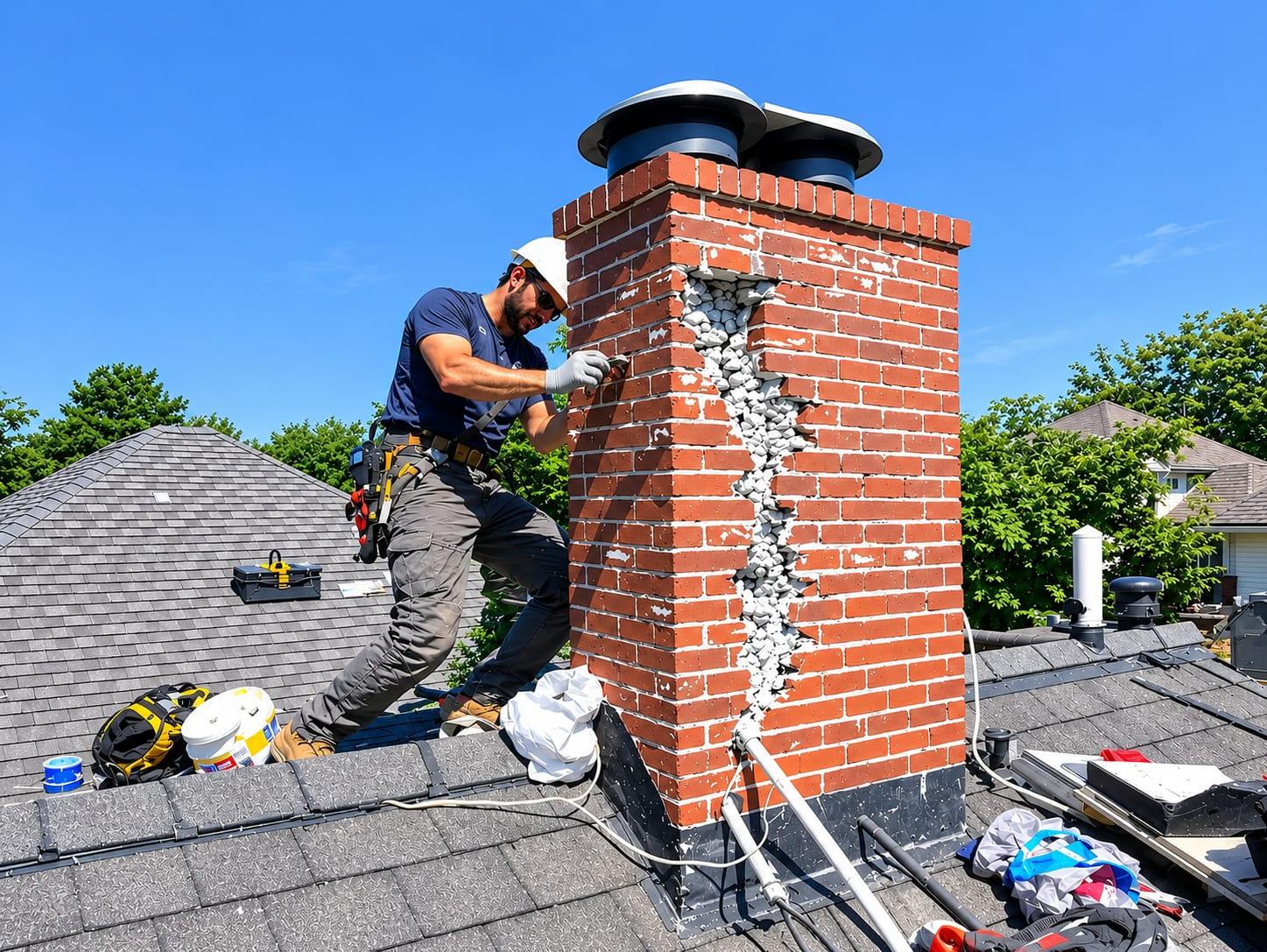
If the chimney is standing but leaning, crumbling or shedding brick, it may need a partial or full rebuild of the existing structure rather than a brand-new one. Our chimney rebuild service covers that work, and our guide to chimney needs immediate repair explains which warning signs mean you should stop using the fireplace now.
Some homeowners are deciding between masonry and a factory-built system. The trade-offs in weight, build time and appearance are laid out in our guide to masonry vs prefab chimney.
The job, step by step
How a brick chimney installation runs
Free estimate visit
We look at where the chimney will go, what will burn in it, how the roof and framing are laid out, and whether there is any existing masonry to remove. Estimates are free.
Planning the chimney
Height, flue size, liner type and the footing are worked out to suit the appliance and the house. A flue that's too large or too small for the fireplace or stove causes draft and smoke problems, so sizing comes first.
Footing and base
The foundation goes in first. Masonry is heavy, and the footing carries the whole chimney.
Firebox, smoke chamber or appliance connection
For an open fireplace, the firebox and smoke chamber are built in. For a stove or insert, the base and connection are prepared for that appliance.
Liner and brickwork
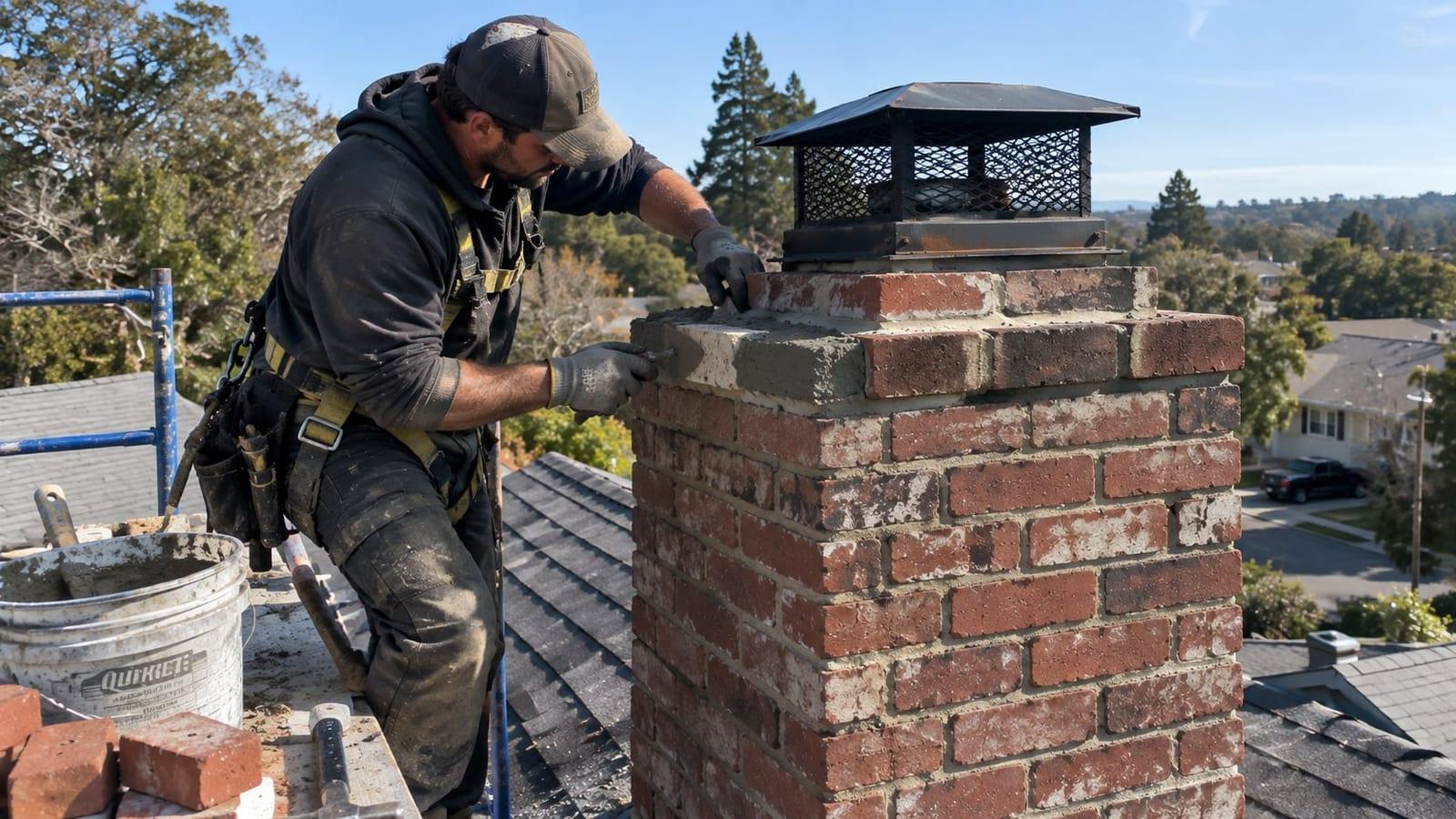
The flue liner is set in place and the brick is laid up around it course by course, keeping the required clearances to framing as the chimney passes through floors and the roof.
Crown, flashing and cap
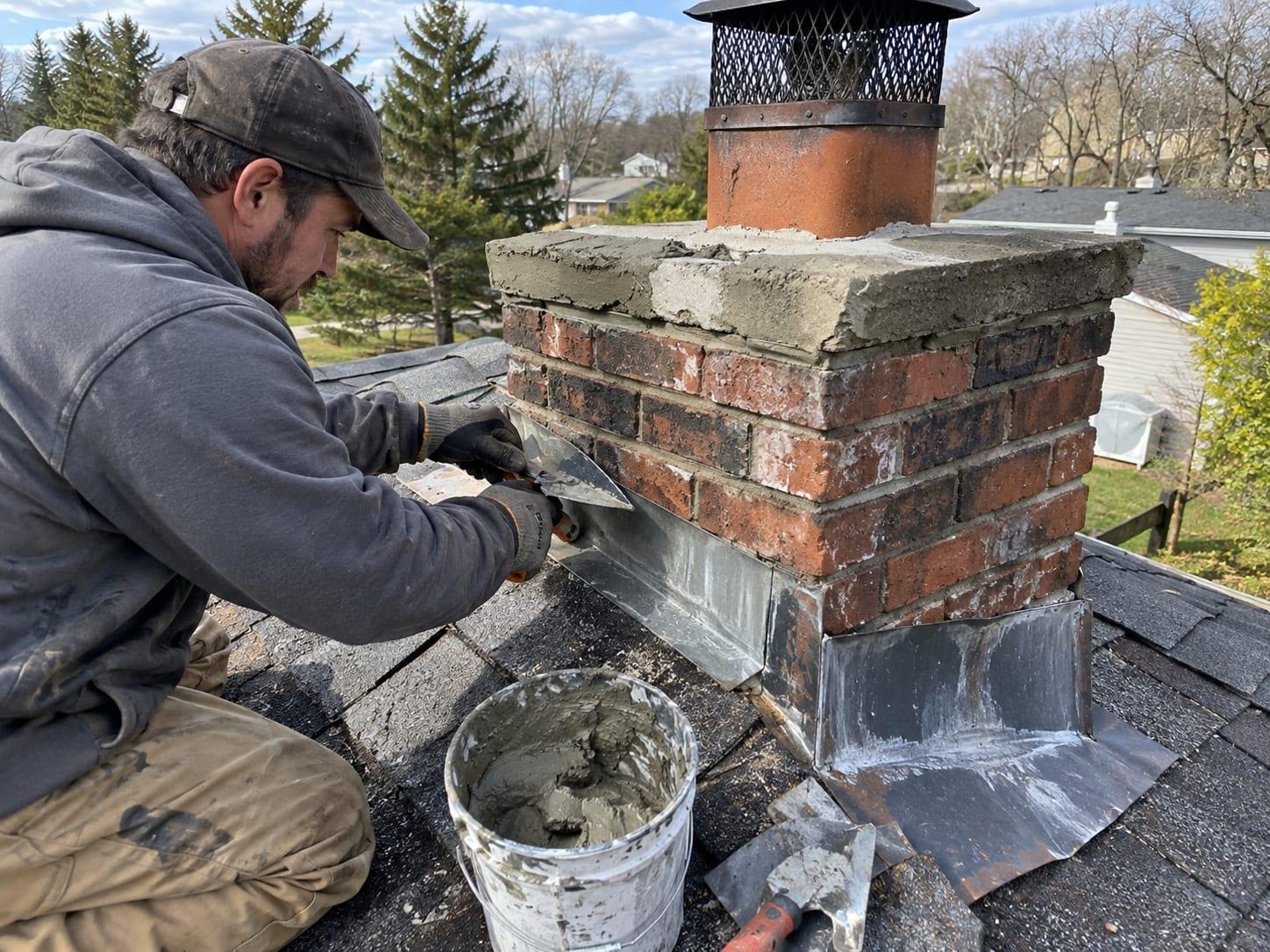
At the top, a crown is formed to shed water, flashing is installed where the chimney meets the roof, and a cap goes over the flue.
Final check before the first fire
We walk through the finished chimney with you and explain how long the new masonry should cure before you light a full fire.
Liners, caps and the parts that protect the brick
The liner is the part that makes a brick chimney safe to burn in. It contains heat and combustion gases and keeps them away from the mortar joints and nearby framing. You can read how chimney liner installation works, including how liners are matched to wood, gas and other fuels.
The top of the chimney takes the most weather. A well-formed crown and a good cap keep rain, debris and animals out of the flue. The chimney cap installation service is part of finishing a new chimney, and the cracked chimney crown causes signs and repair guide shows what to watch for in the years after the build.
Planning for gas
Gas fireplace and gas appliance work is offered. If the new chimney will serve a gas fireplace or gas logs, tell us at the estimate so the flue and liner are planned for that fuel from the start.
Keeping a new brick chimney in good shape
New masonry still needs care. Let the mortar cure before the first hot fire, burn dry wood if it's a wood-burning fireplace, and have the chimney inspected and swept on a regular schedule so creosote doesn't build up in the new flue. Check the crown, flashing and cap after heavy storms, because most water damage in brick chimneys starts at the top.
Booking a brick chimney installation
Free estimates. Call or request an estimate, and tell us what you plan to burn, where you'd like the chimney, and whether an old chimney or prefab unit is coming out.
Commercial and property-manager work is offered, so the same request covers rental homes and business properties. For problems with an existing chimney that can't wait, emergency calls are accepted, and 24-hour service runs seven days a week.