On this page
What chimney animal screen installation is
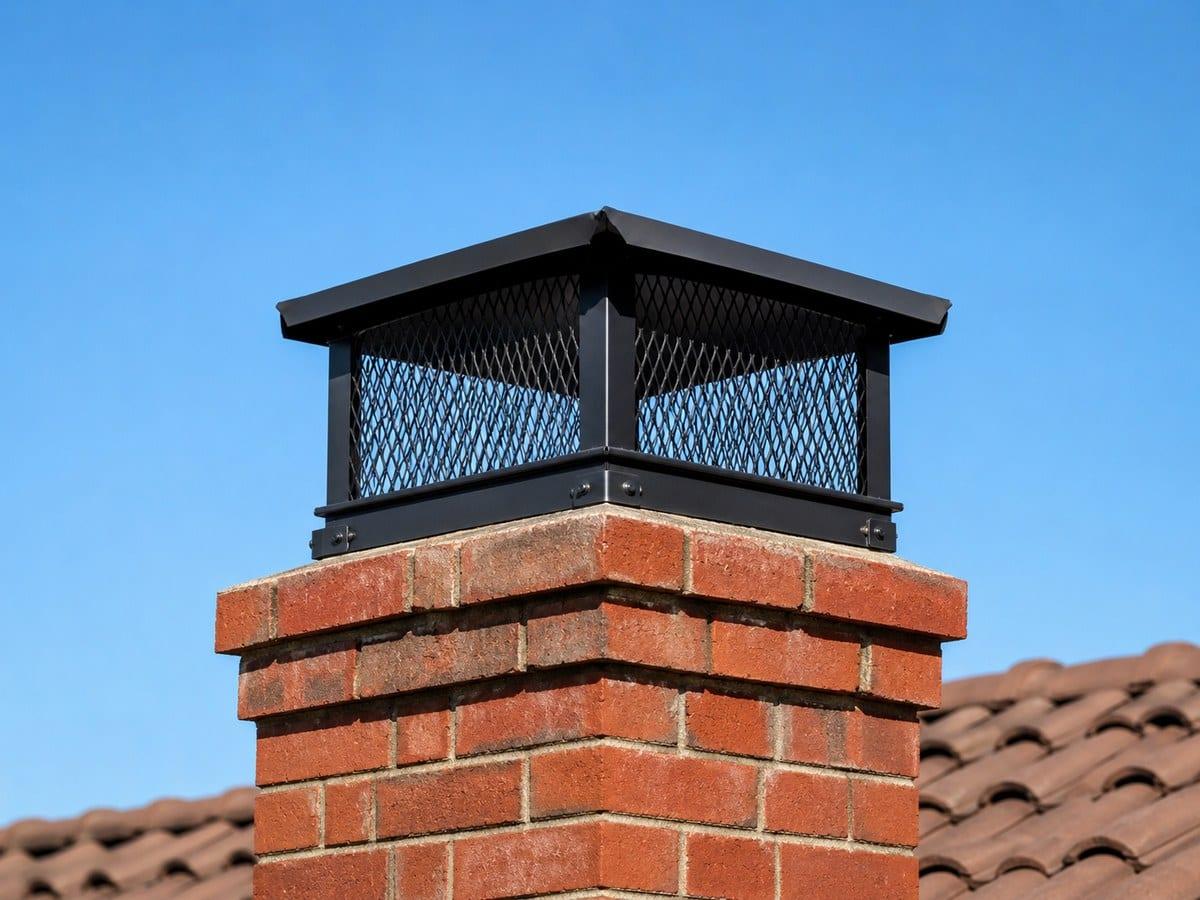
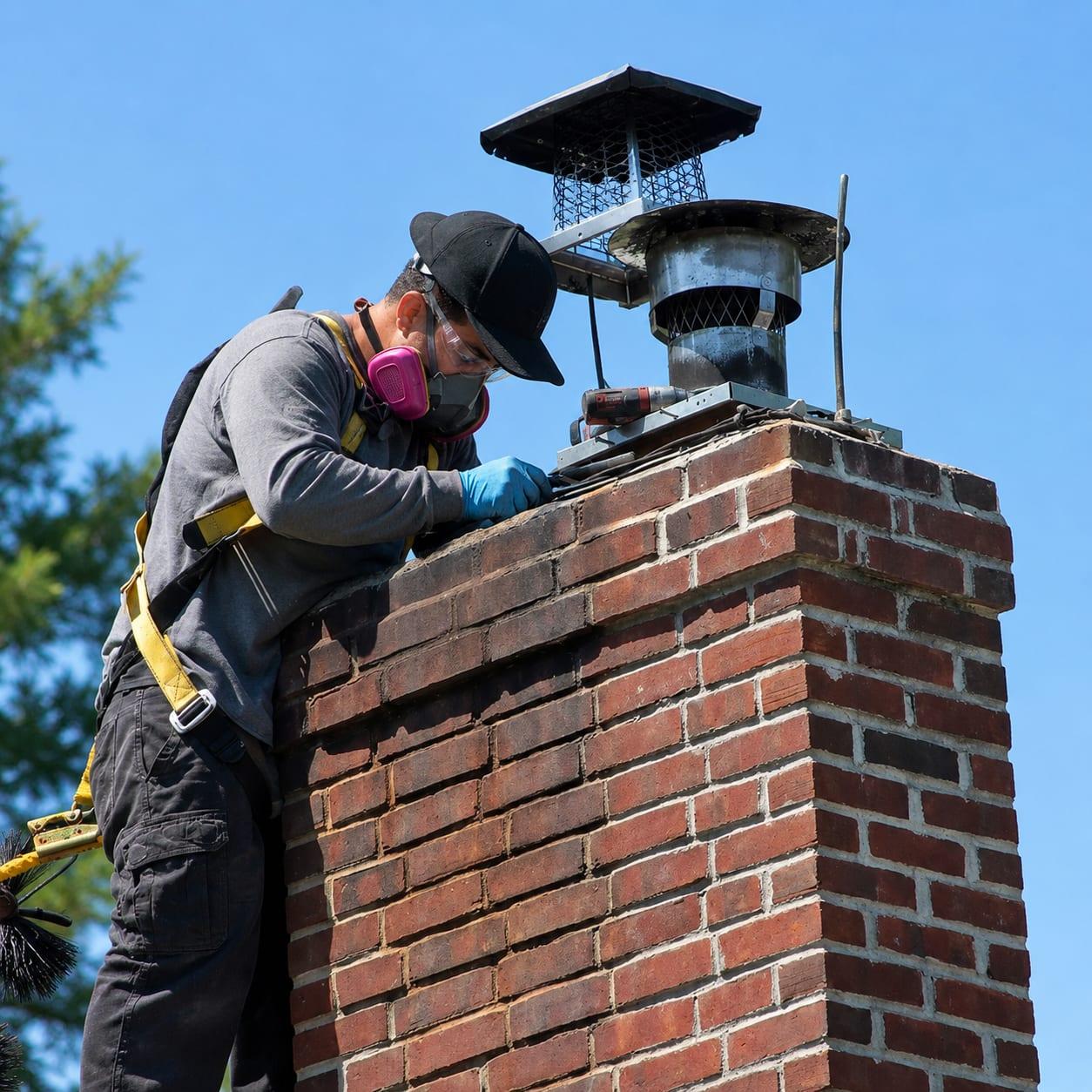
An animal screen is metal mesh fitted around the top of the flue. Smoke and gases can pass through, but birds, squirrels, raccoons and bats can't. Most often the screen is the mesh sides of a chimney cap. On some chimneys it's a standalone mesh guard clamped to the flue tile. Installing one means sizing it to the flue and fastening it firmly enough that a raccoon can't pry it loose. It also has to leave enough open area for the fireplace to draw properly.
Mesh, materials and spark arrestors
Stainless steel mesh holds up longest. Galvanized mesh rusts sooner. Mesh opening size is a balance: openings that are too wide let small animals squeeze through, and openings that are too fine clog quickly with soot on a wood-burning fireplace. A chimney spark arrestor uses mesh to stop burning embers. On many chimneys, one well-chosen screen covers both jobs.
When a chimney needs an animal screen
- The chimney has no cap or screen at all
- An animal or nest has been removed and you want to stop it happening again
- The existing screen is torn, bent, rusted through or pulling away
- Droppings, feathers or bird activity at the chimney top
- A new fireplace or chimney has been left with an open flue
If the chimney has no cap, installing a full chimney cap is usually the better choice, because it keeps rain out as well as animals. If the top flue tile is cracked or crumbling, a screen has nothing solid to attach to. A damaged flue may need a new chimney liner before the top is screened.
What the visit involves, step by step
Make sure nothing is living inside
We check the flue before closing off the top, because sealing an animal in creates a much worse problem. Any nest is removed first.
Measure the flue and crown
We note how many flues there are, their size and shape, and how far each tile stands above the crown.
Choose the screen
Options are a single-flue guard, a cap with mesh sides, or a multi-flue cover that spans the whole crown, depending on the chimney's layout.
Install and secure
The screen is fastened to the flue tile or crown. We check every corner and seam for gaps an animal could work open.
Final check
We confirm the smoke path is clear and the mesh sits at the right distance from the flue opening.
Booking a screen installation
Call or request an estimate. Let us know whether the chimney has a cap now and whether animals have already been inside. We also handle commercial and property-manager work.
When to book chimney animal screen installation
- A strong smell from the fireplace
- A missing or damaged chimney cap
- Nesting material, leaves or droppings in the firebox
- Smoke that won't go up the flue
Don't smoke it out
Never light a fire to drive an animal out — it can trap the animal, block the flue and start a fire in the nest.
How to prepare
- Note when you hear the animal and where.
- Keep the fireplace cold — don't light a fire to drive an animal out.
- Keep the glass doors or screen closed and pets out of the room.
What gets checked
- Odor and debris
- Cap and screen
- Damper condition
- What animal and where
- Nest material in the flue and smoke chamber
- Gaps around the crown and chase