On this page
What chimney spark arrestor installation involves
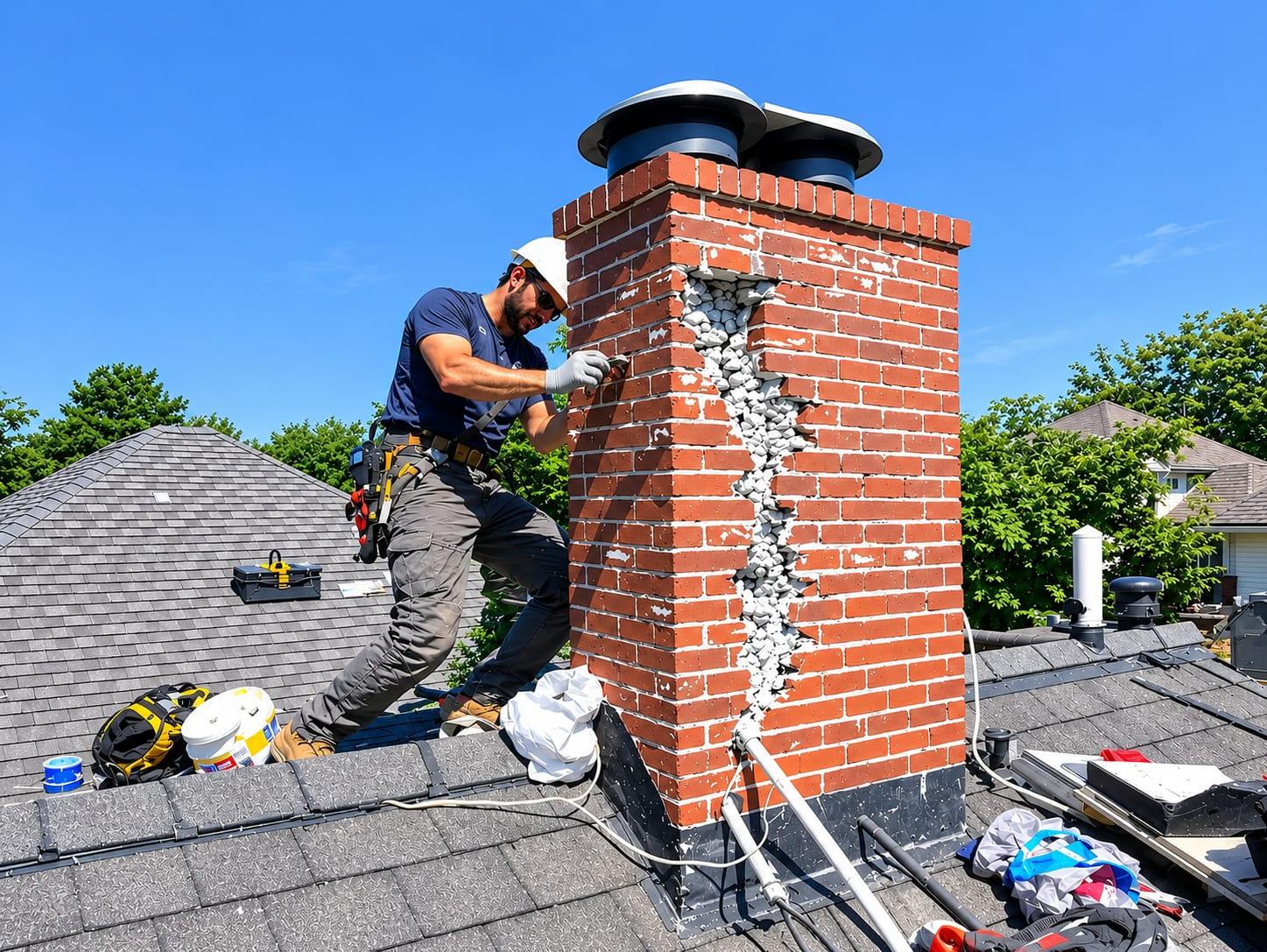
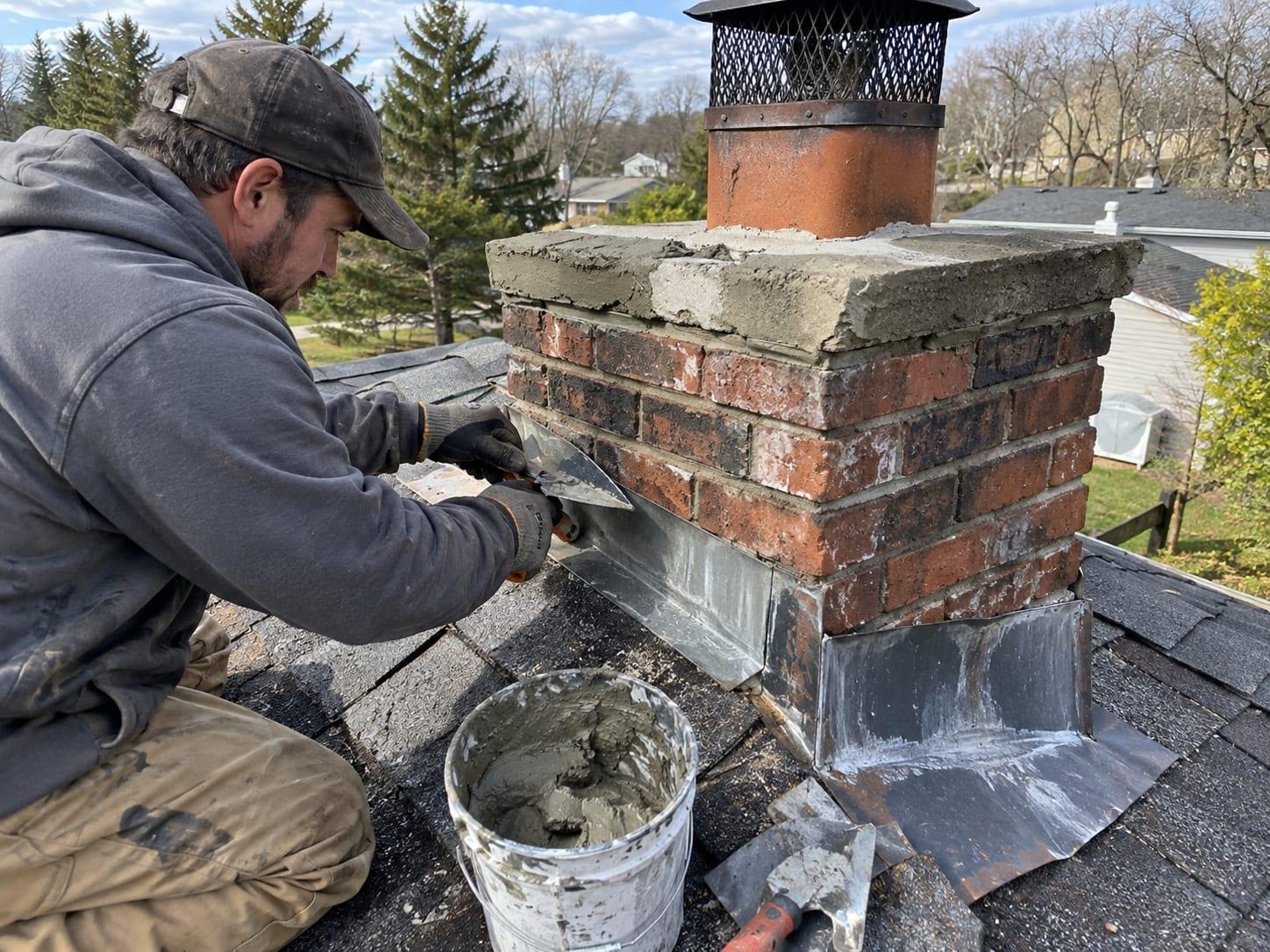
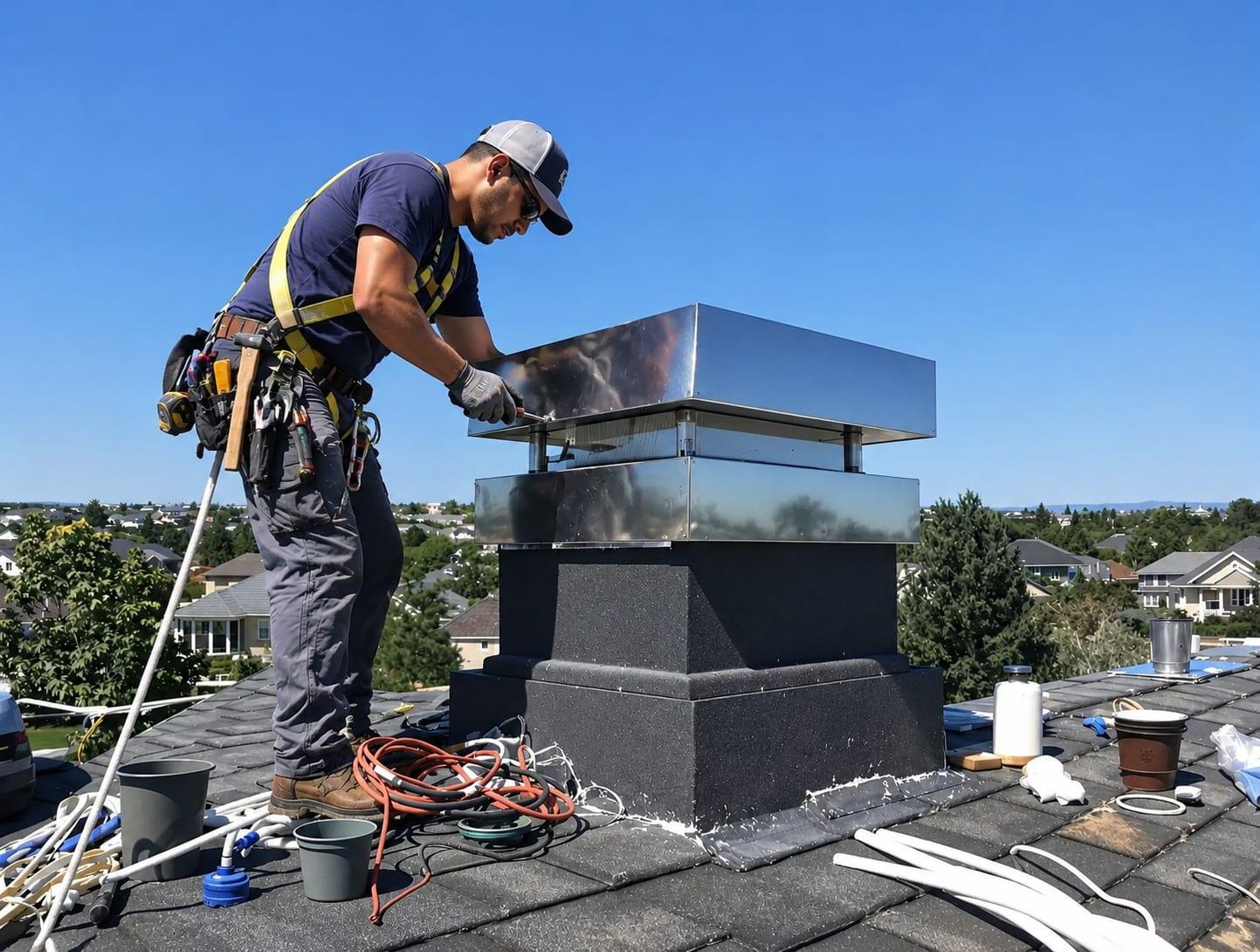
Chimney spark arrestor installation means fitting a wire-mesh enclosure over the top of the flue. The draft carries embers and burning bits of paper or bark upward, and the mesh stops them before they leave the chimney. It has to be fine enough to catch sparks but open enough for smoke and gases to pass freely. Many arrestors are built into a chimney cap with a solid lid that also sheds rain. Others are mesh-only units for chimneys that already have a sound cover. If you also want protection from rain and debris, chimney cap installation covers the lid side of the job.
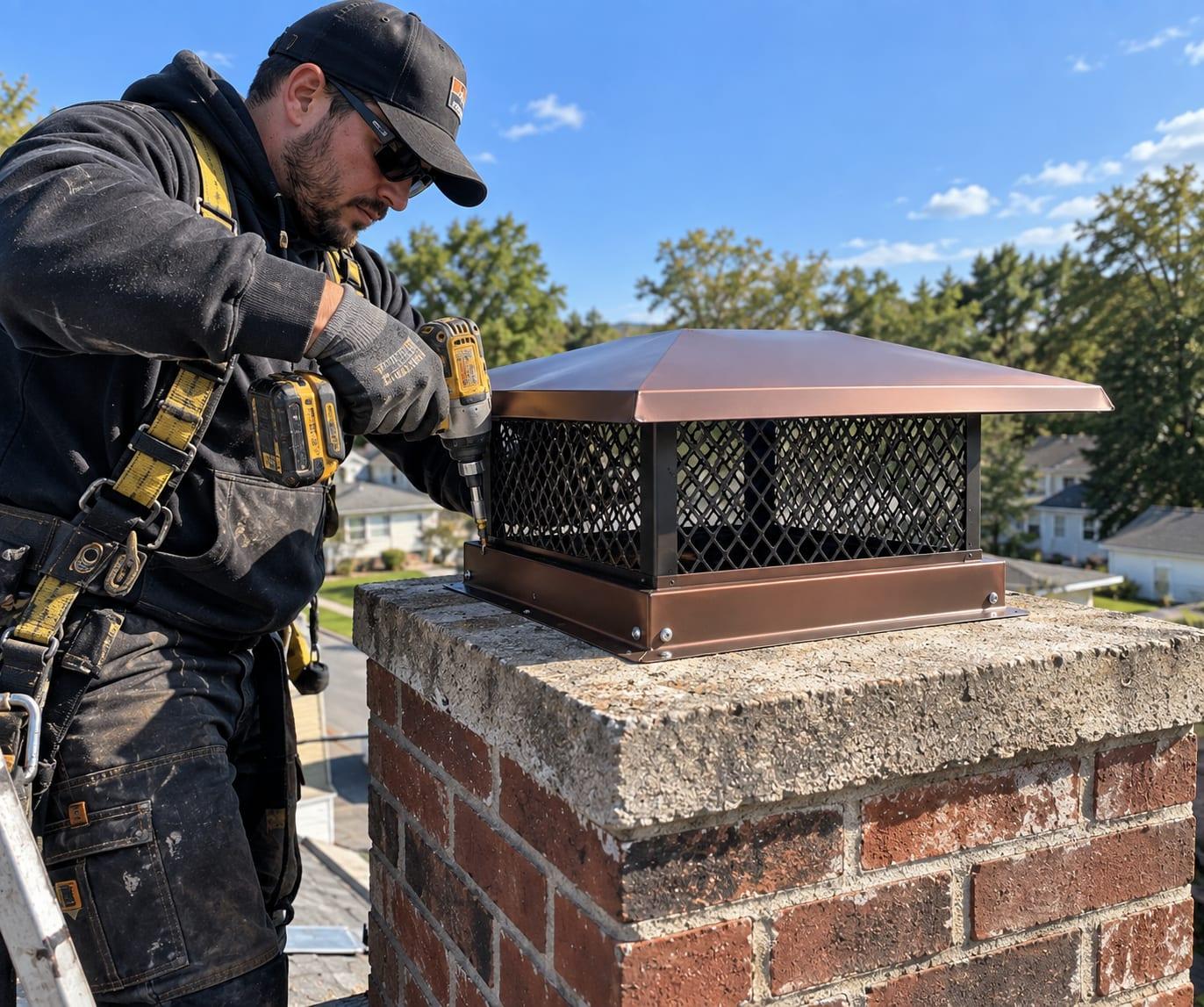
Materials and fit
- Stainless steel mesh holds up longest against heat and the acids in wood smoke.
- Galvanized steel is common, but it tends to corrode sooner where soot and moisture sit on it.
- Copper is chosen mostly for its looks. It weathers to a brown or green patina.
- Single-flue arrestors clamp or screw onto one flue tile. Multi-flue and outside-mount designs cover several flues and fasten to the crown.
- Factory-built (prefab) chimneys usually need a top made for that specific chimney system, so the existing termination is identified before anything is chosen.
Signs a chimney needs a spark arrestor
- A wood-burning fireplace, insert or stove flue with no mesh on top at all
- An old screen that is rusted through, torn, bent or missing sections
- Ash or small scorch marks on the roof, deck or gutters after a fire
- Tree branches overhanging the chimney, or dry leaves collecting in nearby gutters
- A cap that blew off in wind or is sitting loose on the flue
- A screen so clogged with creosote that smoke now rolls back into the room
An arrestor also keeps birds and small animals out of the flue. If wildlife is your main worry rather than embers, chimney animal screen installation is a closely related job. Gas fireplaces don't throw embers the way wood does. For them, the question is usually whether the termination needs a cap or screen for other reasons.
What the visit involves, step by step
Fitting a spark arrestor
Confirm the appliance and chimney type
We note whether the flue serves an open fireplace, an insert or a wood stove, and whether the chimney is masonry or a metal prefab system.
Check the top of the chimney
The flue tile, the crown and any old screen are examined. A cracked or missing flue tile can't be fixed with an arrestor. In that case, lining the flue may need to come first.
Measure
Flue dimensions, the height of the flue above the crown and the number of flues decide whether a single-flue or multi-flue design fits.
Fit and fasten
The arrestor is secured with clamps or fasteners and positioned so the mesh sits well clear of the flue opening.
Check draft and clean up
We confirm smoke and exhaust can exit freely and remove the old screen and any debris from the roof.
A clogged arrestor is a draft problem
Soot and creosote collect on the mesh over a burning season. If smoke starts drifting into the room or fires get harder to start, the screen may be partly blocked. Have it checked during routine chimney sweeping rather than scraping it from a ladder yourself.
Booking spark arrestor installation
Call or request an estimate. Tell us what you burn, whether the chimney is brick or a metal prefab, and what, if anything, sits on top of it now. A photo of the chimney top taken from the ground helps. Commercial and property-manager work is offered as well, so buildings with several fireplaces can be planned together.
Before the technician arrives
- Note any animal sounds or debris in the firebox.
- Make sure the roof can be reached from the driveway or yard.
- Keep the fireplace unused the day of the visit.
Animals in the flue
Don't light a fire to drive an animal out. Keep the fireplace cold and closed off and have the animal removed first.
Checked on every visit
- Clearance between the hood and the flue
- Mesh size and condition
- Rust or corrosion
- Flue size and tile condition
- Fasteners and mounting