On this page
What smoke chamber repair is and what it involves
The smoke chamber sits above the damper and below the flue in a masonry fireplace. Its job is to funnel smoke from the wide firebox into the much narrower flue. In many masonry chimneys the chamber walls are built as stepped brick, called corbeling. That leaves ledges and rough surfaces that disturb the draft and give creosote a place to collect.
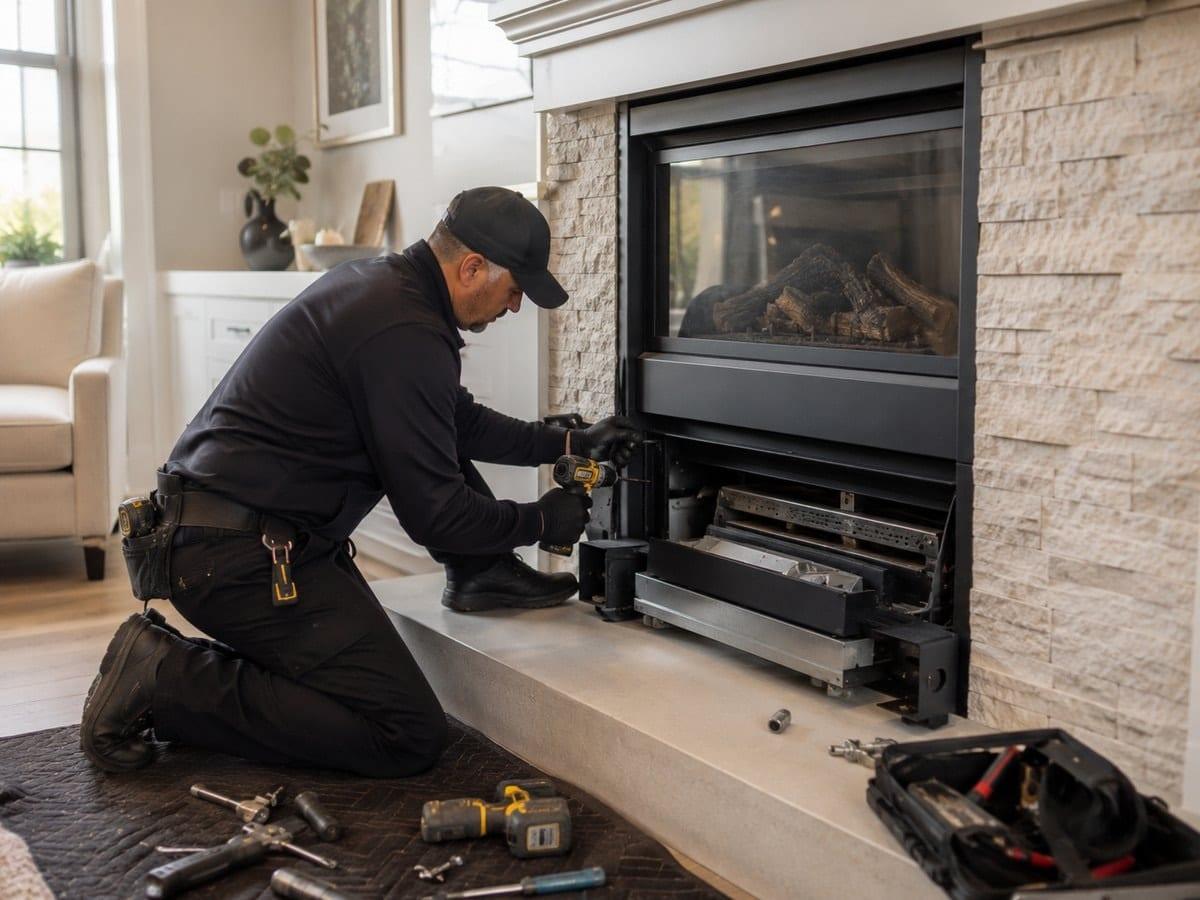
Smoke chamber repair seals cracks and open joints, rebuilds sections of brick that have deteriorated, and parges the walls. Parging means troweling heat-resistant mortar over the chamber so the surface is smooth, sealed and evenly sloped toward the flue.
The parts and materials involved
- The smoke shelf, the flat area behind the damper where debris and rainwater collect
- The chamber walls, whether corbeled brick or a previously parged surface
- The joint where the chamber meets the bottom of the flue
- Heat-resistant mortar for parging and for filling cracks
- Replacement brick where sections have crumbled
Carbon monoxide
A blocked or damaged flue can push carbon monoxide into the home. If an alarm sounds or anyone feels dizzy or sick near the fireplace, get everyone outside and call 911.
What gets checked
- Smoke chamber and smoke shelf
- Doors, glass and gaskets
- Mortar joints inside the firebox
- Draft from the opening
- Firebrick or refractory panels
- Hearth and surround
- Damper operation
How to prepare
- Keep pets in another room while the work area is open.
- Let the fireplace or stove cool completely — ideally no fire for 24 hours before the visit.
- Write down what you've noticed and when it happens — smells, smoke, sounds or stains.
- Clear a few feet of space in front of the hearth or appliance.
Signs it's time for smoke chamber repair
- Smoke coming into the room
- A fireplace that is hard to light or won't stay lit
- Doors or glass that are cracked or don't seal
- A damper that won't open or close
- Cracked or missing firebrick or refractory panels
When a smoke chamber needs repair
Signs that point above the damper
- Smoke spills into the room even with the damper fully open and the fire well established
- Black staining on the fireplace face just above the opening
- Flakes of mortar or bits of brick landing on the smoke shelf or in the firebox
- A sweep or inspection noted cracks, gaps or bare corbeling in the chamber
- Heavy creosote buildup concentrated just above the damper
Smoke spill has several possible causes, including the damper, the flue size, a cold chimney and air pressure inside the house. For that reason we confirm the chamber is actually the problem before recommending this work. If the damage continues up the flue or into the exterior masonry, the plan may also include broader repairs to the chimney itself.
What the visit involves, step by step
How smoke chamber repair is done
Protect the room
The hearth and surrounding floor are covered before any work begins.
Clean first
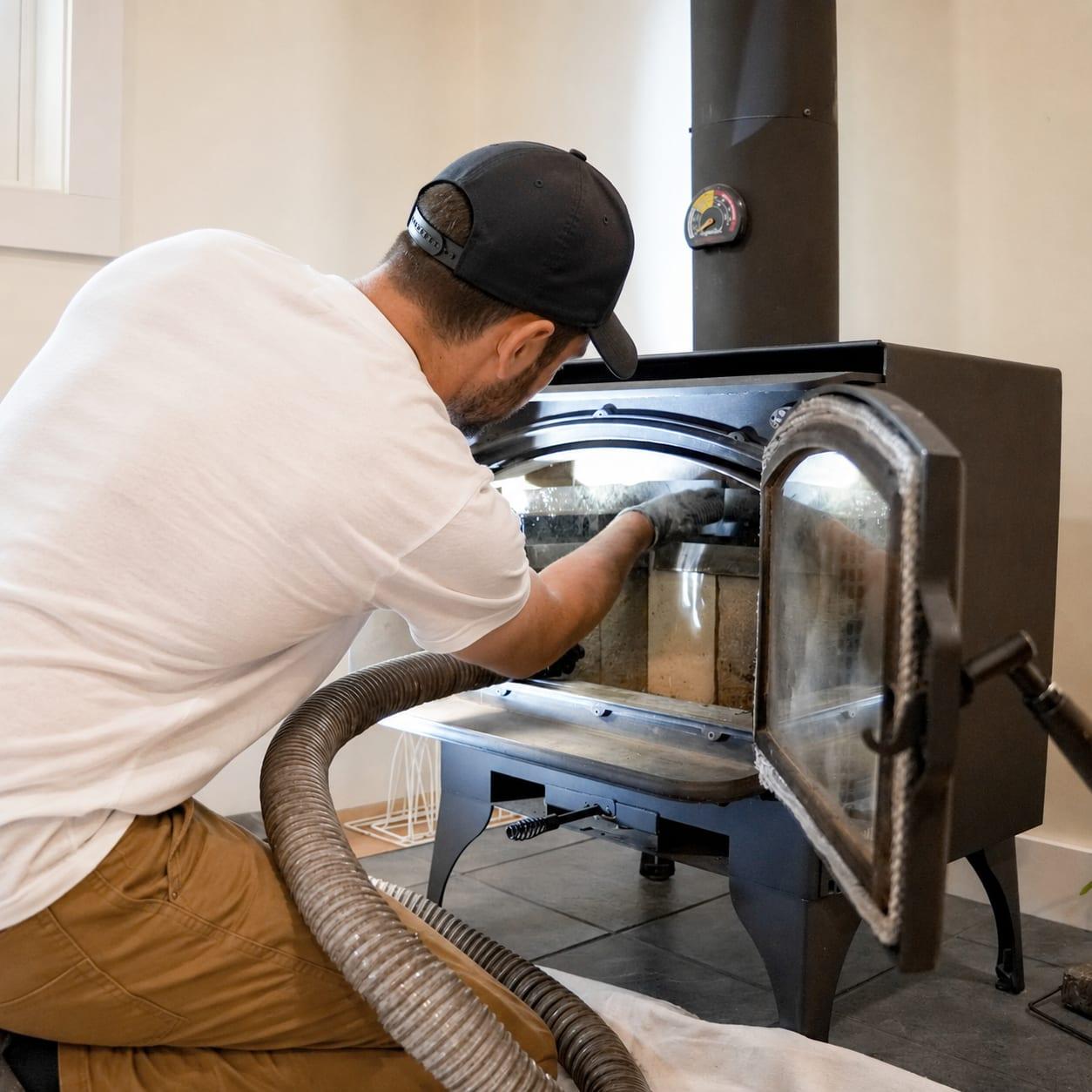
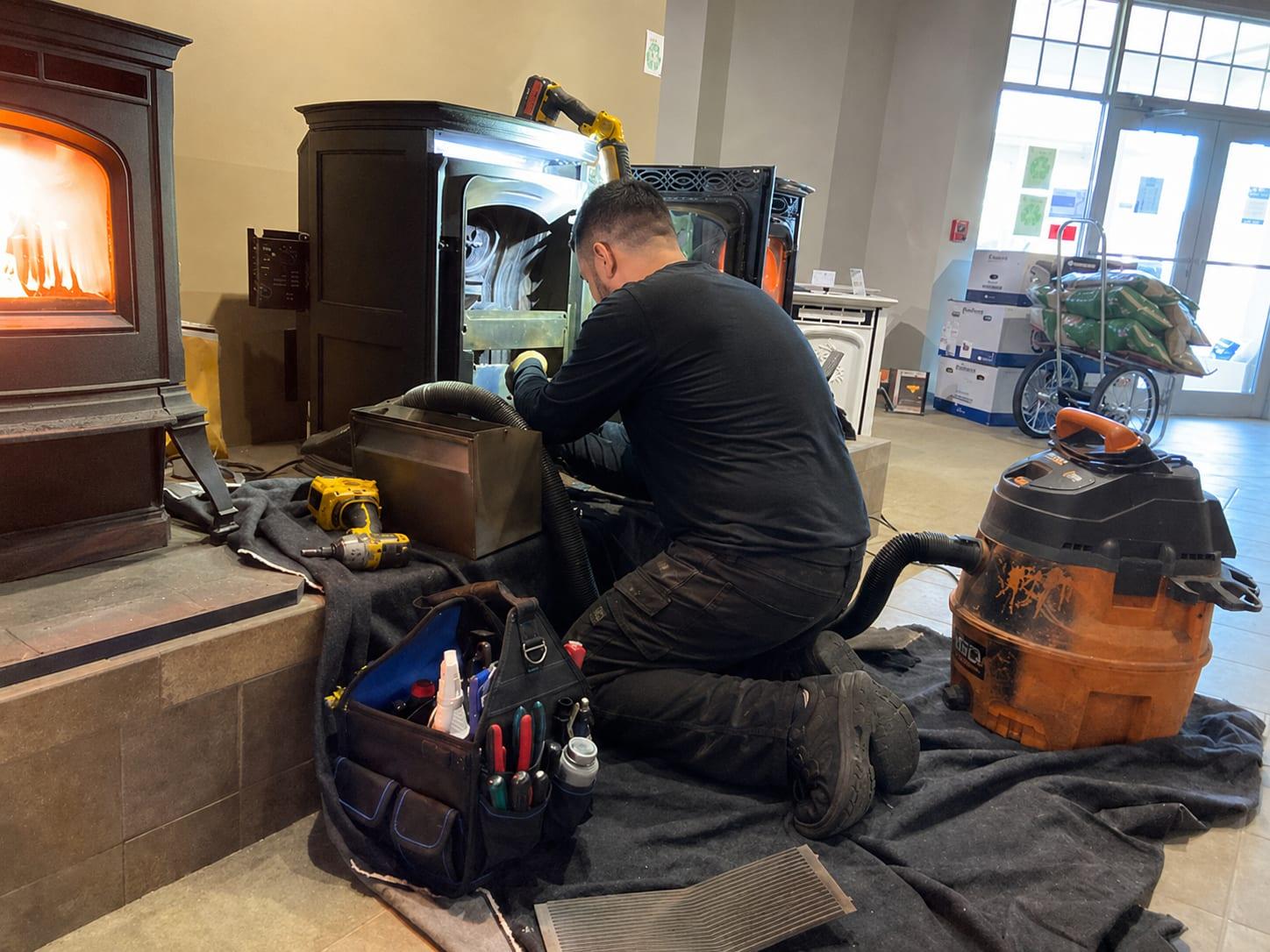
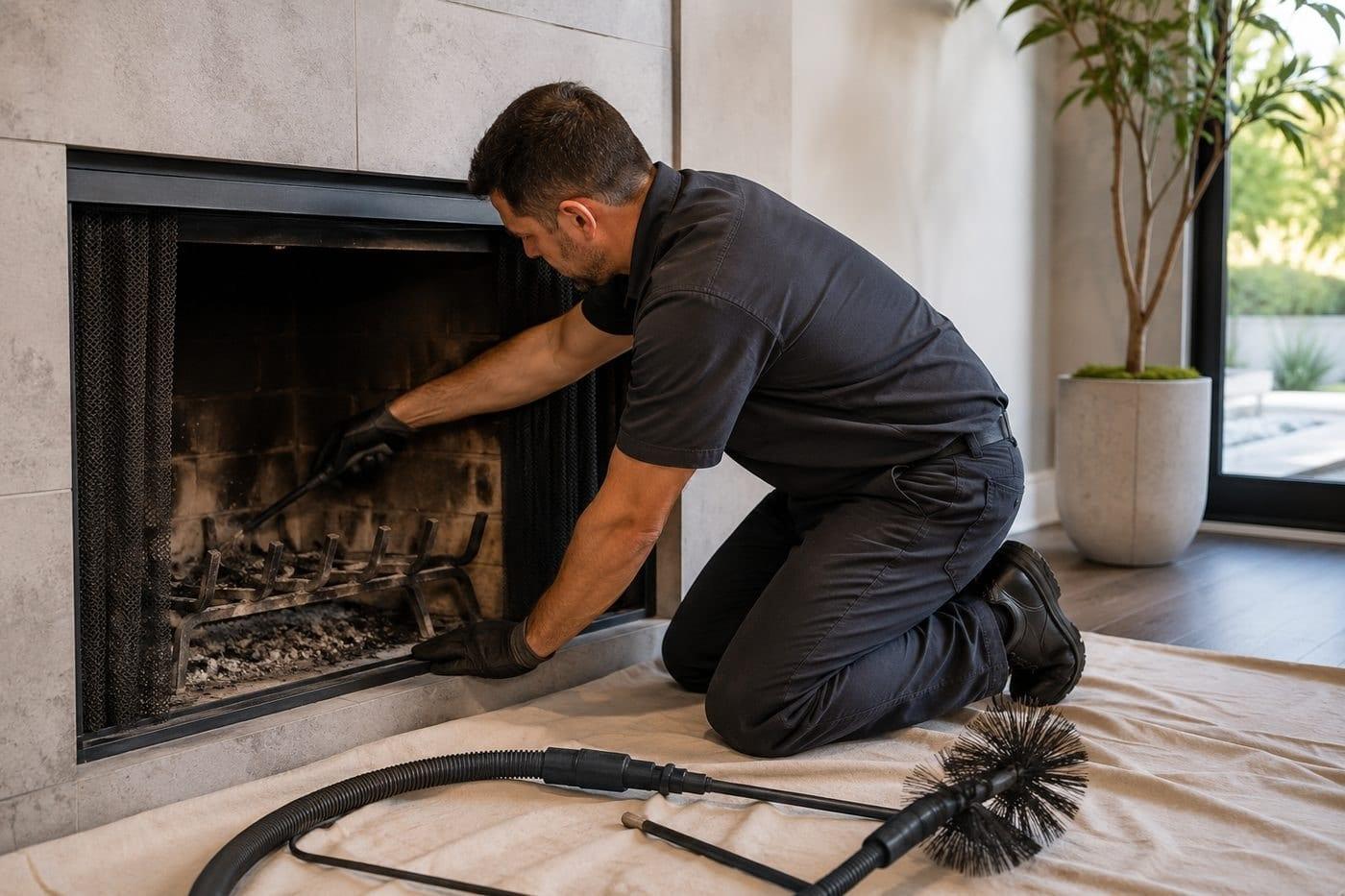
Mortar won't bond to soot or creosote, so the chamber is cleaned as part of the job. This is often combined with a full fireplace cleaning.
Inspect the chamber
The walls, smoke shelf and damper area are examined. A camera is used where the surfaces can't be seen directly.
Repair and rebuild
Cracks are sealed, and loose or broken brick is replaced.
Parge the walls
Heat-resistant mortar is applied in a smooth layer from the damper up to the flue.
Allow it to cure
Follow the curing time we give you before lighting the first fire.
Safety and maintenance context
Cracks in a smoke chamber can let heat and combustion gases reach areas they shouldn't, including the framing around the chimney. The rough ledges also hold creosote, which is the fuel for chimney fires. If gaps have been found, treat the fireplace as out of service until it's repaired. After the repair, regular sweeping keeps buildup off the new surface. If a fireplace has worn out well beyond the chamber, compare the cost of repairs with a new fireplace installation.
Booking smoke chamber repair
Get in touch and describe what you've noticed: smoke in the room, staining, debris falling into the firebox, or a note from a past inspection. Request an estimate and we'll start by confirming what the chamber needs.