On this page
What a metal chimney installation includes
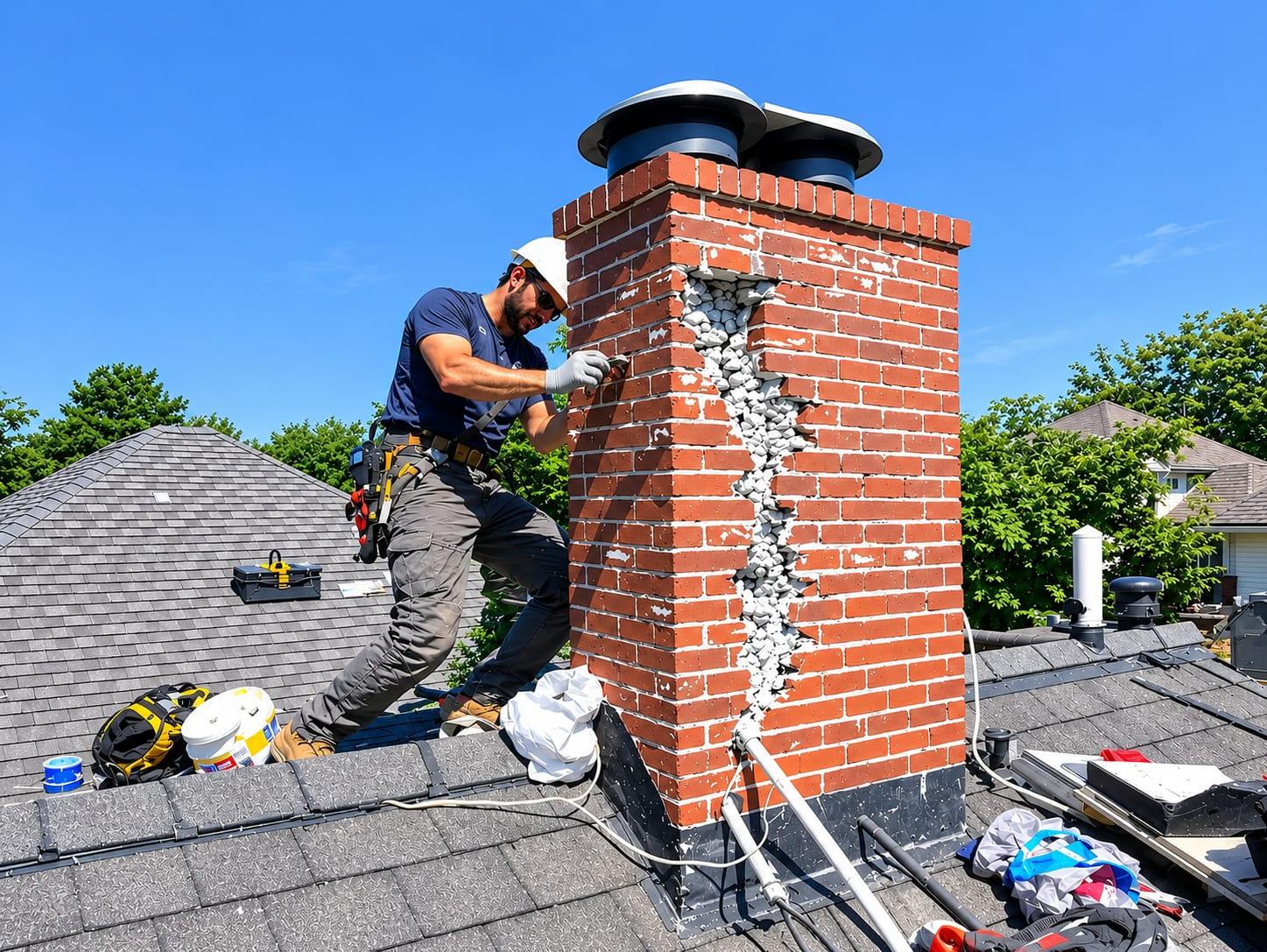
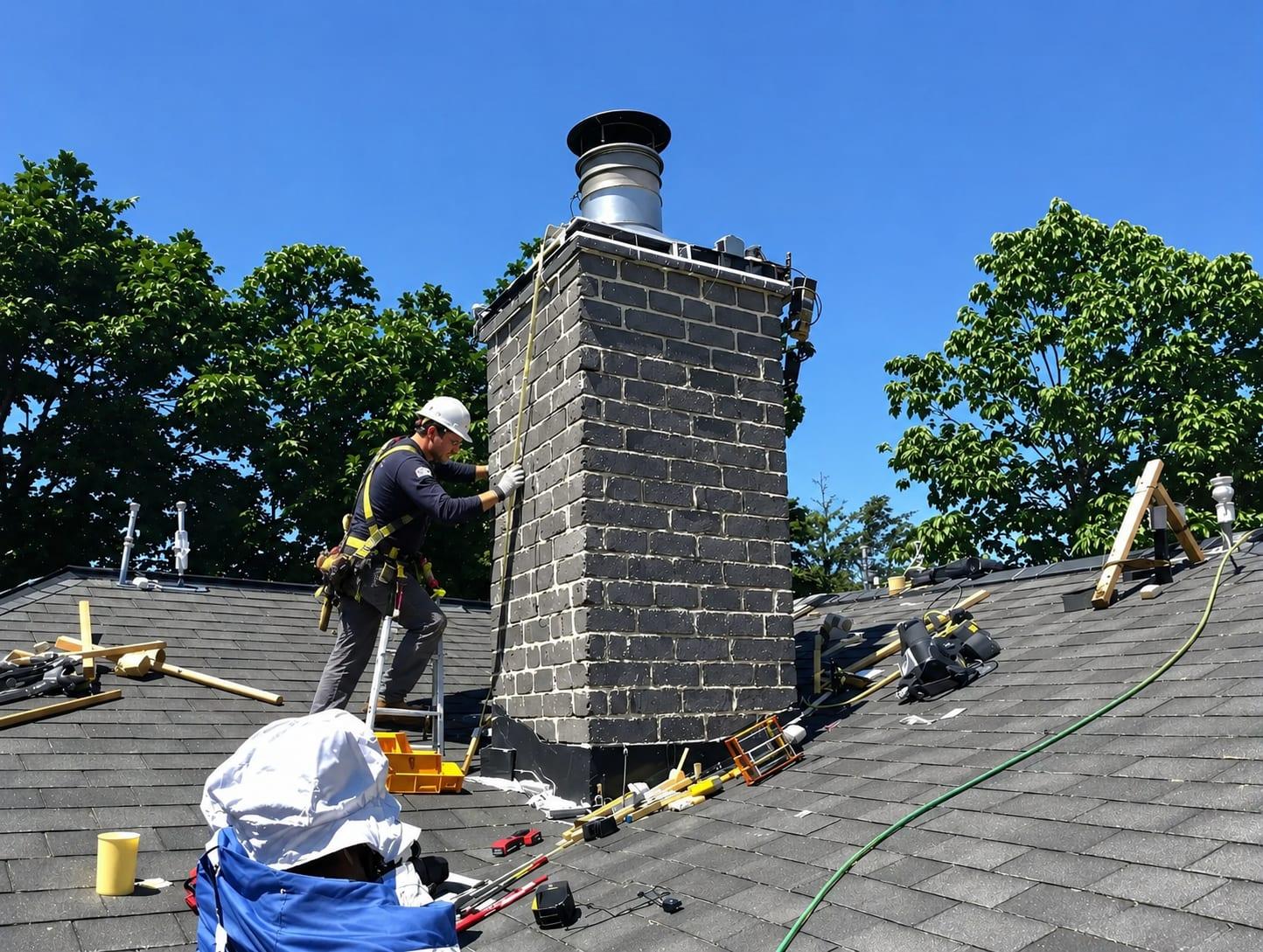
A metal chimney is a factory-built system, usually insulated or air-cooled stainless steel pipe, that is tested and listed as a complete assembly. That assembly includes its own supports, firestops, roof flashing and cap. Installing one means building it from the appliance up through the ceiling and roof, or out through a wall and up the outside of the house, with every part at the clearance its instructions call for.

It works very differently from a brick chimney. A masonry chimney gets its strength and fire protection from mortar, brick and a flue liner, while a metal chimney gets them from the engineered pipe and the parts that hold it. If you are weighing the two, our guide to how masonry and prefab chimneys compare covers the tradeoffs.
The parts of a metal chimney system
What gets installed
- A start collar or connector point where the appliance meets the chimney
- A ceiling support box for an inside route, or a wall thimble and tee for an outside route
- Firestop spacers at each floor or ceiling the pipe passes through
- An attic insulation shield, so insulation stays clear of the pipe
- Chimney pipe sections that lock together, with wall or roof bracing where needed
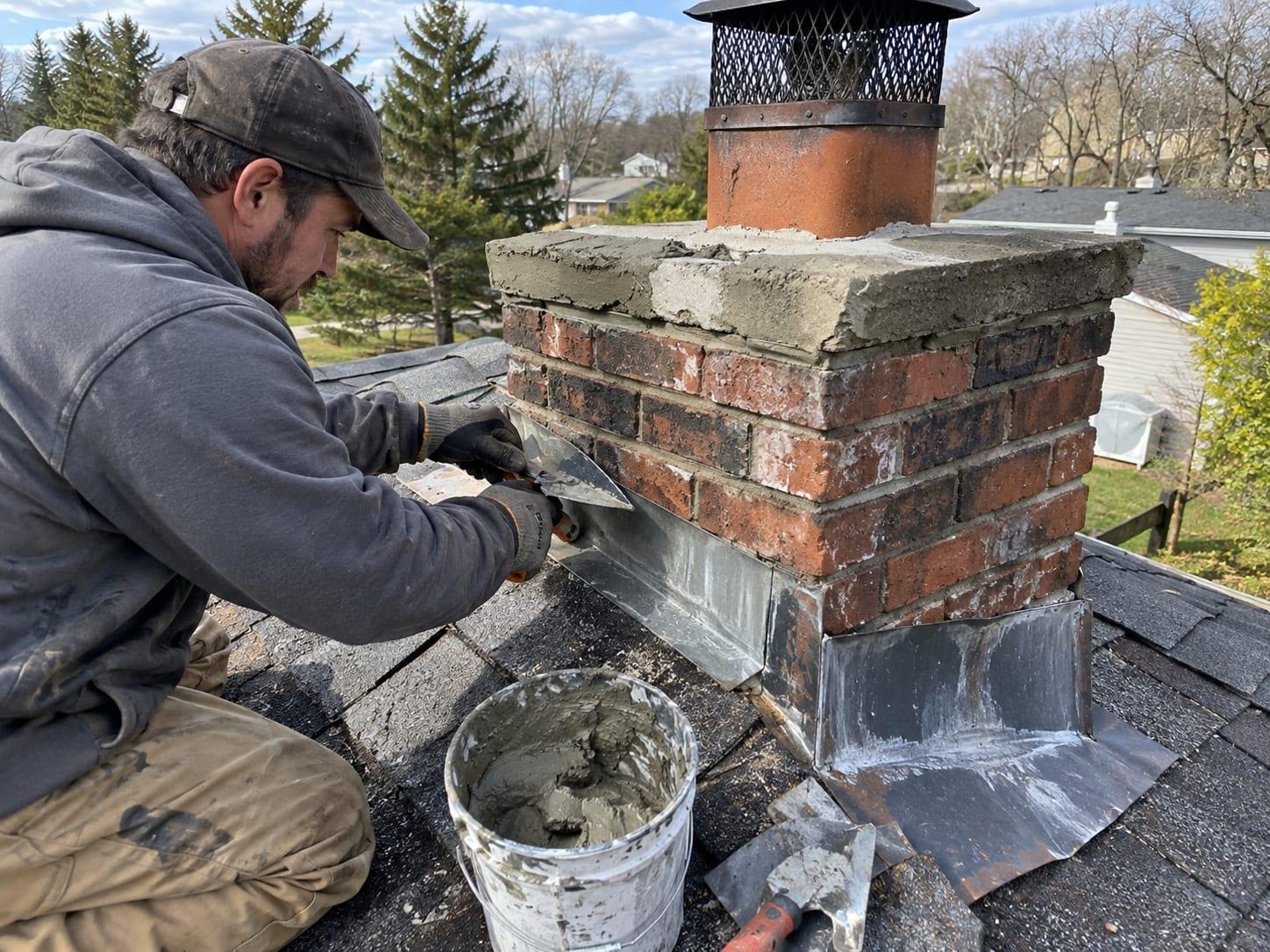
- Roof flashing and a storm collar to keep water out of the opening
- A cap at the top, with a spark arrestor screen where one is wanted
The cap is often the part homeowners think about last, but it keeps out rain, debris and animals. Read more about installing a chimney cap if your existing chimney only needs a new top.
Signs a home needs a metal chimney
- You are adding a wood stove or fireplace and the house has no flue in the right place.
- The existing factory-built chimney shows rust, dents, warped sections or joints that have pulled apart.
- A prefab fireplace is being replaced, and the old chimney is not approved for the new unit.
- The system is a mix of parts from different manufacturers, or single-wall stovepipe runs through a ceiling or wall.
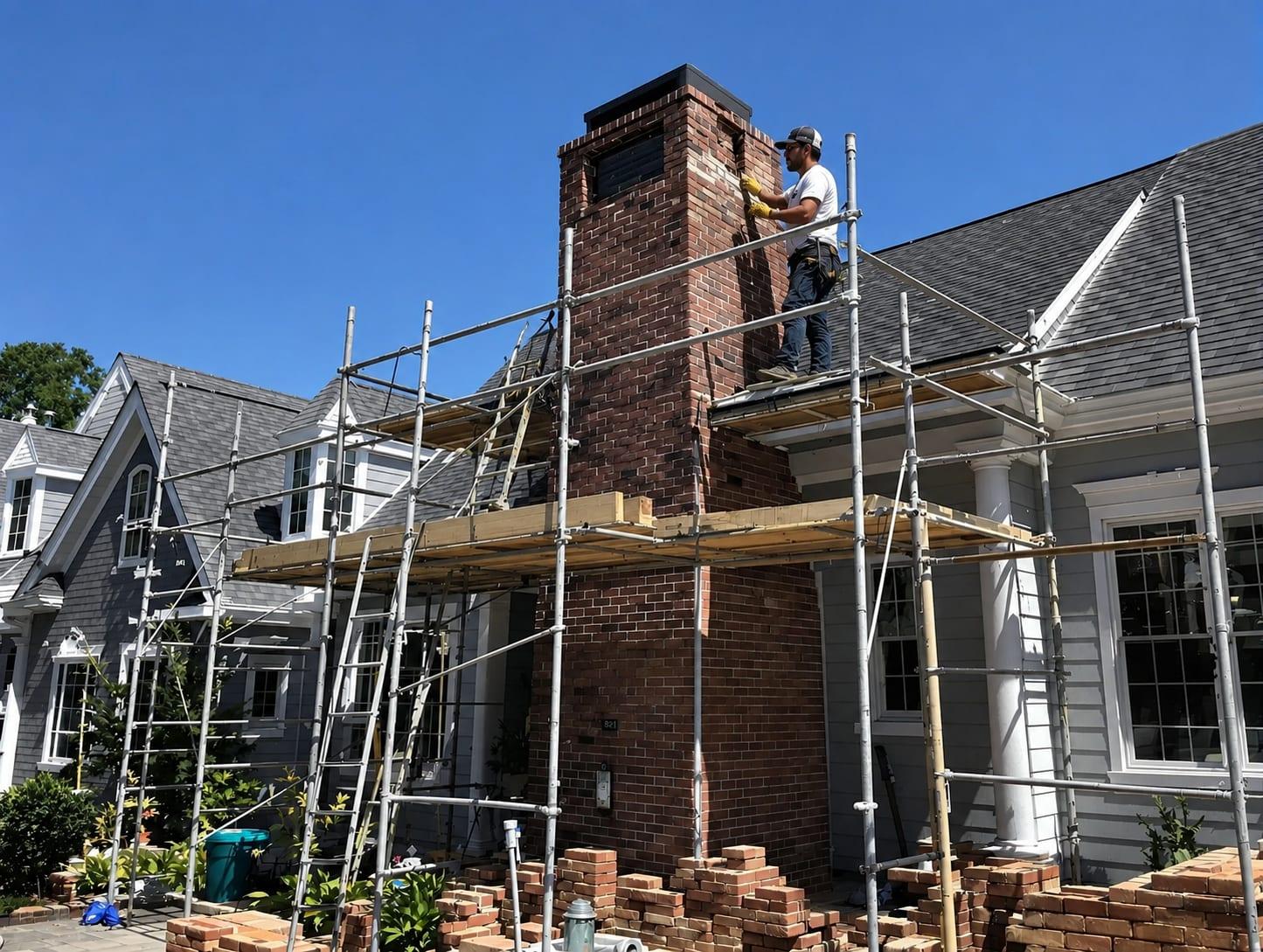
- A masonry chimney is too far gone to repair, and a metal system is one option alongside a full chimney rebuild in brick.
Not every damaged brick chimney needs replacing. Many problems at the top of the stack start small, and our guide to cracked chimney crowns explains what can be fixed in place.
| Feature | New metal chimney | Chimney liner |
|---|---|---|
| What it is | A complete factory-built chimney system | A flue lining set inside an existing chimney |
| Where it goes | Through the ceiling and roof, or up an exterior wall or chase | Down the inside of a masonry or existing chimney |
| Usual reason | No usable chimney, or the old factory-built one has failed | The chimney structure is sound but the flue is damaged or the wrong size |
What it is
- New metal chimney
- A complete factory-built chimney system
- Chimney liner
- A flue lining set inside an existing chimney
Where it goes
- New metal chimney
- Through the ceiling and roof, or up an exterior wall or chase
- Chimney liner
- Down the inside of a masonry or existing chimney
Usual reason
- New metal chimney
- No usable chimney, or the old factory-built one has failed
- Chimney liner
- The chimney structure is sound but the flue is damaged or the wrong size
When the structure is solid and only the flue is the problem, relining with a new chimney liner is usually the simpler fix.
Stop using the appliance if you see this
Smoke coming into the room, scorched or darkened wood near the pipe, or a section that has visibly separated are reasons to let the fire go out and leave it out. Our article on signs a chimney needs immediate repair lists other warning signs.
How the installation visit works
From estimate to first fire
Estimate and appliance check
We look at the stove or fireplace, its model and its installation instructions. The chimney has to be a system that appliance is approved to use.
Route planning
We decide whether the pipe goes straight up through the ceiling and roof or out a wall and up the exterior. We also measure clearances to framing and the height needed above the roof.
Openings and supports
We cut the ceiling, roof or wall openings and install the support box or wall thimble, firestops and attic shield.
Pipe assembly
Sections are locked together and secured, with bracing added where the chimney extends high above the roof or runs along a wall.
Roof seal and cap
We install the flashing and storm collar, seal them against water, and fit the cap.
Connection and check
We connect the appliance, check the draft, and walk you through what to watch for.
Safety and upkeep after installation
Keep stored wood, furniture and decorations outside the clearances marked for the appliance and connector. Do not box in or insulate around the pipe beyond what the system includes. Burning wood leaves creosote in any chimney, metal or masonry, so plan on regular sweeping and inspection. Look up at the cap and flashing after storms, since loose parts there let in water.
For a gas appliance, the venting must match that specific unit, and gas fireplace and gas appliance work is offered. We work on all major brands of factory-built chimneys and appliances.
Booking a metal chimney installation
Call or request an estimate, and have the stove or fireplace model handy if you know it.