On this page
What refractory panels do and what replacement involves
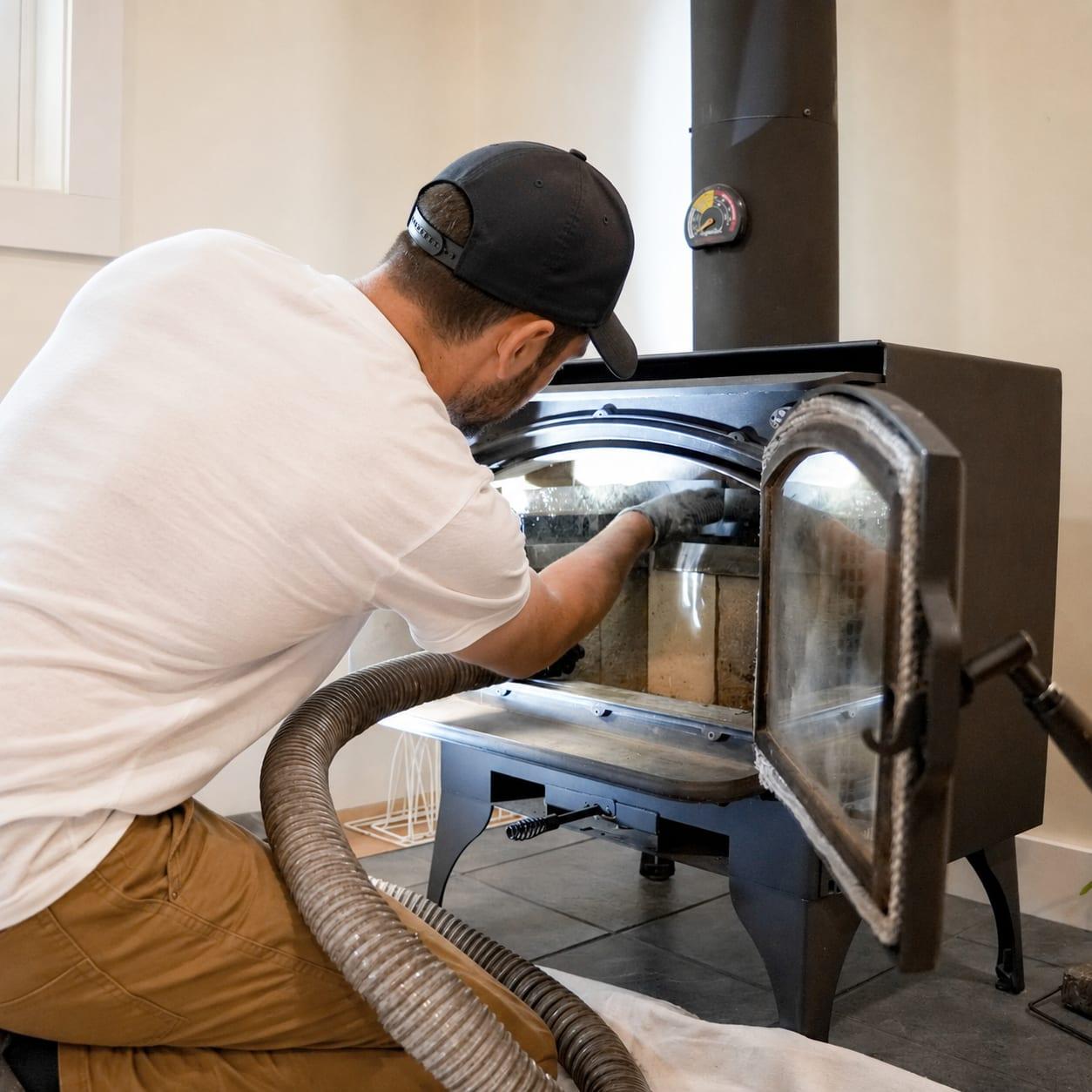
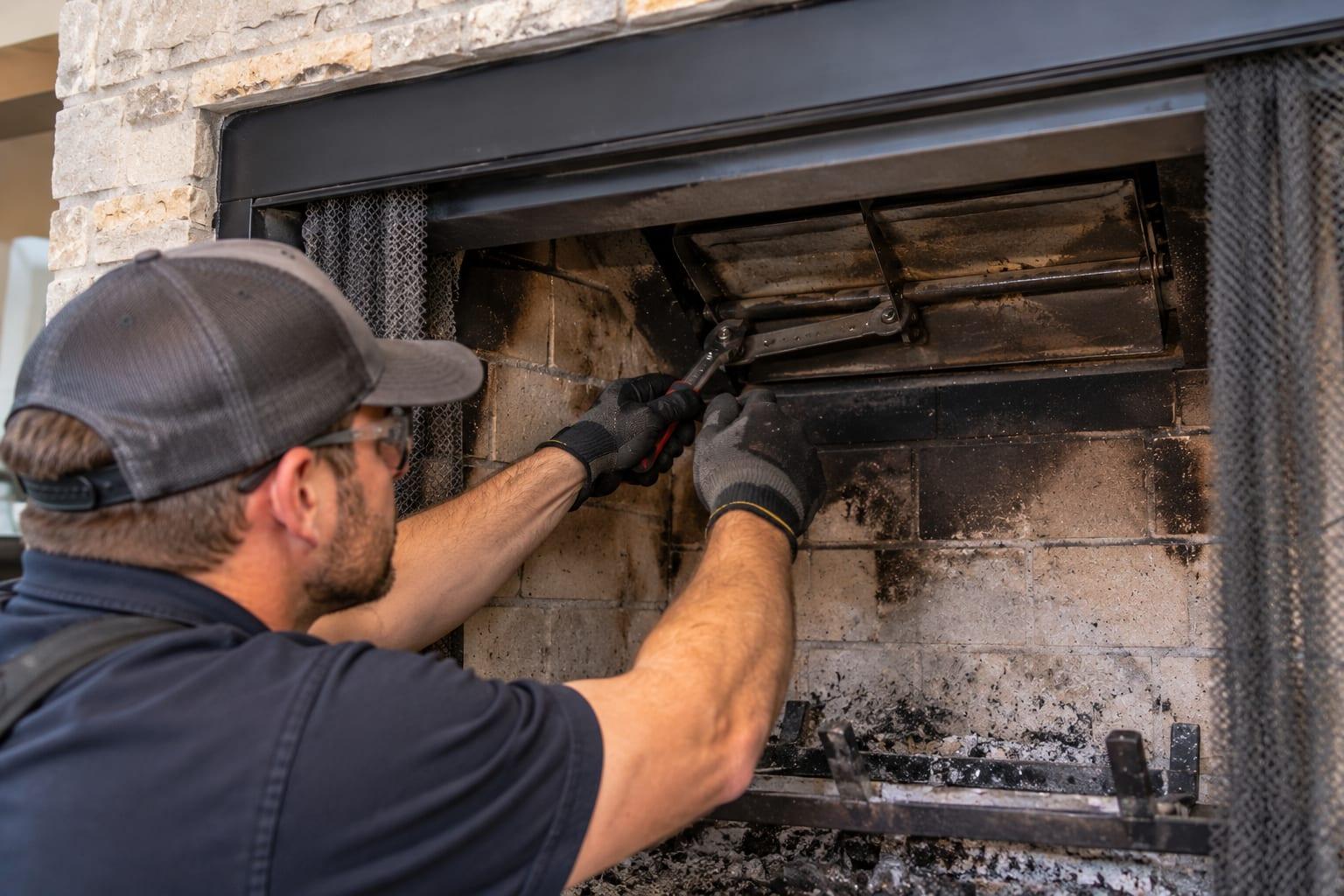
In a factory-built fireplace, the firebox is a metal box lined with molded refractory panels, made from a heat-resistant cement or ceramic-fiber material. There is usually a back panel and two side panels, and sometimes a floor piece. The panels shield the metal shell from the fire, reflect heat into the room and protect the framing around the unit.
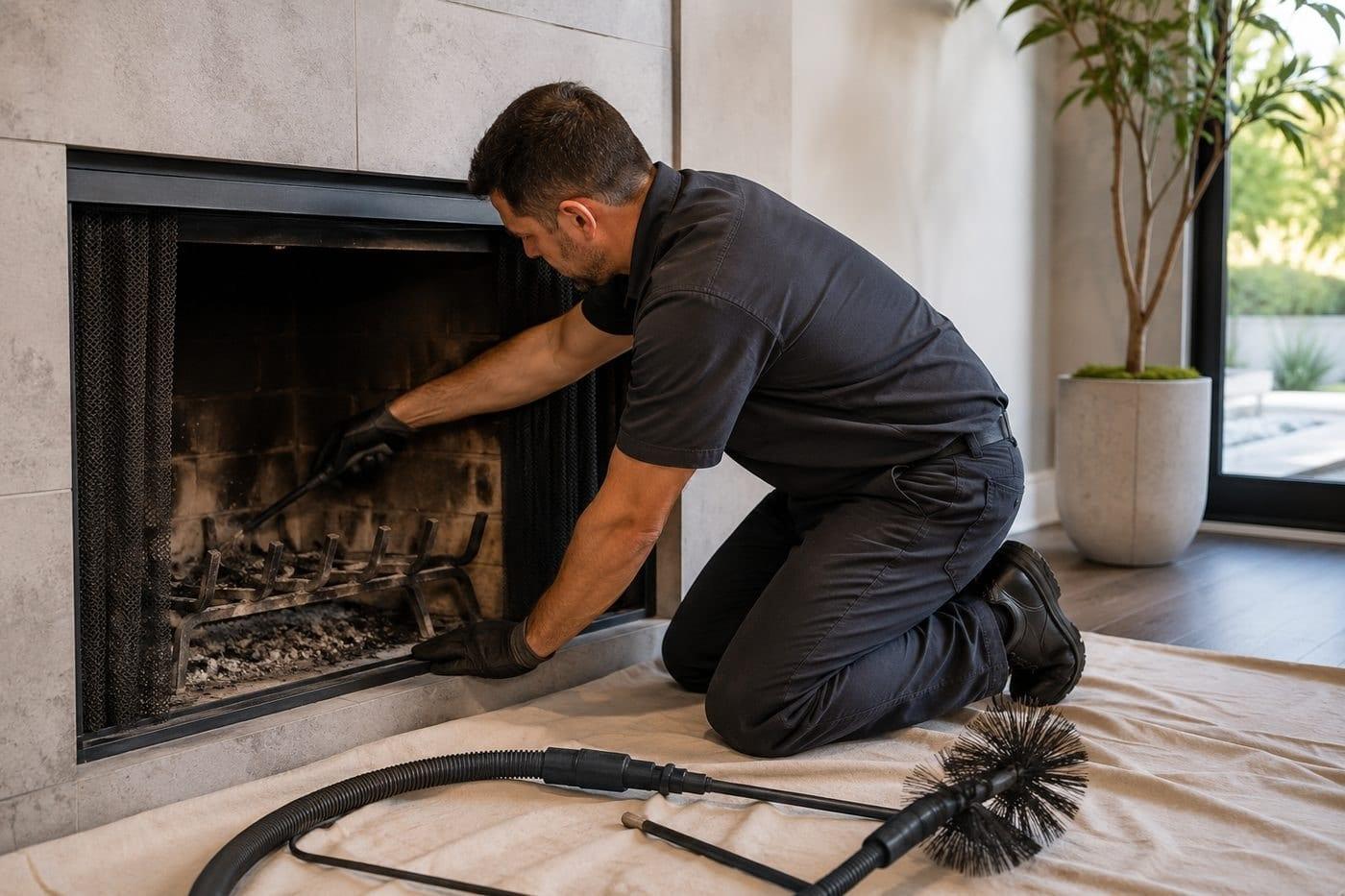
Refractory panel replacement means removing the worn panels and fitting new ones made for that make and model, held in place by the unit's retainers. Masonry fireplaces are lined with firebrick instead, which calls for firebox repair rather than a panel swap. If the metal shell behind the panels is damaged, prefab fireplace replacement may be the honest answer.
What gets checked
- Refractory panels on factory-built units
- Hearth and smoke chamber transitions
- Back and side walls for movement
- Damper above the firebox
Signs to watch for
- Cracked or crumbling refractory panels
- Gaps where the firebox meets the hearth or the smoke chamber
- Heat or discoloration on the wall or mantel around the fireplace
Before the technician arrives
- Clear the hearth and nearby furniture.
- Clean out loose ash if you can do it safely when cold.
- Let the fireplace cool completely — no fire the day before.
When the panels need replacing
Fine hairline cracks are common in refractory panels, and manufacturers generally treat them as normal. Have any firebox crack checked before you keep burning. Replacement is called for when you see any of these:
- Cracks that have opened wide or run all the way through the panel
- Pieces broken off, or a surface that is crumbling
- Metal from the firebox shell visible through a gap
- Panels that have shifted, bowed or come loose from their retainers
- Damage from a log, grate or poker striking the panel
Stop burning if metal is showing
A gap that exposes the metal firebox lets flame reach a surface that wasn't designed for direct fire. Don't light another fire until the panel has been replaced.
What the visit involves
Replacing refractory panels
Find the model
We read the rating label to identify the make and model, so the new panels match the unit.
Inspect behind the panels
With the grate and ash cleared, we check the panels and the metal shell for warping, rust and burn-through.
Remove the old panels
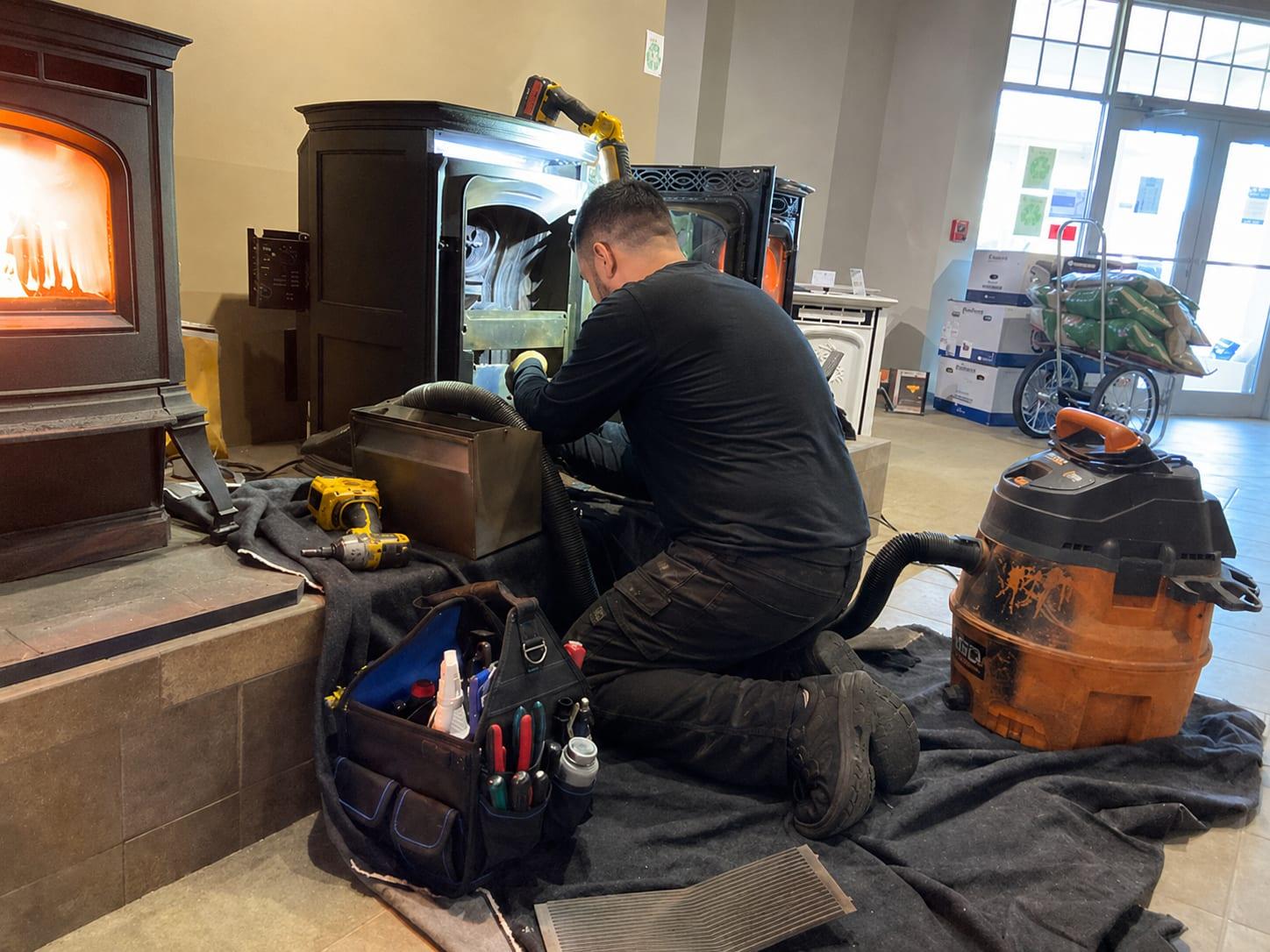
We release the retainers, lift out the worn panels and vacuum out the debris.
Fit the new set
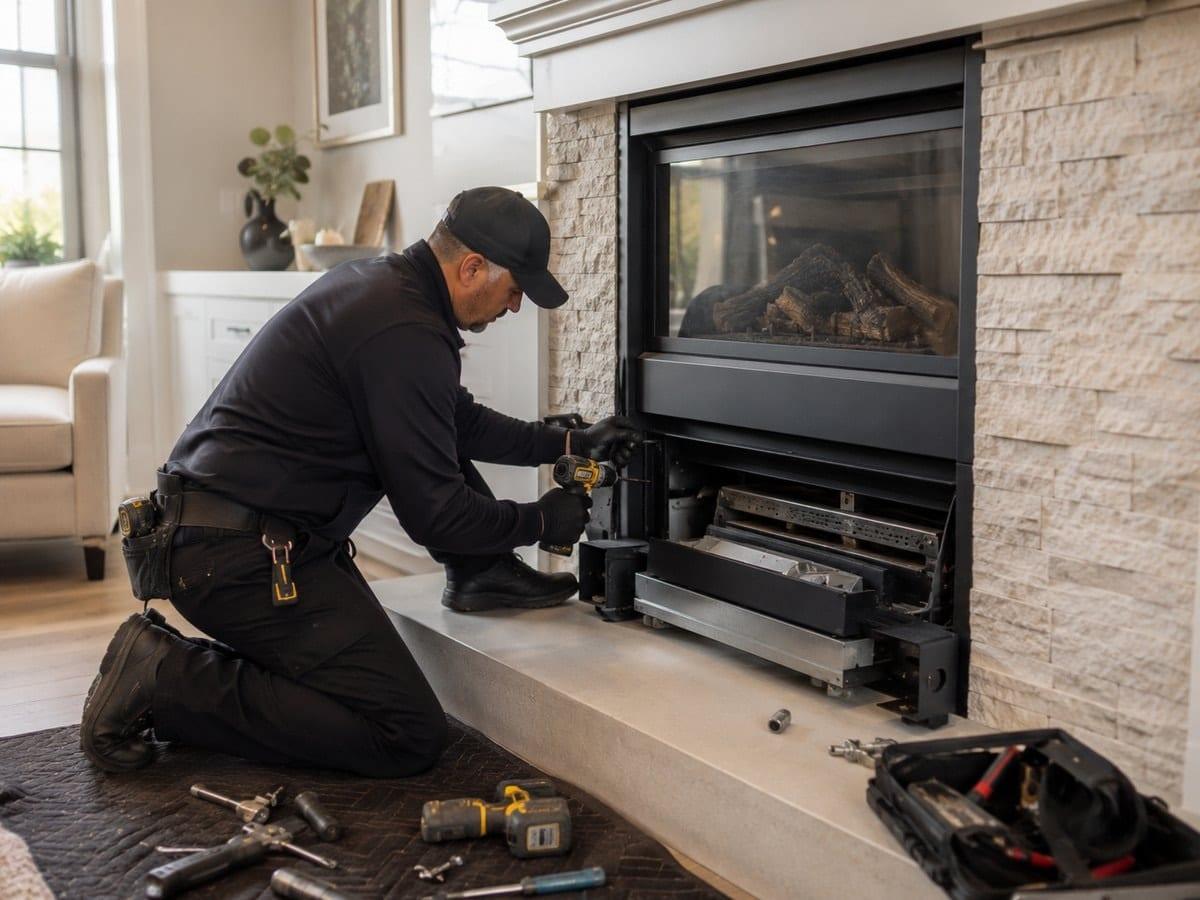
The panels go in the order the manufacturer specifies, and the retainers are secured and the fit checked.
Check the rest of the unit
We look over the doors, the glass and any signs of water coming from above.
Two other problems sometimes turn up during the visit. Worn doors or cracked glass can be handled with fireplace door and glass repair. Rust or water staining in the firebox points to a leak higher up, which is traced through our chimney repair service.
Making new panels last
- Build fires on the grate, not leaning against the back or side panels.
- Use the grate size the manufacturer specifies for the unit.
- Burn seasoned firewood only, never treated lumber or trash.
- Follow the manufacturer's guidance for the first few fires on new panels.
Booking refractory panel replacement
Call or request an estimate. If possible, send a photo of the rating label, which is often found on the side of the firebox opening or behind the lower grille, along with photos of the damaged panels. Panels are made for specific models, so the label is what lets us match them. Homes across Greater San Jose are served, and commercial and property-manager work is offered.