The short answer
Choose a pellet stove if you want steady, thermostat-controlled heat, less daily tending, and the option to vent through a wall instead of up a full chimney. Choose a wood stove if you want heat that keeps working when the power is out, a fire with real flame and crackle, and a simpler appliance with few moving parts. Both need a proper vent and regular cleaning. Neither is maintenance-free.
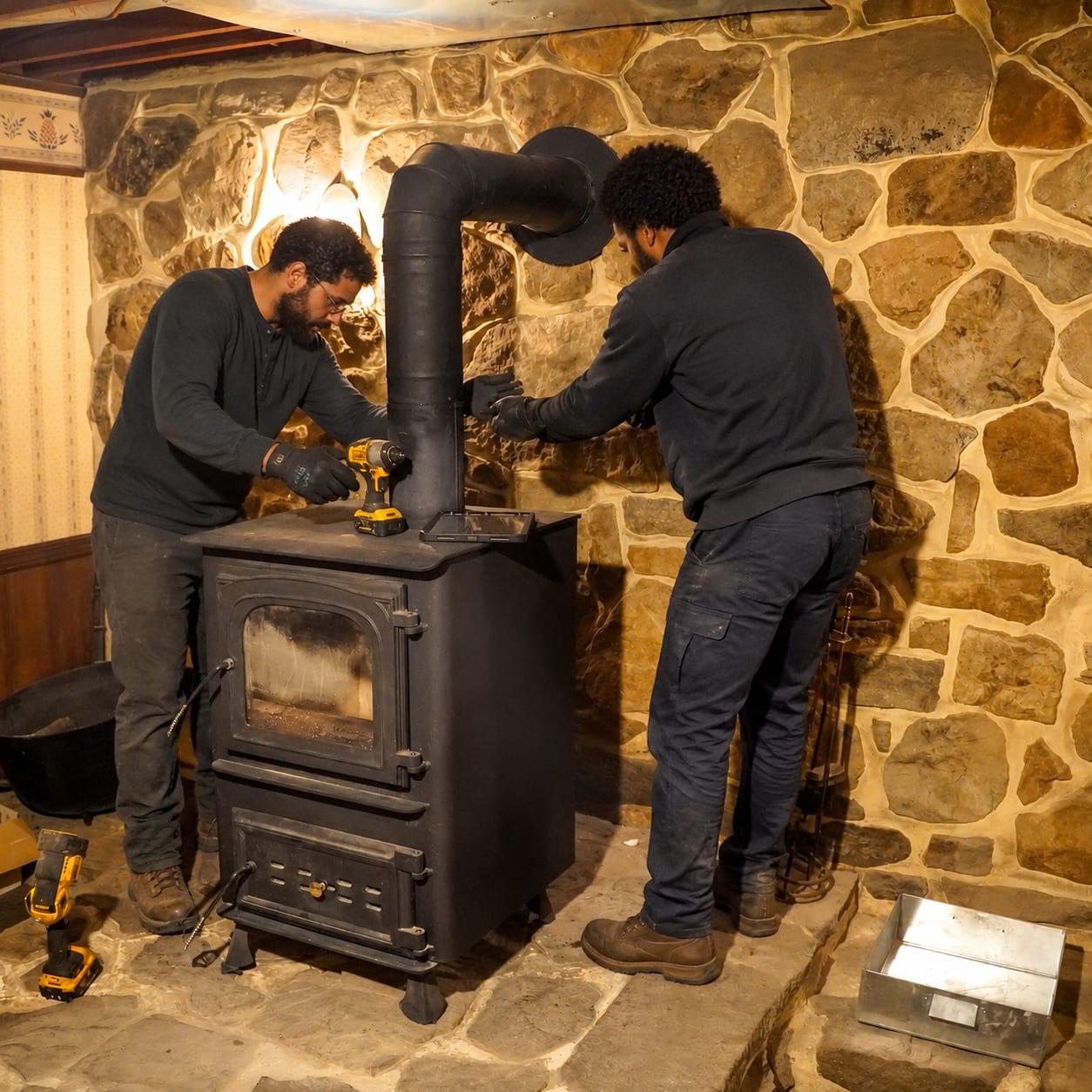
| Feature | Pellet stove | Wood stove |
|---|---|---|
| Fuel | Compressed wood pellets, sold in bags | Split, seasoned firewood |
| Loading | Fill a hopper; an auger feeds pellets automatically | Add logs by hand every few hours while burning |
| Heat control | Thermostat or heat setting on a control panel | Air control and how much wood you load |
| Electricity | Required for the auger, fans, igniter and controls | Not required |
| Venting | Sealed pellet vent pipe, often through a wall, with a vertical rise recommended | Full chimney rated for solid fuel, running above the roofline |
| Main residue | Fly ash and ash in the burn pot | Ash plus creosote in the flue |
| Moving parts | Several: motors, fans, sensors, control board | Few or none |
| Noise | Fans and auger are audible | Quiet apart from the fire itself |
Fuel
- Pellet stove
- Compressed wood pellets, sold in bags
- Wood stove
- Split, seasoned firewood
Loading
- Pellet stove
- Fill a hopper; an auger feeds pellets automatically
- Wood stove
- Add logs by hand every few hours while burning
Heat control
- Pellet stove
- Thermostat or heat setting on a control panel
- Wood stove
- Air control and how much wood you load
Electricity
- Pellet stove
- Required for the auger, fans, igniter and controls
- Wood stove
- Not required
Venting
- Pellet stove
- Sealed pellet vent pipe, often through a wall, with a vertical rise recommended
- Wood stove
- Full chimney rated for solid fuel, running above the roofline
Main residue
- Pellet stove
- Fly ash and ash in the burn pot
- Wood stove
- Ash plus creosote in the flue
Moving parts
- Pellet stove
- Several: motors, fans, sensors, control board
- Wood stove
- Few or none
Noise
- Pellet stove
- Fans and auger are audible
- Wood stove
- Quiet apart from the fire itself
How each stove makes heat
Pellet stoves
A pellet stove is closer to a small appliance than a traditional fire. Pellets sit in a hopper. A motorized auger drops a measured amount into a burn pot, an electric igniter lights them, and a combustion fan pulls in air and pushes exhaust out through the vent. A second fan usually blows warm air into the room. The control board adjusts the feed rate to hold the heat setting you choose.
Because the combustion fan pushes exhaust out, the vent runs under positive pressure. That is why pellet vent pipe has sealed joints, and why a leak in a pellet vent can push exhaust into the room instead of sending it outside. If a carbon monoxide alarm sounds or anyone feels unwell, get everyone outside and call 911.
Wood stoves
A wood stove is a sealed firebox with adjustable air intakes. It relies on natural draft: hot gases rise up the chimney and pull fresh combustion air in behind them. Chimney height, flue size and flue temperature all affect how well it drafts. When draft is weak, smoke rolls back into the room, the same problem behind a smoky fireplace. Burning wet or unseasoned wood also cools the flue and speeds creosote buildup.
Venting: where the two stoves differ most
Venting is usually the deciding factor in a pellet stove vs wood stove choice, because it controls where the stove can go and how much work the installation takes.
- Pipe type: pellet stoves use small-diameter pellet vent pipe with sealed joints. Wood stoves need chimney pipe rated for the high temperatures of a wood fire, or a properly lined masonry chimney.
- Route: a pellet vent can often exit through a sidewall. A wood stove chimney generally has to run vertically and end above the roofline to draft.
- How exhaust moves: a pellet stove's fan pushes exhaust out. A wood stove depends on the chimney's draft to pull it out.
- Not interchangeable: pellet vent pipe is not built for wood-fire temperatures, so it cannot serve a wood stove.
Does a pellet stove require its own chimney?
No, a pellet stove does not require a traditional chimney, but it always needs its own dedicated vent. Many pellet stoves vent horizontally through an exterior wall with pellet vent pipe. Most stove manufacturers recommend some vertical rise in the vent so smoke can still escape by natural draft if the power cuts out and the fan stops. A pellet stove should not share a flue with another appliance.
Can existing chimneys work for pellet stoves?
Yes, in many cases, once a liner is installed. A masonry chimney built for an open fireplace has a flue far larger than a pellet stove needs, and its mortar joints are not sealed against positive-pressure exhaust. The usual approach is to run a pellet vent liner up the inside of the existing flue and connect it to the stove. The chimney still needs to be inspected first, because cracked flue tiles, a damaged crown or a stuck damper can affect the installation.
How is a pellet stove chimney installed?
A pellet stove chimney is installed by following the stove's manual for pipe size and route, running sealed vent pipe or a liner to a capped outlet, and testing the connected stove for leaks.
Pellet stove venting, step by step
Check the stove's installation manual
The manual sets the vent diameter, the maximum vent length, how many elbows are allowed, and the clearances to combustible materials. These requirements vary by model.
Plan the vent route
The installer decides between a sidewall exit, a vertical run through the roof, or a liner up an existing chimney, keeping the termination away from windows, doors and walkways.
Inspect an existing chimney if one is used
The flue is checked for damage, blockages and old creosote, and cleaned before the liner goes in.
Install the vent pipe or liner
Sections are connected with sealed joints, supported along the run, and kept at the required clearances. A wall thimble or roof flashing protects the penetration.
Fit the termination cap
A cap at the outlet keeps rain and animals out and directs exhaust away from the house.
Connect and test
The stove is connected, fired, and checked for proper operation and for any exhaust leaking at the joints.
For more on how the work is scoped, our pellet stove chimney installation service explains the venting options in detail.
Living with each stove
Day-to-day upkeep is where the two stoves feel most different.
Routine care for a pellet stove
- Keep the hopper filled and pellets stored somewhere dry; damp pellets swell and jam the auger.
- Scrape or empty the burn pot so ash doesn't block the air holes.
- Empty the ash pan and wipe the door glass as the manual directs.
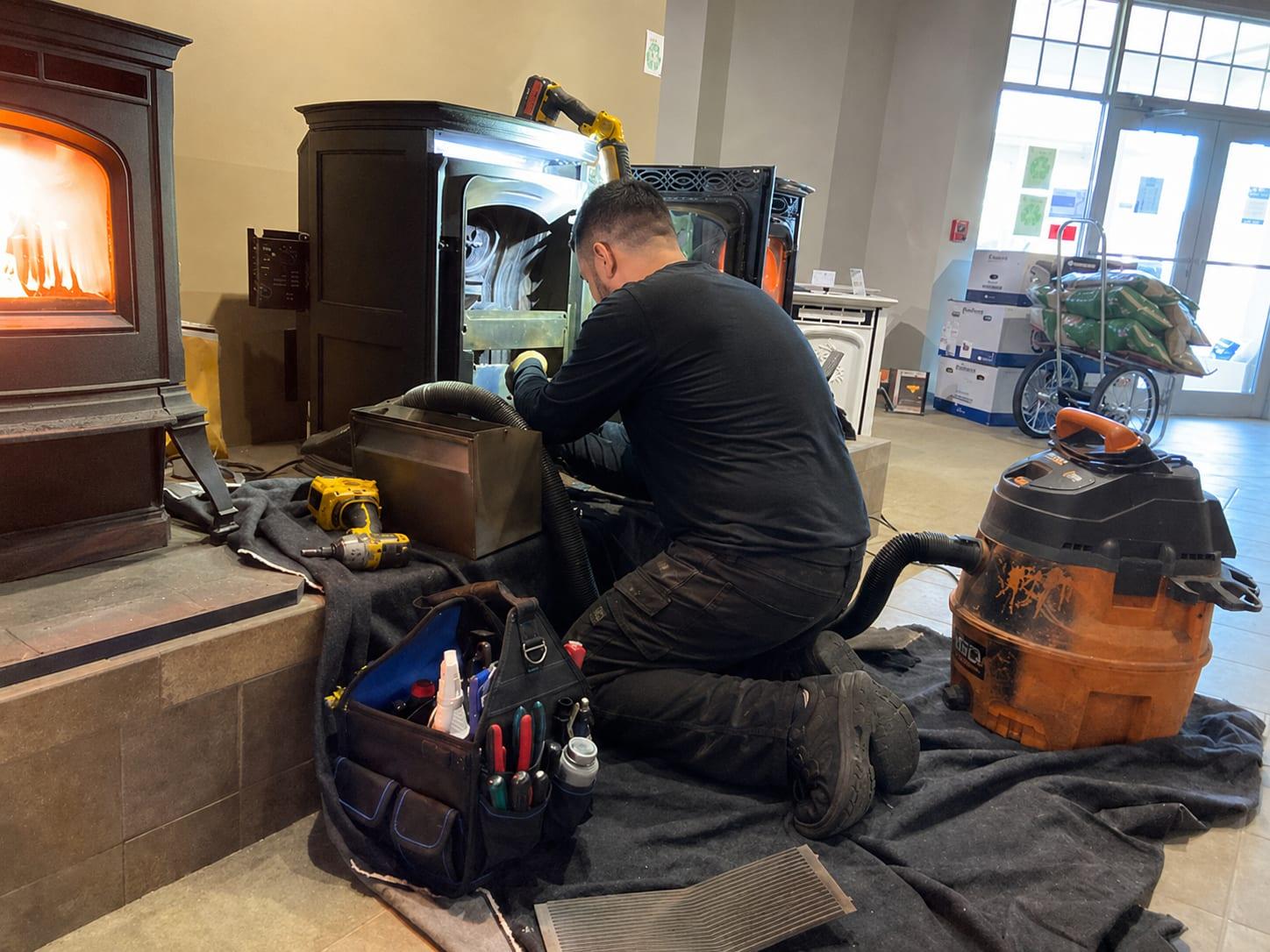
- Have the vent, fans and heat exchanger cleaned on schedule, since fly ash builds up where you can't see it.
Routine care for a wood stove
- Split, stack and dry firewood well ahead of the season.
- Load and adjust the fire by hand while it burns.
- Remove ash regularly, leaving a thin bed if your stove's manual recommends it.
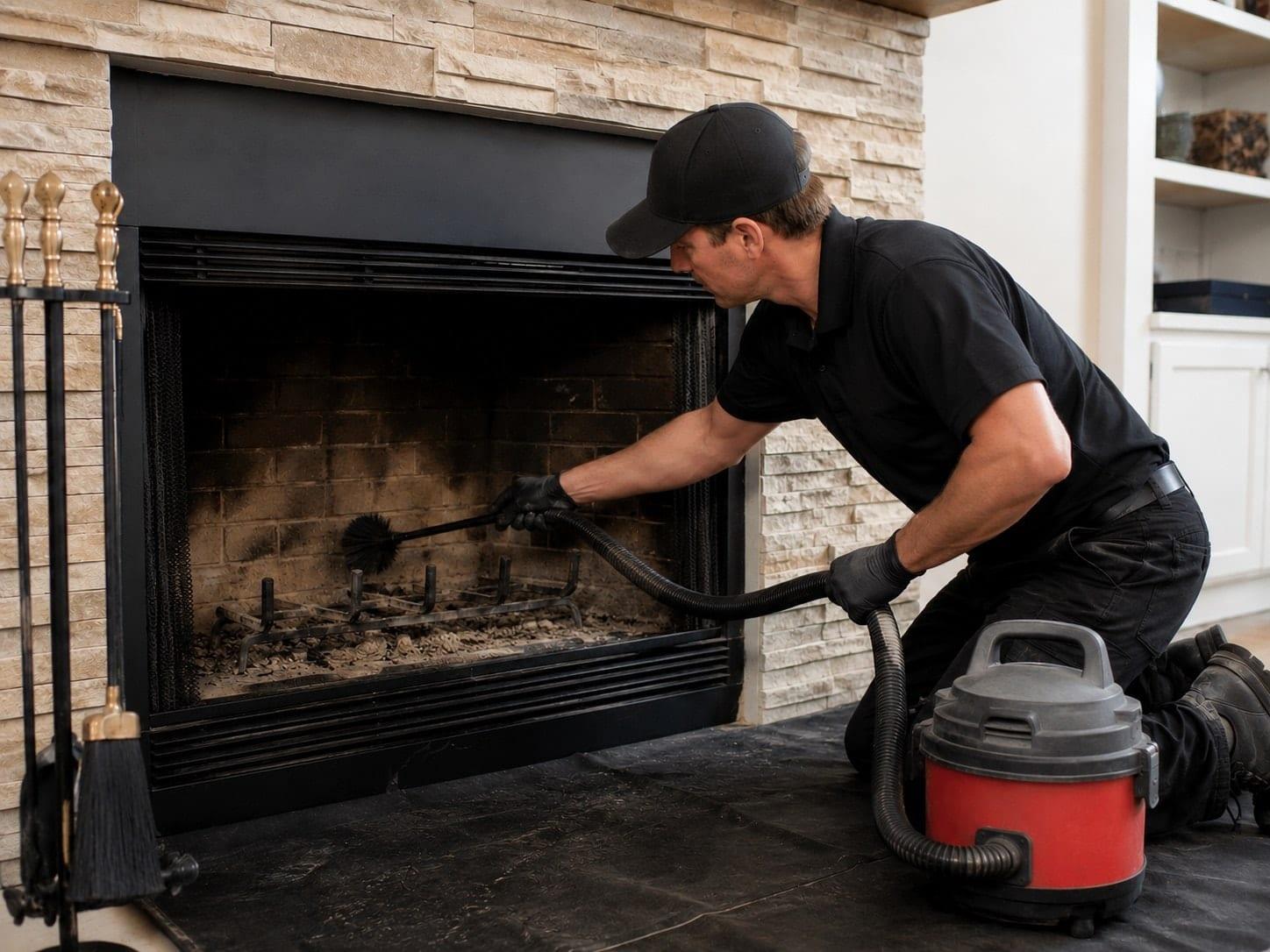
- Have the chimney swept and inspected so creosote doesn't build up in the flue.
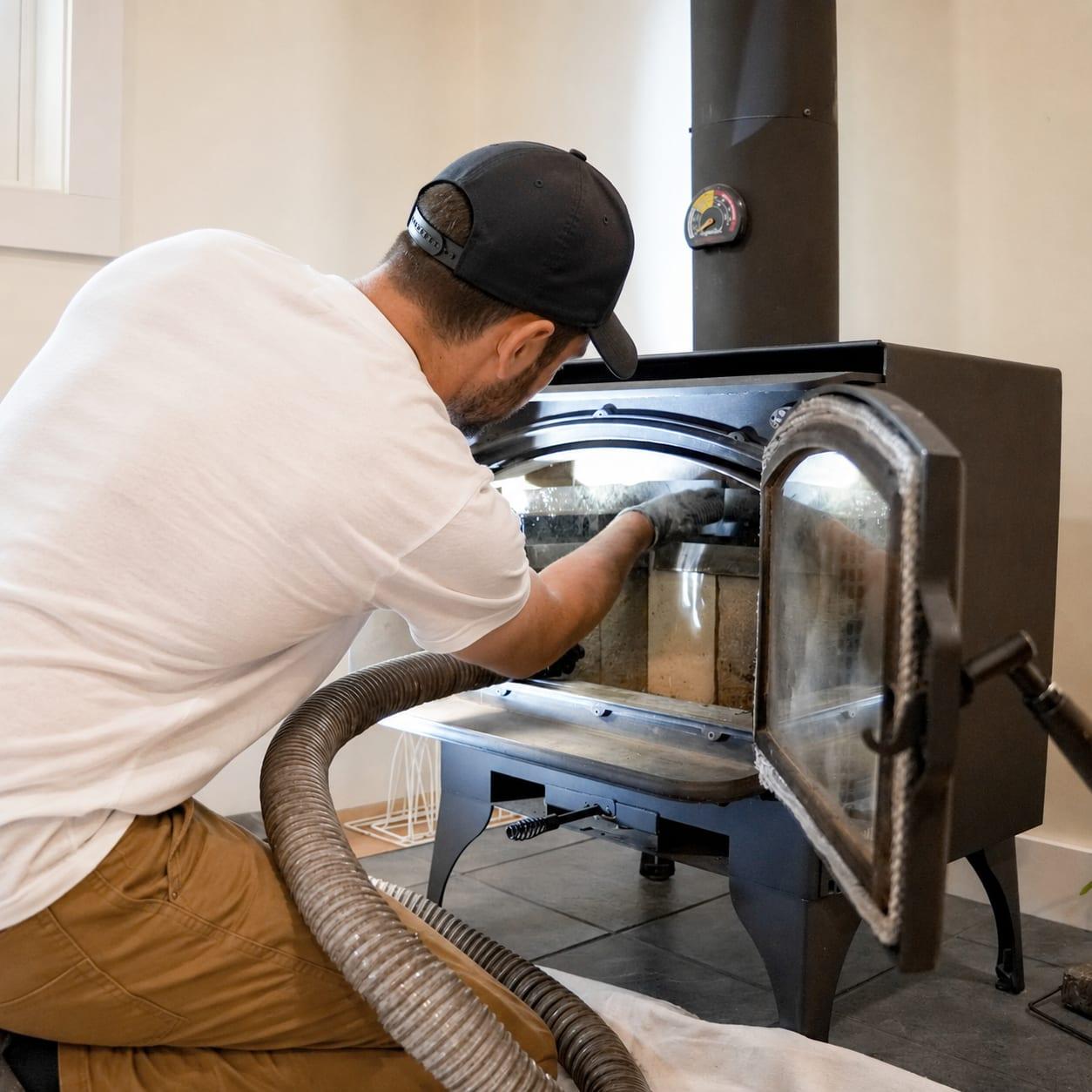
Both stoves can develop cloudy fireplace glass. On a wood stove it often points to damp wood or a smoldering, low-air fire; on a pellet stove it can mean the burn pot or air passages need cleaning. Professional pellet stove cleaning covers the internal passages and vent, while wood stove cleaning focuses on the firebox, baffle and chimney.
What helps you decide
Questions to ask yourself
- Do you need heat during power outages? A wood stove keeps working; a pellet stove needs a backup power source.
- Is there a usable chimney, or would a new vent be needed? A wall-vented pellet stove can go where a full chimney would be hard to add.
- How much handling do you want? Pellet stoves need a hopper fill and quick cleanup; wood stoves need wood prep and regular tending.
- Where will fuel be stored? Pellet bags need a dry indoor space; firewood needs a covered outdoor stack.
- How do you feel about fan noise and mechanical parts? Pellet stoves trade quiet simplicity for automation.
- Is the stove for primary heat or occasional fires? Steady thermostat control suits daily heating; the look and feel of a wood fire suits many occasional users.
If you're still weighing where a stove should sit, our guide to fireplace insert vs freestanding wood stove covers that choice, and gas vs wood burning fireplace compares another common option.
When you're ready, we handle pellet and wood stove installation, repair, cleaning and venting, and estimates are free.