On this page
What prefab fireplace replacement means
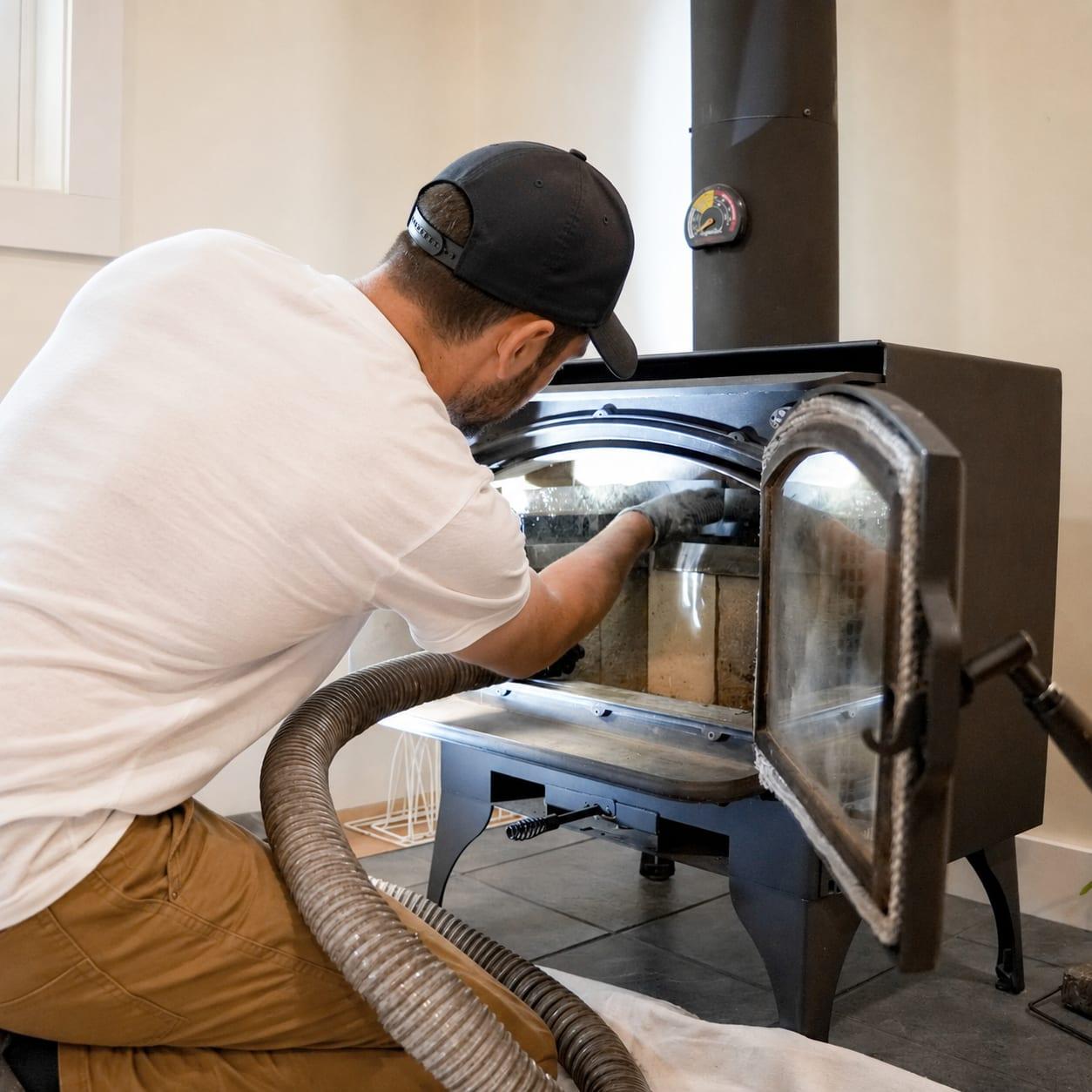
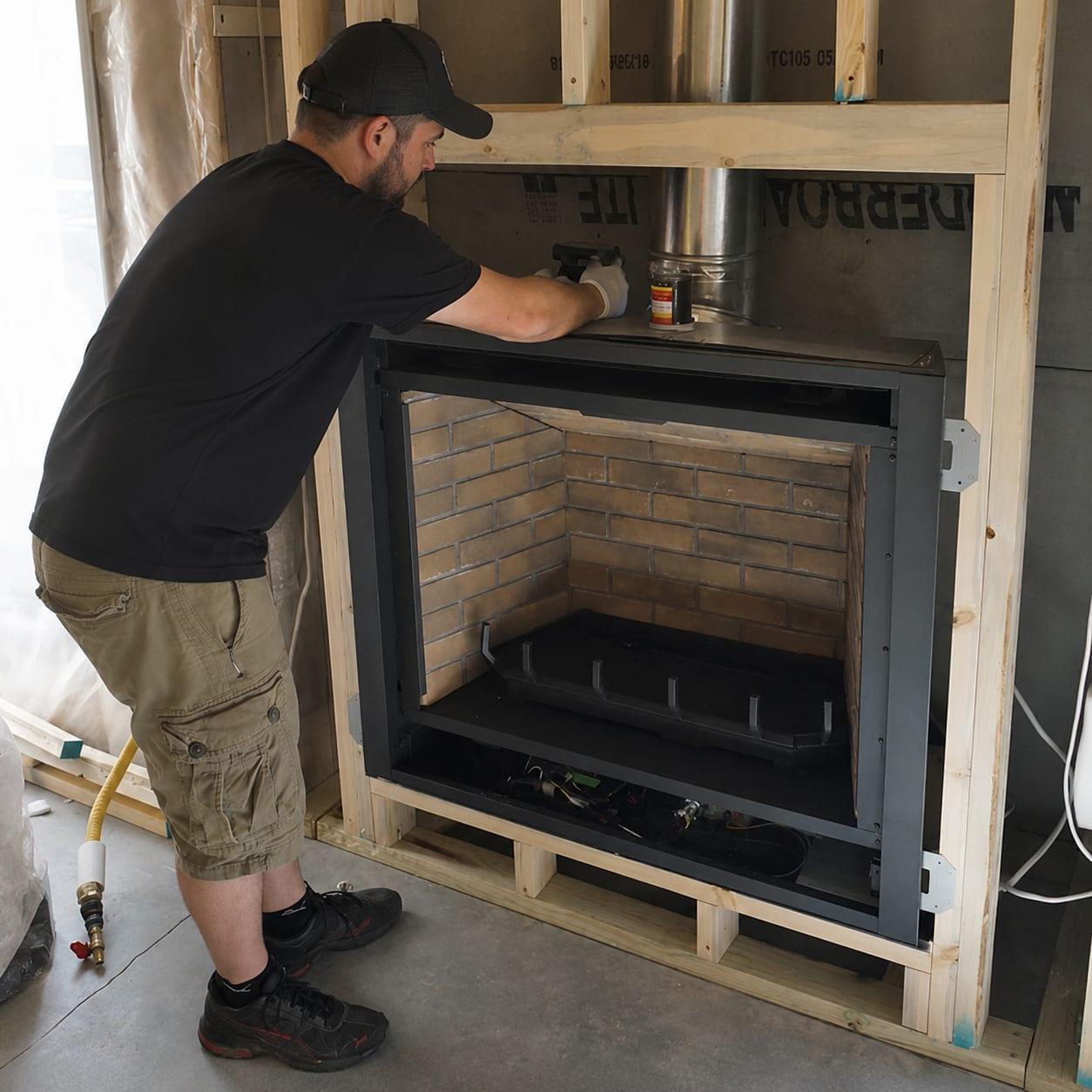
A prefab, or factory-built, fireplace is a metal firebox made in a factory, set into a framed wall and paired with its own metal chimney. Unlike a masonry fireplace, it isn't rebuilt brick by brick. When it wears out, the fix is replacement: either of the parts that have failed or, when the firebox itself is finished, of the whole unit.
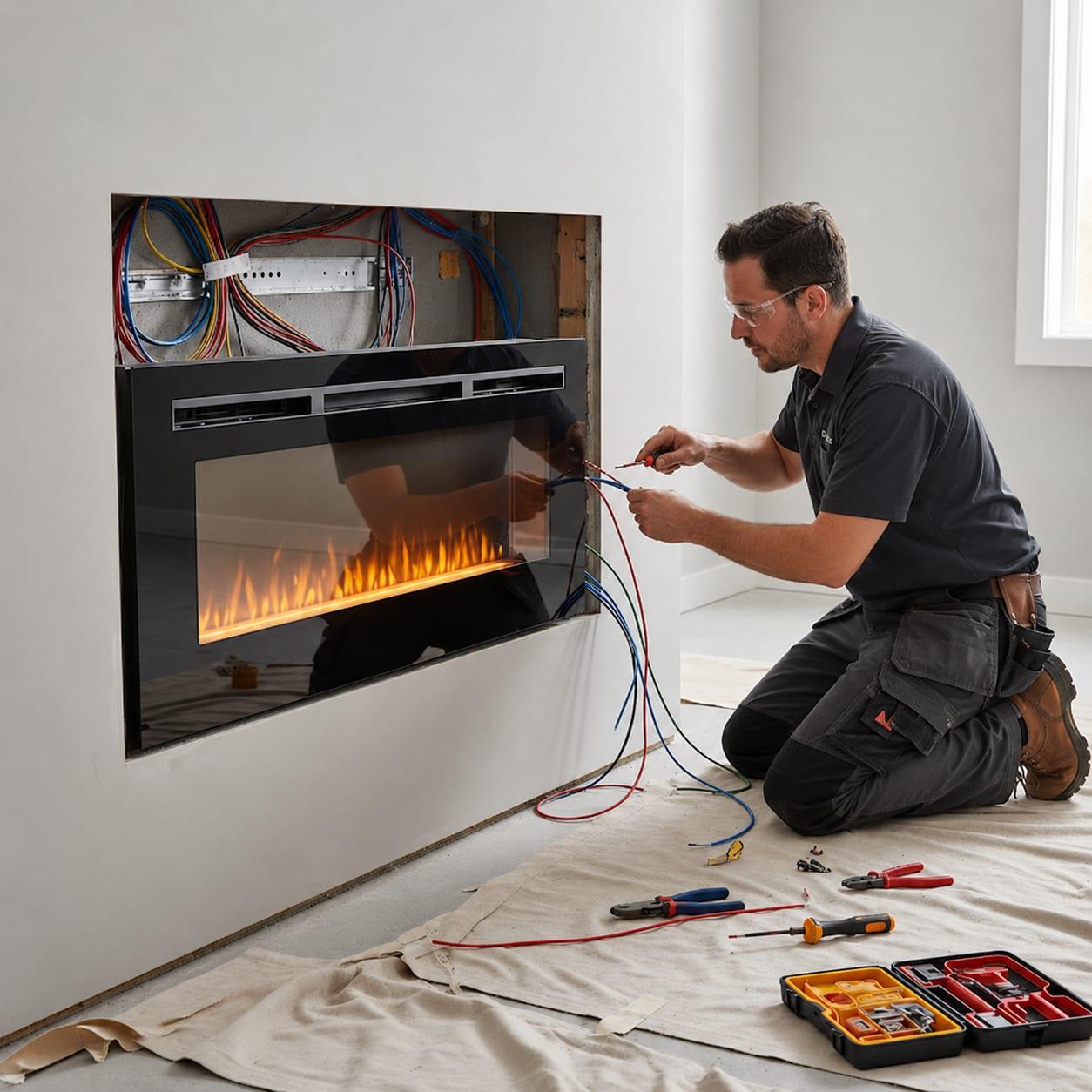
Smaller problems stay small jobs. Cracked liners are handled by refractory panel replacement, and broken doors or glass by fireplace glass replacement and door repair. Prefab fireplace replacement is for the point where the unit itself is the problem.
Signs a factory-built fireplace needs replacing
- Firebox walls or floor that have warped, split, rusted through or burned through
- Open gaps at the firebox joints or where the unit meets the chimney pipe
- Replacement panels, doors or other parts for the model can no longer be found
- Smoke entering the room that cleaning and draft checks haven't solved
- Scorching or discoloration on the wall, mantel or surround near the unit
Any of these is a reason to stop using the fireplace until it has been checked. Burn-through or open seams can let heat and fire reach the framing around the unit.
Why the chimney matters to the replacement
Factory-built fireplaces are tested and listed together with a specific chimney system. A new unit has to be compatible with the chimney pipe it connects to. If it isn't, the chimney is replaced along with it. The new unit's instructions also set the clearances to the surrounding framing, which can change how the wall opening, hearth and surround are finished.
What the visit involves
Replacing a prefab fireplace
Identify the unit
We read the model and listing label and note the chimney system the unit is connected to.
Inspect the firebox and chimney
We check for damage in the firebox, at the joints, in the chase and along the flue to the roof.
Decide between parts and a full replacement
We explain which option actually fixes the problem you have.
Remove and replace
The surround is opened as needed and the old unit or failed parts are taken out. The replacement is set with the required clearances and joined to compatible chimney components.
Test and hand over
We check draft and operation, then go over how the new unit should be used.
If you want a fireplace in a new spot rather than a replacement in the old one, that is a new fireplace installation.
Looking after the new unit
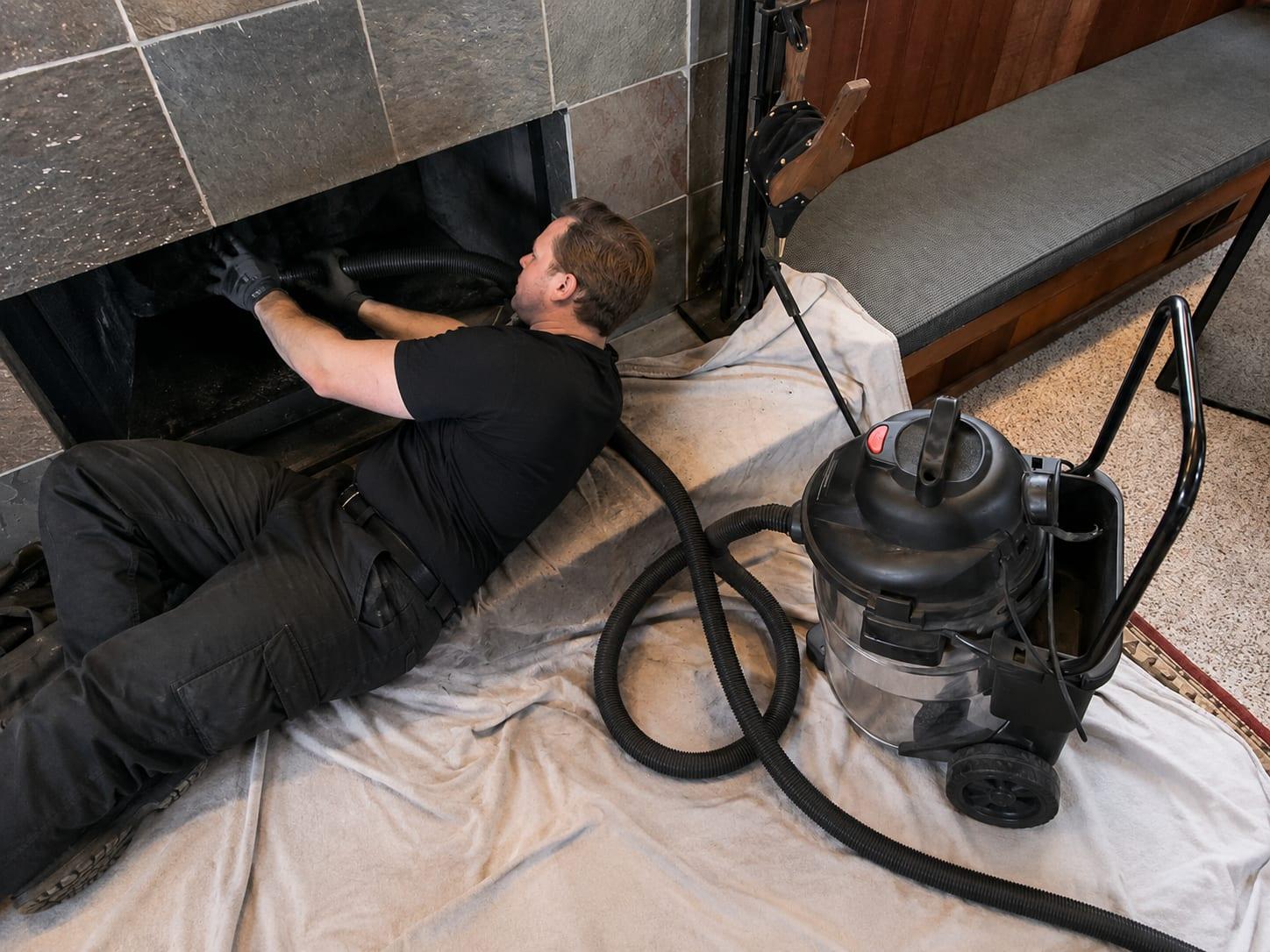
Burn only the fuel the unit is designed for, and follow the manufacturer's guidance on grates, fire size and door use. Regular fireplace cleaning keeps ash and creosote from building up on new parts and lets wear be spotted early.
Booking prefab fireplace replacement
Call or request an estimate. If you can, photograph the label inside the firebox or behind the lower grille, which usually lists the make and model, and add a few photos of the damage. We serve homes across Greater San Jose, and commercial and property-manager work is offered for rentals and buildings with several units.
How to prepare
- Write down what you've noticed — smoke at the door, a hard-to-control fire, noises or smells.
- Have the make and model handy; it's usually on a plate on the back or under the ash lip.
- Make sure the roof or the attic access can be reached if the flue needs to be checked from above.
- Let the fireplace go out and cool completely — ideally no fire for a full day before the visit.
Signs of a chimney fire
A loud roaring sound, a glowing connector pipe, dense smoke or sparks from the top of the chimney can mean a chimney fire. Get everyone out and call 911; have the system inspected before the next fire.
What the technician checks
- Listed chimney or vent route
- Chase and chase cover
- Framing and clearances
- Permit requirements
- Gas supply or hearth requirements by fuel