On this page
What chimney odor removal involves
Chimney odor removal means tracking down what is causing the smell and physically removing it. Sprays, candles and bowls of baking soda only cover the odor for a while. The usual sources are a short list: creosote left on the flue walls by wood fires, water that has soaked into masonry or debris, leaves and nesting material packed into the flue or smoke chamber, and the remains of an animal that got trapped.
Air movement is the other half of the problem. When a house pulls more air out than it lets in, through bathroom fans, a range hood, a clothes dryer or simply tight windows, the chimney can become the easiest way for outside air to get back in. That air flows down the flue and carries the smell into the room. This is why many homeowners notice the odor most when the fireplace hasn't been used in weeks.
Signs your chimney needs odor removal
- A campfire, tar or asphalt smell near the fireplace even when no fire has burned for a while.
- A musty, damp-basement smell that gets stronger after rain or on humid days.
- A sour or rotting smell that showed up suddenly, which often points to an animal or nest.
- The smell gets worse when exhaust fans, the dryer or the air conditioning are running.
- Dark stains, flakes or crumbly black deposits on the firebox walls or damper.
- Scratching, chirping or bits of twigs and leaves falling into the firebox.
| What it smells like | Likely source | What usually addresses it |
|---|---|---|
| Smoky, tar-like, asphalt | Creosote on the flue and smoke chamber | Sweeping and creosote removal |
| Musty or damp | Water getting in through the top of the chimney or the masonry | Removing wet debris, then fixing how the water enters |
| Rotting or sour | A trapped animal or old nesting material | Removing the animal and nest, then screening the top |
| Earthy or stale | Leaves and debris packed into the flue | Clearing the blockage |
When the smell is smoky and tar-like, the fix is usually the same work described under our creosote removal service. A sudden rotting smell is a different job, handled through chimney animal and nest removal. An earthy, stale odor paired with poor draft often means the flue is packed with debris, which is where clearing a chimney blockage comes in.
What the visit involves, step by step
Talk through the smell
We ask when you notice it, which rooms it reaches, whether weather or running fans change it, and what you burn or vent through the chimney.
Look at the firebox, damper and flue
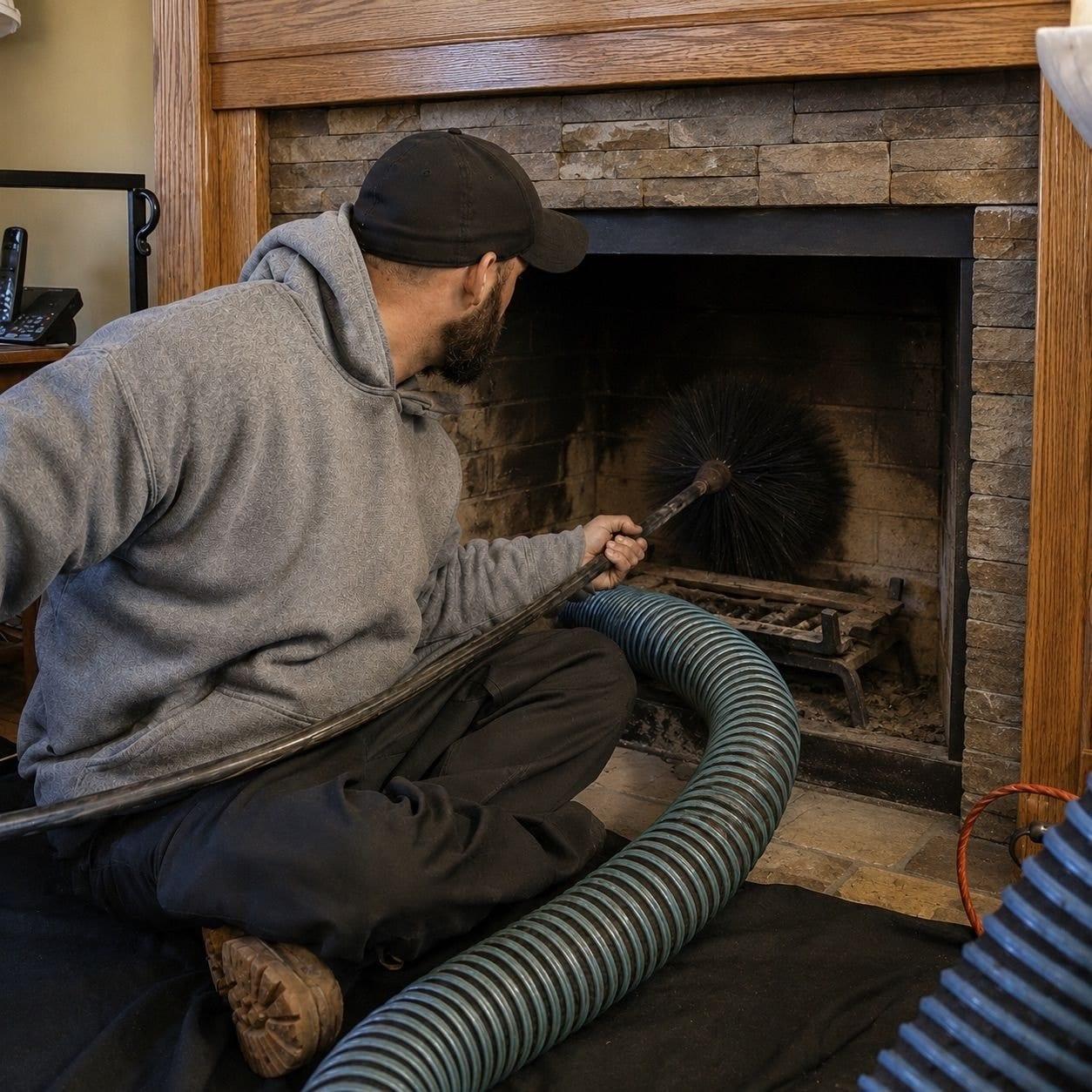
The firebox, damper and as much of the flue as can be reached get checked for deposits, moisture, debris and signs of animals.
Remove the source
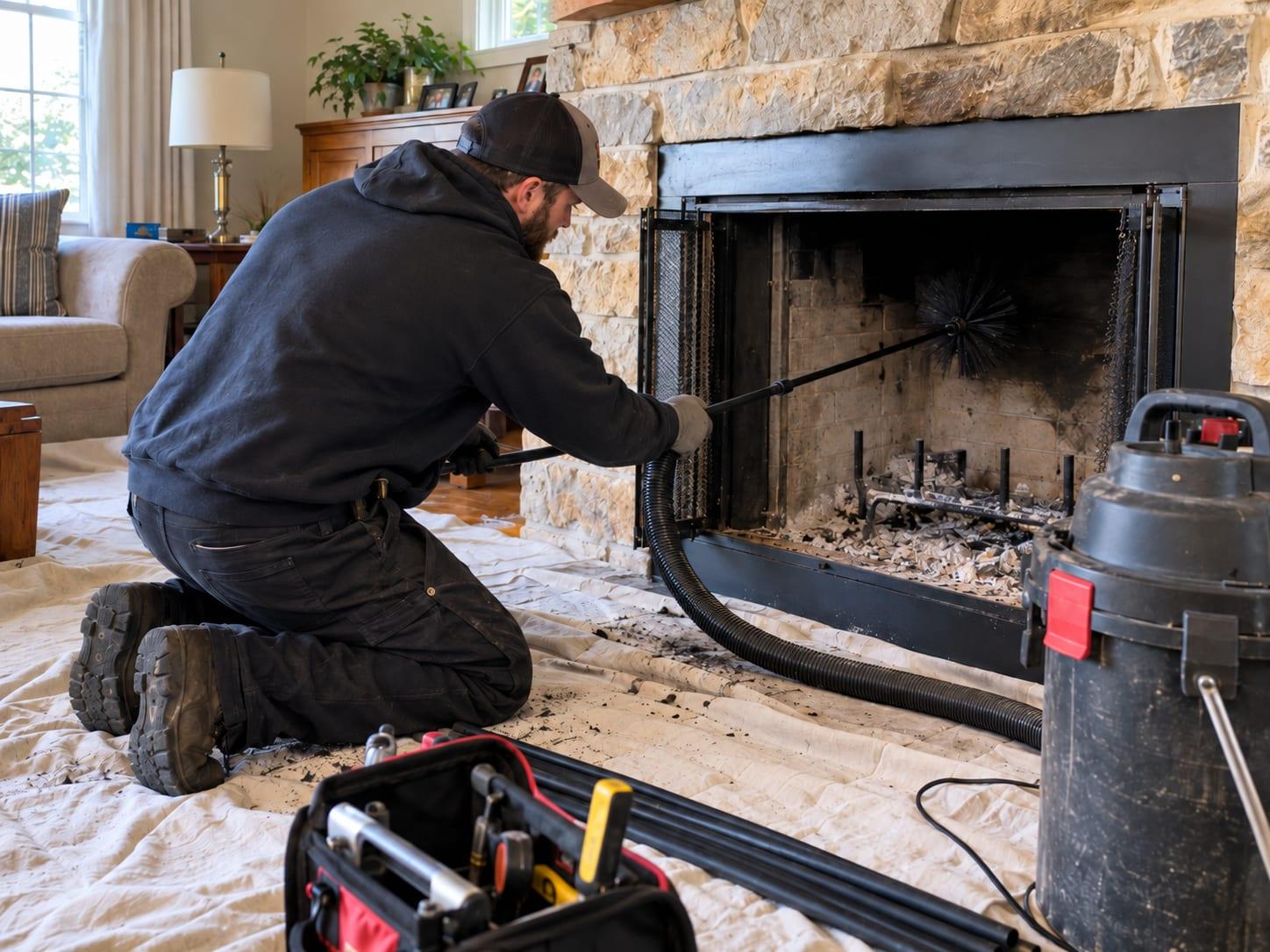
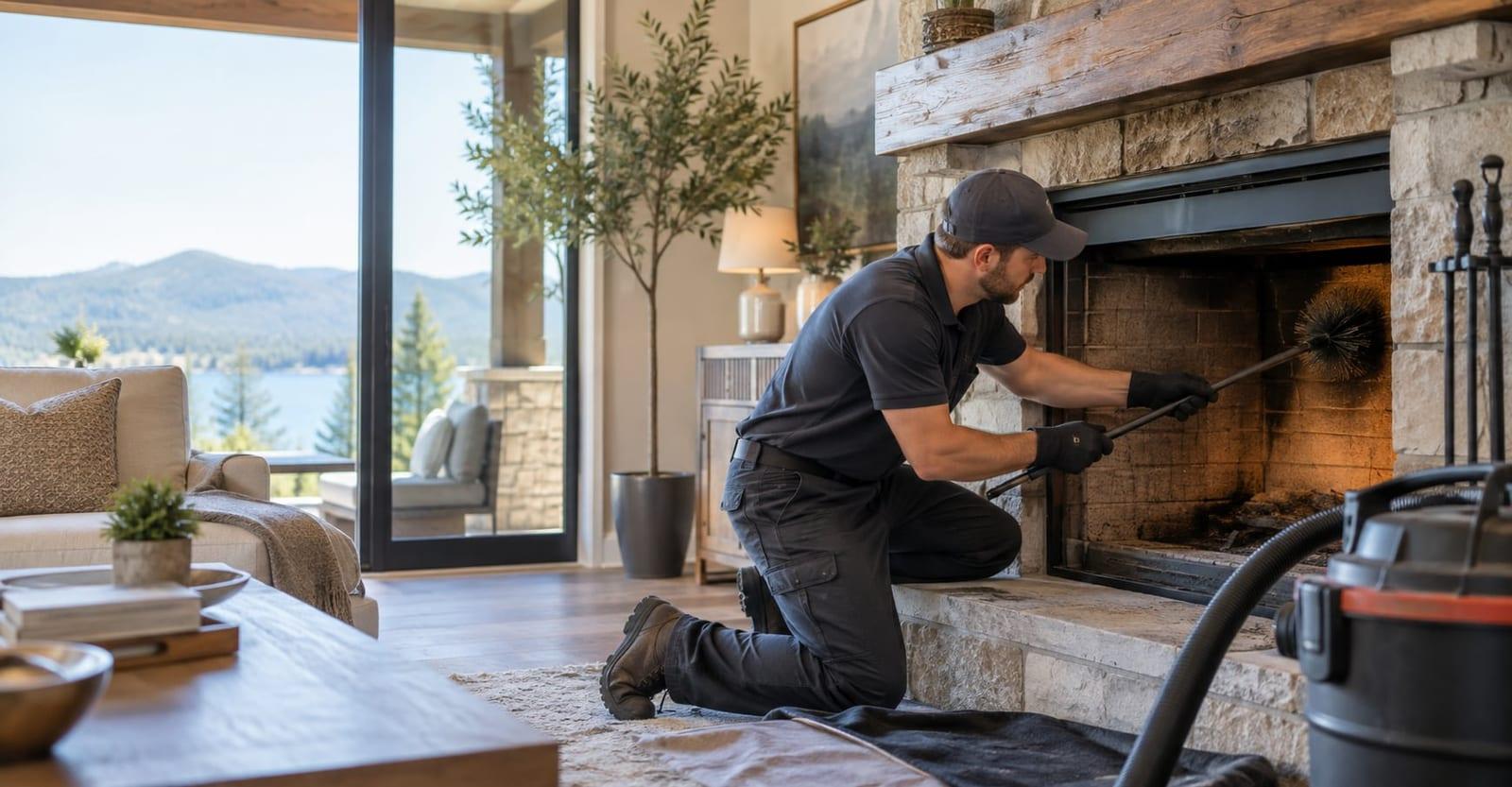
Depending on what turns up, that means sweeping the flue, taking out creosote, clearing debris or removing nesting material and animal remains.
Check how moisture and animals get in
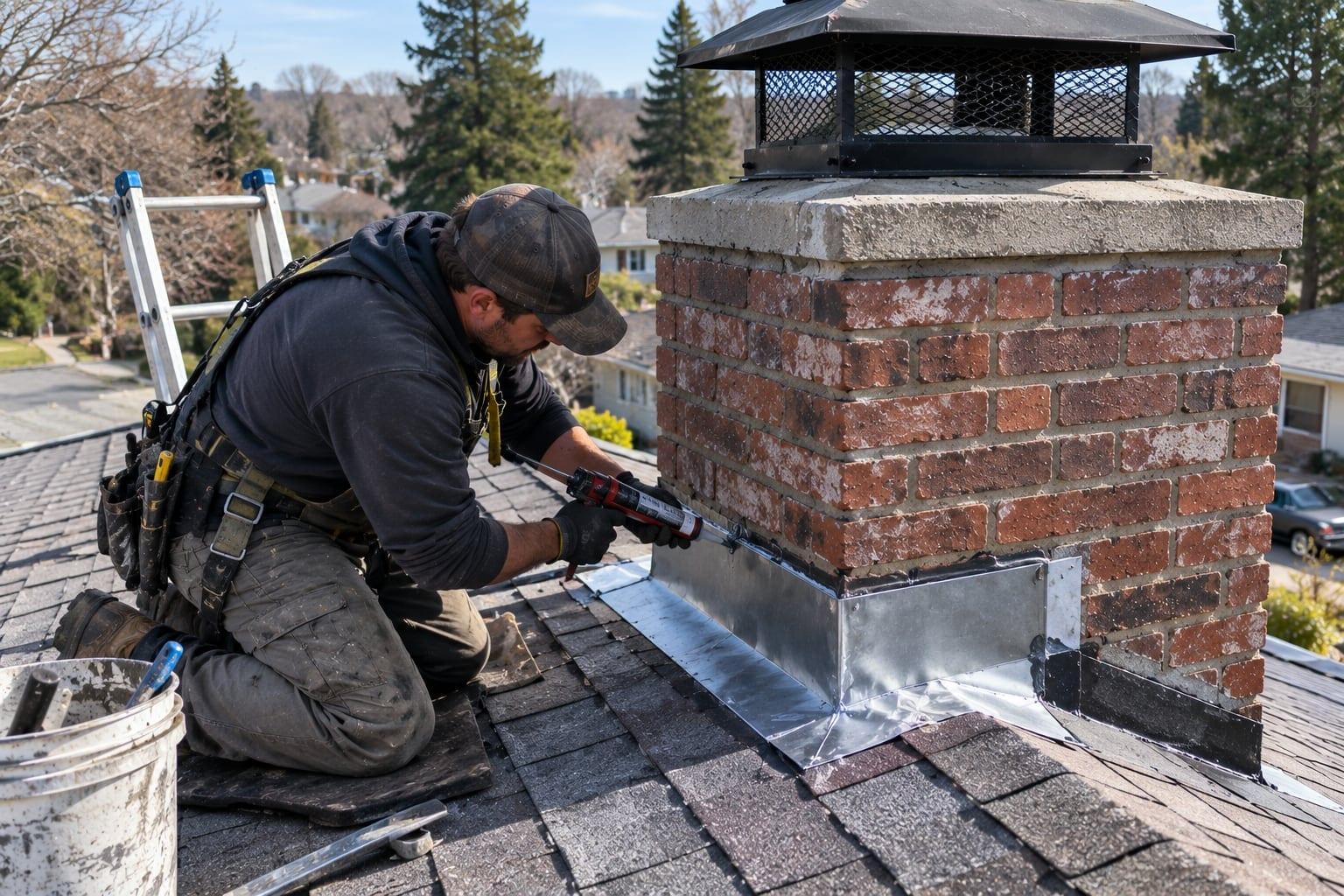
The top of the chimney is checked, including the cap, crown and surrounding flashing, because an open or damaged top lets water and animals back in.
Explain what was found
You hear what was removed and whether a repair would keep the smell from returning, so you can decide what to do next.
Parts of the chimney that hold onto smells
Masonry chimneys are porous, so brick, mortar and the clay or metal flue liner can absorb both creosote and moisture. Once they have, they keep releasing odor long after the last fire. The smoke chamber above the damper is a common spot for heavy, sticky creosote because it is hard to reach without the right tools. Factory-built chimneys inside a framed chase can hold onto smells too, especially when water gets in under a worn chase cover.
Some causes are fixed by repairs rather than cleaning alone. A damper that no longer seals lets outside air pour down the flue. A missing or damaged cap lets in rain and animals. Masonry that soaks up water keeps feeding a musty smell. Chimney cap installation, chimney damper repair, chase cover replacement and chimney waterproofing are all work we do when one of these turns out to be the root cause.
Keeping the smell from coming back
- Close the damper when the fireplace isn't in use, as long as it still seals well. If the fireplace has gas logs, leave the damper as the installer set it — vented gas logs need it open.
- Burn dry, seasoned wood. Wet wood leaves more creosote behind.
- Schedule a regular chimney sweep service so deposits don't build up to the point where they smell.
- Keep a cap with screening on top of the chimney so leaves, rain and animals stay out.
- If you are weighing a store-bought cleaning log or brush kit, our guide to DIY vs chimney cleaning covers what those can and can't reach.
A rotten-egg smell is not a chimney odor
If you smell rotten eggs or sulfur near a gas fireplace or any gas appliance, treat it as a possible gas leak. Leave the house and call your gas utility or 911 from outside. Don't light anything, and don't switch lights or appliances on or off.
Booking chimney odor removal
Get in touch to request a visit. It helps to tell us what the smell is like and when it shows up, for example after rain, when the air conditioning runs, or only in certain rooms. Mention whether the fireplace burns wood, runs on gas or has an insert.