On this page
What a real estate chimney inspection covers
A real estate chimney inspection is a full look at the chimney and fireplace system, done because a home is changing hands. A general home inspection usually only notes what can be seen from the room and the roofline. This inspection goes further: it checks the condition of the flue, the liner, the smoke chamber, the damper and the outside structure, and it looks for blockages, cracks and water damage.
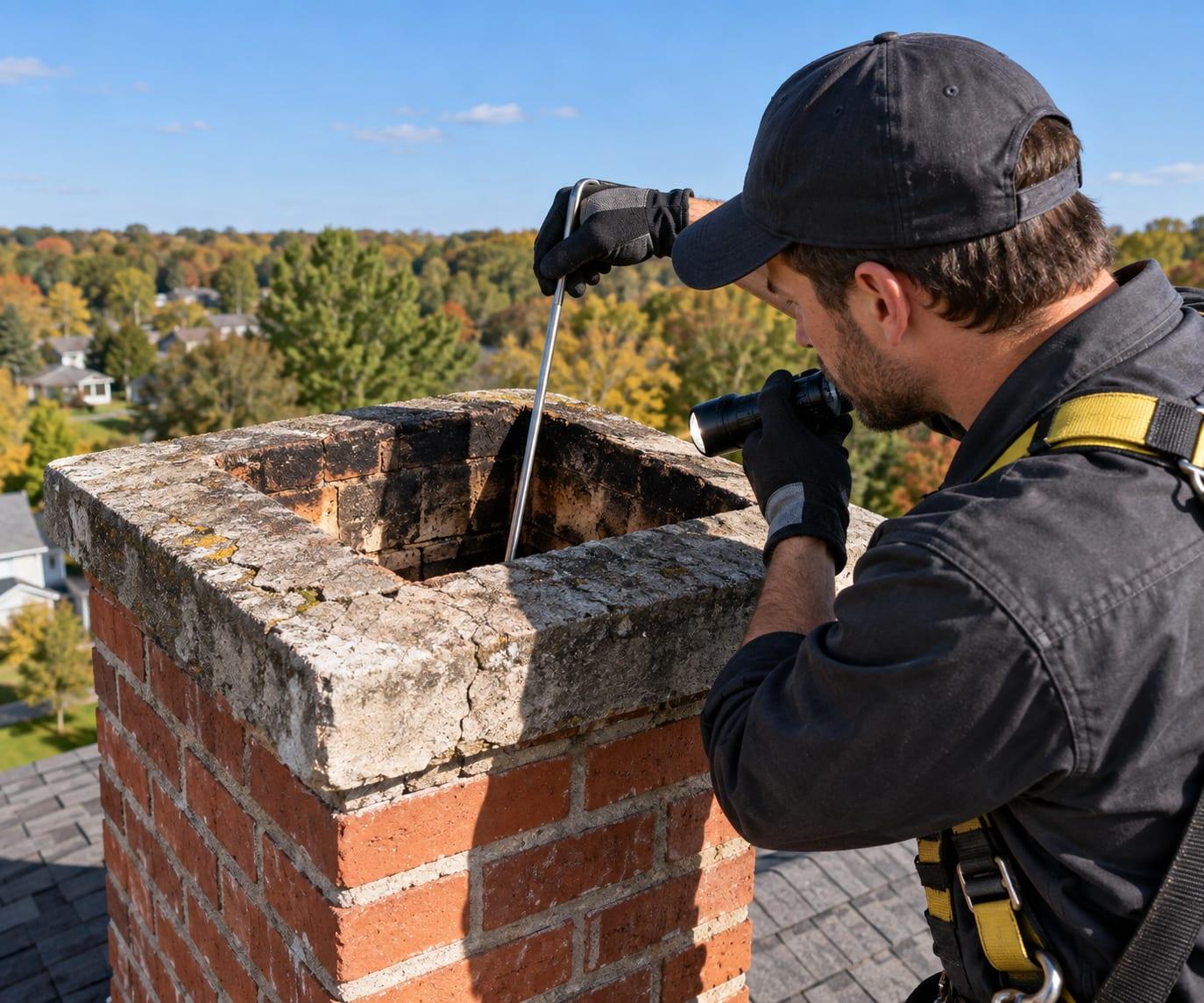
It follows the same approach as our standard chimney inspection service, with one difference. The camera scan of the flue is part of the visit, because a sale is the point where an unseen problem becomes someone else's bill.
When the level 2 standard applies
The Chimney Safety Institute of America (CSIA) standard of practice describes a Level 2 inspection as one that includes a video scan of the flue. The standard recommends it at a property sale or transfer, after a chimney fire, and after a weather or seismic event. That is a recommendation from the industry standard, not a code or legal requirement. It is still the reason most buyers and sellers choose this level of inspection instead of a quick visual check.
If the house has recently been through high winds or heavy weather, the same camera work overlaps with our storm damage chimney inspection. We can cover both in one visit, so you don't have to book two.
Signs a home needs a closer look before closing
Any sale with a working fireplace is a good reason to book. These signs make it more pressing:
- The listing calls the fireplace "as-is" or "decorative," or the sellers haven't used it in years.
- There are stains, peeling paint or damp patches on the walls or ceiling around the chimney. Our guide to water damaged chimney signs shows what to look for.
- The crown, bricks or mortar on the outside are cracked or crumbling, or the metal chase looks rusty.
- There's a smoky or musty smell near the fireplace, even when no fire is burning.
- The damper is stuck, missing or won't seal.
- Nobody can say when the chimney was last cleaned, or whether it has ever had a chimney fire.
- An insert, a wood stove or gas logs were added later, and the flue may not match the appliance.
What the visit involves, step by step
How the inspection runs
Scheduling around the sale
Tell us the closing timeline and who will give us access: the owner, the agent or a property manager. We confirm whether the fireplace burns wood, gas or pellets before we arrive.
Exterior check
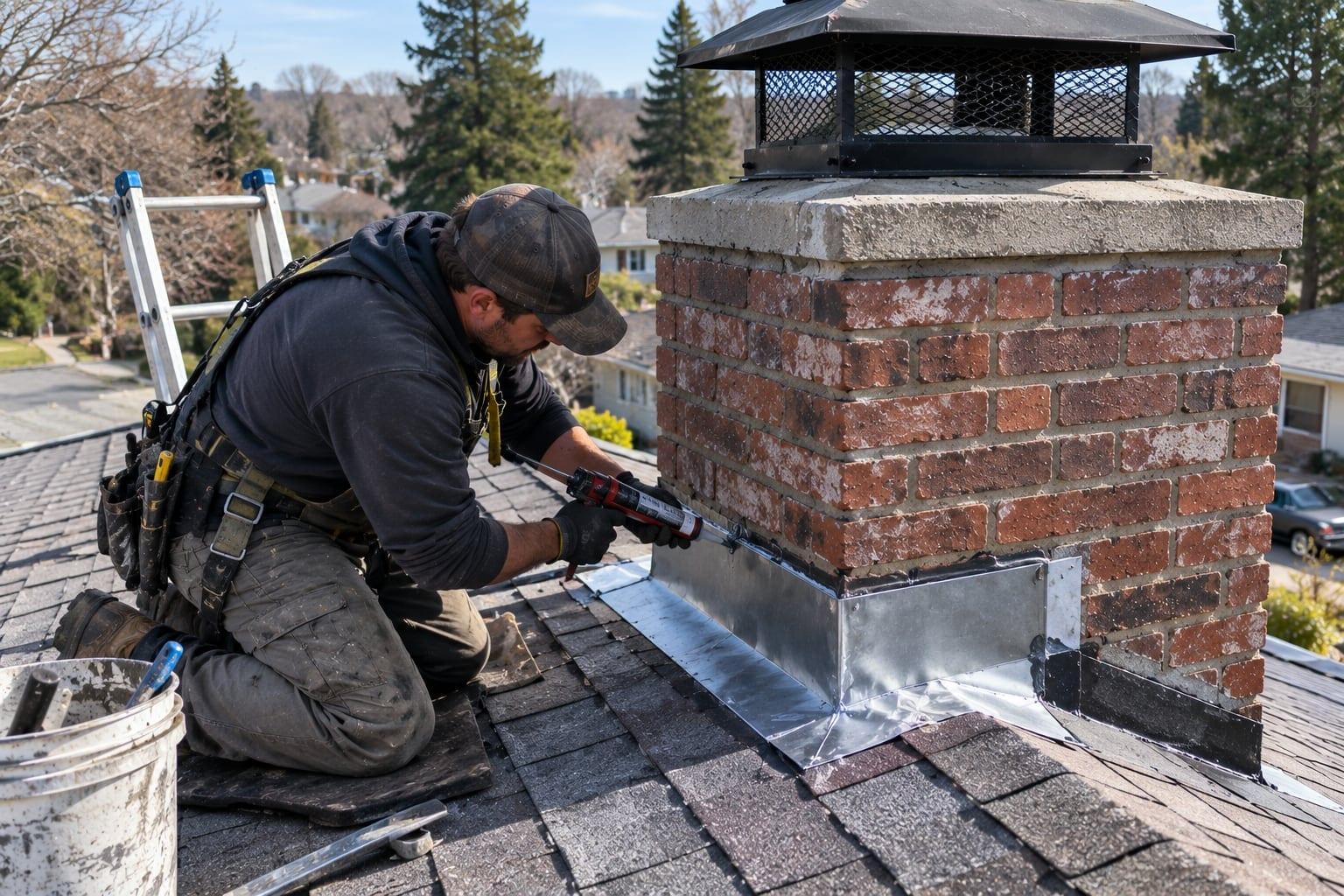
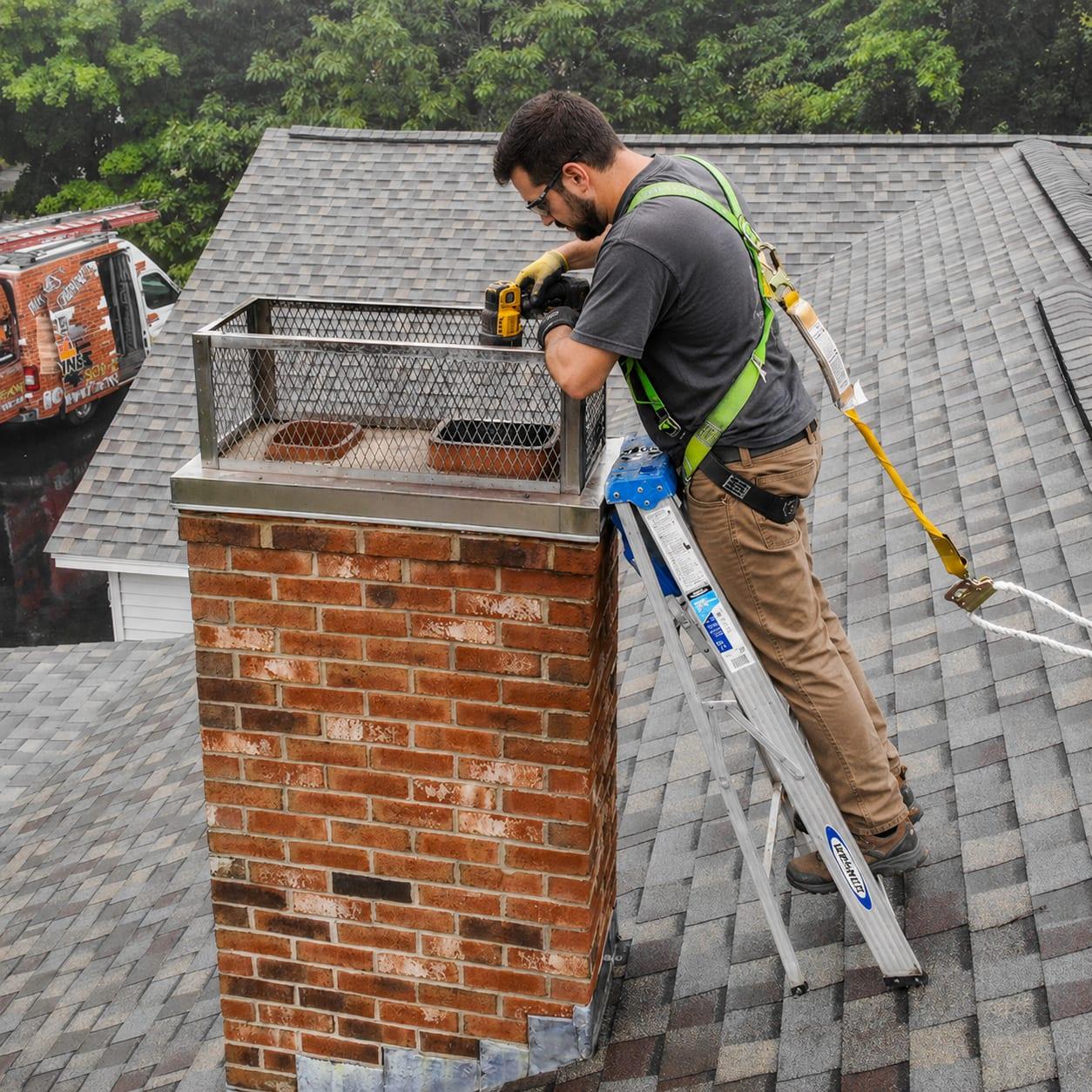
We look at the cap, crown, flashing and masonry. On factory-built chimneys we check the chase and chase cover.
Interior and firebox
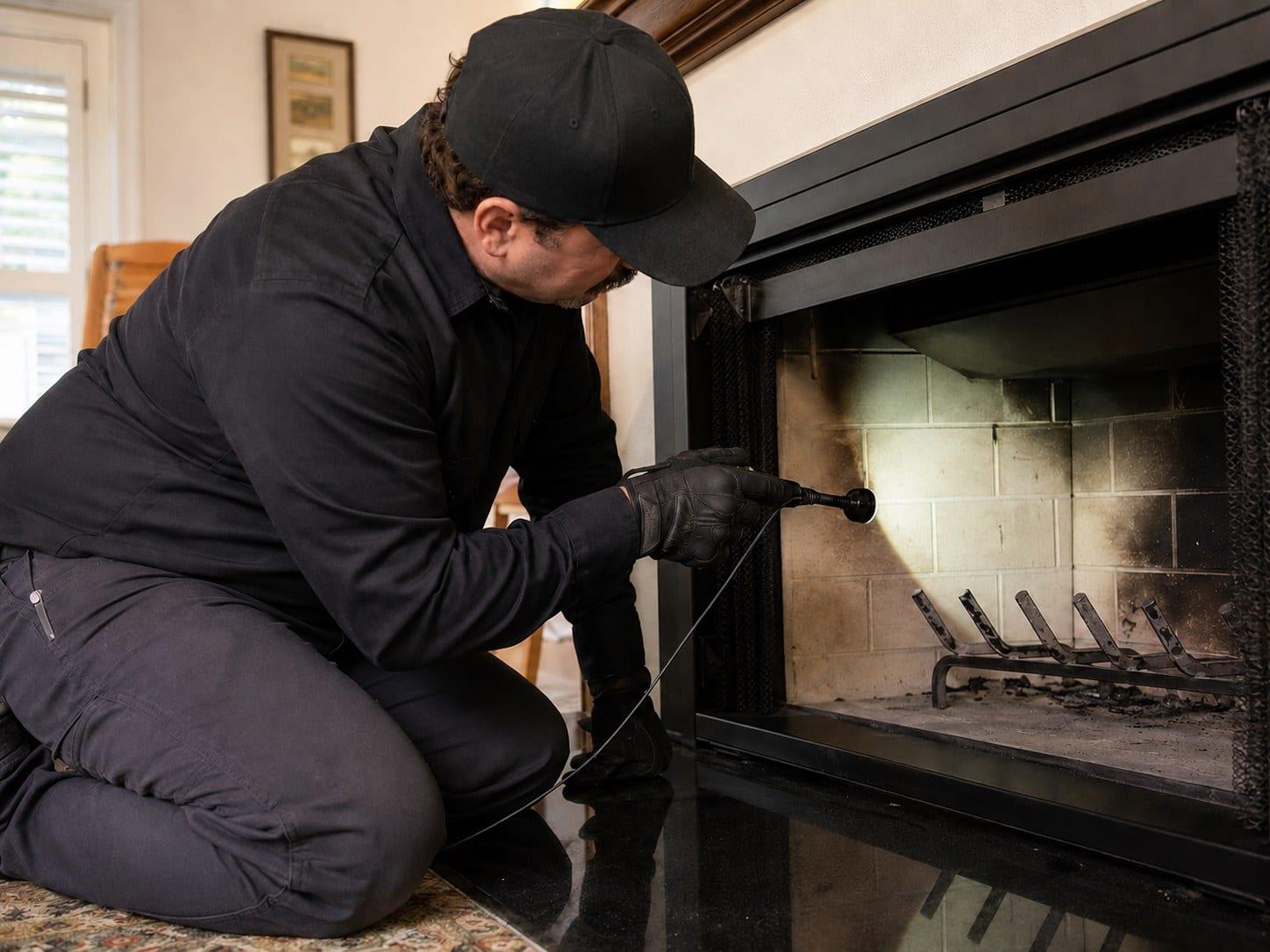
We check the firebox walls, the damper, the smoke chamber and any glass doors or insert. We look for cracks, gaps and heavy creosote buildup.
Camera scan of the flue
A camera goes up the flue to show the liner joints, cracks, blockages and nesting material that can't be seen from the firebox or the roof.
Going over the findings
We explain what we found, what needs attention and what can wait. You can then decide whether to raise it in the sale.
Chimney types and fuels we check
The visit changes a little depending on the system. A masonry chimney with a clay liner has different weak points than a prefab metal chimney inside a framed chase. Our guide to different types of chimneys explains the main kinds. We inspect wood-burning fireplaces, inserts, wood and pellet stoves, and gas fireplaces and gas appliances, and we work on all major brands.
Safety and maintenance context
Until the flue has been inspected, it's safest not to light a fire in a home you've just bought. Only try this once the flue has been checked clear of blockages and creosote; if smoke comes into the room, stop adding fuel and don't relight. Hidden cracks in a liner can let heat reach the framing or let combustion gases leak into the house, and heavy creosote can ignite. None of this is visible from the hearth.
Before the first fire in a new home
Make sure the damper opens fully and that working smoke and carbon monoxide alarms are installed. Hold off on burning until the flue has been checked.
After the sale, the new owner takes over the upkeep. Annual inspection and regular sweeping keep small problems small. If you're wondering whether to sweep the chimney yourself, our guide to diy vs chimney cleaning sets out what a homeowner can safely handle and what needs a professional.
Booking your inspection
Get in touch with the property's details and your closing date.
If the house is being sold as an investment property or will be rented out after closing, see how rental property chimney inspection works.