On this page
What fireplace conversion involves
A conversion keeps the existing fireplace opening and changes the fuel that heats it. One common route is wood to gas, using either a set of gas logs in the open firebox or a sealed gas insert. The other is wood or gas to electric. Each route asks something different of the chimney:
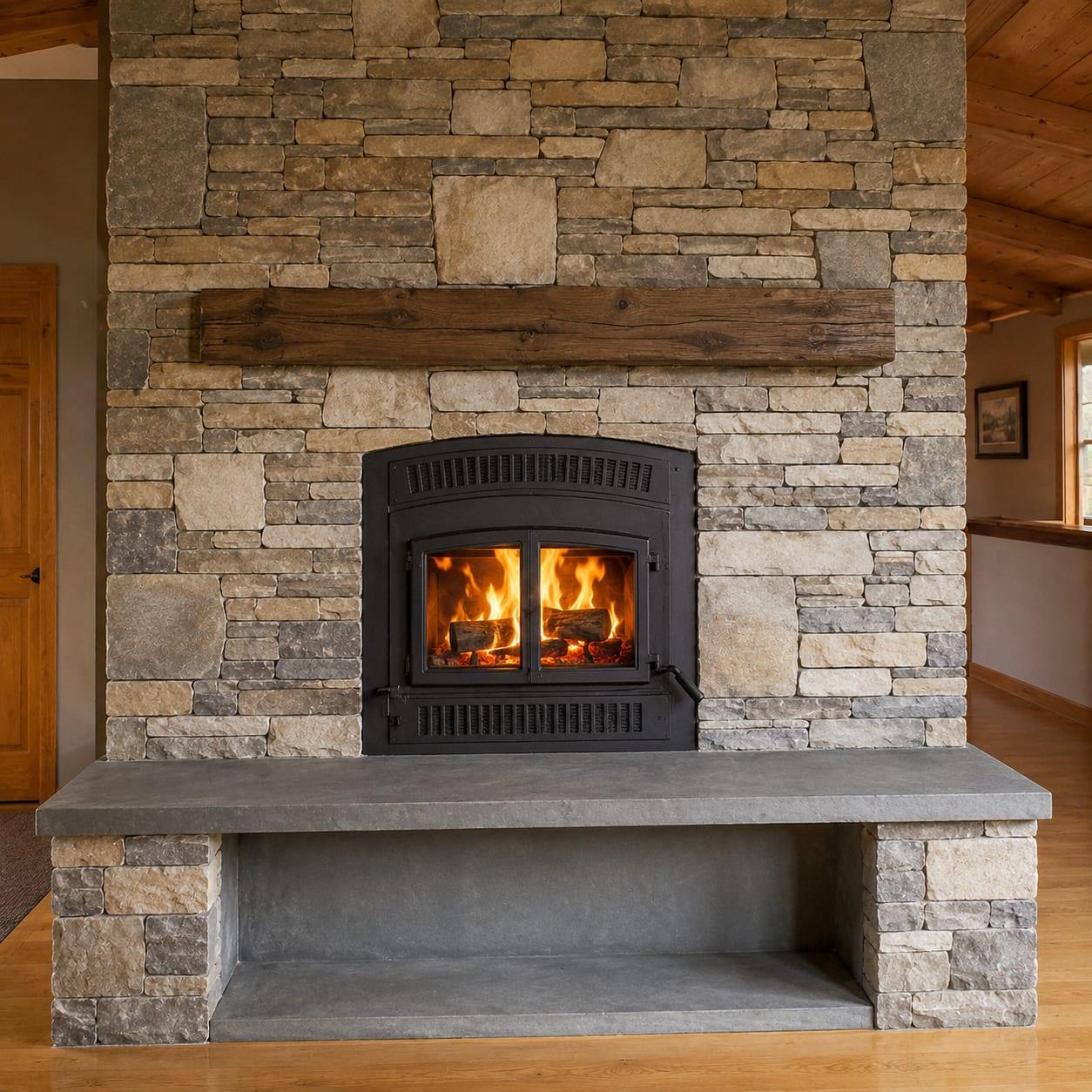
- Gas logs still vent through the open flue.
- A sealed gas insert usually runs its own vent liner up the chimney.
- An electric unit doesn't vent at all.
| Gas logs | Gas insert | Electric unit |
|---|---|---|
| Venting | Through the existing open flue, with the damper fixed open | Sealed, through a liner in the chimney |
| Supply | Gas line to the firebox | Gas line to the insert |
| Heat | Mostly for looks; much of the heat goes up the flue | Built to heat the room, behind a glass front |
| Flame | Real flame in the open opening | Real flame behind glass |
Electric units are the simplest to live with. If one later stops heating or loses its flame effect, electric fireplace repair is handled too.
When a conversion makes sense
- The fireplace rarely gets used because hauling wood, building fires and clearing ash takes too much effort
- Smoke, soot or wood odor is a problem in the room
- Someone in the household is bothered by wood smoke
- You want a fire at the push of a button or a remote
- The flue needs work before it can safely carry wood smoke again, and you're weighing whether to keep burning wood at all
Two related jobs are often confused with conversion. If you're happy burning wood and the fireplace just needs soot and ash cleared, book fireplace cleaning instead. If there's no fireplace to start from, or the old unit is coming out entirely, the job is a new fireplace installation.
What the visit involves, step by step
Planning and completing the switch
Talk through the goal
How much heat you want, the look you prefer, the upkeep you'll accept and how often you'll use the fireplace all point to one route.
Assess the fireplace and chimney
We measure the opening and check the firebox, damper and flue, because a conversion inherits whatever condition is already there.
Check the fuel supply
For gas, we check whether a line already reaches the fireplace or needs to be run. For electric, we find the nearest outlet.
Clean and prepare
A wood-burning flue is swept before a gas appliance vents through it, and the firebox is cleared of ash and debris.
Install the new setup
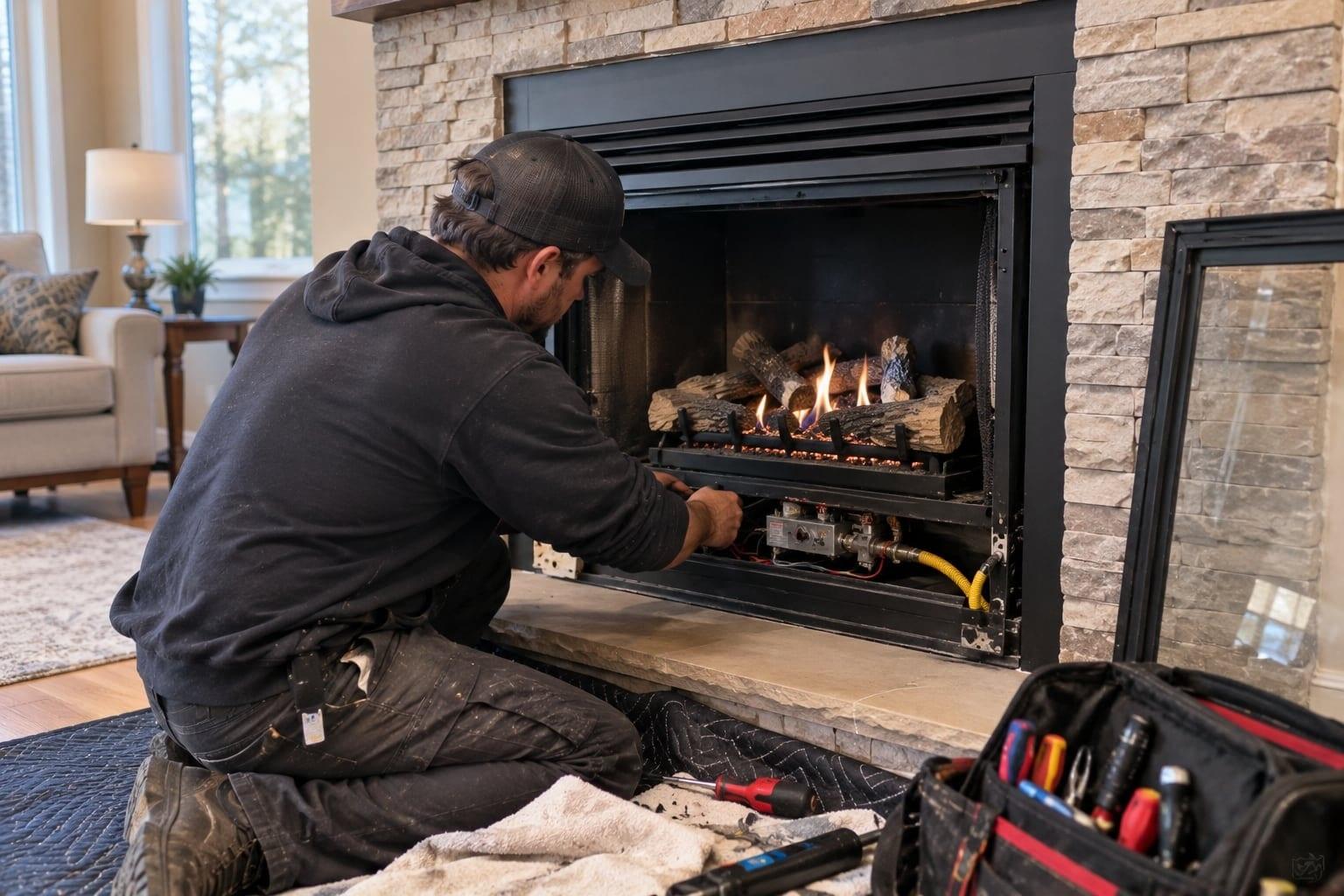
Gas logs, a gas insert with its venting, or an electric unit is fitted to the opening following the manufacturer's instructions.
Test and walk through
Gas connections are leak-tested and the unit is fired. You're shown how to operate it and what upkeep it needs.
Gas logs and the damper
Vented gas logs in a former wood-burning fireplace need the damper held permanently open, usually with a clamp, so combustion gases always have a way out. Never burn wood in a firebox that has been fitted for gas.
Booking a conversion
When you call or request an estimate, say whether the fireplace burns wood or gas today. Mention which route you're leaning toward, or say you'd like help choosing. Photos of the opening and hearth are useful. Commercial and property-manager work is offered as well, for lobbies, restaurants and rental homes where gas or electric is easier to manage than a wood fire.
What gets checked
- Opening or framing dimensions
- Gas supply or electrical needs
- Vent or liner route and length
- Required clearances to combustibles
- Permit requirements
How to prepare
- Clear a few feet of space in front of the hearth or appliance.
- Write down what you've noticed and when it happens — smells, smoke, sounds or stains.
- Keep pets in another room while the work area is open.
- Note the make and model of any insert, stove or gas unit if you have it.
If you smell gas
Leave the home right away, don't use switches or phones inside, and call your gas utility or 911 from outside.
Signs it's time for fireplace conversion
- A damaged factory-built unit past repair
- A remodel that adds or moves a fireplace
- A switch from wood to gas or electric
- An open fireplace that sends most of its heat up the chimney
- A worn-out insert or stove